

Most boaters are boating in denial. When all your trips go according to plan, your flares and life jackets are of no use to you. Your EPIRB and life raft just take up space aboard the boat.
Life has a way of diverting from the plan, so prudence tells us the emergency equipment is worth carrying. Even so, when most boaters free their lines and head for open water, they go with an innocent but dangerous unwillingness to acknowledge that something could go wrong. They may believe they are a safe boater, but planning for a safe day and planning to survive the unexpected are two vastly different things.
An emergency plan must be more than just having the latest safety equipment. It is a state of mind, a willingness to ask “what if,” and a refusal to become a statistic.
The riveting book Adrift and the new documentary film based on it tell the story of Steven Callahan’s experience spending 76 days alone in a life raft. It was one of the most visceral books I’ve ever read, likely because Callahan didn’t write the book from memory. He kept detailed notes during his time in the raft, so you are reading exactly what he was feeling and experiencing in the moment.
In speaking with boaters in my classes and lectures around the country, I am disheartened to hear that too few consider a life raft important. Even fewer consider what type of raft they would need, or how they would carry or deploy it.
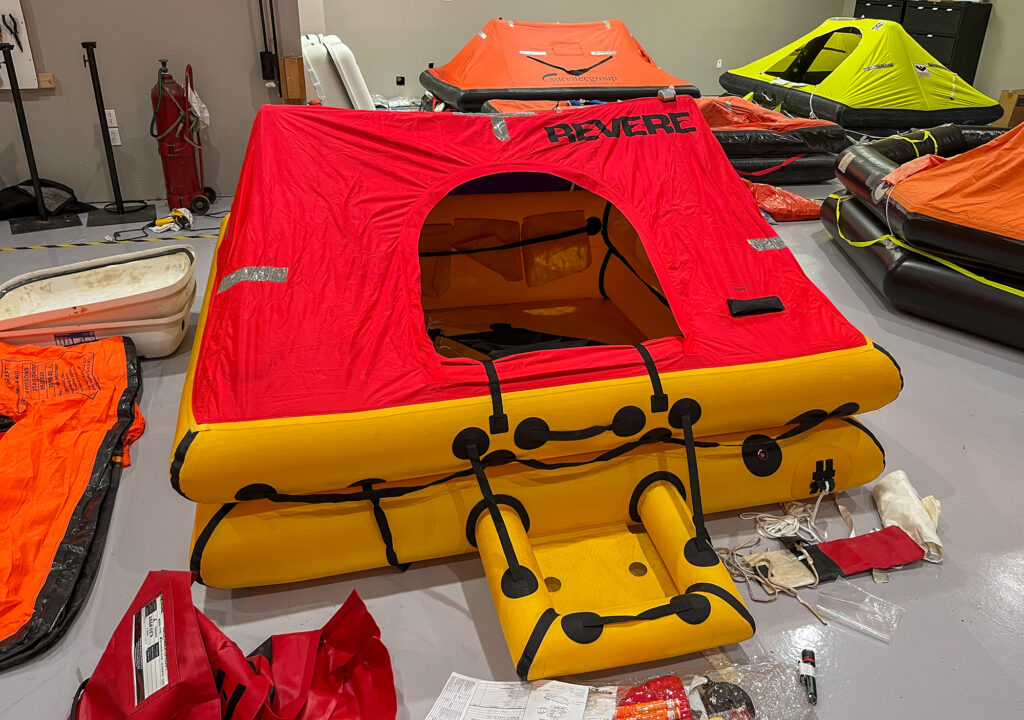
Not all rafts are created equal. Manufacturers build them for distinct uses that are labeled: coastal or offshore. A coastal raft is designed for near-shore waters, relatively fast rescue and short survival windows. These rafts may offer limited protection from the elements and carry fewer survival supplies. By contrast, an offshore raft is meant for serious bluewater use, when rescue might be measured in days. These rafts typically include a canopy, ballast pockets for stability, reflective materials for visibility, and emergency provisions such as water, rations, a first-aid kit and signaling equipment.
Even if you never plan to cross an ocean, your day on the water can have a head-on collision with the unexpected. A simple trip across a large bay, or a run 5 miles offshore to fish, can turn into a prolonged survival situation in the wrong conditions. If there is any chance that you might be out of sight of land, or beyond a few miles from a marina or harbor, think seriously about carrying an offshore-rated raft.
Also consider the packaging. Rafts are available in a hard canister or a soft valise. A canister offers the most protection for the raft and is intended for mounting on a railing or on deck. It resists water intrusion, ultraviolet damage and physical abuse. The downside is bulk and weight. The valise is lighter and more compact, often stowed in a lazarette or locker. But it must be kept dry, and it’s not as rugged over time. The right choice depends on your boat’s size and layout, and more important, on how quickly and easily it can be accessed.
That brings us to one of the most overlooked aspects of carrying a life raft: where you stow it. I’ve seen too many rafts buried under deck chairs or shoved deep into lockers, requiring a yoga pose and a crowbar to retrieve. Equally troubling are rafts in hard canisters stowed on hardtops, precariously difficult to reach.
Mounting the raft high on a hardtop may allow it to float free if the boat sinks, but that setup can make the raft dangerously difficult to reach in emergencies like a fire or flooding, when someone must launch it manually. Rafts in hard canisters, which can weigh 75 to 100 pounds, should be mounted where they can float free in the event of a rapid sinking or capsizing, but should also be easy to self-launch by anyone on board.
In an emergency, every crew member—not just the captain—should know where the raft is, how to release it and how to get it overboard. Practice that drill. Talk through the process with everyone on board. If someone other than you had to launch the raft, would they know how?
Rafts come with a variety of features based on their intended use. A good example is the kind of floor the raft has. A single-layer floor might keep you afloat, but in cold water, it will sap the heat right out of you. An inflatable floor provides insulation and adds buoyancy, which is a meaningful difference in survivability.
Similarly, a canopied raft may seem like an extra, but when you’re out there for hours or days, protection from wind, sun and rain can make the difference between life and death. Exposure is one of the greatest threats in any situation.
Rafts can also contain provisions and supplies, packed within the raft. The quantity and variety of these supplies are commensurate with the raft’s intended use.
Owning a raft also means maintaining it. They require regular inspection and service, usually every three years, by an authorized service center. A frequently overlooked serviceable item on canister mounted rafts is the hydrostatic release mechanism—the device that senses the boat is sinking and cuts the lashing to release the raft to float to the surface. Its service life is two years and is independent from the raft service.
Staying current with maintenance costs money, but think of it like your fire extinguishers or engine maintenance: It’s there to work when nothing else will. A neglected raft is as bad as not having one at all. Most service centers will welcome you to see your raft inflated and to familiarize you with the contents. Take advantage of this valuable opportunity. It can make you more confident in a terrifying situation.
Some boaters view life rafts as only being necessary for large yachts, open ocean cruisers or commercial vessels. But safety isn’t about the size of your boat. It’s about the size of the ocean.
Emergencies don’t care if you’re in a center console or a cruising trawler. What matters is whether you’ve given yourself and your crew the tools to survive the worst day you hope you’ll never have. No one ever climbed into a life raft thinking, Well, this was a waste of money. The only thing more important than having fun out on the sea is making sure you come home.
This article originally appeared in the September 2025 issue of Passagemaker magazine.