

It had been a beautiful day working our way out of Long Island Sound, with only an hour left until we dropped the hook in our favorite harbor on Shelter Island in New York. As we made the U-turn through Plum Gut into Gardiners Bay, the setting sun was low over the bow, throwing a molten path of glare straight into my eyes. Ahead, the water shimmered like liquid glass, hiding everything in our path.
I knew there were other boats in there. I heard them on the VHF radio. But from the helm, I saw nothing but blinding light.
Then I glanced at the radar. There they were: bright, solid targets, painted clearly on the screen.

In that moment, I was reminded of the beauty of radar in daylight. Most boaters think of radar as something they turn on only when they can’t see. Night runs, thick fog and heavy rain—that’s when radar earns its keep. The problem is that when boaters finally do need it, they’re likely not proficient with it. So when visibility suddenly drops, the learning curve becomes a hazard.
The good news is that the solution to this problem is simple: Use your radar all the time. In bright sunshine, in flat seas, even when there’s nothing to see. Turn it on anyway.
Yes, practice is part of the reason, but if that’s all you take away, you’ll miss radar’s biggest gift in daylight: It can see what your eyes can’t.
Even in perfect weather, your eyes are not always your best tool. A small boat can easily blend in against a shoreline. Morning and afternoon glare can hide everything from navigation markers to larger vessels until they’re dangerously close.
Radar doesn’t care about glare. It paints a clear target where your eyes only see shimmering light, whether you’re offshore or in a busy harbor.
Daylight practice with radar also allows you to develop skills when you can afford to experiment. That means calm water, open water, minimal traffic and, if possible, with someone else driving the boat and performing lookout duties.
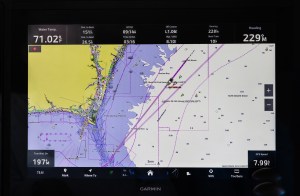
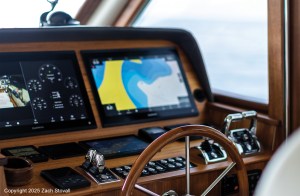
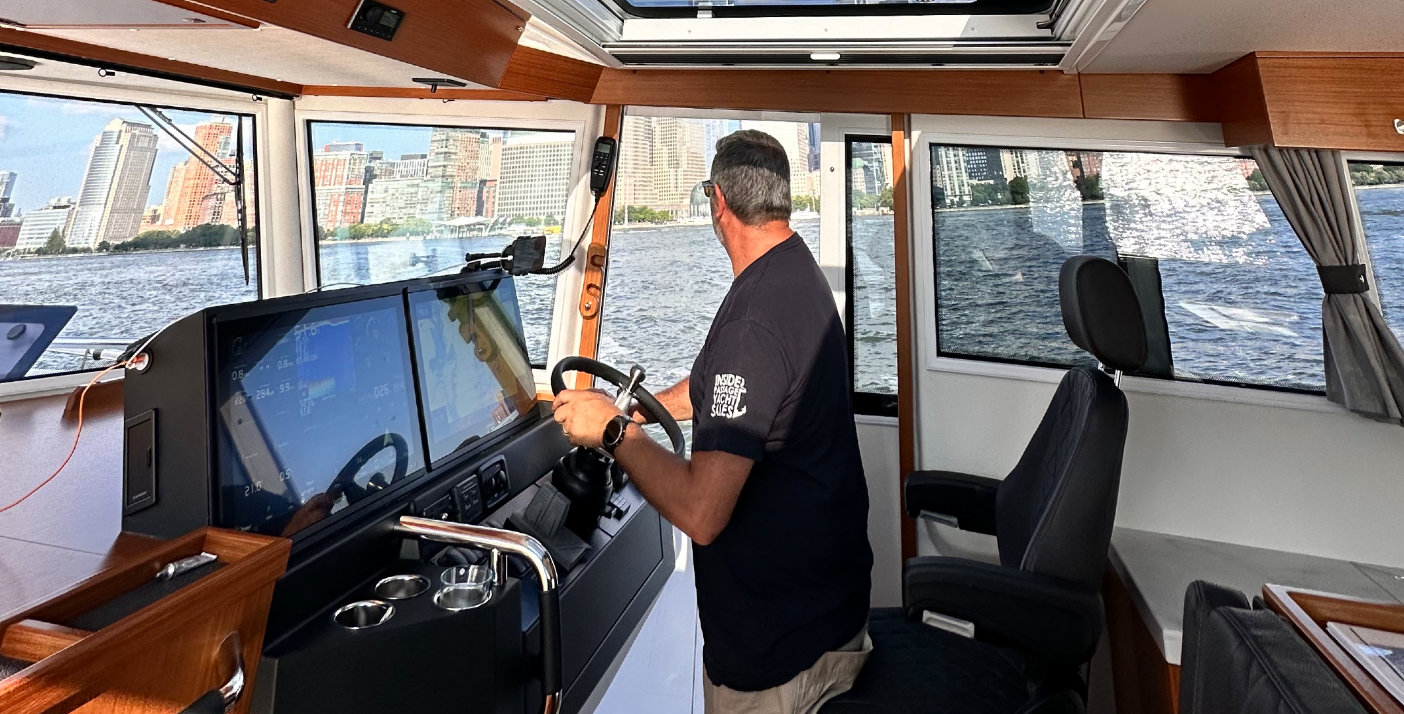
If your electronics allow it, dedicate one display solely to radar. Many modern multifunction displays can show radar and charts side by side, but having them on separate screens, or using radar overlay on your chartplotter, offers extra clarity.
I prefer chartplotters in a north-up orientation. North up adjusts the screen so that true north is always at the top. It’s like looking at a paper chart, steady and predictable.
If you are a route-up navigator, you’re in luck here, because radar should always be in route or heading-up mode. Heading up rotates the display so that your bow always points to the top of the screen. The targets appear on the same relative bearing as you see them out the window, and your radar and chartplotter screens will match. North-up navigators have to perform some mental gymnastics to compare our radar and chartplotters, but you don’t.
Modern radar systems are remarkably smart. In automatic mode, they do a fine job of adjusting gain and filters to give you a clean image. But automatic settings aren’t perfect, and sometimes they filter out weak targets you might want to see. Learning to tune manually puts you in control.
Gain adjusts the sensitivity. If it’s too high, then the screen fills with speckled noise; too low, and small targets vanish. Sea clutter reduces wave reflections close to the boat, and rain clutter filters help you see through precipitation.
Practice adjusting these settings while watching the image change in real time. Once you’re comfortable, you’ll be able to tweak the radar quickly in bad weather to reveal important details.
One of the most effective ways to build radar skills is to make using radar a habit, and even a little fun. While underway in daylight, pick a target on the radar screen, then look outside and try to identify it. Start with easy, obvious targets like buoys or large vessels, and then move to more challenging ones like small boats or distant land features.
Change ranges frequently. Zoom in to examine targets nearby, then zoom out to study a wider area. Be mindful, when in manual mode, you may have to make adjustments to filters or gain when zooming in and out. Compare the shape of a shoreline on radar with what you see on your chartplotter. Learn how islands, headlands and inlets appear in the contrasting color world of radar.
This kind of practice is not just academic. It builds instinct. You’ll learn to recognize the signature of certain objects, like the solid, steady return of a steel navigation buoy versus the weaker, intermittent echo of a fiberglass sailboat.
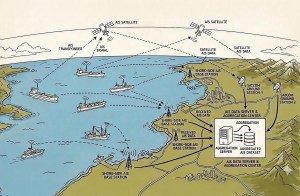
Most cruising boats today are equipped with AIS. This feature makes it easy to identify another vessel by name, while tracking its speed and heading.
To track a non-AIS equipped boat, you likely have the next best thing. Most modern radar sets have MARPA tracking. With MARPA, you can select a target on the radar and have the system calculate its course, speed and relative motion. Watching how that data changes as a vessel moves gives you the same situational awareness AIS provides, without relying on the other boat to be transmitting.
If a boat is anchored, its radar echo will be just as stationary as an aid to navigation. This is when the radar overlay feature comes in handy. Overlay lets you see the radar echo or return overlaid onto your chartplotter screen. If it matches with a known aid to navigation, you’ve gotten confirmation on the target. If it doesn’t, you’re probably looking at a vessel.
The next question to ask is whether the vessel is anchored or moving. If it’s moving, acquiring the target with the MARPA feature comes in handy for avoiding a collision. I find overlay the most useful in daylight hours or in foggy conditions. In crowded harbors, it’s also helpful when stationary navigation lights and boat lights can easily be mistaken for each other. On a chartplotter alone, a symbol might represent a fixed navigation aid, but on the water, that light might be obscured or confused with a vessel’s running light.
Ultimately, using radar in clear weather is about building confidence, not in the equipment, but in your ability to interpret what you see quickly and accurately. The radar unit itself doesn’t make you safer; your skill in reading it does. And skill only comes with repetition.
In an emergency, you won’t be fumbling with settings or struggling to interpret what the screen is showing. You’ll be acting from habit, already knowing which controls to reach for, which ranges to select, and how to prioritize targets.
This article originally appeared in the November/December 2025 issue of Passagemaker magazine.