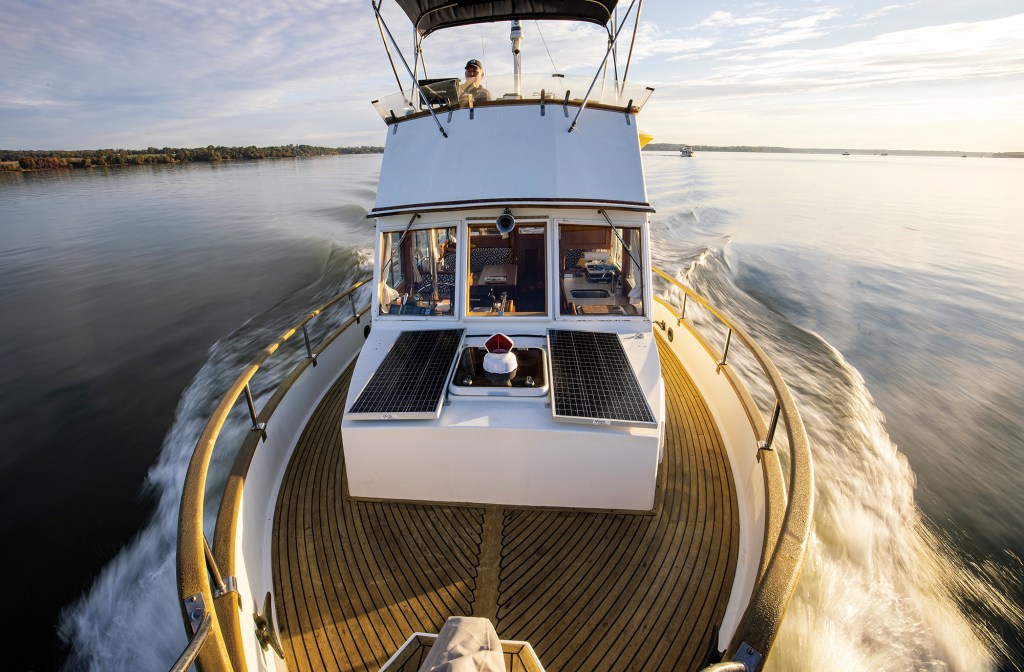
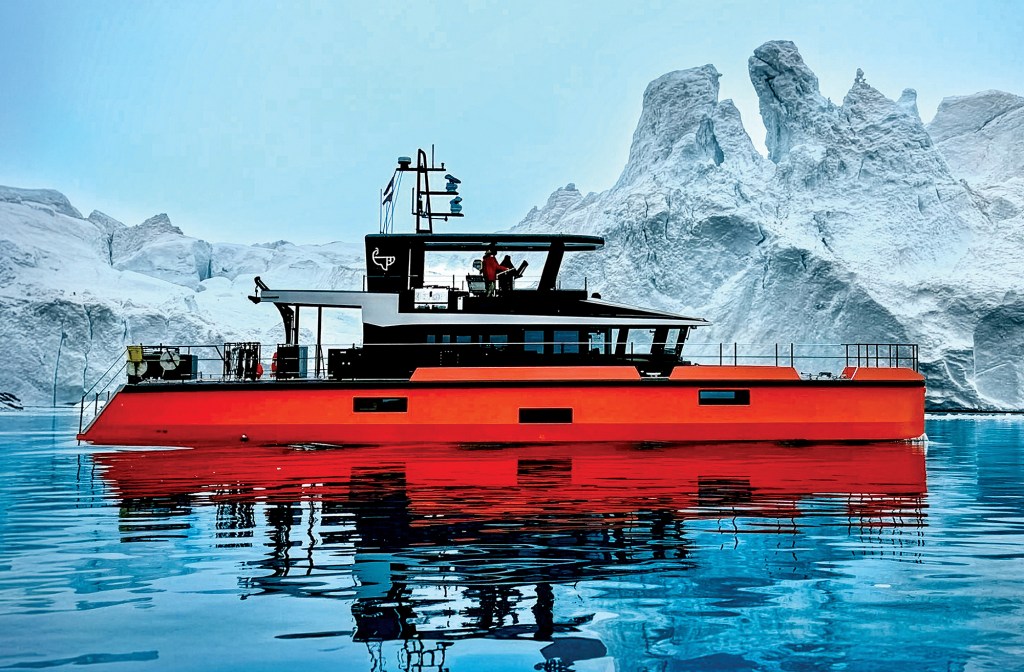
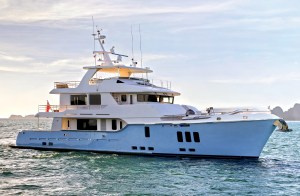
Coastal Craft 420
I thought we were flying. The bottom of the boat was firmly and properly in contact with the sea, but as I swung the wheel

There was a time when a battery charger was almost an afterthoughta gray box with an analog meter that hummed away on the bulkhead, its
Marine batteries, their design, use, and charge/discharge abilities, have been a subject of intense interest within the recreational marine industry for decades. I clearly recall a meeting many years ago, when I worked as a boatyard electrician. I sat in the yard managers office with the manager and one of our long-time customers, a fastidious naval architect who had recently completed a roundtrip passage from New England to Bermuda aboard his 40-foot sloop as part of an organized race. In his hand he had a sheaf of papers which contained neatly written columns recording battery voltages, amperes being used, and the time that each reading was taken, which was roughly hourly, as well as an indication of when and how long the engine was used for charging purposes. He was less than content with the ability of his house battery bank to provide for the modest electrical needs of the vessel. It was equipped, of course, with cabin and navigation lights, communication equipment and radar (the latter only being used occasionally at night), as well as a few other small accessories. Even by the standards of the time, the late 80s, it was an electrically simple boat, yet, the batteries could keep up with its needs.

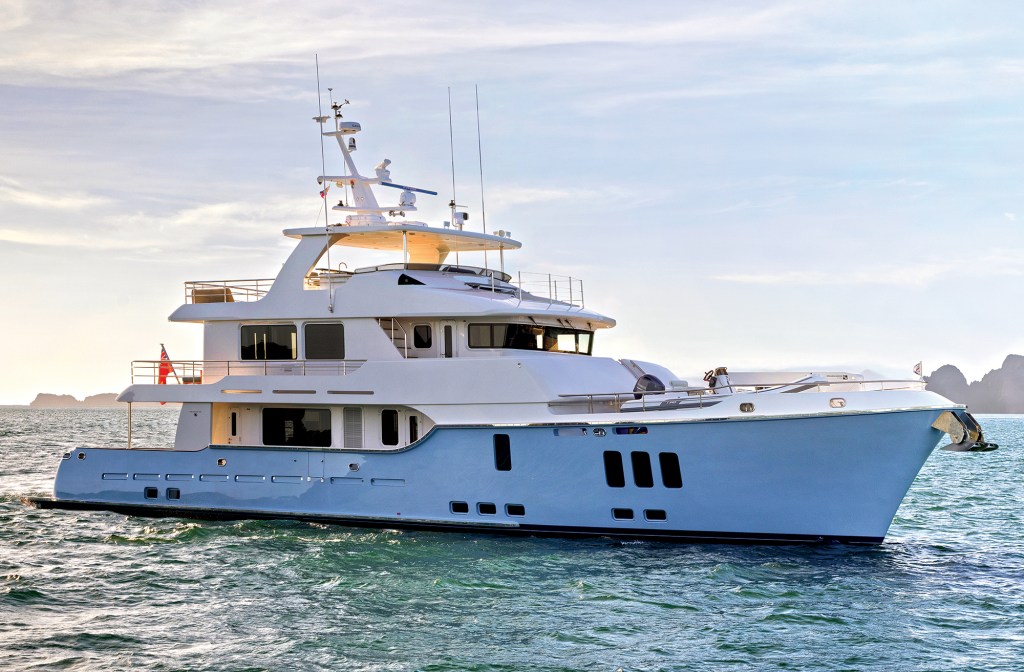
The three-stateroom, semidisplacement model has a range of power options and a low air draft.

A solar-power system on our classic trawler lets us spend time moored or anchored with more than enough juice to meet our energy needs.

America’s Great Loop Cruisers’ Association has been helping boaters complete the ultimate voyage for a quarter century.

The steel-hull Nightfall, designed by William Garden, connects generations of this family through a love of cruising.

Larry Graf, the founder, designer and lead engineer of Aspen Power Catamarans, talks about Aspen’s proa hull designs and adventure cruising on his own creations from the Arctic to the Sea of Cortez.

With her vertical bow, reverse raked windshield and indoor-outdoor living space, the Galeon 430 EXP defies categorization.

It is called a razor because it shaves away unnecessary complexities, providing a simple solution to complicated questions.

Remembering Lifelong Marine Journalist Chris Caswell

A Master of Quiet Cruising

This imposing 55-footer is a comfortable, well-appointed coastal cruiser primed to take on more ambitious journeys.