

Good maintenance is the key to uneventful, trouble-free boating. Knowing a few tricks doesn’t hurt, either.
Years ago, I was a guest on a 147-foot motoryacht on a charter in the Caribbean. Hopping off the yacht’s tender, I followed the steward to my stateroom and made my first stop in the head. Much to my embarrassment, when I flushed, I was greeted with silence. The mate said my head had been problematic on their last charter. He had a quick solution, although it meant removing a marble slab in the companionway to reach the plumbing.
We both had a laugh about my predicament before the other guests arrived. I recalled a time when I was running charters that a similar situation occurred. Fortunately, my head malfunction had been discovered and corrected before my own charter guests had arrived.
Most boats are a compilation of things that can break on a regular basis. A savvy skipper is well aware of his vessel’s systems and stays ahead of the problems. Whether the journey is a destination vacation or delivering a boat to and from my usual haunts between New Jersey and Florida, I am a firm believer in mental and written checklists before tossing off the dock lines and heading out.
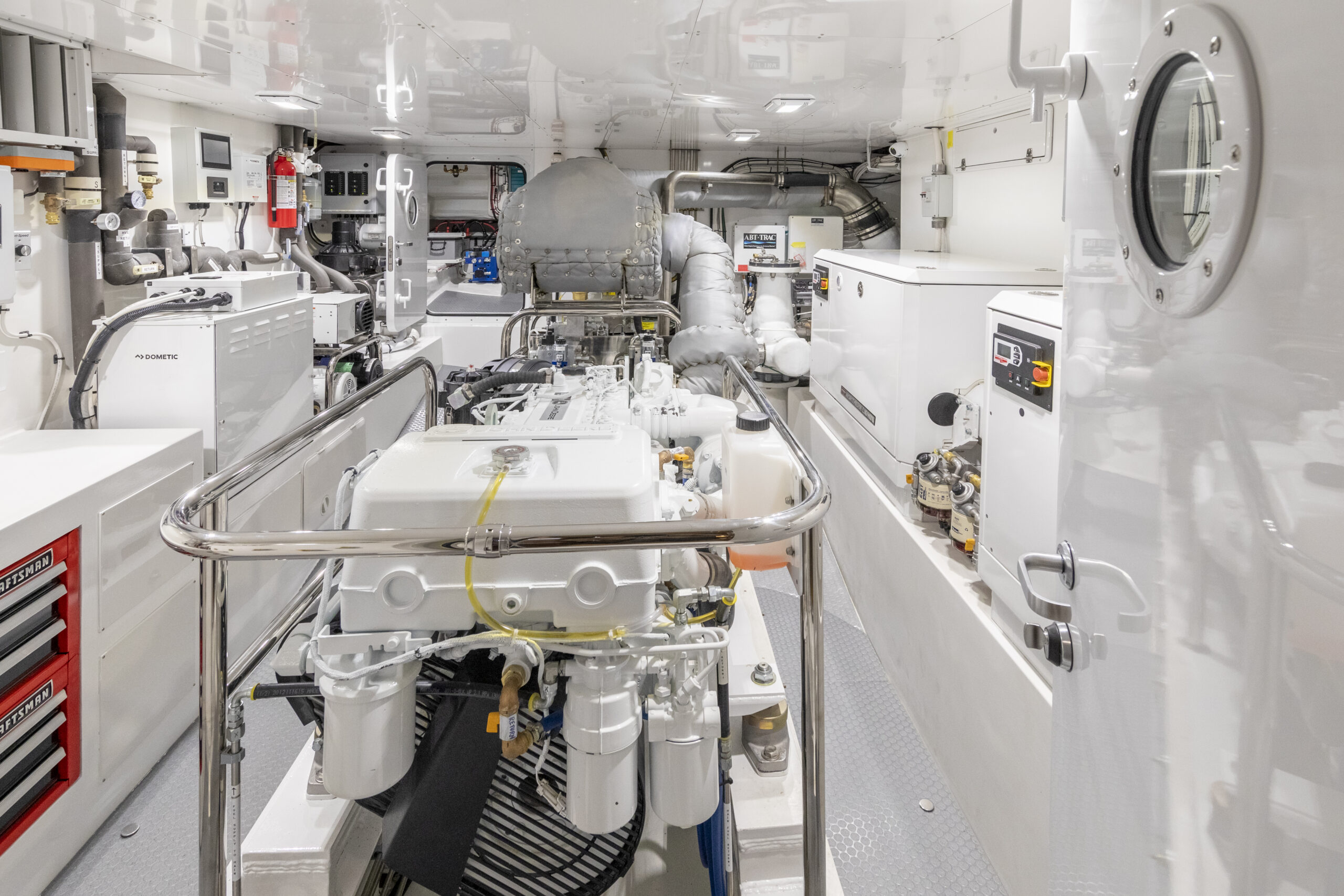
I start with a two-hour, open-water run to let the ponies out of the stable. It’s important to exercise the engines and generator. I want to see the engine turn up to its full rpm, and watch the gauges to ensure that oil and gear pressures, and water temperatures, are in the green. A swift run also tells me about the status of the fuel filters and water separators.
On a cruise where I will be taking on fuel from unfamiliar sources, fuel filters are crucial. I don’t want to lose an engine coming into a strange inlet. Back at the dock, an engine-room and mechanical inspection follows.
Years ago, on a test run, a high-temperature alarm on my starboard engine blared a half-mile from my slip. Once I had the boat secured, I uncovered a bad raw-water pump impeller, which I was able to change easily enough because I had a spare. Once the impellers were swapped, I hustled back to the boatyard to restock my spares with a fresh pair of impellers. I also grabbed an extra impeller for the generator. A good collection of spare parts can make a problem nothing more than an inconvenience.
Still, my best trips up and down the Intracoastal Waterway, as well as ocean passages, have been the ones when I never needed to open my toolbox. That’s why, after the engines and genset pass inspection, I check and clean the raw-water strainers. I also test each bilge pump and float switch, and the high-water alarms. I like to pack the bilge areas beneath the engines and transmissions with new oil-absorbing pads before a long day of running. Similar oil-absorbing cloths should be handy to prevent spillage into the water at the fuel dock.
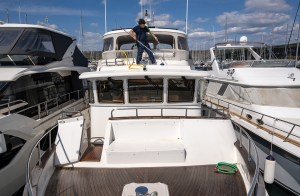
For topside perusals, I start at the bow and check my anchor, rode and chain. The windlass is activated, and its up/down operation is verified. I also make sure it’s equipped with a secure snap and safety line. I keep a smaller “lunch hook” and rode in the lazarette as a backup.
If you have a dinghy on the bow or elsewhere, double check that it is chocked and secure. If it’s outfitted with a cover, be sure the material is tight so it won’t flap loose when the boat is underway.
While forward, confirm that your navigation lights and anchor light are functional. Navigation lights must be displayed from sunset to sunrise, as well as in periods of reduced visibility such as fog or rain. I always check my compass light, too, ever since I discovered mine was dead coming home during a night passage years back.
Similarly, operate all of your navigation electronics, test your VHF radio, and confirm that all safety equipment is in usable condition, from PFDs to fire extinguishers to visual distress signals.
Other electrical issues that will warrant attention concern your shore-power cord. You may need different plugs depending on what the marina offers, but make sure the male inlet plugs are wired properly with waterproof boot covers for weather protection.
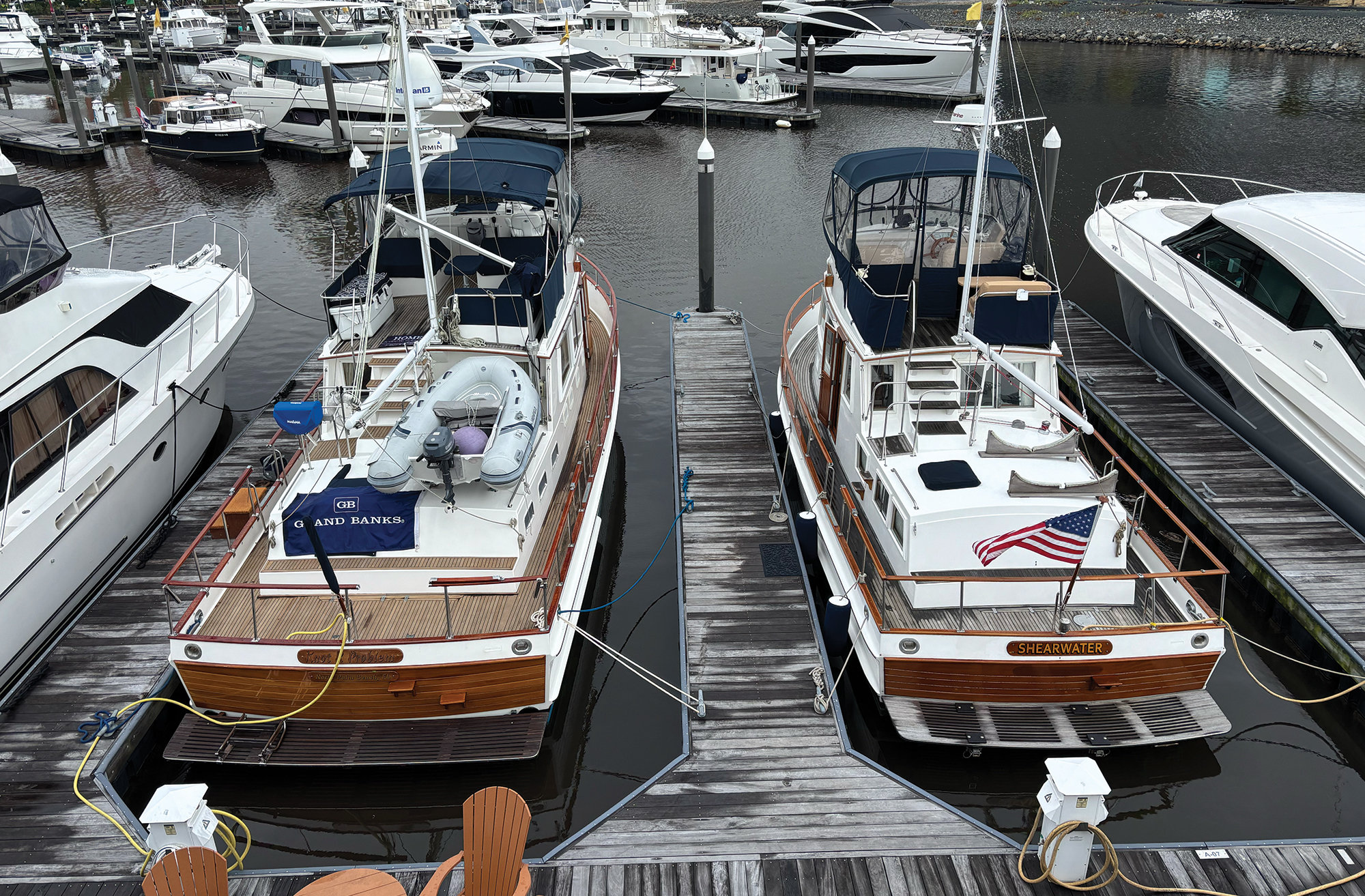
At your home port, you likely have a set of dock lines. You can bring those with you, or make up another set for traveling. I prefer the latter approach because each marina tends to have a different docking arrangement. I want to have two bow, two stern and at least two or three spring lines.
Approach unfamiliar slips with patience, and resolve to avoid confusing your crew. Be aware of other boat traffic, and do not assume anything. Observe local conditions including wind, tide, current and kayak operators. Use fenders to protect your boat from the dock and other boats.
Reverse the process in the morning, and you are ready for another enjoyable day of cruising. A valuable trick that all traveling cruisers should know is how to tie a bowline, so you will always have at least one loop to lasso a piling. Another useful skill comes in handy when the boat in the next slip has placed its loop over yours. Simply take the bitter end of your line, and run it up and through the loop of the other boat. Roll your loop under it and over the piling.
Remember to file a float plan, and to operate your boat at a safe speed for the prevailing conditions. Observe navigation rules, and always post a lookout when underway.
For many boaters, summer is a wonderful time to discover new territories where family memories are made. Get out on the water and enjoy those opportunities.
This article originally appeared in the July/August 2025 issue of Passagemaker magazine.