

Photo: Chris Mottalini
Seeing Clearly
When it comes to washing the boat, vinyl enclosures are the poster child for neglect. These enclosures can cost upward of several thousand dollars. They’re vital team players that deserve more attention than a haphazard spritz of fresh water when you come back to the dock. Regular cleaning and thorough attention will ensure that the total enclosure package—clear panels, surrounding fabric materials, zippers and snaps—will have a long service life.
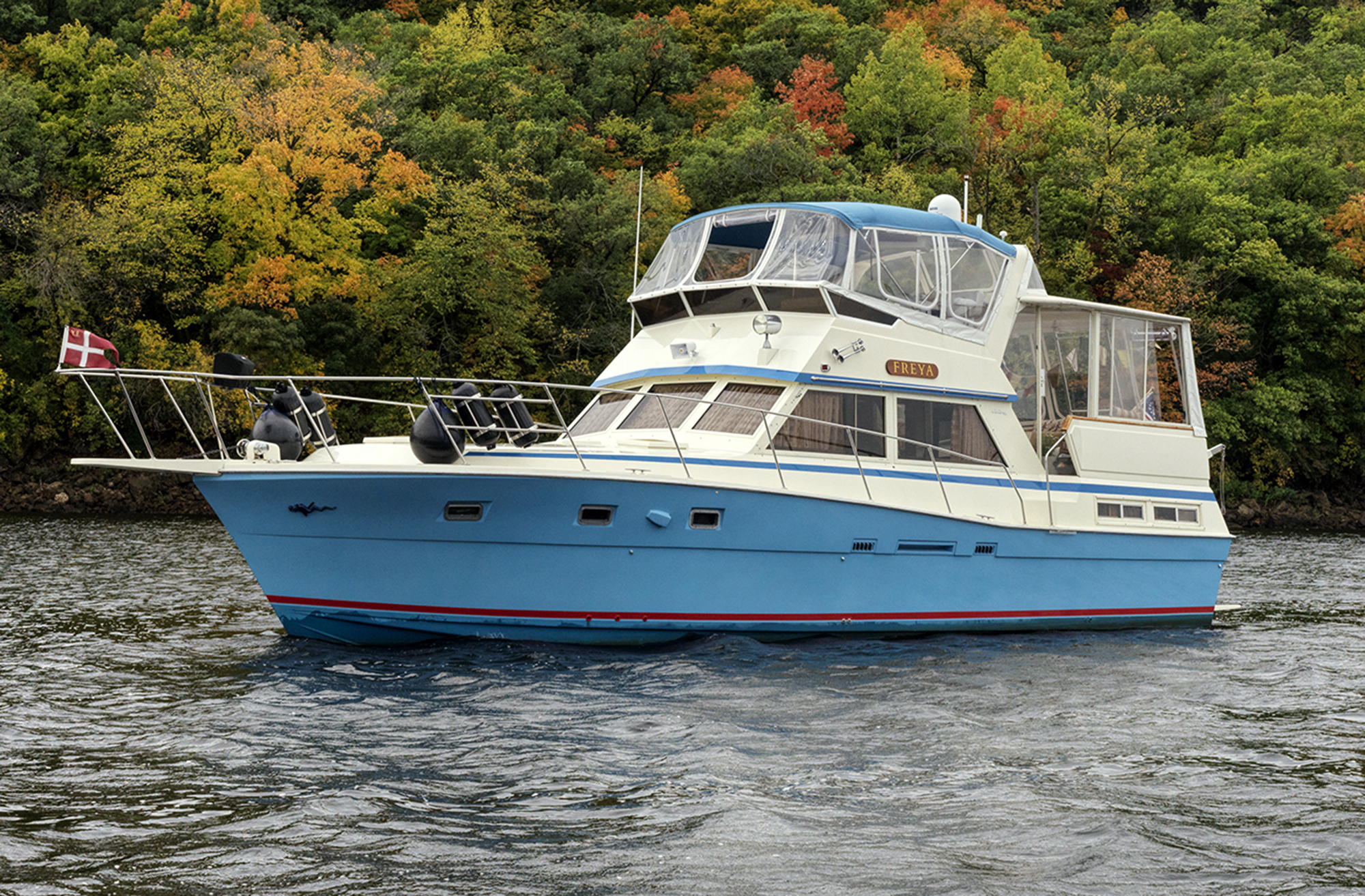
Clear vinyl and optically clear rigid acrylic panels on the flybridge work all season long. They are designed to protect against wind, spray, rain and cold, while providing all-weather visibility for the skipper and guests alike.
When washing my boat, I view the enclosure as being just as vital as hull care and brightwork. I start with a thorough but light spray of fresh water to drench the enclosure and its surrounding areas from top to bottom. Never aim a sharp stream of water at the clear vinyl; that will drive and grind salt across the clear material, leaving scratches after the enclosure dries.
I also prefer to use a separate pail of soapy water filled with suds from a mild phosphate cleaner. I pair that with a dedicated foam or cotton mitt that’s used only for the enclosure. I stow the mitt and bucket on the flybridge so they do not end up being used for cleaning fiberglass or metal fittings. The key is to avoid transferring dirt from one part of the boat to another.
During the rinse cycle, thoroughly flood the enclosure. Bird droppings on the hardtop or Bimini top must also be washed off to prevent running and staining in the rain. Pay special attention to nylon or plastic zippers that connect the panels. Flush them with fresh water on both sides to prevent salt from collecting within the zipper teeth. Even if you never open portions of the enclosure, salt-clogged zippers or fabric stitching should be avoided. Occasionally unzip the panels to ensure the teeth and tracks are free of debris.
If you do open your enclosure regularly for better visibility or to bring in fresh air, avoid leaving the panels rolled up for too long. Moisture can develop inside the rolled-up material, and under summertime heat, this buildup could affect the vinyl’s clarity, or lead to mold and mildew.
To facilitate easier zipping, I added a small loop of cotton cord to each zipper tab. It gives me a safer pulling angle when I’m opening or closing panels. Similarly, a light spray of silicone or even a swipe with lip balm can provide enough slip for the zipper teeth to operate smoothly.
Once the clear panels have been rinsed, a vinyl squeegee or a clean chamois will remove water droplets that would otherwise leave telltale spots behind. As with my soap mitt, I use a special chamois for drying my enclosure, and only for this purpose.
Further maintenance depends on the materials in the panels. Clear vinyl, often called Isinglass, comes in various thicknesses. Thicker grades offer better clarity and generally fit the various shapes of the flybridge better than thinner grades, but the thicker grades are difficult to roll up—especially if the panels are large. On some boats with a fiberglass hardtop, the panels can be designed to lift as a unit and be secured with snaps under the hardtop.
A popular, though more expensive, enclosure material is Strataglass, which has a scratch-resistant coating and can be rolled up. Strataglass also has specific requirements for routine maintenance. Users are told—for good reason—to use IMAR products for cleaning and polishing, to preserve and protect the coating. I have firsthand experience ruining a Strataglass panel with the wrong cleaning product. As with any cleaning exercise aboard the boat, always read the label.
Another enclosure material that’s popular on larger vessels is manufactured with durable and rigid acrylic panels. This material does not roll up. Some boat owners will opt for a Strataglass forward section and the rigid acrylic panels for the sides, particularly when the flybridge is equipped with air conditioning.
Acrylic panels are easy to maintain and require occasional protection with Collinite Insulator Wax No. 845. This is a pure wax with no cleaners, so be sure the panels are clean before applying. Minor scratches can be addressed with Novus 2 Fine Scratch Remover by applying it with a clean cotton or microfiber cloth in a circular fashion and then buffing it off. Follow this step with the No. 845 wax, too.
Deeper scratches can be removed with Novus 3 Heavy Scratch Remover. Apply with back-and-forth strokes at a right angle to the scratched area. Wipe clean and then apply the Novus 2 in a circular motion.
Always use clean, soft cloths on any enclosure material. At all costs, avoid using paper towels, which will leave all sorts of minute scratches that will appear the moment sunlight shines on the clear surfaces.
Enclosures are vital to enjoying your boat in all weather. Spend time maintaining them, and you will be happier when you are away from the dock.
This article originally appeared in the September 2025 issue of Passagemaker magazine.