

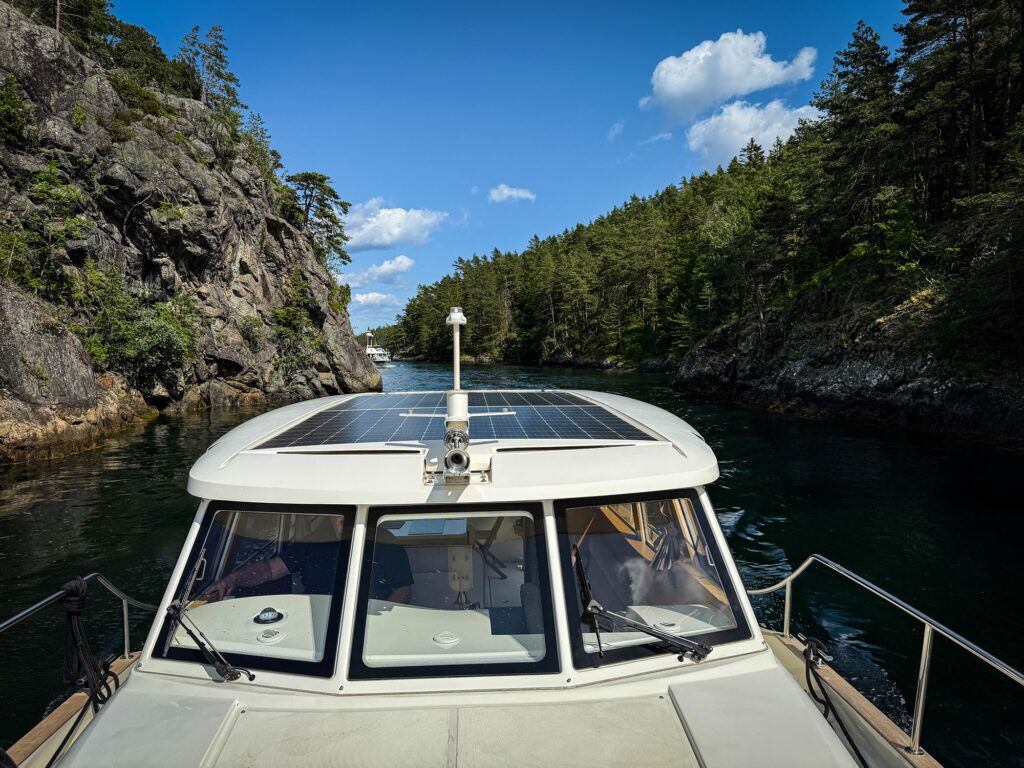
My wife, Grace, and I were on a boat that appeared to be more science fiction than anything I had ever experienced. Still, I was excited. Our plan was to live aboard for more than two weeks, traveling some 235 nautical miles around Norway. Being here was a dream I’d been carrying around for 30 years, ever since I made an amphibious landing as a young U.S. Marine Corps officer on the beaches of Stavanger, on Norway’s southwest coast. I swore then that I would return and captain my own boat up into the fjords.
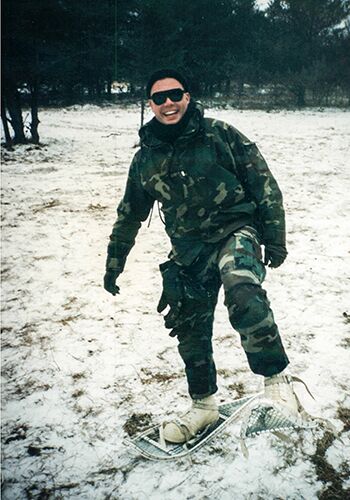
When you’re 22 years old, you dream of the impossible. When you’re 55, you find the ramsalt to do it.
In Norway, ramsalt means an old salty sailor. It also has a connotation of steadfastness and reliability. You need all three to cruise an itinerary like the one we had planned in Norway, which has a long history tied to the sea as well as raw, natural beauty.
The Telemark region is best known for the Telemark Canal, an approximately 62-nautical-mile waterway that links the sea to the interior. Canal Boats Telemark rents 33- to 39-foot electric trawlers. Because the boats are all electric, you don’t need a license, but you do need boating experience and approximately $5,500 a week.
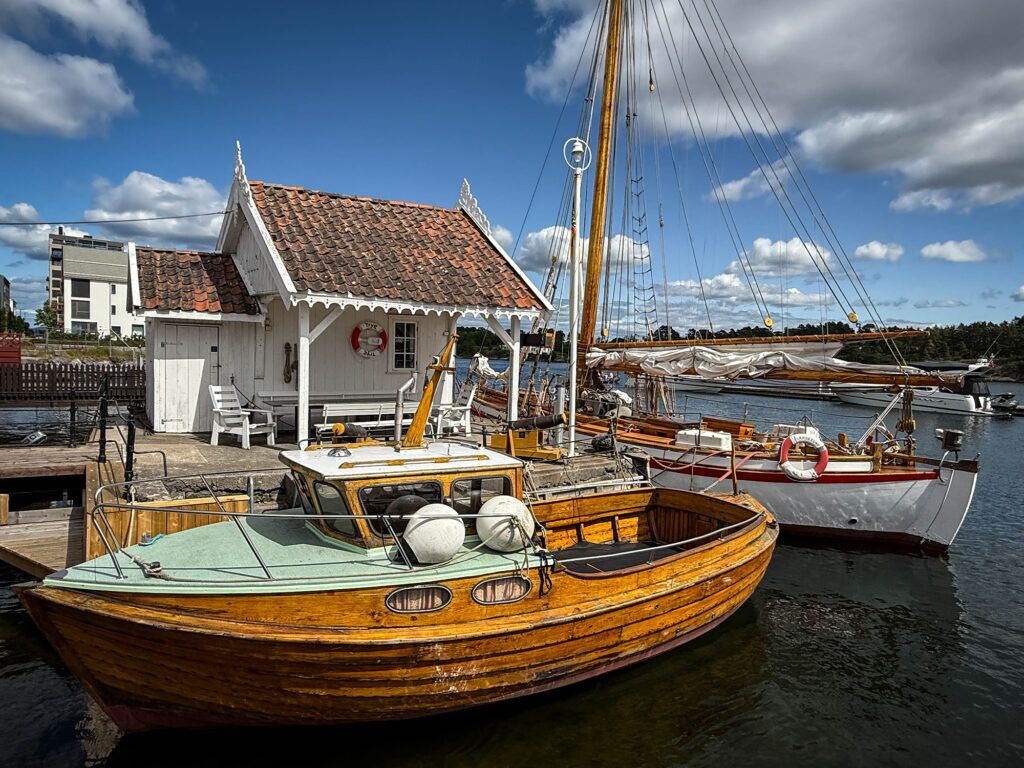
The company promised that the only real limit to our cruising ambitions would be the ability to recharge the electric drive system. We could harbor-hop among the coastal villages, motor offshore on the North Sea or head up a fjord and brave the Telemark Canal.
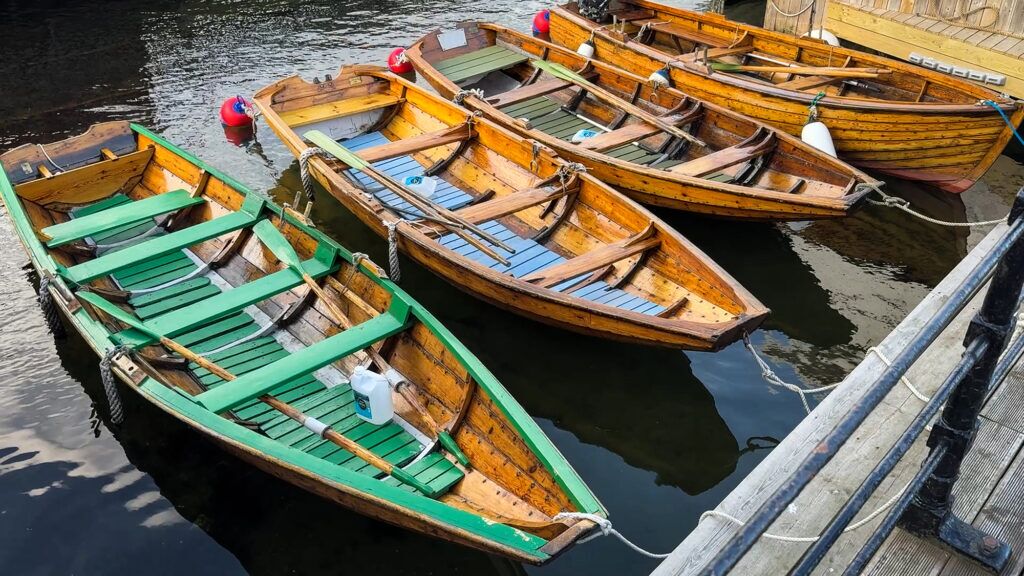
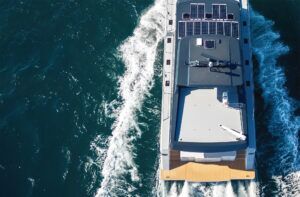
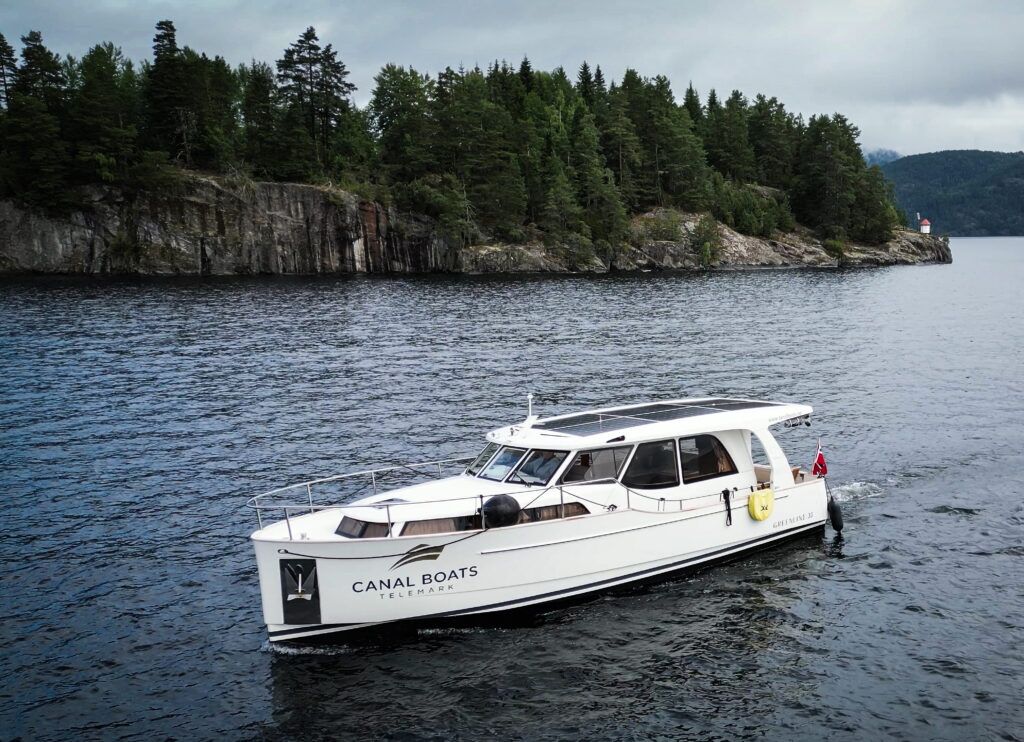
Our boat was a Greenline 33, built on what they call a super displacement hull. It has a solar array to charge the house batteries, and water tankage appropriate for cruising. The propulsion system is made by Torqeedo with its 50-kW Deep Blue motor, the equivalent of a 70-hp engine. Two 40-kW BMW batteries power the drive system to a maximum speed of 10 knots. With a full charge, traveling at a steady 5.5 knots, range is approximately 53 nm.
The more than 1,400 watts of solar charging up on the hardtop would only run the house battery system. To recharge the electric drive, we would need to plug into shore power daily.
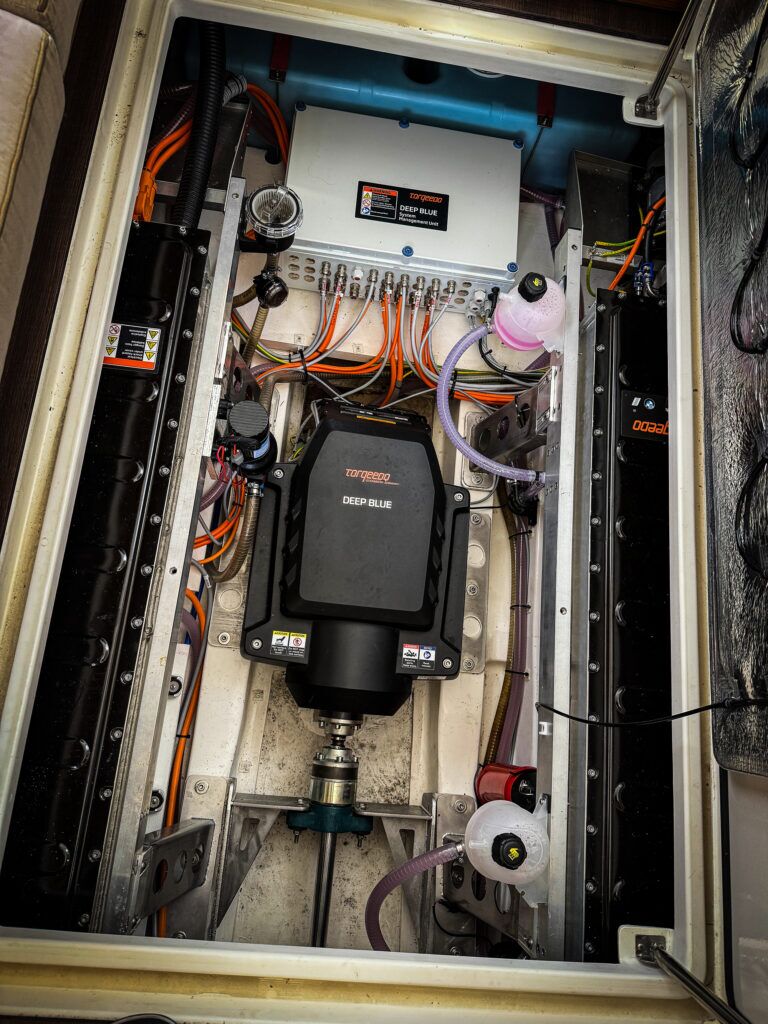
Initially, I was skeptical, but by the end of the trip, I was a firm believer in the technology. We charged the boat from regular shore power (230 volts) overnight, and we were fully charged when we awoke. Our cruising experience was silent and plug-and-play. Twice, we took advantage of the seven fast charging stations in the Telemark region. Our charging times dropped to just two or three hours.
From the charter base in Porsgrunn, we headed south into the Langesundsfjord. Our first day’s run was more than 25 nm to the coastal port of Kragerø. This part of the coastline is littered with archipelagos. The Simrad chartplotter and autopilot made snaking between the granite islands almost an afterthought. The electric drive churned our wake in quietude. At cruising speed, it generated less than 70 decibels in the cabin.
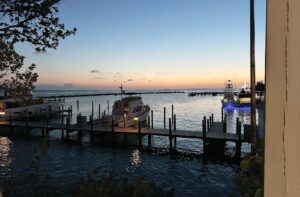
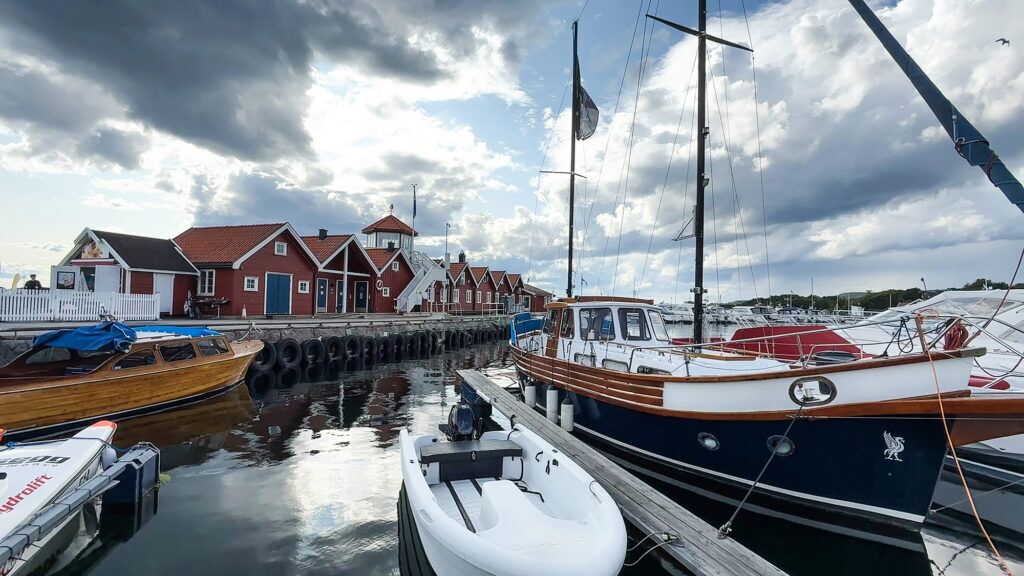
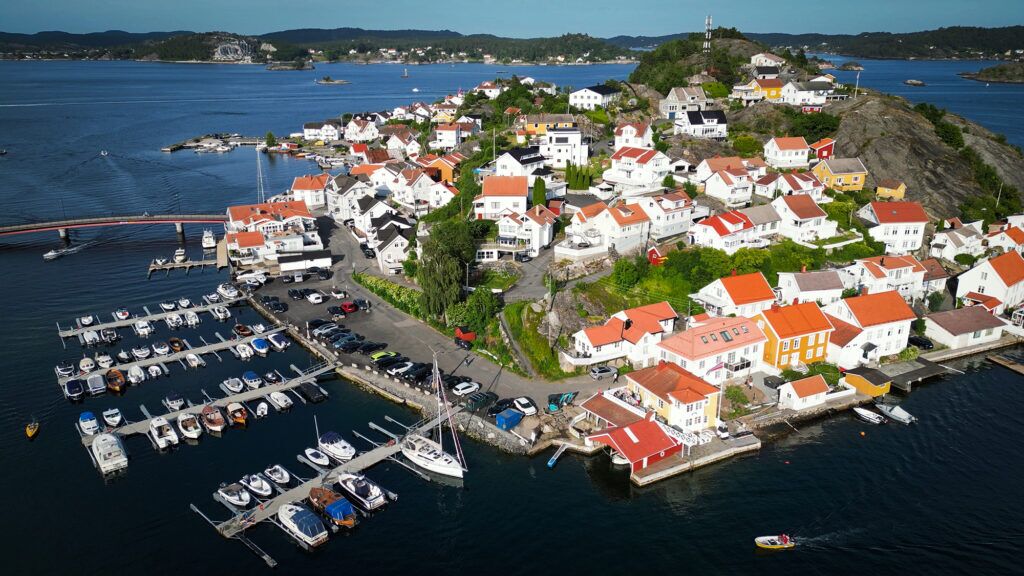
Kragerø is one of a dozen coastal ports in this region that date back to the Age of Sail. Like all the towns, Kragerø showcased a variety of restaurants and bars, and of course, a grocery store for provisioning.
There are gjestehavns (public marinas) in every port with water, electricity and bathrooms. Summer days at this latitude have more than 20 hours of daylight. Coastal villages become a playground for locals and tourists alike. The significant boating infrastructure means you don’t need reservations; you can harbor hop on a whim. It costs $10 to $50 per night to stay at a marina.
Of course, you can also anchor out and stay on the hook for a couple days, as long as the house battery bank will support it. By the fourth day, I was eager to challenge the electric drive’s capabilities.
We headed out onto the Skagerrak, a strait of the North Sea. Our plan was to travel just 10 nm southwest to the port town of Risør, but a late start and increasing headwinds sent us bashing to weather just 2 miles offshore. Rain was due in the next 24 hours.
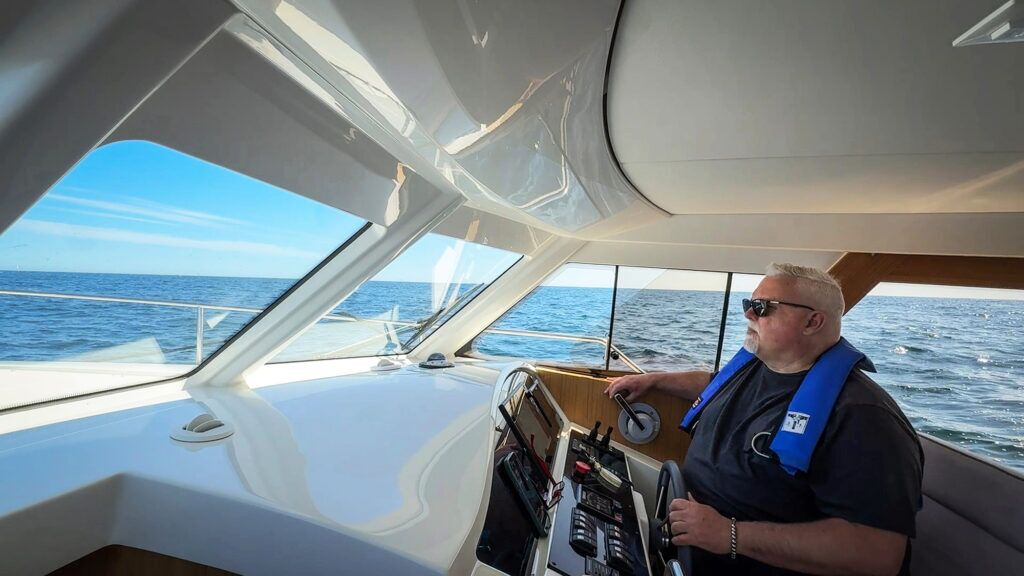
The B&G and Torqeedo monitors revealed important lessons about the electric drive. To go faster, you burn more electricity. To maintain course against wind and current, you burn more electricity. To beat the unpleasantness of going 5.5 knots in a 6-foot swell, you burn more electricity. All the while, the more electricity you burn, the shorter your range.
After two hours, I quit. This was long before my wife, the boat or the electric drive would have given up. A prudent mariner adapts to the weather, but this was a vacation, and I had long since given up trying to prove anything.
While rain blew through the Skagerrak on the sixth day, we sailed back up the fjord to the village of Helgeroa. We dined on steak and eggs cooked in the galley, and we spent a day doing laundry after Grace was pitched off the bobbing dock and took a swim with the jellyfish.
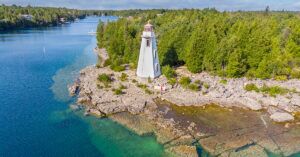
Eight days into our journey, we braved the Skagerrak again, this time scooting along the coastline to the port town of Langesund. Of all the little towns we visited, Langesund was probably my favorite. We hiked to Tangen Fort, a World War II-era fortress on the rocky shoreline, now a geological and nature reserve. By day, we sampled local cheeses and marveled at the maritime museum run by volunteers of the Langesundsfjord Coastal Association. At night, we slept soundly under the vigil of the Langøytangen Lighthouse.
On its own, our trip around the southern coast of Norway would have stood as a fantastic introduction to the Telemark region. But this trip was only halfway done. We were determined to trek more than 60 miles north, up the fjord, climbing 236 feet in elevation through dozens of locks in the Telemark Canal.
We wanted to see Norway’s raw, remote interior. It would be a real test of ramsalt.
This article originally appeared in the November/December 2025 issue of Passagemaker magazine.