

Story by Michael MacLeod, as told to Chris Dixon
Photos by Michael MacLeod
People spend years preparing to do the Great Loop. They search for a boat that’s just right. They outfit that boat just so. They plan and organize and provision every possible thing they might need before they cast off their lines and head out.
I, on the other hand, started my first cruise around the Great Loop without even knowing what it was. I didn’t know how complicated it was going to be, or how many things might go wrong out there on my 22-foot C-Dory with a 90-hp Yamaha engine. Then again, I knew very few people in America, so I had no real reason to slow down or stop. I just kept going and completed the Loop in around four months.
I get my spirit of adventure from my mother. My father was a Scottish-British diplomat who met her in Tokyo at the end of World War II. They had me in Bogotá, Colombia, and then we lived in Turkey, Austria, Denver, Los Angeles, Hawaii, Ethiopia, Mozambique, Angola and France—after which my father retired and promptly died of smoking too many duty-free cigarettes. My mother then moved to Sarasota, Fla., bought herself a small sailboat and married a guy who had helped her learn how to sail. They explored all over Florida and the Bahamas while I worked as an impresario who hires and conducts orchestras.
But the explorer instinct was always in me, too. In the mid-1980s, I pedaled a bicycle all the way from London to the Outer Hebrides. I have climbed the tallest mountain in Britain. I’ve climbed Fujiyama in Japan. I climbed Kilimanjaro, too, five days up and three days down.
I got my first boat after moving to Cooperstown, N.Y., which has a 9-mile lake. I ran the summer festival, Glimmerglass Opera, and thought I should have a small boat to entertain conductors, singers, directors and potential sponsors. I used to take the sponsors out into the middle of the lake and ask, in jest: “Would you like to get back to the mainland?” On one occasion, I actually got $100,000 out of a couple from Boston.
The 22-foot C-Dory appealed to me because it’s made by Northwest Marine Industries near Seattle—which means the boat can handle weather. There’s a little cabin up front, a small galley with a fridge and a Porta Potti. You can sleep in the V-berth. It’s good for one person, maybe two, but with no heat or air conditioning.
After my 5-year stint in Cooperstown, I trailered the boat to Albany, and took it down the Hudson River, around Manhattan and past the Statue of Liberty. In 2009, I trailered the boat to the uppermost navigable part of the Mississippi River, near Minneapolis, and then headed south all the way to New Orleans.
On the way down, just south of St. Louis, there’s a marina called Hoppies. This wonderful woman who runs it asked me if I was going down the lower Mississippi or down the parallel waterway with locks and marinas en route to Mobile, Ala. She explained that the lower Mississippi flows even faster the farther south you go, so I chose the Tennessee-Tombigbee Waterway. Then I was determined to get to New Orleans. This was in 2009, and I had only one form of navigation: a handheld car GPS that kept saying, “Recalculating. Recalculating.” When I got to Mobile, I asked how to get to New Orleans, and they said I should go out to Marker 12, turn right and then put the boat due west, and stick to that. I did.
My first time around the Loop included limited creature comforts. I had a small electric heater that, with shore power, I could plug in to keep me warm at night in some of the colder places. My Wallas cooker/heater ran off diesel or kerosene from a little tank underneath the counter. Aft, I had a second wheel and throttle, so I could steer from outside. I had a cleat put in the middle of the boat that I could reach from the outside wheel on the starboard side for easier docking.
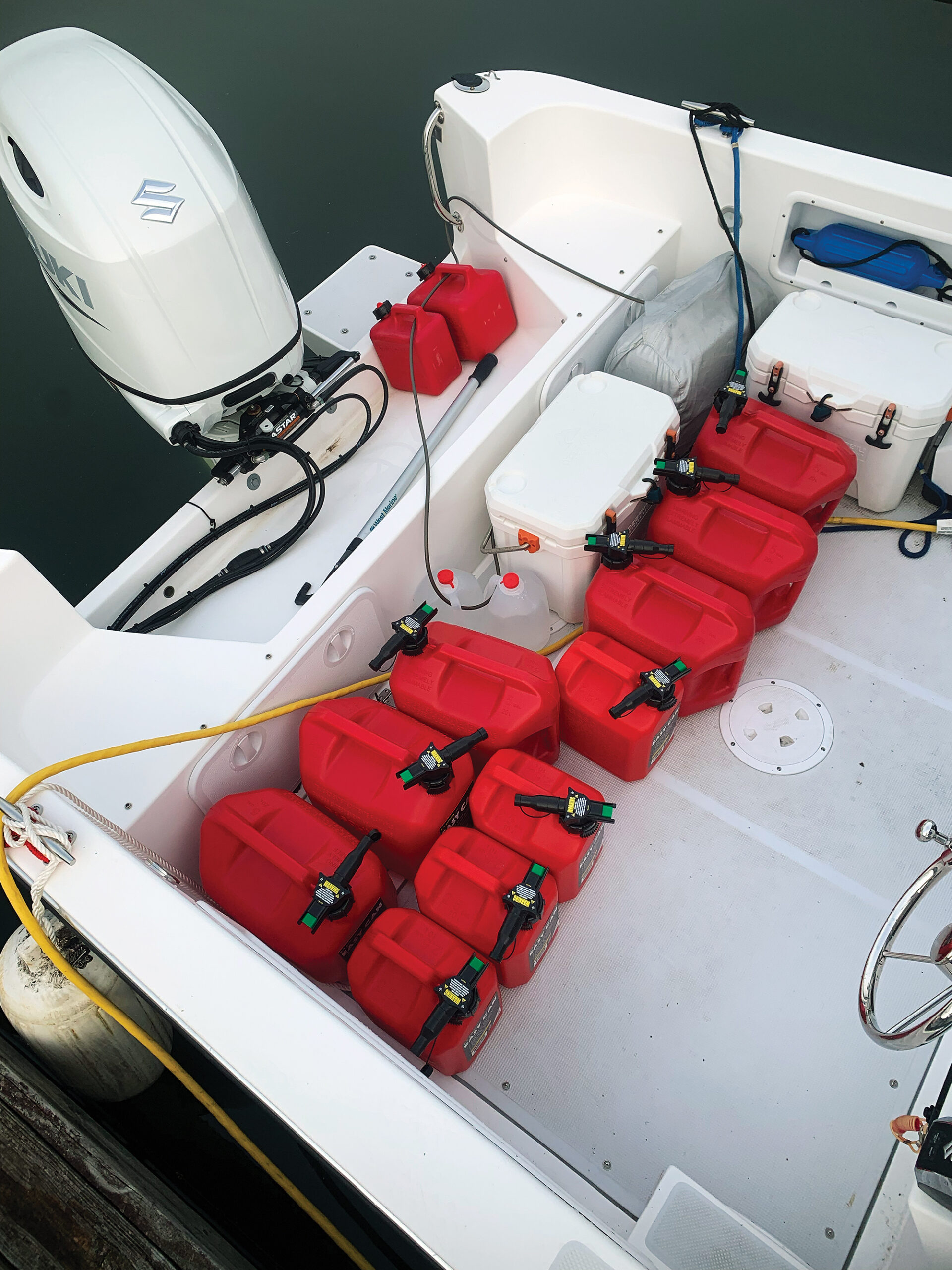
I also installed a swim ladder so I could get in and out of the boat without having to haul myself over the side. Ice boxes kept my food cold. I had more fenders than ice boxes, though, because when you’re doing lots of locks, you need lots of fenders. People don’t realize how much space fenders take up. Some marinas had courtesy cars, which I’d use for shopping and errands. A couple times, I walked 2 or 3 miles, but being an avid golfer, I just pretended I was playing a round. Then I’d Uber back with the groceries. I did eventually get a rooftop air conditioner, which was heavy, ugly and noisy. I didn’t like it.
Small boats do have their advantages, though. The bigger your boat, the farther ahead you have to plan. In a small boat, marinas will find a spot for you. I never booked one ahead of time, so I didn’t have to race the weather. And I could duck and dive in a way that you can’t in a larger boat.
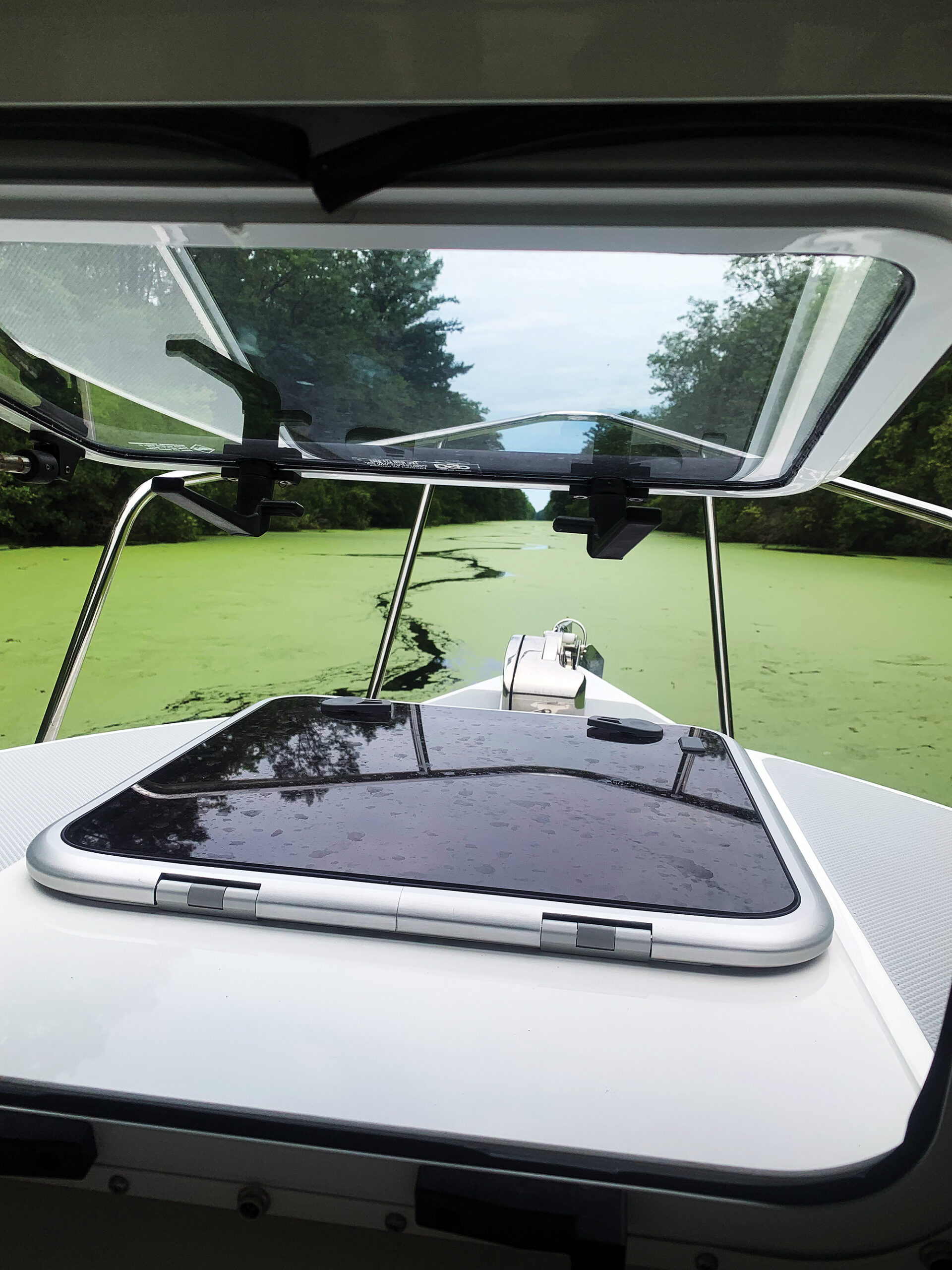
On my first Loop cruise, I had two smartphone apps: Windy and Navionics. I especially like Navionics because it has dock-to-dock guidance. Point where you want to go, and it’ll give you a line to follow that suits your boat’s capabilities. I have no idea how I would have managed without Navionics.
I did have stress. If you’re cruising solo, anchoring is stressful. Getting a decent night’s sleep is problematic. The first night I anchored on that first Loop cruise, the water was too shallow and it was tidal, with low tide at about midnight. The boat was basically on the ground. I also once found myself on the Illinois River too far from any marina, so I had to anchor. These huge barges go by 24/7. I figured that if there was a sharp bend, they’d have to swing wide to get around the bend, so I anchored in a sharp bend. Every half hour or so, the most powerful lights in the world zapped onto me. It’s difficult to sleep with that going on.
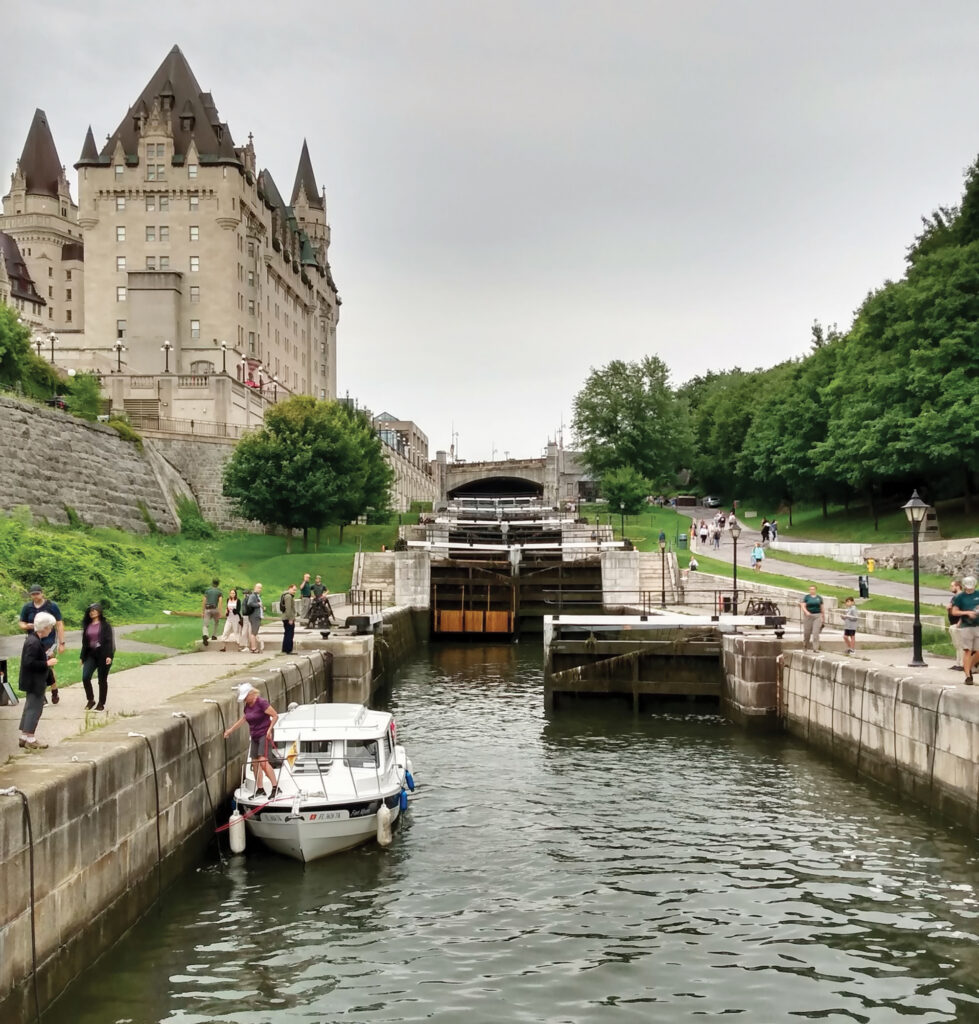
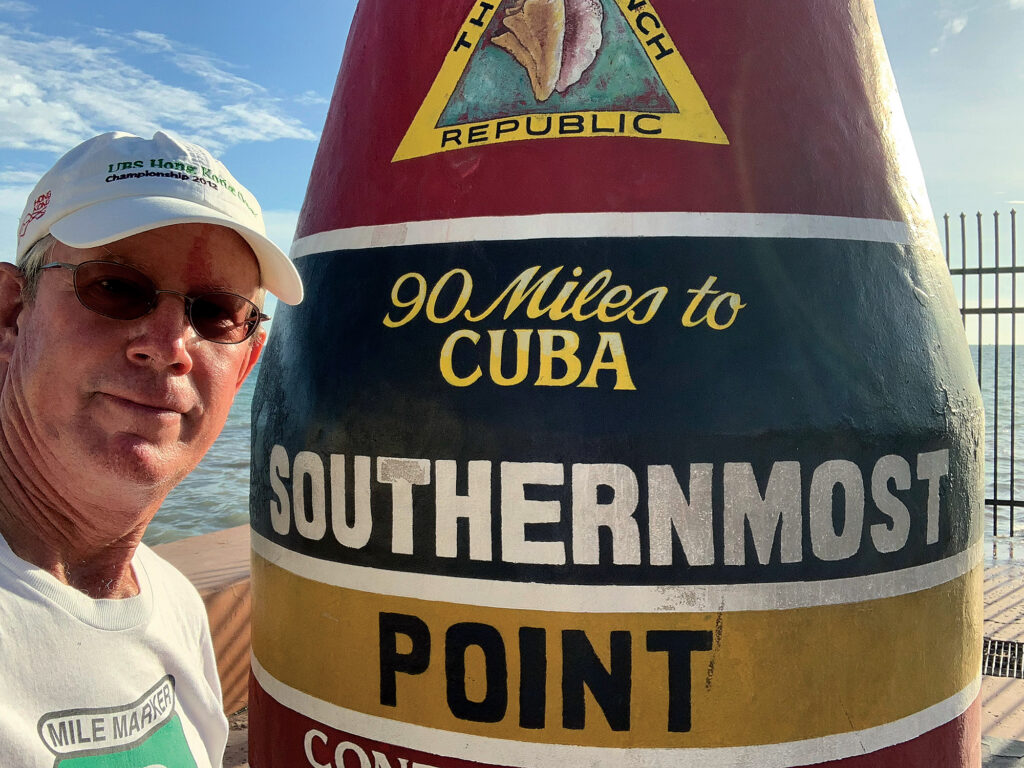
All of that happened before 2020 and the pandemic, when I decided to head out on that boat again, to get away from all the chaos on land. Having done the Loop once, I had no qualms about cruising from my home in Fort Myers, Florida, all the way up the East Coast to the Canadian border. But that country wouldn’t let me (or most anybody else) in, so I instead cruised the whole of the Erie Canal, went to the Thousand Islands, and then down to Key West. From a mileage point of view, that was equal to doing the Great Loop.
Which is one reason why I figured I might as well do the actual Loop again—this time in a clockwise direction, and not on my own.
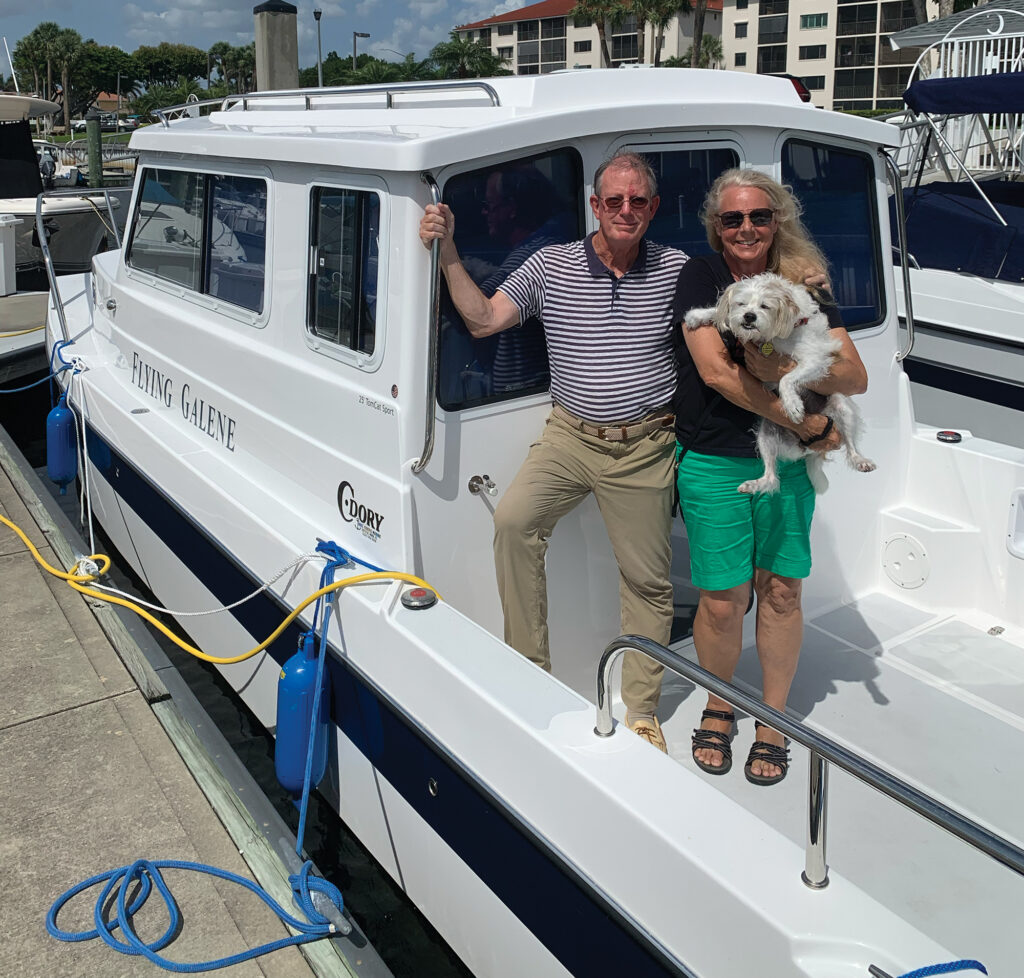
A woman named Linda came into my life in Fort Myers. The 22 doesn’t have a shower or a plumbed-in toilet, so I sold it and got a 25-foot C-Dory with a 200-hp Suzuki, a shower, a proper toilet and a marine air conditioner. We had a wonderful time. But Linda came with a lovely dog called Wookie who added some challenges.
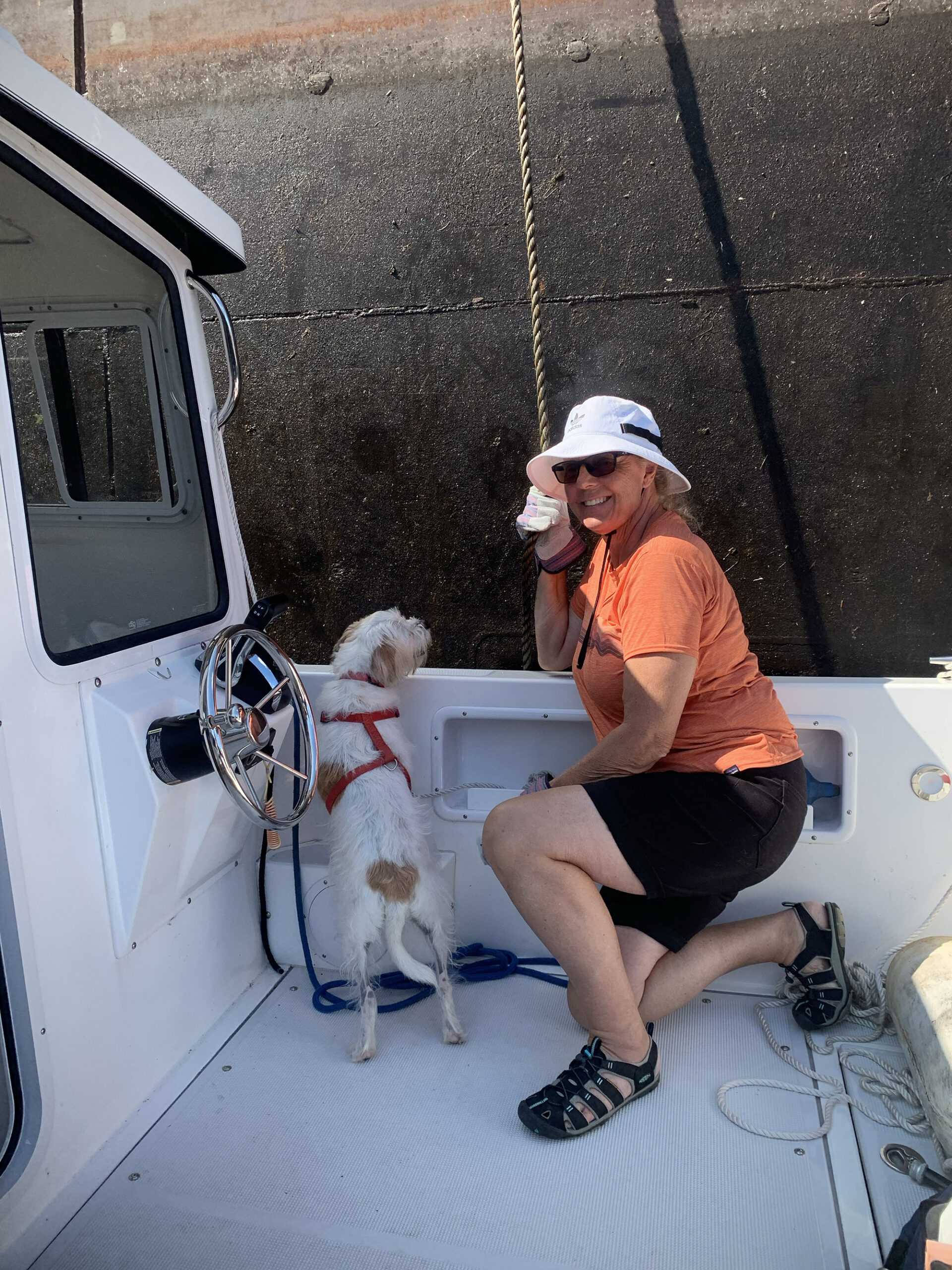
For instance, there was that day at the lock. Now, I did 179 locks. And in almost all of them, you tie up or grab lines on the starboard side. Well, we got to a lock on the Rideau Canal going due north to Ottawa, and there was no space on the starboard side to wait, just a pile of rocks. Portside was a small floating dock. So, I swung the boat around because my fenders were to starboard. But now I was facing away from the lock. The dockmaster said: “You need to be pointed toward the lock, so rearrange your fenders.” The boat was in neutral, tied to the dock. Linda and I were on the dock rearranging the fenders when Wookie jumped on the throttle, putting the boat in full speed forward.
Our bow line broke. The bow swung away from the dock. I tried to grab the boat with my right hand. The boat won. The stern line, fortunately, held. I dived onto the boat and killed the engine by pulling the emergency cord. I then killed the dog. (Just kidding.)
There was no damage, other than to my right shoulder—two rotator cuff surgery repairs and a bicep tendon that had to be reattached back in Fort Myers.
On this Loop trip, the Mississippi River was moving at 5.2 mph. The thing to watch for is logs and debris, and if you’re cruising upstream, all the debris is coming at you faster. On the other hand, our small boat had an advantage with the Mississippi’s whirlpools. The deeper your hull, the more they affect it. They can even spin you around. But in a small boat, you can zip along the top.
One of the things I like about the Great Loop is that you do make friends. During this second Loop with Linda, I cruised much slower; I took maybe six months. I savored the places and stayed longer. Going from Mackinac Island to the Wisconsin side of Lake Michigan was windy, but I’d made friends with a lovely couple from Wisconsin who had a 45-foot Sea Ray. I tucked in behind them, and they took the brunt of the waves and the swell.
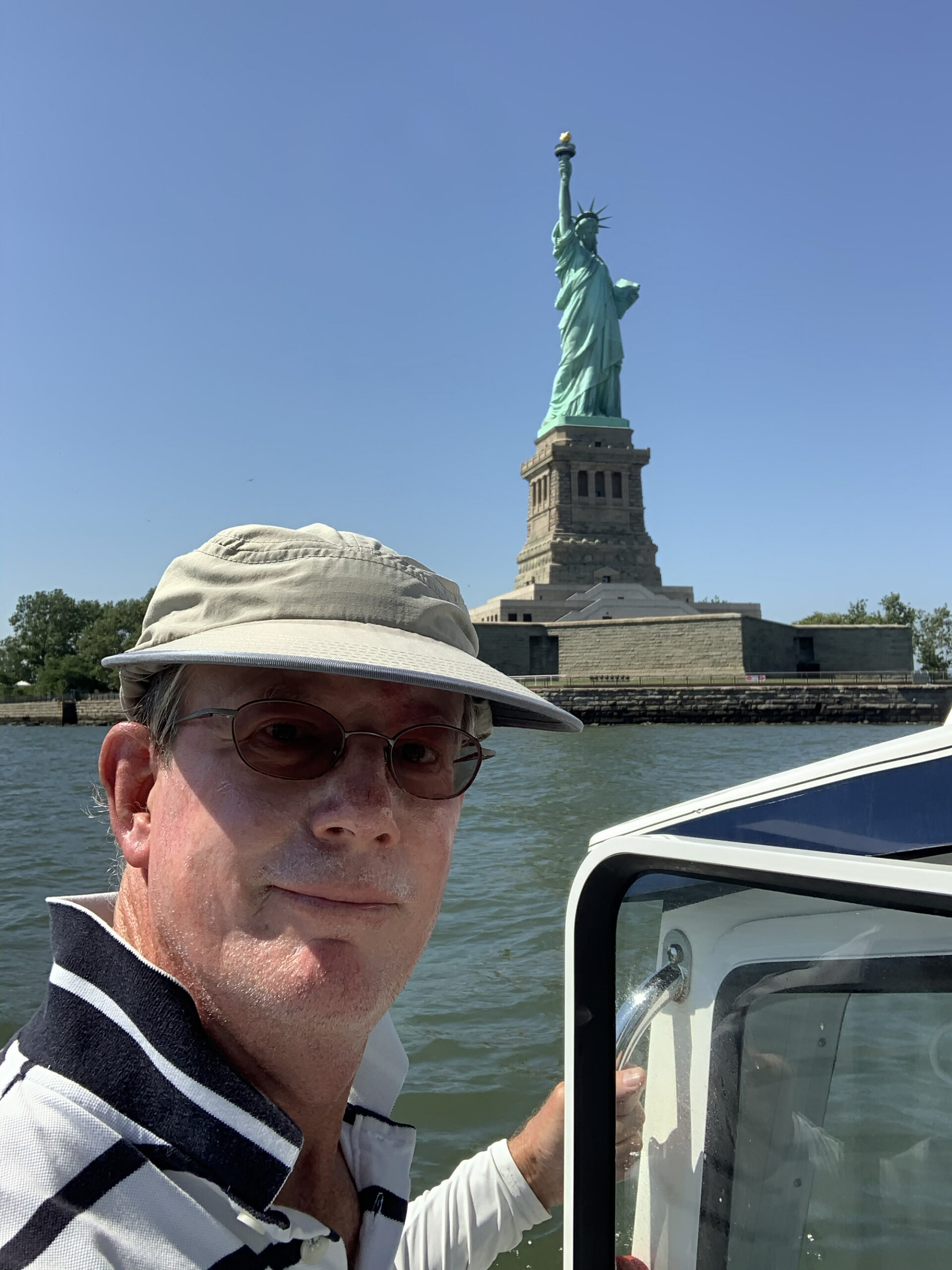
One of the most interesting friendships I made was with a couple who have done the Great Loop 34 times. And there were occasions when I anchored and it was the thrill of a lifetime, like at the Statue of Liberty. I found a spot out of the way of the Staten Island Ferry, and I woke up just in time for the sunrise. I’ve got this fantastic video panning from the Manhattan skyline to the Statue of Liberty. Just a glorious moment.
I had absolutely no mechanical issues, other than once hitting a log. Fortunately, it only bent the prop, but didn’t stop the boat from functioning. I had a spare.
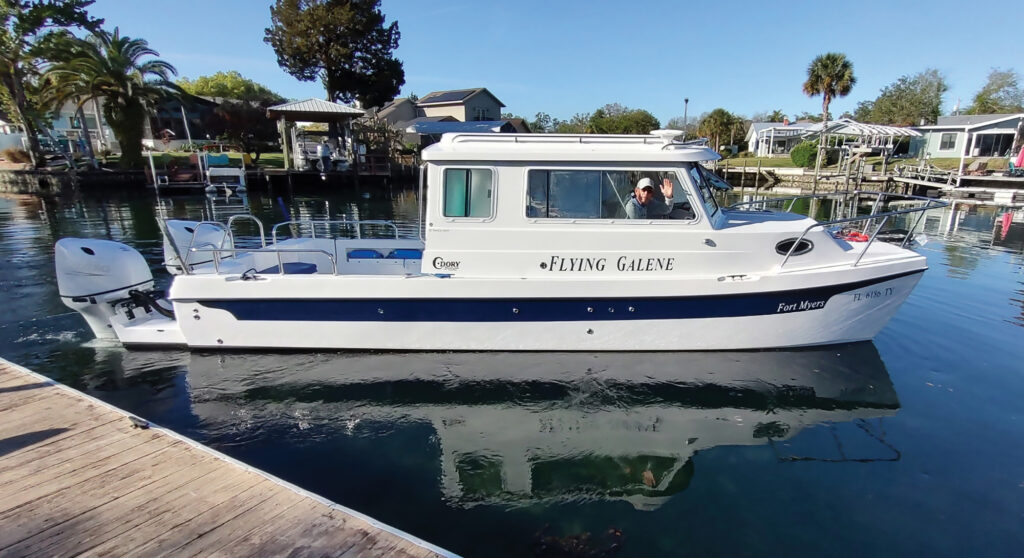
Most recently, I bought a 25-foot C-Dory again, but this one is a catamaran called a TomCat. It has two engines, so I can steer with the wheel or by putting one engine forward and the other in reverse. And there’s a joystick for easier docking. Wookie the dog should be able to steer using her nose on that joystick.
I find that this TomCat also offers a smoother ride because the hulls cut through the smaller waves. And the sleeping area is larger than a queen-size bed. The boat has twin Suzuki 140s, which I find are less power than some people would recommend, but I like them because they’re lighter and the propeller shaft is shorter, which means that without tilting, I can go in shallower water. I don’t intend to do big, open-water stuff anymore. I’ve gone for quieter and less expensive, because I want to use less fuel.
I’m really looking forward to taking the TomCat up into Canada, and I may well take it up the East Coast, doing part of the cruise with Linda and Wookie. Who knows where I’ll go after that? After all, I’m an adventurer.
This article originally appeared in the September 2025 issue of Passagemaker magazine.