

I had never seen a shark attack before that day in Elbow Cay. I’d seen plenty of sharks lumbering about, chasing bait or darting at rays with unimaginable speed from the edges of darker water. I’d even reeled in more than my share of half-eaten fish. Never an attack on a person, though.
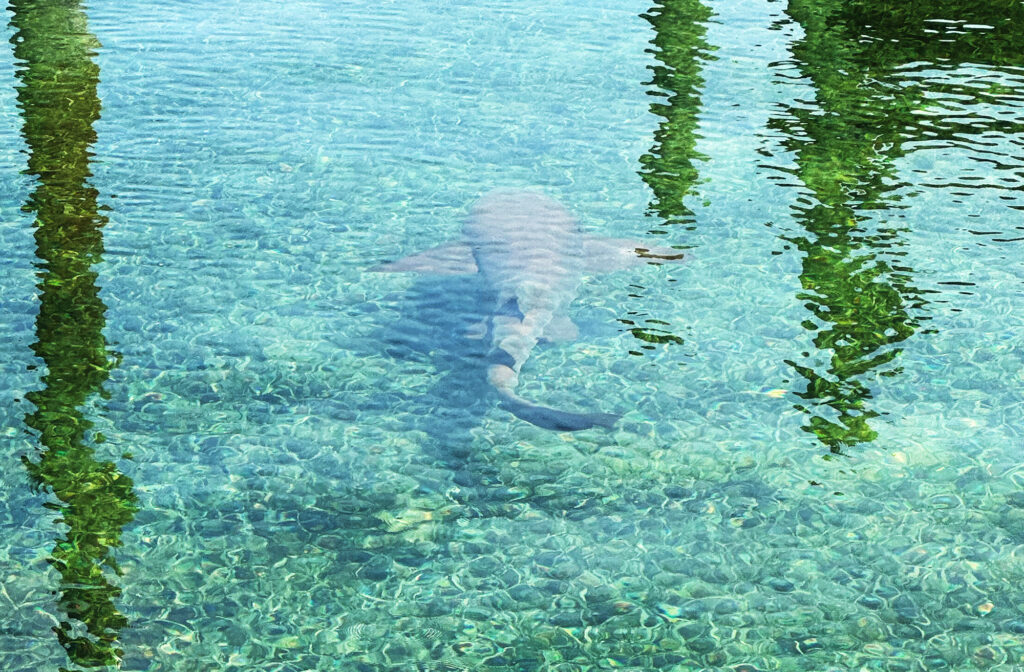
At about 6 o’clock the evening before, when I was en route to dinner, the Hope Town water taxi operator had pointed to a woman taking in the last of the day’s light. She was on a raft 10 feet off the beam of a sailboat. The driver had muttered about the bull sharks that frequented the harbor—beasts nearly 2 feet wide at the pectoral fin.
While that woman on the raft wouldn’t turn out to be the victim, the driver’s sage observation resonated.
In all my years on the water, I’d only done the run from Florida to the Bahamas once. It was from Miami to Bimini on a friend’s express cruiser. We’d lost an engine, the macerator pump had leaked, and the tender’s engine compartment had flooded on the trip across.
A firm believer that nautical exploration is more enjoyable if you live through it, I resolved to lean toward overpreparation for the first post-rebuild Gulf Stream crossing of my Grand Banks 47, GiGi.
I’d been well offshore during GiGi’s test run north along the Eastern Seaboard (see “Culinary Odyssey” at passagemaker.com) but heading through the open ocean toward another country felt like a higher level of risk. While I was reasonably confident in mechanical integrity, I know firsthand that any boat can sink. For me, it was on the Peconic Bay in a Vanguard 470 that, according to the guy who sold it to me, took silver in the 1980 Olympics. What I remember most about that day was the disbelief, treading water with only the buoyancy assistance of a shorty wetsuit as I watched the boat slip into the water column below me, slowly, then very quickly.
Moments like that stick with you. Despite hours of research and preparation ahead of the Bahamas crossing, I feared spending my final moments in the water with my wife, Giselle, praying for rescue and probably getting cursed at.
I sought the advice of Capt. Martin Cooper, who walks his yellow Labrador retriever each day down my block in Hobe Sound, Fla. Cooper spent the final 25 years of his career as a pilot flying a corporate Bombardier Global Express across the Atlantic Ocean. In 2013, he crossed the pond at a much slower pace, at the helm of his Lagoon 450. He has sailed to the Bahamas from Florida for 35 of the past 37 years.
“The more time you spend anticipating emergencies, the less time you waste in astonishment when they happen,” he told me. Overthinking things, he says, is what will help keep you alive.
Taking his advice, I turned my attention to weather, safety equipment, communications and emergency protocols. I tracked forecasts, and I compared wind and wave predictions to actual crossing reports. I was struck by how often the two failed to align. I did like what I saw from Marine Weather Center, a subscription-based service founded by Chris Parker. It provides daily forecast summaries for the Bahamas with expected conditions for north- and south-route Gulf Stream crossings. Marine Weather Center also provides a custom service that helps boaters choose the best crossing window based on boat size, cruise speed, range and tolerance level for sea height.
I also prepared a ditch bag with a registered and recently tested EPIRB, a handheld VHF radio, a waterproof smartphone container, signaling equipment, water and sun protection. I created a text group called GiGi Float Planners, with six reliable friends and family members. I would send them a float plan, including the U.S. Coast Guard Search and Rescue phone number and clear instructions on what to do if we missed our projected arrival.
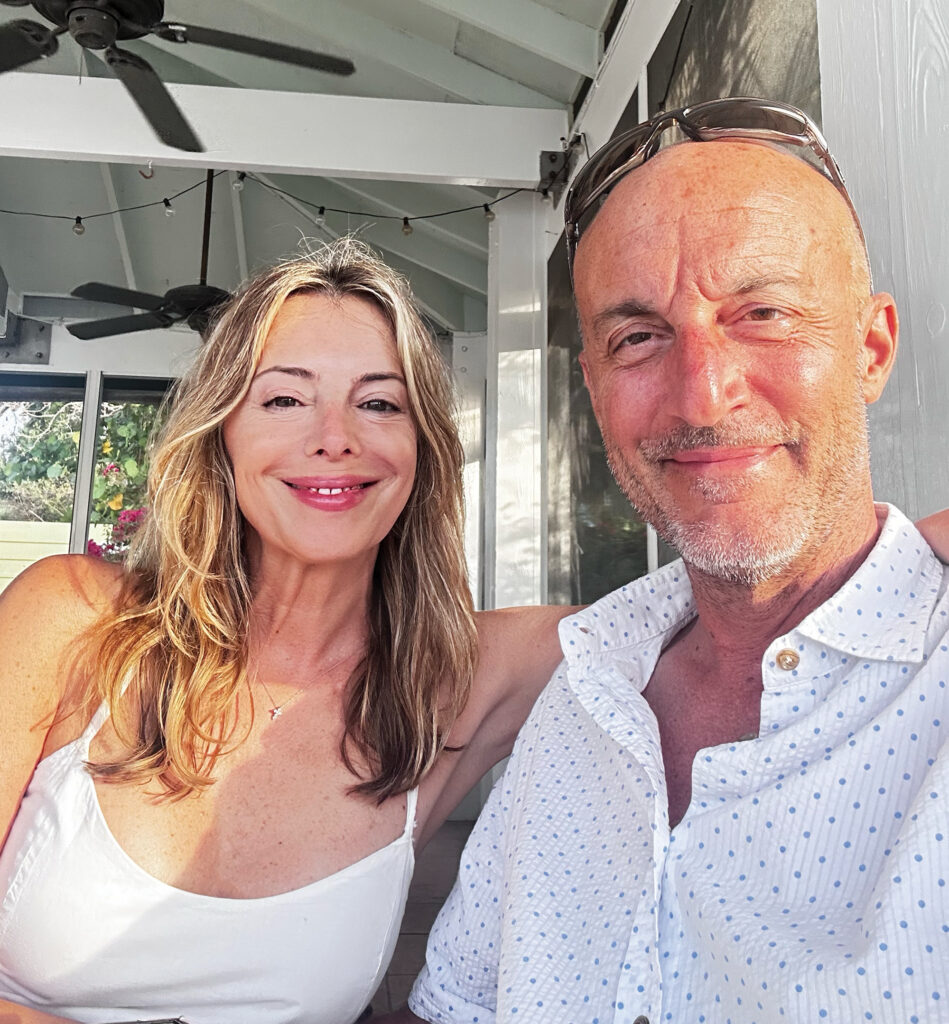
Next, I laminated and tucked an emergency checklist into the waterproof pocket of the ditch bag. Giselle, who is adorably incapable of imagining life without me, didn’t want to read it. I insisted, reminding her how much fun she’d have with her inheritance and her second, likely younger, husband. She mustered the fortitude.
Finally, after coordinating the less-dramatic details like customs clearance and fuel availability, we made our crossing on the morning of May 15, 2025. It was 168 miles from St. Lucie Inlet to Spanish Cay. We held a cruise speed of 20 knots across ideal conditions. The first 65 miles carried us just north of Memory Rock. Though land was still out of sight, the depth sounder went from 2,300 feet to 23 feet in a matter of minutes. It was my first look at that unforgettable cobalt blue line where the water instantly changed color to bright turquoise.

Alone out there, not another vessel in sight, I felt the calm of having arrived despite still having another hundred miles to go. I was voyaging not only to a place, but to a feeling.
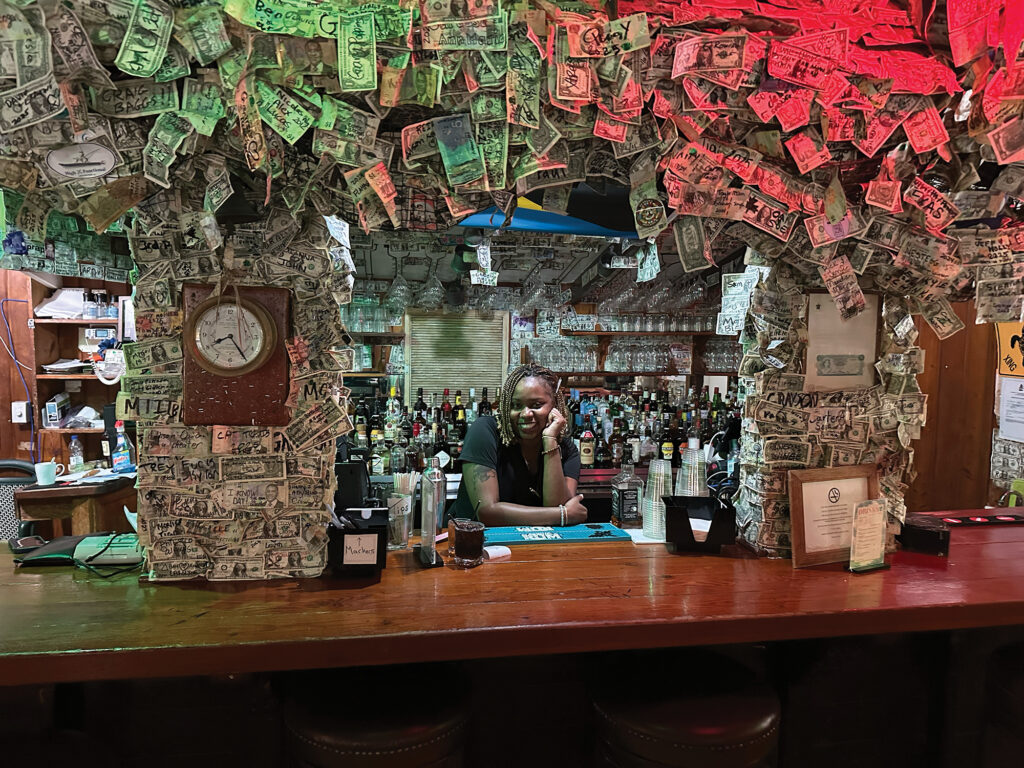
Any lingering restlessness ebbed in Green Turtle Cay, where life cannot move any slower. We made new friends, and we dined on fresh-caught grouper and Caribbean spiny lobster ravioli at The Green Turtle Club Resort & Marina. We drank Sancerre late into the night at the Dollar Bar. During the day, with GiGi tucked into White Sound, we ran the new ULT 300 tender 3 miles south to Gillam Bay and the bliss of pure sugar sands, crystal-clear water and untainted isolation.
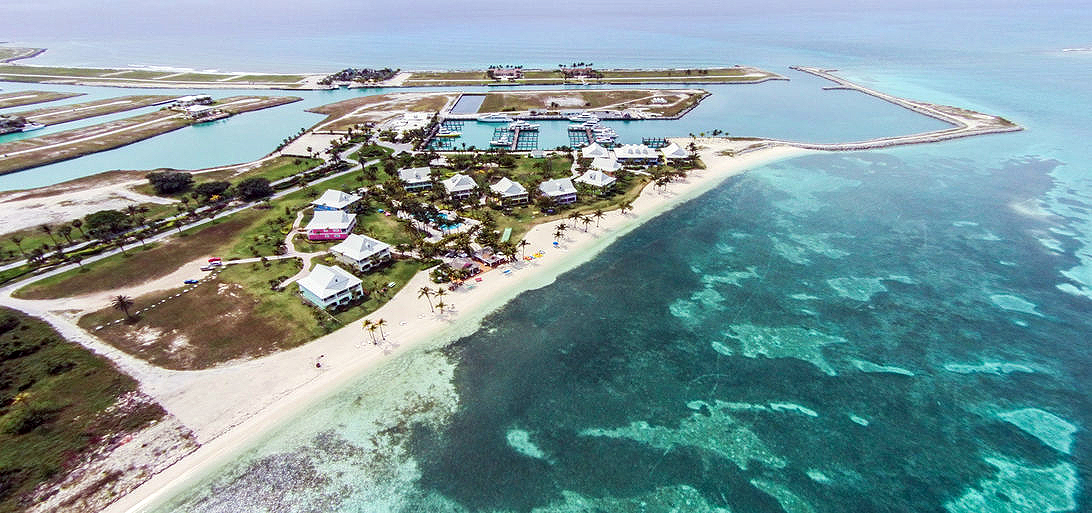
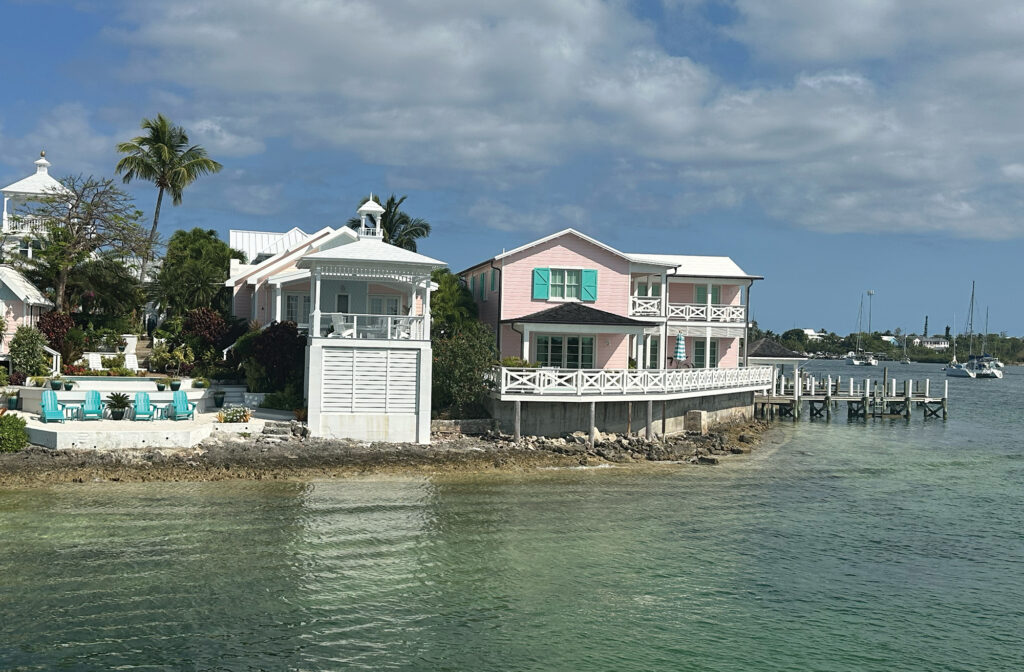
Thirty miles south, after a quick ocean detour around Whale Cay, we hit Elbow Cay and Hope Town, which is filled with history and colorfully painted shops. Top restaurants like the Firefly and the Abaco Inn, with delicious offerings and never-ending views, will happily send a driver to pick you up at the dock. Tahiti Beach has a good anchorage with a pink barge that serves beverages. The tidal pool sea swing on the south side of the sandbar has warm waters where life’s troubles are easily forgotten.
Which, naturally, brings me back to the shark.
Our five days in the Bahamas turned into 10 as we waited on a weather window to make the return crossing. GiGi was docked at the Hope Town Inn & Marina, and that afternoon, Giselle was strolling around the village while I took video calls from the boat’s salon. Sometimes, I treated myself to conference calls from the flybridge.
That’s where I was when I became preoccupied with a diver who was cleaning the bottom of a center-console boat on the opposite dock. An older man was operating an air compressor from the skiff and monitoring a yellow breathing line that ran to the diver below.
As the day closed in on dusk, I respected the diver’s work ethic, but I began to question his judgment. Mine wasn’t the only dinnertime approaching.
One splash, and then another, shattered all tranquility. A bull shark side bumped the diver into the center-console boat.
With a kick, the diver turned the shark away long enough to swim for the skiff. The 8-foot shark circled for a second pass.
The diver, moving with the agility of a seal, launched himself headfirst out of the water. His face hit the skiff’s deck, and his legs folded over behind him.
The old man sat quietly as the diver laughed with high-pitched euphoria.
By then, I’d raced down to GiGi’s bow pulpit, looking for blood and asking if he was OK. He pinched the water from the bridge of his nose, smiled and conceded that finishing the bottom could wait until tomorrow.
And just like that, the peaceful calm that is the Abacos was restored.
This article originally appeared in the November/December 2025 issue of Passagemaker magazine.