

The body of water between Australia and New Zealand has a few names. It was first Te Moana-o-Rēhua, or the Sea of Rehua, a star god to the Māori people of New Zealand whose guidance you may need in order to make safe passage in the dangerous currents. Modern maps label it the Tasman Sea. The water borders—or battles—the South Pacific Ocean, resulting in swells over 25 feet high.
And to Aussies and Kiwis alike, the deadly waters have a third name: The Ditch. “Crossing The Ditch” is a common way to describe braving the 1,200-nautical-mile, open-water passage.
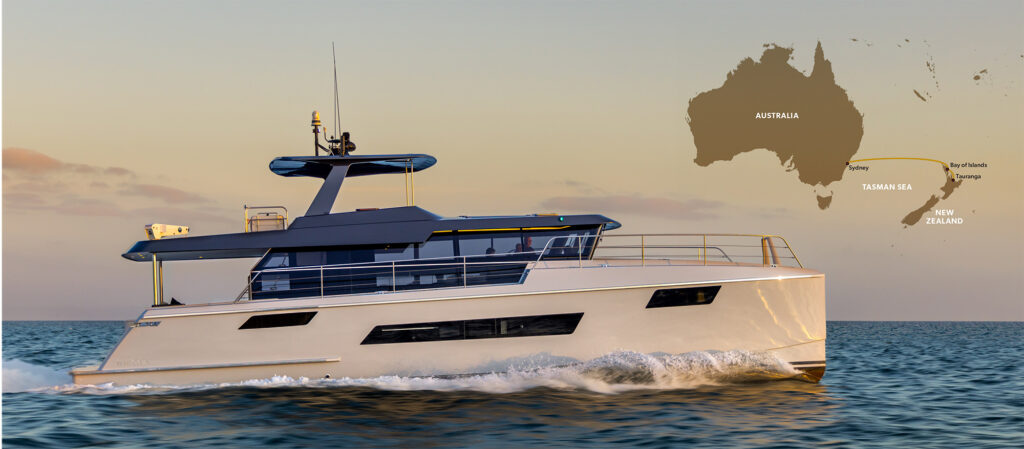
The Ditch is one of the waterways that Mark Heeley had in mind when he decided to buy a powercat. Filling his particular design brief, however, would be a tall order. He had a serious list of specifications. His ideal boat wasn’t something he could pick up off a production line just anywhere. He realized he was going to have to go custom.
Heeley is a racer who has competed in the Fastnet and Newport Bermuda Race. He also coaches advanced youth sailors. However, he says: “I only sail to race, not to cruise.” Hence, wanting the powercat.
“Sailing,” Heeley says, “is of course never the idyllic picture we’re sold. Rarely do the winds allow for us to sail off into a majestic sunset, boat leaning over just so. Next to a more straightforward powerboat, sailing can be a mess of ropes, rigging, winches, sails up, sails down, packing it away, covering it up, you get the picture.”
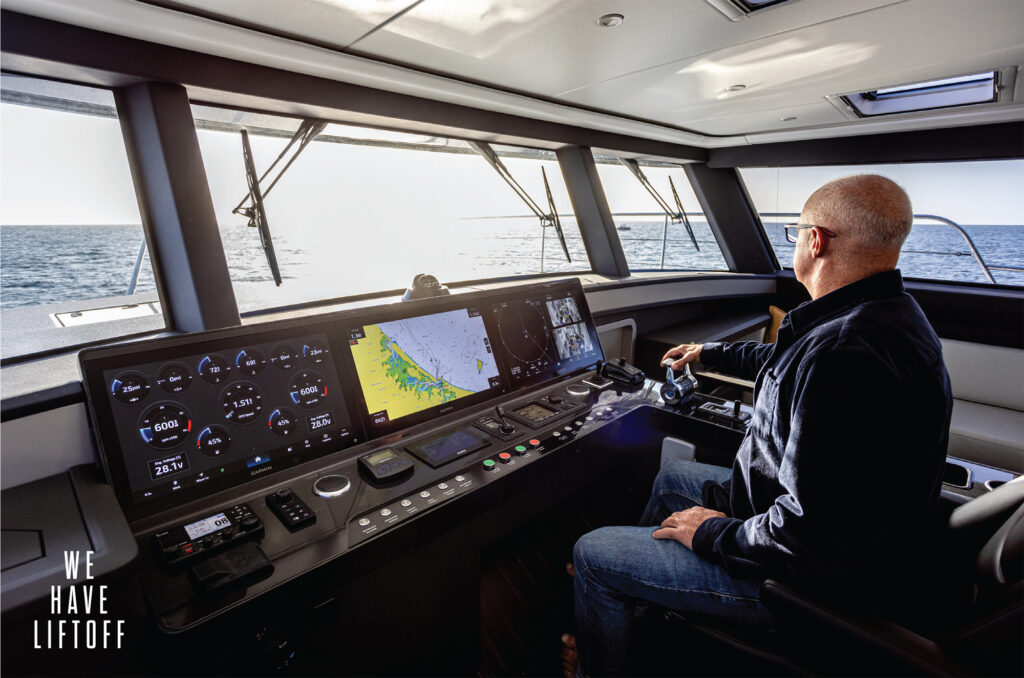
His thinking is that a sailboat is primarily designed around its sailing systems, which become the focus of the whole boat, from how space is allocated to how people spend time on board. Sailboats are also fiddlier, and when it comes to getting his kids interested in boats, bypassing all the finger-jamming winches and ropes suits him just fine. So when he’s not in search of a technical challenge, he’d prefer to cut straight to the boating. “If it’s correctly designed,” he says, “you can leave the dock in five minutes.”
And, Heeley was dreaming of the Whitsundays, Hamilton Island or New Caledonia, all a thousand or more miles from his home base. “The sorts of places that you’d want to go to do any kind of even slightly adventurous cruising, they’re all too far away for a conventional powerboat,” he says. “You can only go in very short steps, lots of refueling, which means you’re very beholden to weather patterns. It would take a week just to get there. And that’s not what I wanted to do.”
Most production cats, he says, are intended to go around the harbor, drop anchor, and let people swim off the back. But he wanted the adventurous locales along with the weekend tours of the harbor. That’s how his ideas took shape.
“You can keep iterating forever and ever. There’s a point at which you have kind of got to draw a line,” he says. “You have to decide: Are you actually going to do this, or are you just going to be another dreamer? And there’s plenty of people who only do the dreaming part, and why not? It’s a lot cheaper.”
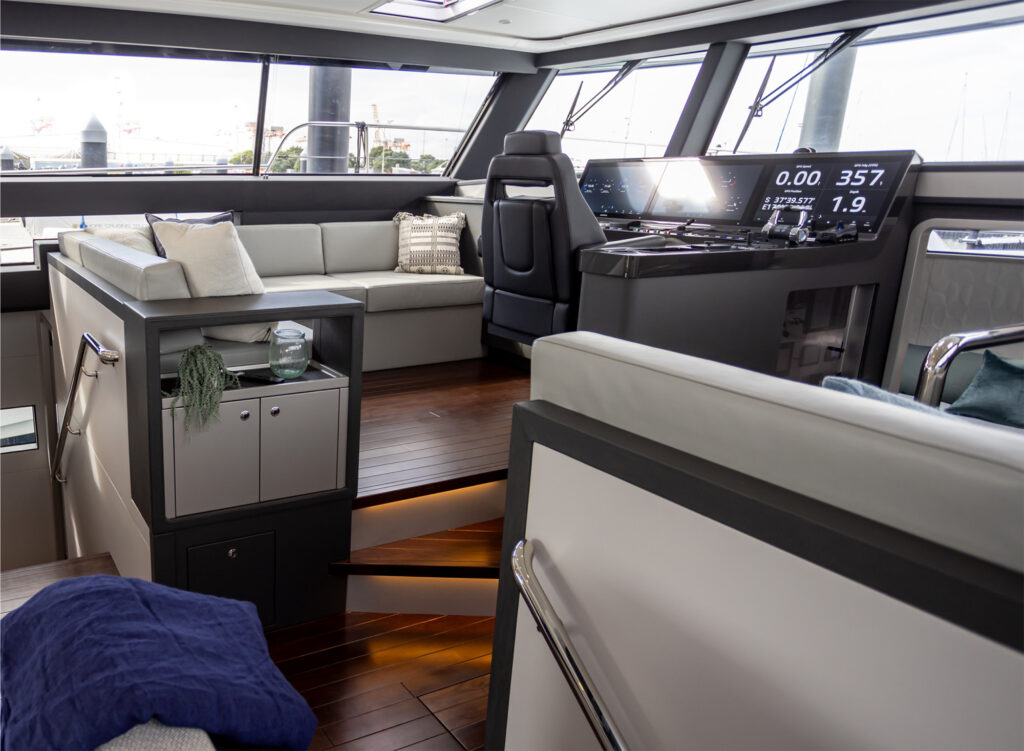
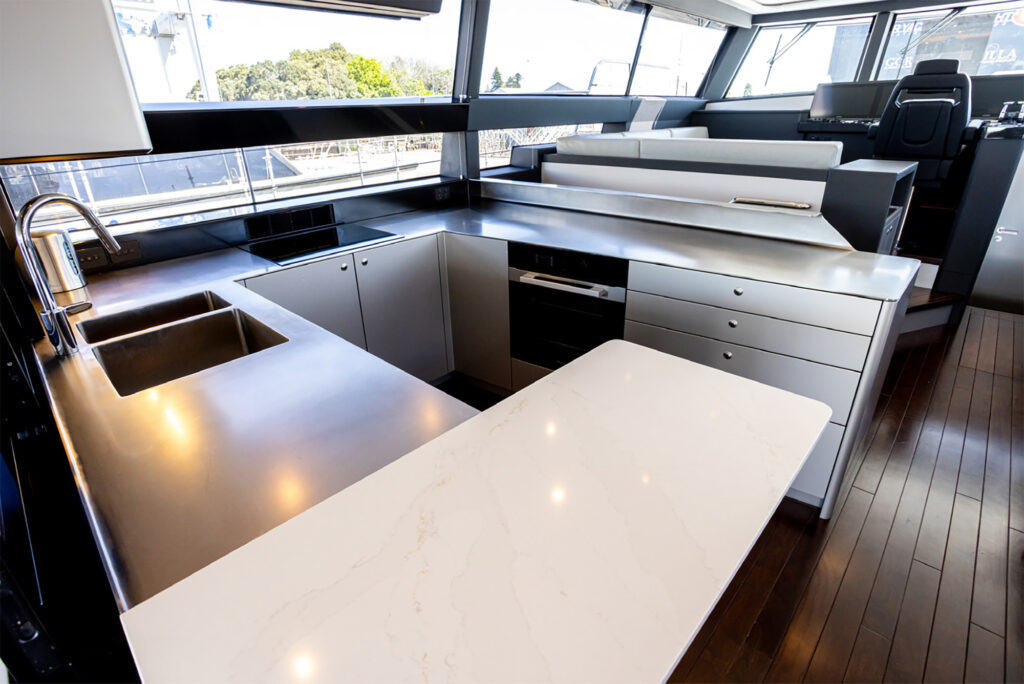
Nic de Mey and his team at Nic de Mey Yachts pride themselves on tackling problems deemed unsolvable by other builders. It wasn’t just the design and craftsmanship of Heeley’s idea that needed skilled hands: The boat’s first major passage would be crossing the 1,200 nautical miles between the company’s yard in northern New Zealand to Sydney. Crossing The Ditch can be unpleasant on any heading, but given that the currents favor ships bound from Australia down to New Zealand, it would be an uphill delivery—one that takes an average of five to seven days, and that they would do in three.
Heeley’s five tenets of an ideal powercat are: sightlines, as in four-corner visibility from the helm; toy stowage, more than a mere locker for fins and goggles; the biggest tender possible while still fitting in a garage; no planing hump, but instead fuel efficiency across various speeds; and range at speed.
Oh, and he wanted the boat to be as big as possible while still being manageable by a single person.
After reaching out to several potential builders with his design brief, original drawings of his dream boat included, Heeley scheduled phone calls with each. He didn’t just want to sign off on a build, but instead to initiate a careful collaboration, “a massive act of faith.”
Upon receiving five different responses, he could only picture himself teaming up with de Mey. The company had been formed in 1994, and de Mey had trained by building carbon-fiber America’s Cup and Whitbread boats. He hung his own shingle “because I don’t like being told what to do.”
Originally based in Auckland, the boutique boatbuilding company now operates out of Tauranga, de Mey’s hometown. The company has taken on some unconventional projects (including the RV market for a specialized build). At the end of the design and build process, de Mey says he wants to leave owners dumbstruck. He says that when potential owners walk away “awkwardly quiet,” he knows he has something to be proud of.
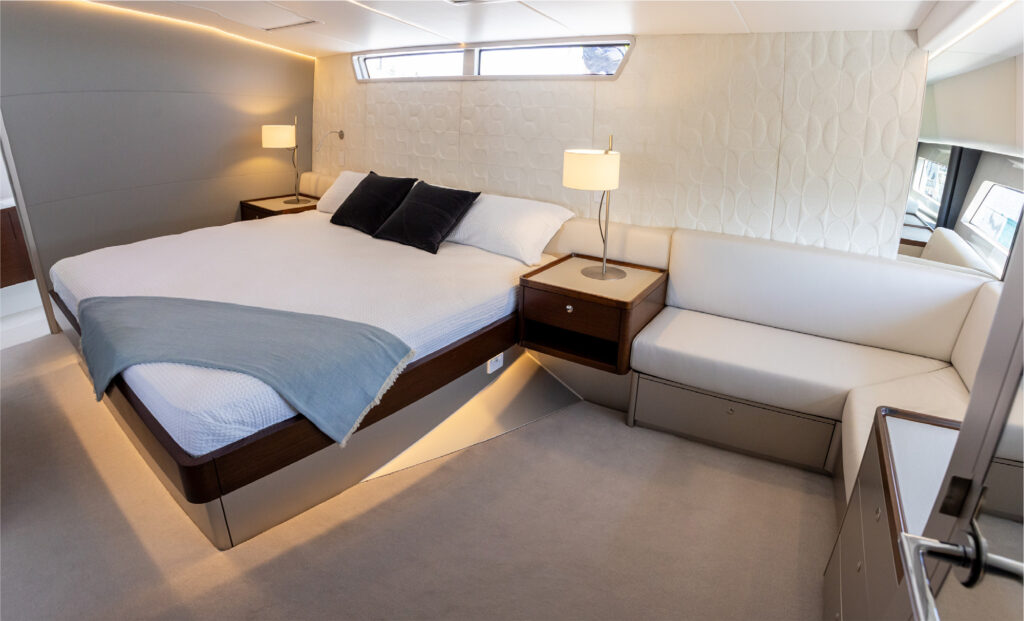
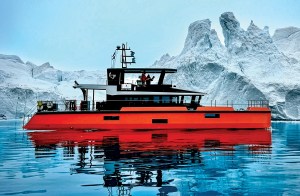
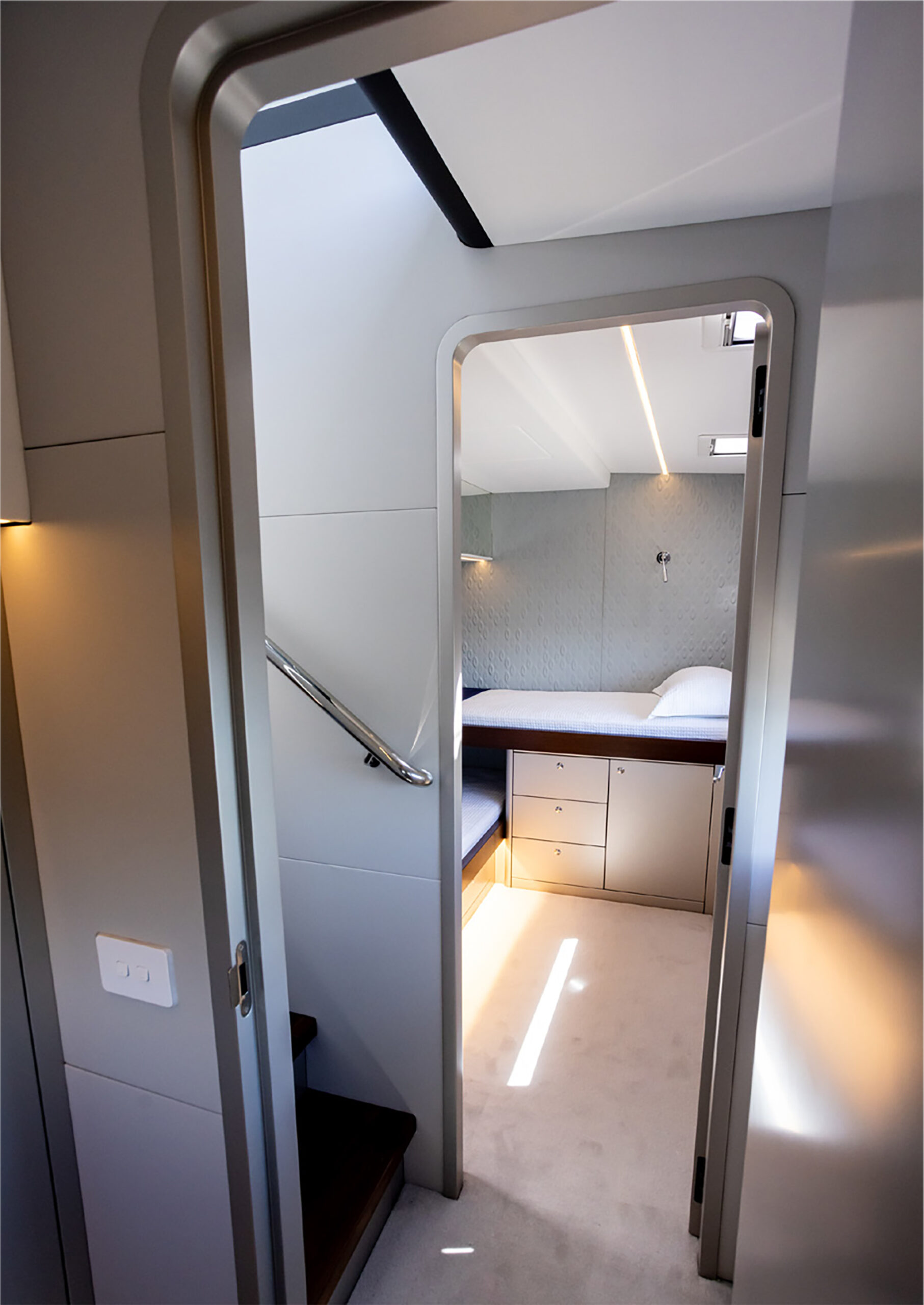
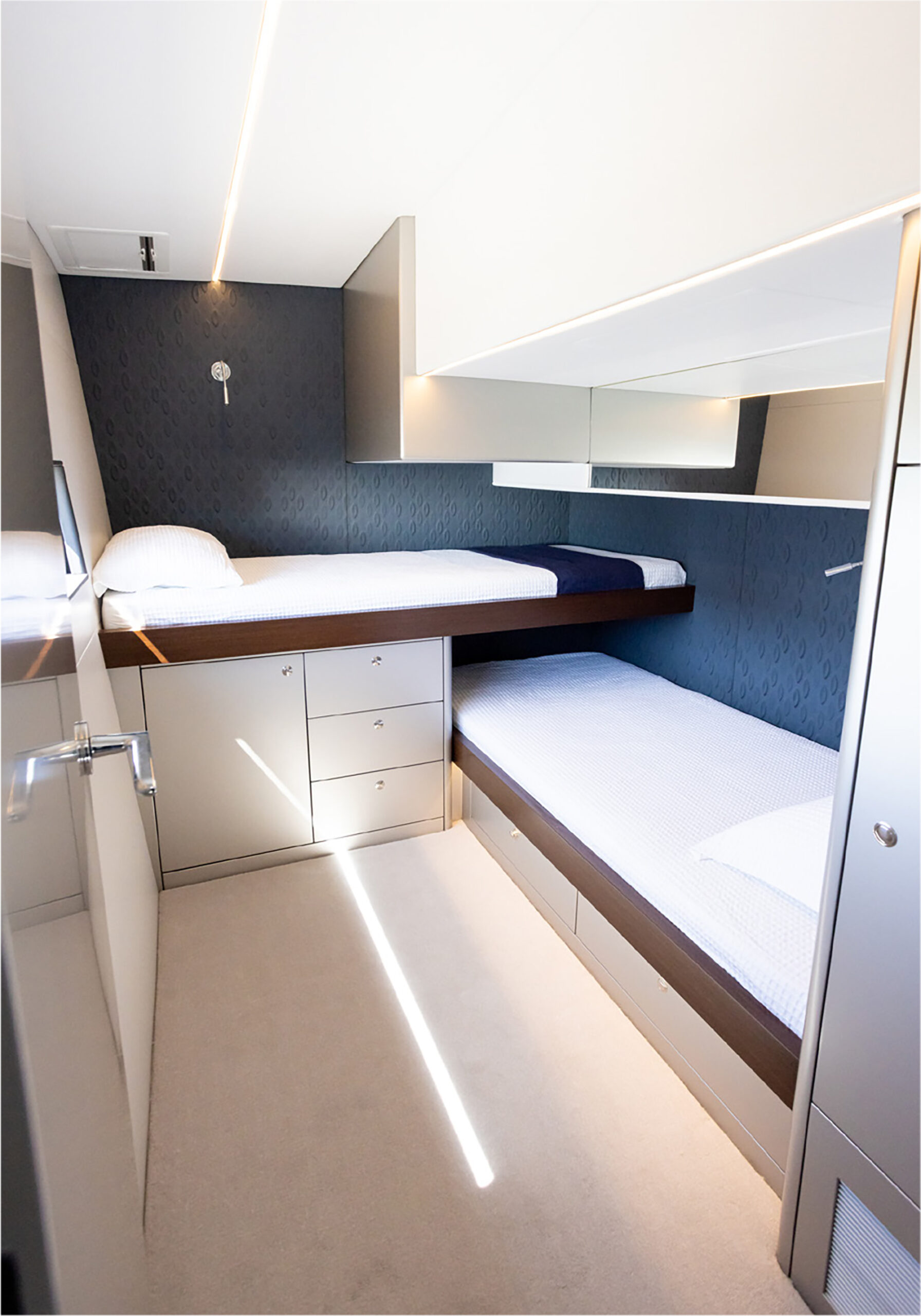
Heeley’s boat ended up being designed by Roger Hill, a naval architect who trained with Bruce Farr. The boat began to take shape as the Demey 60 Spaceship. It was, de Mey says, “quite an aggressive-looking expedition boat.” Its carbon fiber and semi-displacement hull design emphasize low drag, with narrow hulls.
In late November 2024, the boat was ready to head home, and de Mey was keen to get a sense of how all the hard work had come together. Along with his company’s head engineer and electrician, he joined Heeley for the 60 Spaceship’s first passage.
The initial hop was from Tauranga to The Bay of Islands, about 200 miles to the north. There, customs was cleared, the boat was refueled, and they were just one six-hour cycle away from departure. That’s when the weather turned sour. It wouldn’t have been impossible to set off, but it would’ve been unnecessarily uncomfortable, so the crew held off.
“The problem is at the top of New Zealand, the Tasman Sea meets the ocean, and they don’t like each other,” de Mey says. “The conditions there are generally terrible all the time. They’ll have 5-meter [16-foot] breakers even 5 miles off the coast because it’s shallow and there are a lot of sandbars. And then you also have the tide coming off the coast.”
Heeley adds: “We wanted, if possible, a swell that was largely downwind or from behind. And the ocean is never going to be flat, so you’re never going to get no swell, but we decided that 3 meters was the maximum predicted swell we would leave in.”
They ended up waiting the better part of a week for their weather window, but at last it came. As the crew entered open waters, they were met with 6½-foot swells—still an adventurous ride. Because of Heeley’s planing hump stipulation and Hill’s design, the 60 can run at all speeds with pretty much equal stability and reasonable efficiency, so it loped along quite happily, even if some of the passengers were a little green. Within 20 miles, the worst of the swells had leveled off, but the tide remained. It’s so strong that it can be felt hundreds of miles off the coast.
Compared to the previous conditions, though, the rolling 6-foot swell seemed pretty flat, and de Mey remembers “perfect conditions.” They bumped the throttles up to 19 knots. “Just beautiful days, beautiful nights,” he says.
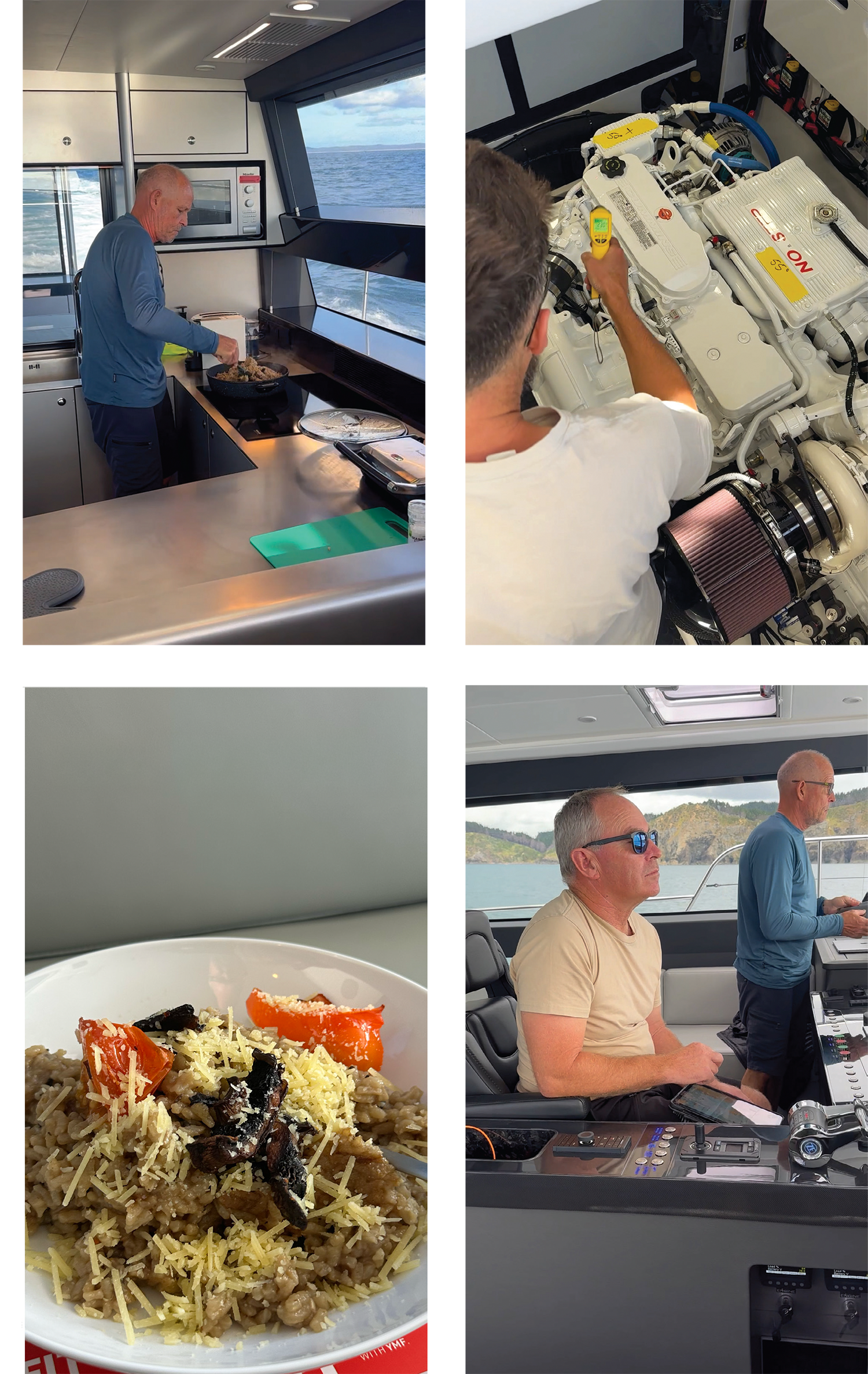
The boat performed flawlessly. Between the radar and AIS, the boat did most of the watchkeeping itself, and the crew hardly needed to look outside. Additionally, de Mey recalls virtually no ships on the passage. Heeley, ever precise, recalls two and a half (two by sight, one by radar).
“We knew the last eight hours into Sydney were going to be reasonably terrible,” Heeley says. “It always is up that coast, but the forecast predicted the approach was going to be bad.”
As the weather developed, 11½-foot swells were six seconds apart. Adding to the vertical sloshing was the acceleration down the towering waves, taking the boat from 12 to 24 knots in a matter of seconds. Under the dark night sky, the crew could anticipate these waves by sound alone, moments before impact.
“The boat handled it well, but you can’t stand up anywhere. You need to watch your footing,” de Mey says. “As soon as daylight broke, you could see what you’re doing, and you could play with the throttles. You could slow down and let a big wave pass or speed up and let it go behind. Basically, we were driving the boat like a race boat. But you don’t dare read a book because you’d get seasick.”
Still, having both the head engineer and electrician aboard for a shakedown is a luxury. At least once per watch rotation—two hours on, six off—they did a check to ensure that all was well, including a trip down to the engine rooms with a temperature gun. Also for the sake of certainty, they brought the boat to a full stop and positioned it to be as flat as possible to check the fuel tank’s sight gauges every 12 hours, to confirm that the electronics were calibrated and estimating correctly.
Heeley is, apparently, the only boater without a superstitious streak, because he didn’t even bother bringing foul-weather gear. “I did say to everyone, the only reason to bring a jacket is we have a mechanical breakdown and we have to go outside of the boat. Then you might need a jacket, but don’t bring any other weather gear. You won’t be using them,” Heeley says. “And that’s exactly what happened.”
Still, even with the boat performing exactly as designed, every driver needs to work with the conditions. “The last night, we slowed down a little because the sea state was getting a bit too exciting,” Heeley says. “But the slowest we ever went was about 11, maybe 12 knots. We were just adapting the speed to suit the waves so that it remained comfortable.”
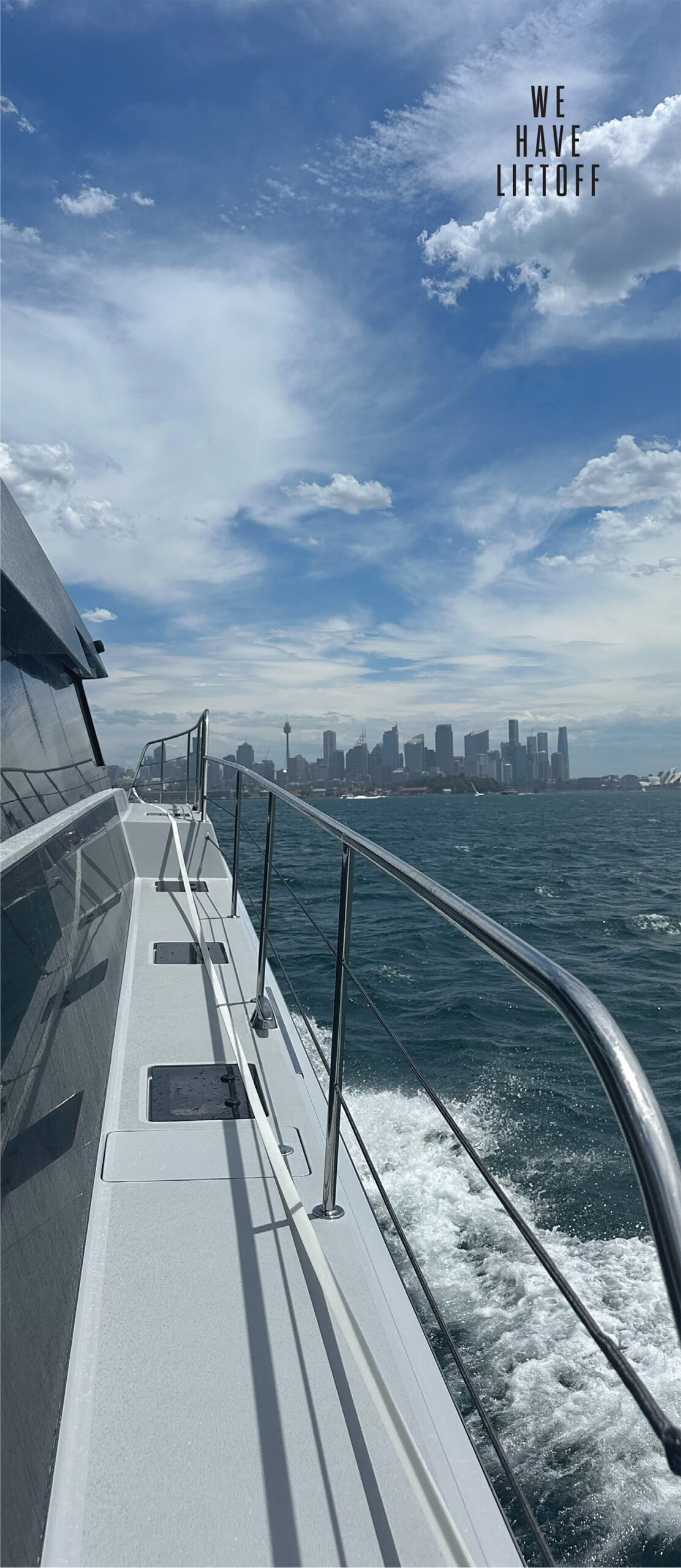
After three days and three hours, they arrived. The boat averaged 16 knots for the whole 1,200 nm and made it with fuel to spare.
This 60 Spaceship won’t be crossing The Ditch again any time soon, but Heeley is taking advantage of every opportunity to be aboard, whether the adventure is short, long or stationary. The boat is exactly what he imagined, ideal for a swim and a spin around the harbor, but capable of going far and fast for a getaway. “Just like every other boat in Sydney Harbor,” he says, “but slightly better.”
Demey 60 Specifications:
LOA: 60ft.
Beam: 22ft. 5in.
Draft: 3ft. 5in.
Displacement: 56,317 lbs.
Fuel: 2,641 gal.
Water: 475 gal.
Engine: 2x 550-hp Cummins QSB6.7
Info: nicdemeyyachts.com
This article originally appeared in the October 2025 issue of Passagemaker magazine.