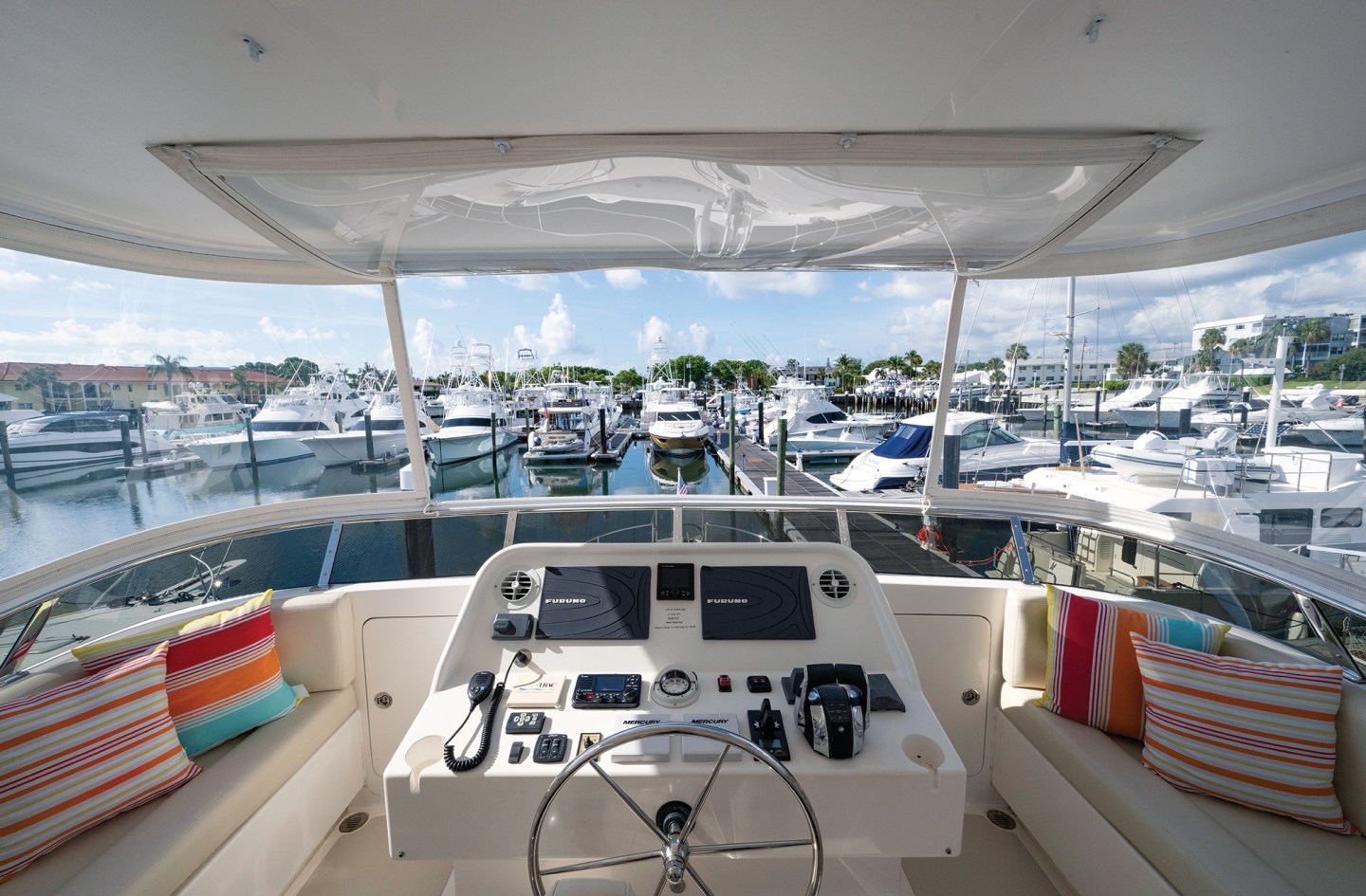
Every boat owner who flips through the snapshots of gorgeous dusks and dawns, stunning harbors and picturesque villages also seems to notice the toll that all that cruising took on the boat’s exterior. With each mile logged, sun-baked haze further dulls what was once mirrorlike gelcoat. Sea-weathered rust stains weep from stainless steel stanchions. Etched mineral deposits shroud the windows.
Fortunately, with thorough prep before a voyage and just a bit of maintenance along the way, well-traveled boats can still maintain their like-new luster.
Starting Strong
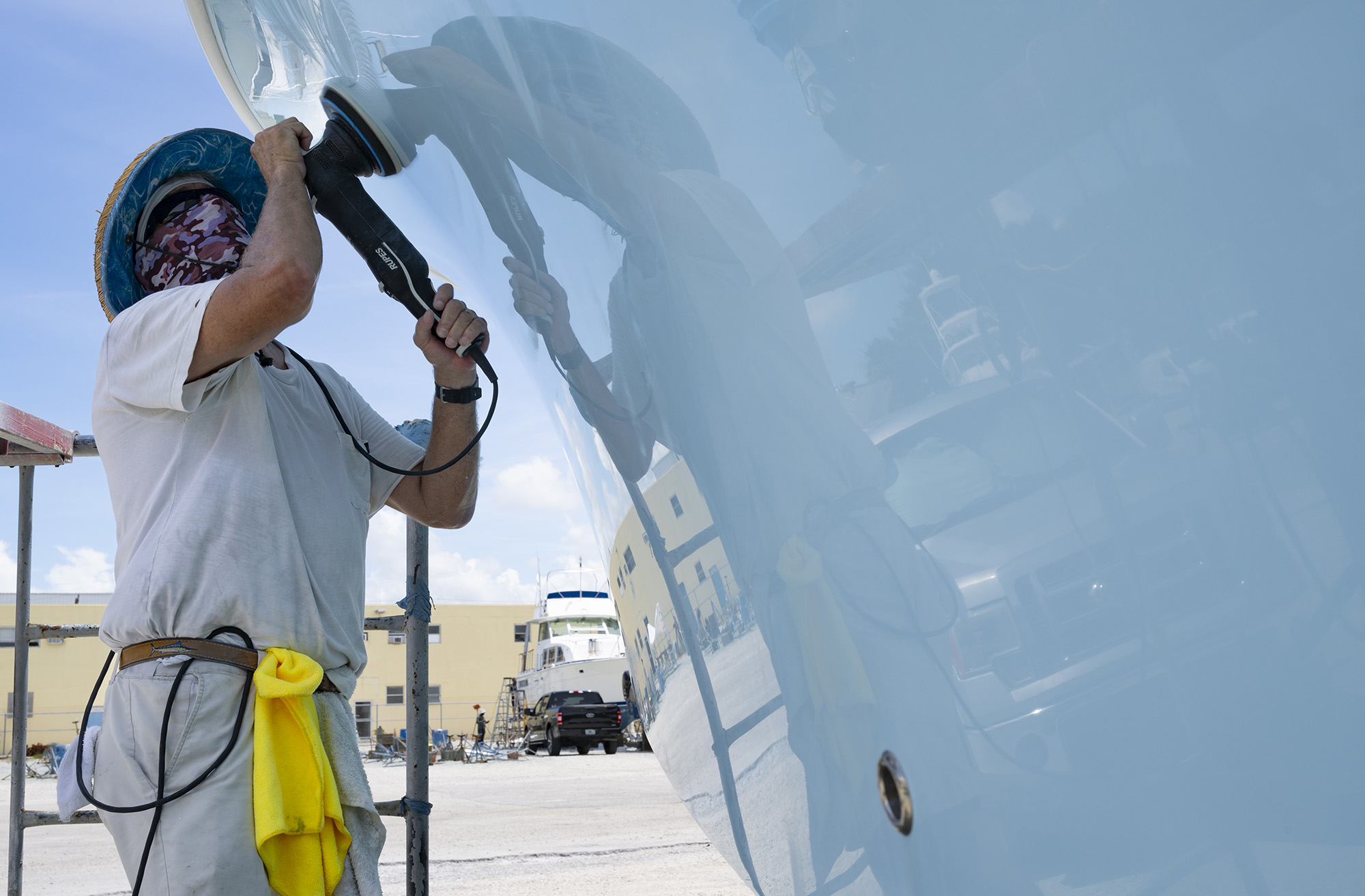
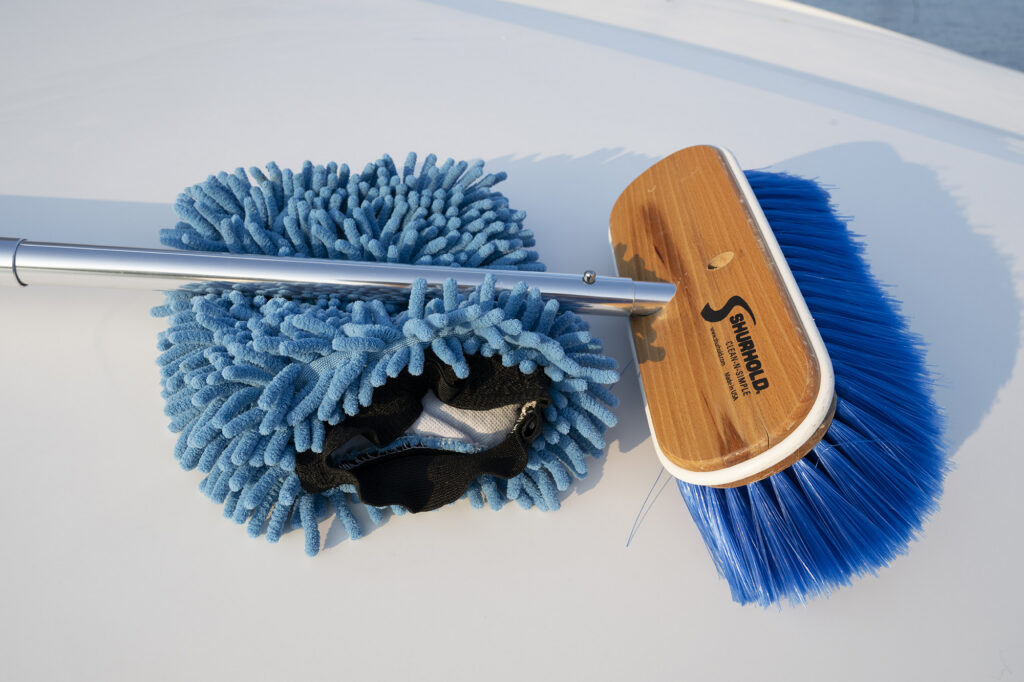
The key to easy cleaning is starting with a smooth, glossy surface. “It takes several steps to fully remove oxidized material to restore a boat’s shine,” says Tom Sawyer, who details boats on Florida’s east coast, from Stuart through West Palm Beach. Sawyer starts with a medium or coarse abrasive polishing compound, applied via a wool wheel that’s spun by a circular buffing machine. It scrubs out sun damage, stains and minor scratches.
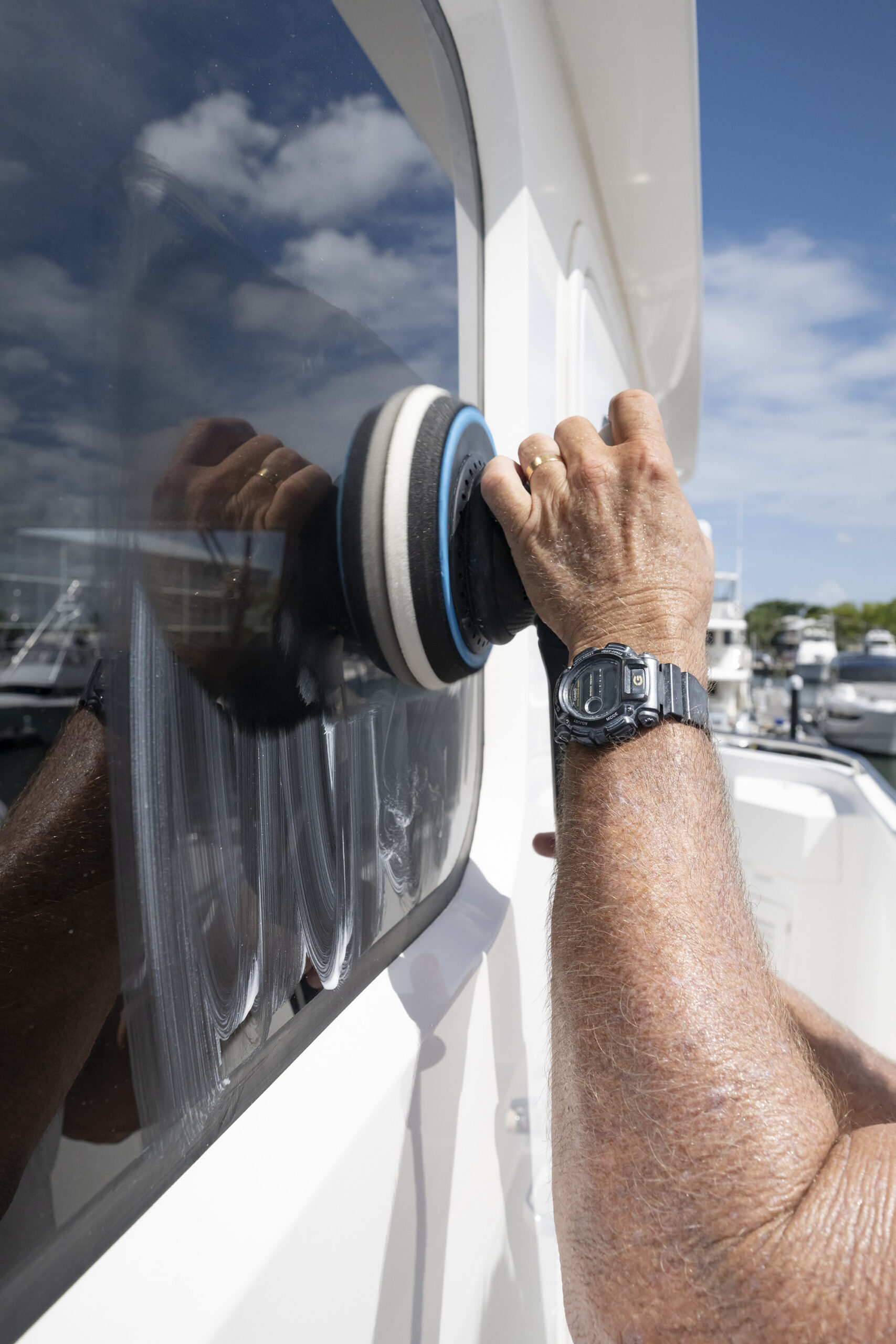
A good detail job doesn’t stop there, though. Successively finer-grit compounds smooth out minute scratches from the previous pass. Then, in the final step before wax, swirl marks left by the circular buffer are polished out with a soft foam pad on a vibrating, orbital polishing machine, leaving behind a perfectly smooth, reflective finish.
“Use the specific foam pad recommended to go with the compound you purchase,” Sawyer says. He matches products and pads from marinedetail.com.
Sawyer warns against detail jobs that make just one or two passes with polishing compound and then apply wax. “It might look good for a few weeks,” he says, but those imperfections grab salt and dirt that speeds deterioration.
Protecting that Shine
A polished surface naturally sheds salt and grime, but a couple of coats of wax add protection. Traditional waxes combine petroleum-based paraffin with animal wax like beeswax or lanolin, or oils from plants like carnauba palms. Today, most marine waxes are polymer blends.
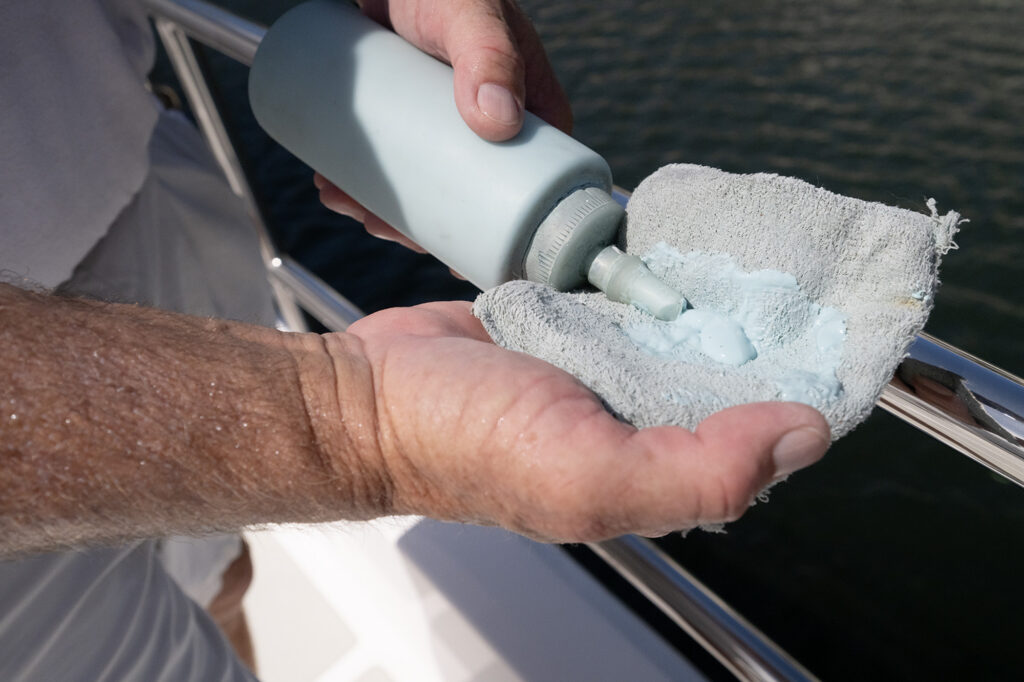
“Polymer is basically a manmade wax, not natural material,” Sawyer says. “It holds up better in the heat, and doesn’t absorb dirt and create black streaks.”
Professional detailing only lasts so long, but a bit of interim care keeps boats looking good while cruising. “If you can’t get it detailed professionally, just get a coat of wax on it every four months or so,” Sawyer says.
He advises focusing on horizontal surfaces like the brow, and the area forward of a Portuguese bridge. “Wipe it on and wipe it off by hand,” he says, or purchase a lightweight, cordless, slow-speed orbital buffer. “In the morning, take the shady side and just do 10 feet, then do 10 feet on the other side in the afternoon shade. In five days, you’ve waxed a 50-foot boat.”
His other advice: Aim for protection, not perfection. “When a professional details the boat again, it will polish right up,” he says. Hullsides that get less direct sun can often go a year without wax.
Cleaning for the Long Term
A goal should be to protect the finish for as long as you can. “With a good coating on the boat, most of the time you don’t even need soap,” he says.
A thorough rinse sheds salt and light dirt. For trouble spots, use a mild, pH-neutral soap in low concentration applied with a very soft brush. “Most boat soaps are too aggressive,” he warns.
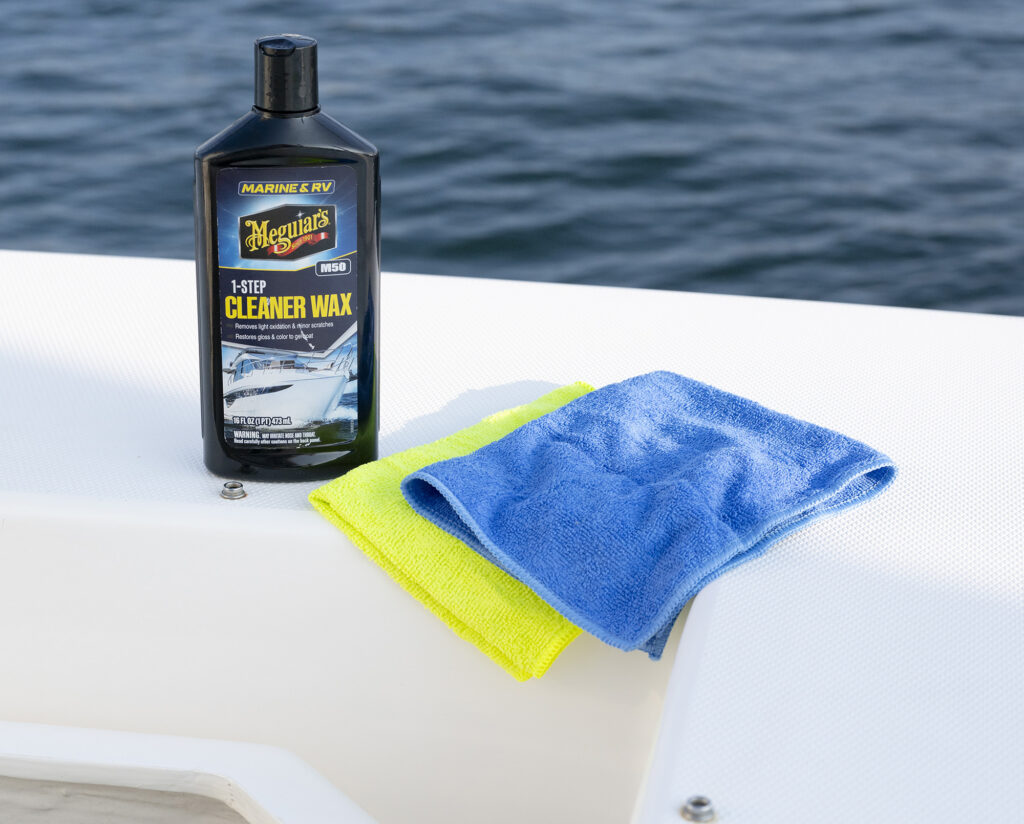
Skip using harsh black streak removers, which also remove protective coatings. “The black streaks come right back, and they’ll be more difficult to remove,” he says. Instead, he suggests cleaning them with the same wax or polymer used on the boat, or using slightly abrasive cleaner wax for tougher stains like exhaust soot. “If you need something a little more aggressive, use rubbing compound, just by hand, and then wax. With a little patience it will come right off.”
For tannin stains (the dreaded mustache of the Intracoastal Waterway), Sawyer uses RustAid by Goof Off, found in the hardware store sprinkler section. “Just a light coat on a brush get rid of that orange stain,” he says, “and it doesn’t compromise bottom paint.”
Ceramic Coatings
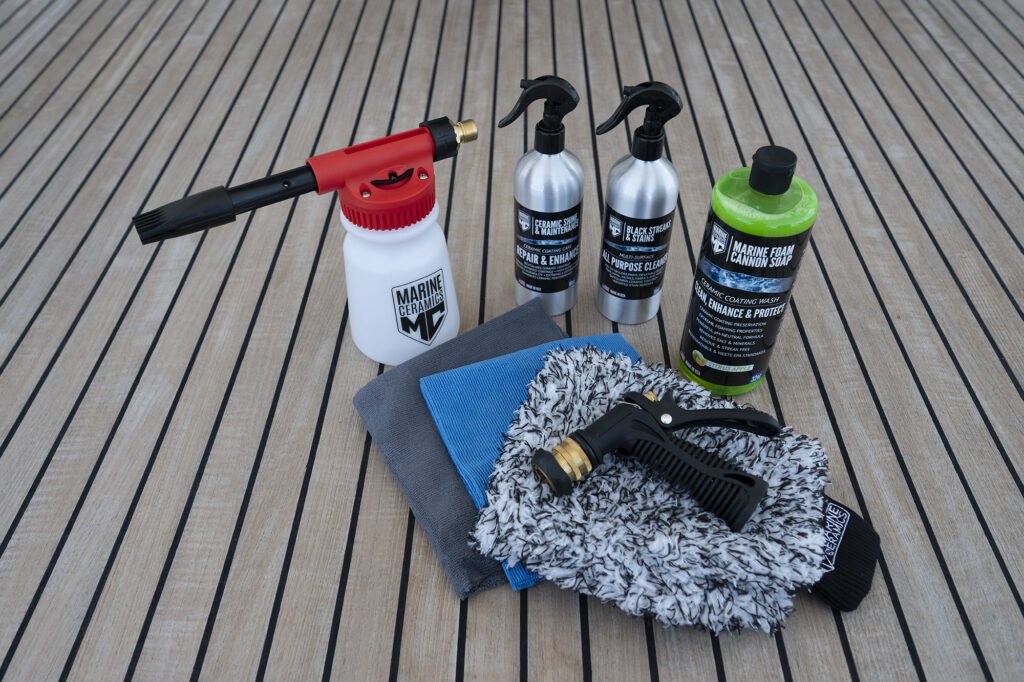
Rather than waxing, many boat owners choose ceramic coatings that combine a polysilazane base with additives that increase flexibility, hardness, and resistance to chemicals and ultraviolet light.
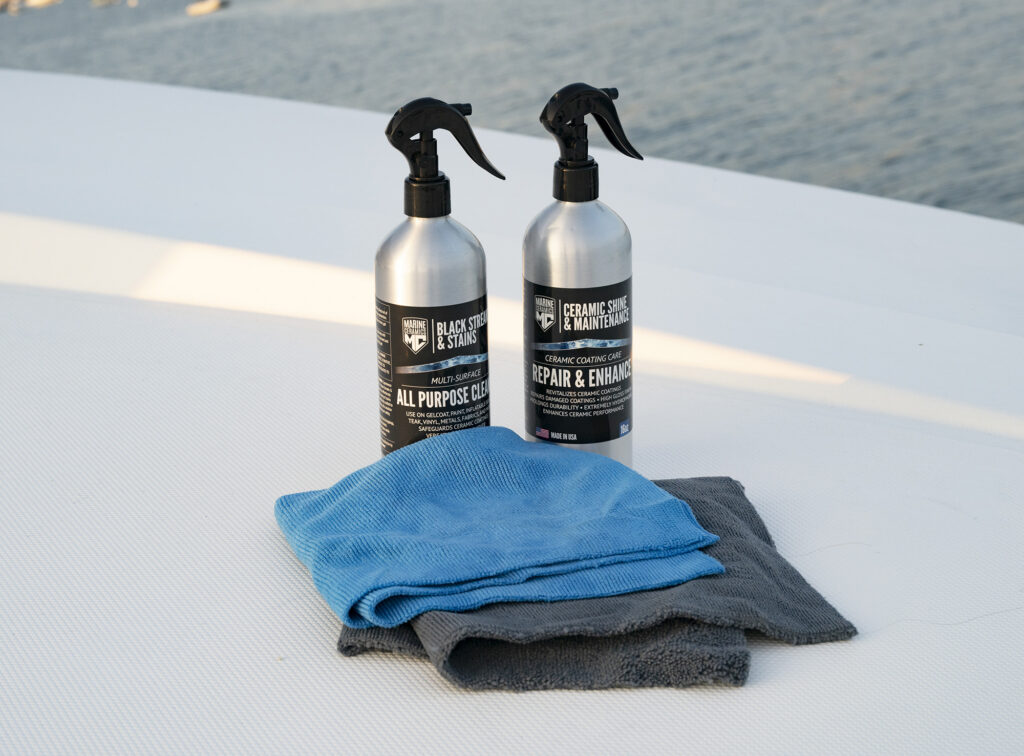
“That coating cures to form a hard, glasslike shell that is a lot more durable than wax or polymer,” says Brian Clapp, founder of Marine Ceramics and MarineDetail.com. His company offers formulations for paint and gelcoat, glass, metal, or inflatable boats and vinyl cushions. “Dirt, blood, bird droppings and black streaks don’t stick in the pores of the gelcoat,” Clapp says. “The surface stays cleaner longer.”
Ceramic coatings require the same oxidation and swirl-free prep as wax, and then the coating is applied in small sections and buffed out before it fully hardens. That labor-intensive process costs as much as polishing and waxing a boat several times. Longer life offsets that cost, but proper care is key. That includes cleaning with ceramic-safe boat soap and cleaners.
“Every couple of months, spray on and wipe off the ceramic maintenance spray,” Clapp says. “The boat will look incredible for a couple of years.”
Spot-Free
Hard-water spots left behind from dock water sully a boat’s shine and grip grime. They also build over time, making the boat harder to keep clean. Before those minerals set, it’s important to dry windows, stainless and large flat areas.
Or keep hard water off the boat entirely. Portable water softeners like Wet Spot remove minerals and iron with a reusable resin filter, just like home-based units. Every few months, they’re back-flushed to rejuvenate that filter.
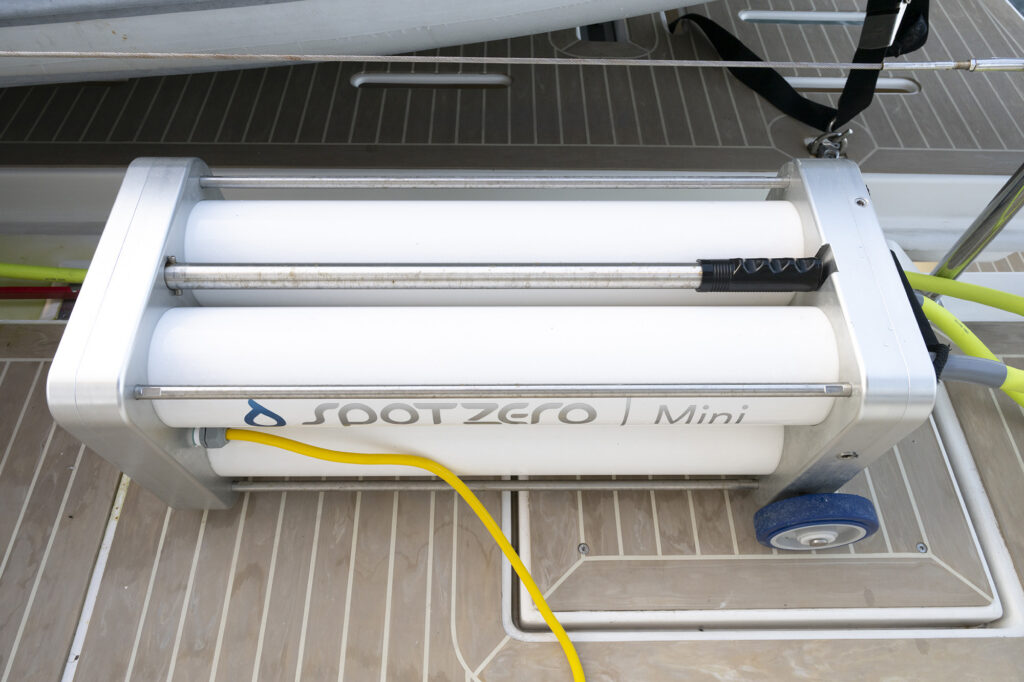
Alternately, there are portable reverse osmosis units, like Spot Zero. These pass water through membranes to remove contaminants, much like a boat’s watermaker. They require a quick, simple back-flush with each use, and a membrane replacement every 1,000 hours.
Metal and Windows
Most aluminum has an anodized coating, so simple cleaner wax is ideal, Sawyer says. On stainless steel, he applies metal polish with a white Scotch-Brite pad to make cleaning easier. (3M Scotch-Brite pad colors indicate abrasiveness.)
Leave it to professional detailers to polish hard water spots off windows, Sawyer says: “The acid-based polish can damage the glass.” Once the windows are spot-free, Sawyer applies ceramic coatings, but for a quick clean, he suggests Rain-X glass cleaner. “Use one microfiber towel to spread it on, and another to wipe it off,” he says. “Do the inside of the pilothouse windows, too. A damp microfiber cloth wipes salt and grime right away.”
Varnish and Teak Decks
Some boaters wax varnish, but that wax must be removed with solvent before sanding to avoid fish-eye voids in the next coat. “Tell your varnish guy it’s been waxed,” Sawyer warns.
Alternately, mask off the varnish, scratch it with a maroon Scotch-Brite pad, and lay on a fresh protective coat every three months or so. A few brush marks or holidays will be corrected with the next professional application. Be sure to touch up nicks with varnish on an artist brush right away to avoid discolored spots.
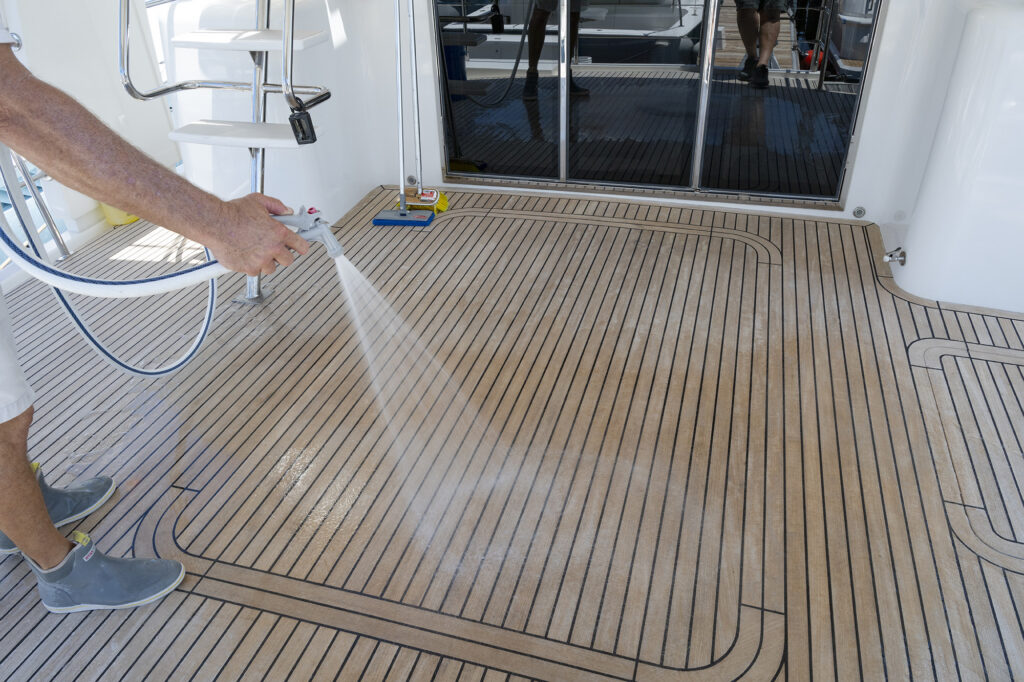
Teak decks stay clean with just a light scrubbing with the same soapy water used while washing the boat. “Brush across the grain, not with it, to pull up dirt and salt,” Sawyer says. “If you have trouble areas, try scrubbing with a little Cascade dishwasher detergent.”
Enclosures and Canvas
Avoid household cleaning products, especially glass cleaner, on clear enclosures. Instead, choose EZ2CY Cleaner and Polish, 303 Clear Vinyl Cleaner or similar products. “Even Dawn dish soap leaves behind a residue that, over time, breaks down the glass,” says John Erickson at Canvas Designers in West Palm Beach. Anything containing alcohol or bleach similarly degrades clear panels.
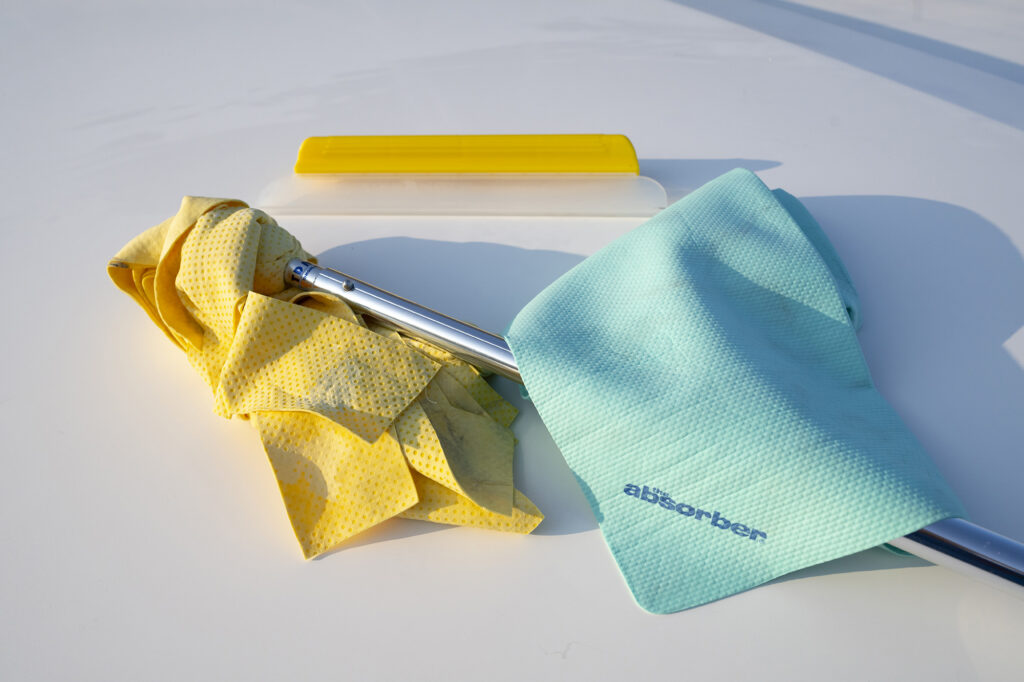
Most boat soaps are fine, but always use a clean, soft brush or pad. “Grit scratches that enclosure. You might not see it, but over time those scratches draw in salt and residue,” Erickson says. This causes clear panels to haze. Likewise, use a clean synthetic chamois to dry clear panels, and rinse crystallized salt spray off before rolling the panels.
“The fabric material is extremely resilient,” Erickson says. Clean trouble spots with a toothbrush and Spray Nine, or lightly with a Magic Eraser. Wash grit out of problematic zippers, and then lubricate them with ChapStick or wax.
Interior Concerns
“Be careful hiring your average house cleaner,” says Garrett Severen, sales manager at Nordhavn Southeast in North Palm Beach. “Both the products and tools they use can do a lot of damage.”
Vacuum cleaners with grit embedded in plastic wheels can scratch wooden soles. Rust remover etches gelcoat. Bleach harms interior surfaces and marine toilet seals. Furniture polish makes woodwork difficult to refinish. Ordinary glass cleaners harm clear plastic.
“Most boat detailers know someone with experience cleaning yacht interiors,” he says.
Also avoid clear plastic carpet masking film. “It leaves behind an adhesive residue that attracts dirt, just in the 24-inch-wide strip where it was applied,” he says. “You’re better off using moving blankets or having a Sunbrella runner made for the boat.”
Wherever it’s possible, remove carpets for cleaning, rather than dragging hoses or heavy equipment around the boat.
With just a little effort, photos you share from the next trip will show off a boat that’s just as beautiful as its surroundings.
This article originally appeared in the December 2025 issue of Passagemaker magazine.