

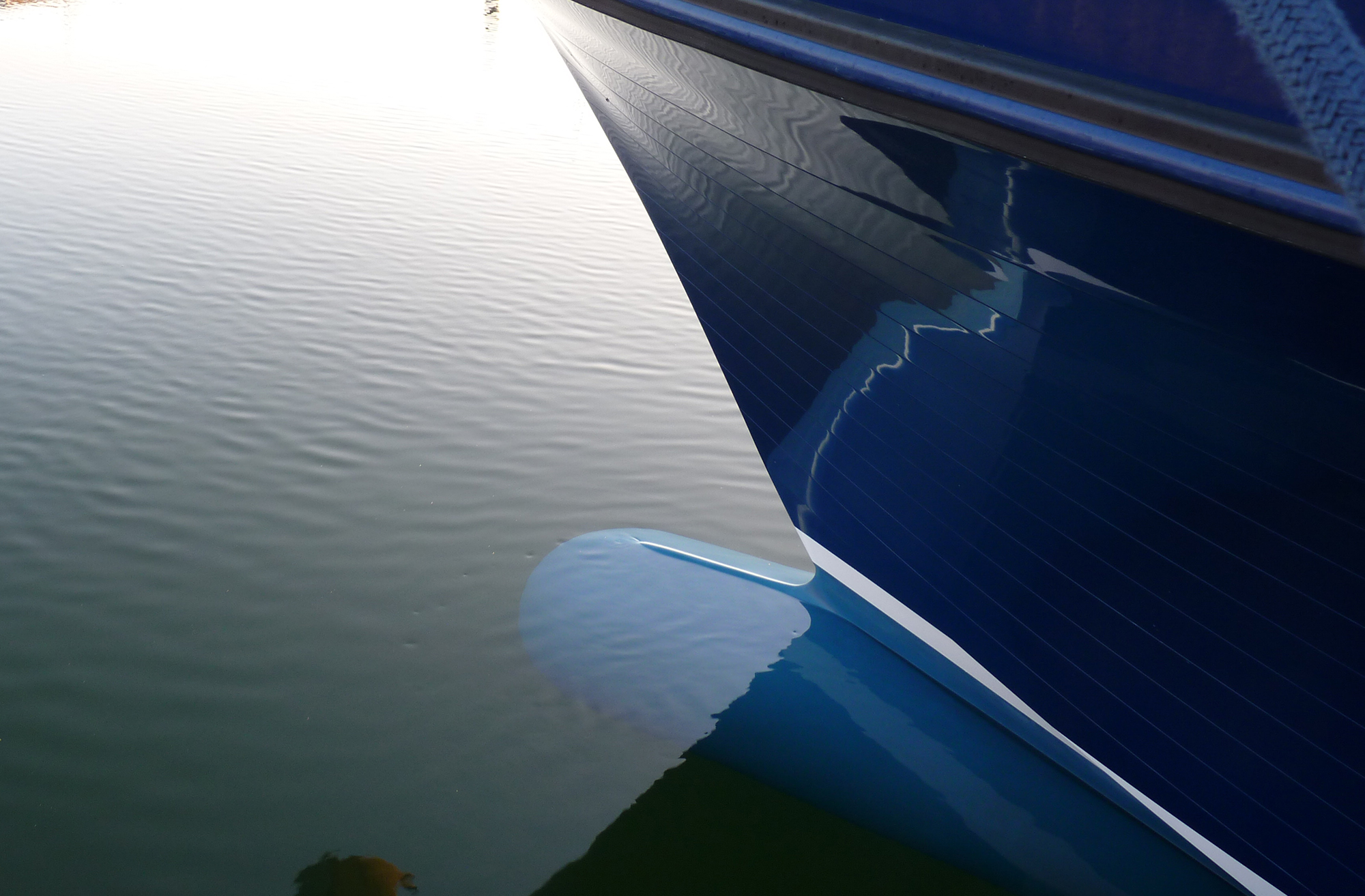
A bulbous bow serves a number of purposes on all types of hulls. Vessels fitted or properly retrofitted with a bulb bow can see an increase in range from 12% to 15% while reducing trim angle for better visibility; a lower bow wave for less water on deck and shoreline environmental impact; better fuel economy; and reduced pitching for improved comfort and seakeeping.
At my naval architecture firm, Bray Yacht Design and Research, we have retrofitted bulbs to more than 60 boats, from 40 feet up to 150 feet, with speeds up to 24 knots. We have also done extensive model testing on numerous designs from deep-V hulls to lobster hull forms.
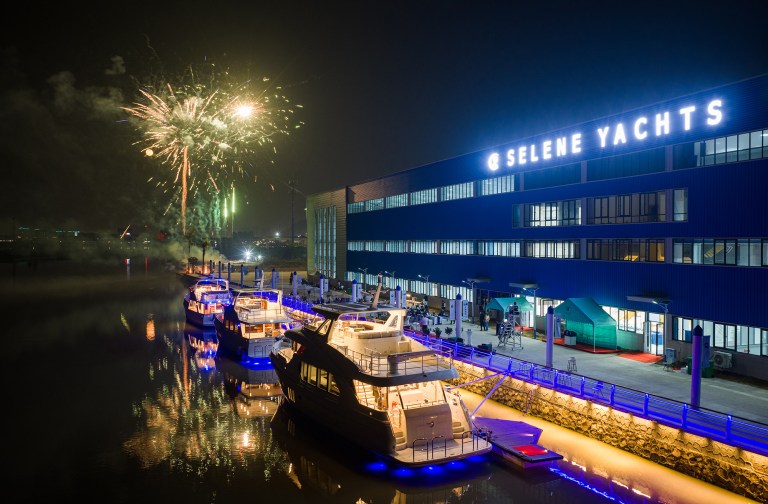
One example was a Selene 59 whose owners saw much better fuel consumption than other Selenes while out cruising together. “Not only did we do better than the other two boats,” the owner told me, “we also ran better than the Cummins predictions. At 1300 rpm, Cummins had the fuel consumption at 6.3 gph and our actual was 4.4 gph.”
Another example was a Horizon 65 whose owner told us that at 1650 rpm, the vessel used to do 11.5 knots but post-
refit achieved 16.8 knots. Trim angle improved, and fuel burn dropped from 76.5 gallons per hour to 60 at 16.8 knots. The owner also told us: “The bow spray is significantly lowered, and the motion in a seaway is just as dramatically improved, with a major reduction in pitching motion.”
On new builds, naval architects and designers can reduce overall engine horsepower and fuel tankage, and still be on brief with contracted speed and range. Smaller fuel tanks and smaller engines weigh less, so hull volume goes down, making for a lighter boat. Bulbous bows also work as ice breakers on thin, new ice.
A common misconception is that bulbous bows are only for displacement hulls, when actually the bulb starts to work as you approach hull speed. It’s most effective once the vessel exceeds hull speed. A bulb will reduce resistance (and fuel consumption) up to 18 percent, with benefits at speeds as high as 18 knots on vessels smaller than 80 feet.
Bulbous bows can be a part of the full design from initial concept, or they can be retrofitted. The key is that the bulb must be designed for the specific hull of that vessel to achieve maximum effect. A considerable amount of data exists from the use of bulbous bows on commercial vessels, but there’s less understood about the benefits on smaller craft.
Generally speaking, three main components create drag: wetted surface (frictional resistance); wave-making resistance; and appendage drag. Wetted surface area causes the majority of the vessel’s resistance up to a certain speed-to-length ratio. After that, wave-making resistance becomes the primary factor after this speed. This is why a bow bulb is seldom, if ever, seen on sailboats; they are just not traveling fast enough.
Appendage drag is only of real concern for fast planing hulls. Trawler and explorer yachts generally travel at hull speeds up to semi-displacement speeds. As wave-making resistance at this speed range is the primary factor, it makes sense to reduce this drag as much as possible.
Waves are a graphic presentation of the forces acting on your hull. The bigger the wave train of the vessel, the more power is being used to move the water aside. A bow bulb modifies the bow wave by starting to form a wave ahead of the hull’s bow wave. This partially throws the vessel’s overall wave train out of cycle, causing a reduction in wave height. This is referred to as constructive, or destructive, wave interference.
As boat speed increases, and the wave train gets bigger, this constructive interference becomes more and more effective. As an example, on a vessel with a 64-foot waterline, the bulb would start to work to reduce resistance at 6.5 knots. At 8 knots, there would be a fuel saving (or increase in range) of 14 percent. The bulb would continue to produce savings at speeds up to 16 knots.
The bulb’s proportions are derived from the features and dimensions of the vessel itself. The diameter directly correlates to the hull midship area. Length is determined by the stem profile: The farther forward the bulb extends, the more leverage it has to affect trim (it is generally kept shorter than the bow overhang). Vertical placement is calculated so the bulb is just below the surface of the water at rest. This lets the vessel run flatter and reduces the overall wave height.
Usually, all this information is new to people who own recreational boats. My advice is to keep an open mind about bulbous bows, even if you’ve never considered one in the past. It just might improve your cruising experience, in more ways than you realize.
This article originally appeared in the January/February 2026 issue of Passagemaker magazine.