

Hitting a large chunk of floating debris or running aground often does significant damage to the propeller, resulting in vibrations or reduced power. Such was the case last summer for my dockside neighbor, who, after an incident, was able to continue his trip thanks to a set of spare props he carried aboard. The replacement props initially appeared to eliminate the vibration, but when he let all of the ponies out of the stable, there was a throb at the helm.
Out on the water, he could feel it through his feet and in a vibration on the wheel. Back at his dock, he pondered whether he could live with the situation until his yearly haul out at the boatyard.
Running aground or hitting logs are a part of boating. If you’re lucky, the impact is at slow speed and the bottom is soft mud or sand. But when the impact is significant enough to bend a wheel and foster a plethora of vibrations, it’s important to head to the nearest boatyard for a haul out and complete inspection, not only of the prop, but also of the complete drivetrain.
The propeller is an endpoint. The slightest aberration in the boat’s complicated drivetrain will require a series of inspections to root out the cause of stray vibrations. The good news is that a thorough examination can generally isolate the problem and hasten a recovery.
Oddly enough, all boats exhibit minute forms of vibration underway. It often takes an incident that causes a prop change or prop reconditioning to create a new trail of vibration or performance issues. This is common when a diver changes a prop with the boat in the water, an often necessary shortcut that doesn’t allow for significant inspection of the drivetrain.
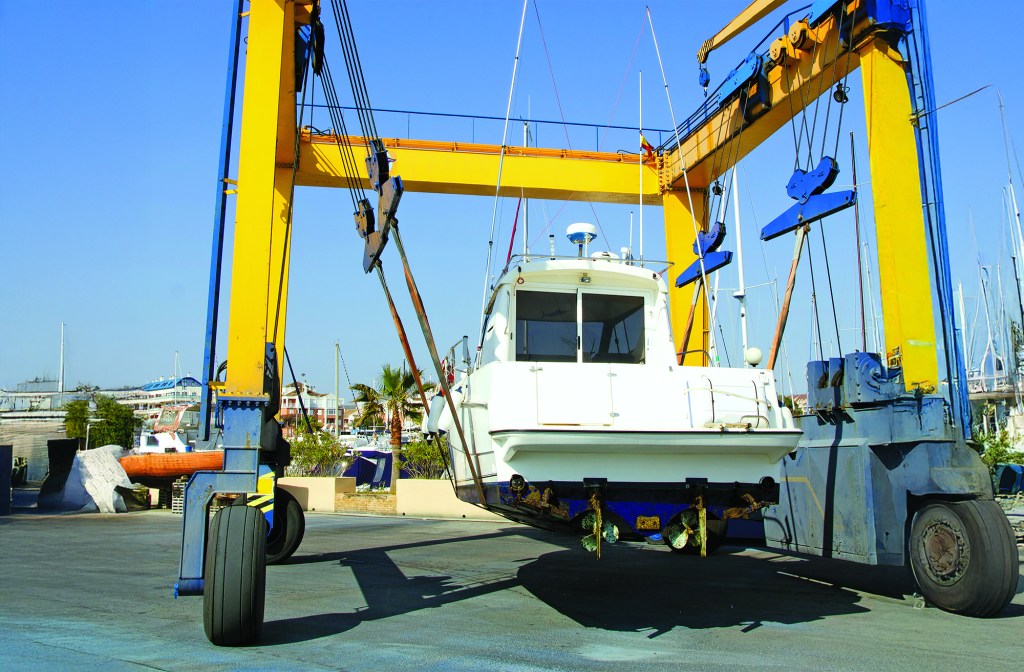
When my neighbor finally made it to the Travelift, a number of issues became apparent. Although the spare prop was installed correctly, the cutlass bearing, which had not been changed since he owned the boat, was worn to the point where the prop shaft was scored as it passed through the strut. Further inspection indicated the shaft was slightly bent.
The yard foreman said the shaft required a replacement. I recommended that my neighbor send out the other propeller and have it reconditioned and balanced, as it wore a distinct, polished line on each of the three blades where it had carved a path through sand. After the expense and effort to eliminate any vibration and smooth the ride, this step was duly needed.
In the engine compartment, the yard repacked both stuffing boxes and checked the alignment of both engines after letting the boat rest in the water overnight while still secured in the Travelift straps.
We then spent a full hour on a sea trial, and my neighbor claimed his boat had never run as well or as smooth. Each engine turned up to its full rpm. On the bridge deck, there was no rumbling underfoot. Hands on the steering wheel were secure even with a light touch.
Although my neighbor had wanted to spend his budget on some interior appointments, he realized the money he spent to get his boat repaired was well worth the expense for the comfort and safety of his young family.
This article originally appeared in the April 2026 issue of Passagemaker magazine.