For more than two decades, Gerald Berton has been working on a problem that’s always been a part of the boating industry: how do you give an owner total confidence at the helm, regardless of experience level or boat size? Originally, his answer was to build the Yacht Controller, a wireless control system that enables yacht operators to maneuver their vessel away from the helm. The mission of safety and ease of use has since grown into an entire ecosystem of safety-focused technology under The Yacht Group.
“As we evolved, we began offering external thrusters, and then expanded the product line for boating customers to include backlit letters, thermal imaging cameras, searchlights, and more,” Berton said. The company eventually became The Yacht Group to avoid branding confusion.
Berton was already a veteran yacht broker with a 100-ton captain’s license and a background in Coast Guard search and rescue when he discovered wireless remote control technology that could be adapted for large boats. The Yacht Controller was launched in the U.S. in 2003, and Berton set out to convince a skeptical industry that a remote could be trusted with a multimillion-dollar yacht.
The trust didn’t come easily, though.
“It took us 10 years before consumers believed the tech was solid and reliable,” Berton said. Today, Yacht Controller is installed on more than 30,000 boats across 200-plus brands, with partnerships spanning major builders and dealer networks including MarineMax, Ocean Alexander, ZF, Pershing, Princess, and more.
Interestingly, adoption didn’t start where you’d expect. “Our biggest market in the first ten years was the Pacific Northwest,” Berton said. “Those buyers tended to be more tech oriented and had greater confidence in wireless equipment.” Two decades later, that early skepticism has largely disappeared. “There’s no longer a reservation about the tech, just competition in price and performance.”
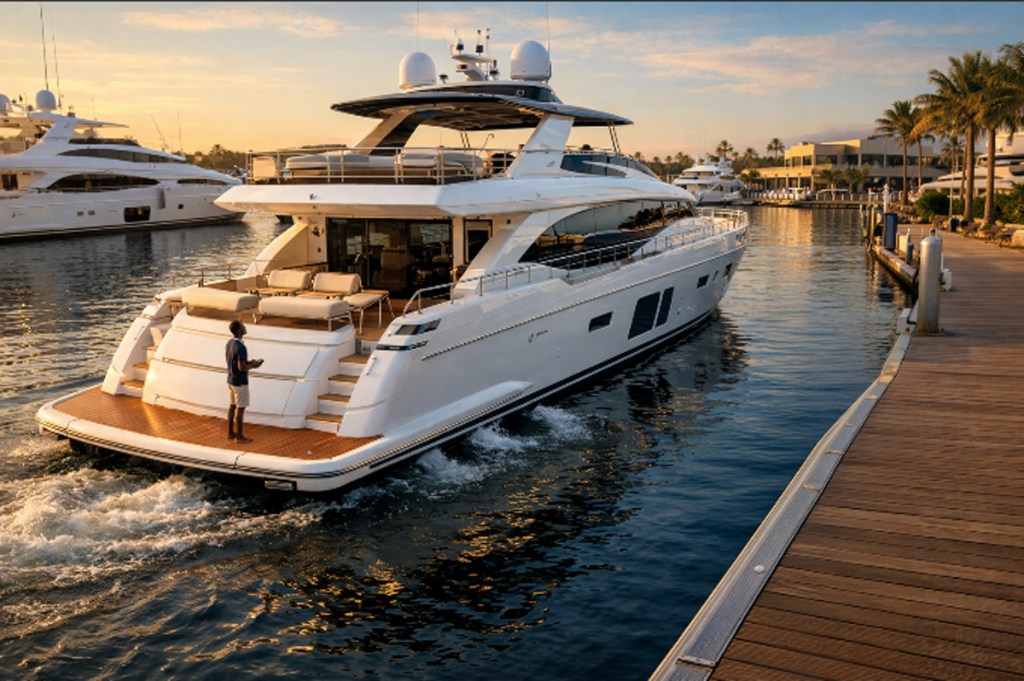
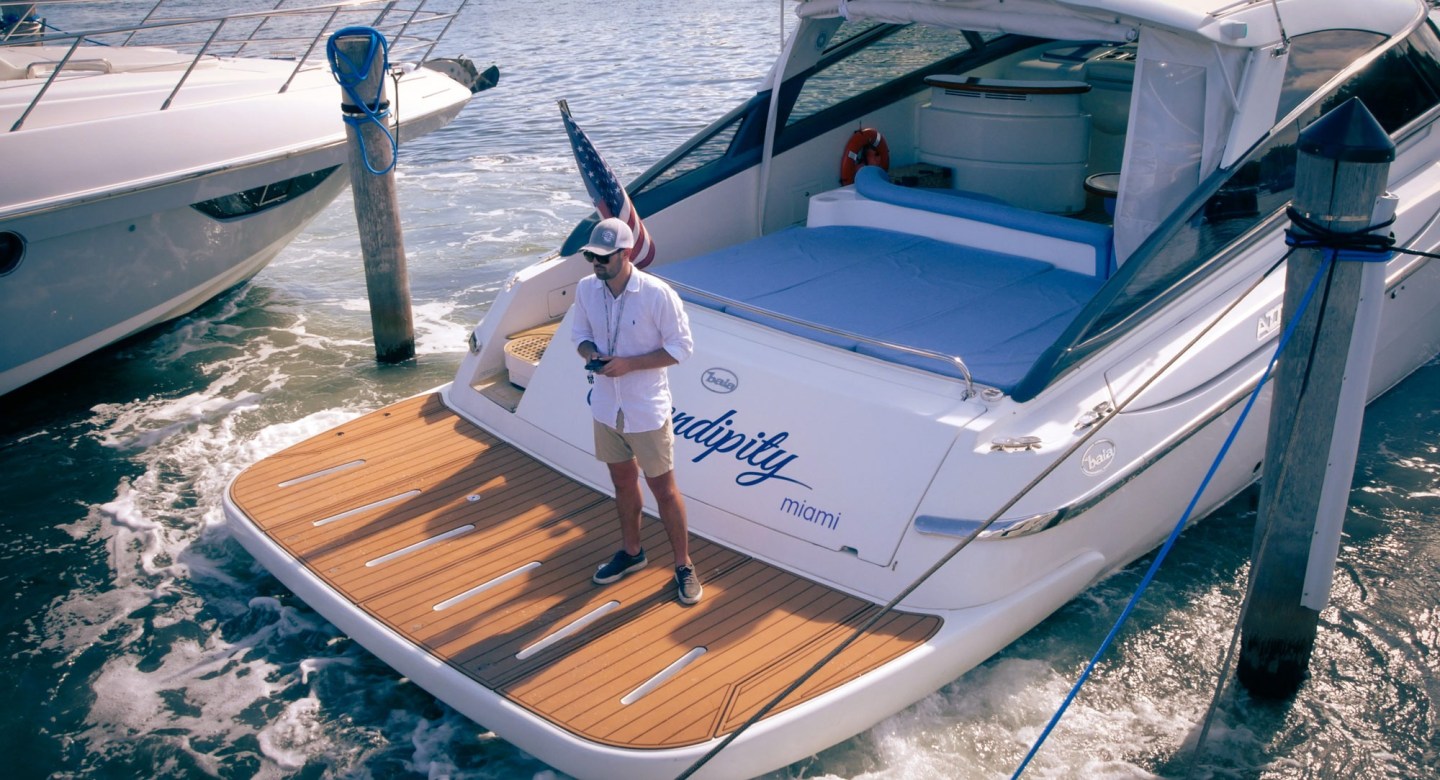
At its core, Yacht Controller is built to give one person the ability to move a boat with total precision from anywhere on board.
“You can move your boat an eighth of an inch in any direction with perfect control,” Berton said. “Many boats have a lot of power and lurch when you put them in gear. When you have a control handle, you’re dealing with a big throw.”
The Yacht Controller system’s levers, developed with Porsche Design, use silicone membrane switches engineered for tactile, look-down-free operation, letting the operator keep their eyes on the water, not the transmitter.
The product line spans vessels from roughly 36 to 150 feet, and Berton says it’s not just single-handed operators who benefit from it. Any captain who wants to eliminate the guesswork of relying on inexperienced hands aboard can make use of the features.
“The owner and friends on the boat don’t always know much about boating. The reality is that help can be harmful,” Berton said. “The captain needs to be able to take full control of the boat if you don’t have an experienced crew on board.”
Even on larger vessels that require additional crew, sightline limitations on models over 50 feet (particularly catamarans, where no single vantage point offers a full view of the boat) make wireless mobility a genuine safety advantage rather than a convenience.
Remote calibration is one of the system’s newer capabilities that addresses long-term reliability head-on.
“Our latest innovation is that once we install a Yacht Controller, you can calibrate it remotely,” Berton said. “We can make any adjustments if there needs to be tuning. It doesn’t require us to run out to do adjustments.”
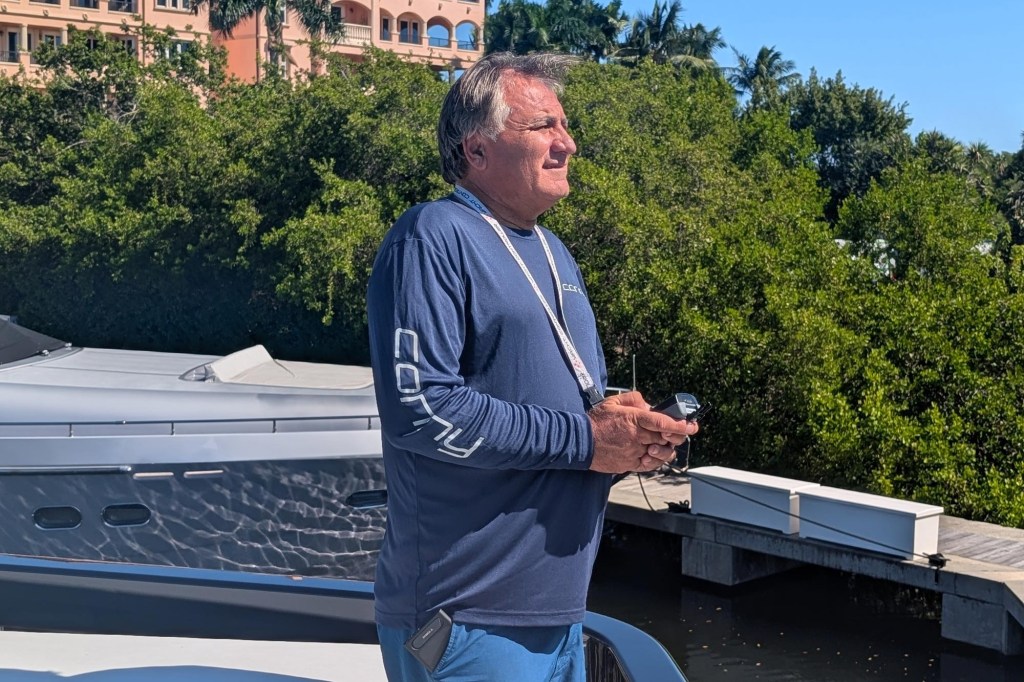
Not every boat comes equipped with a stern thruster. If you’re backing into a slip without one, fine adjustments can be difficult to manage. The Yacht Group’s patented Virtual Thruster technology addresses that gap directly, using differential engine thrust to simulate the same fine control a physical thruster would provide.
“By moving engines against each other, you can vector thrust,” Berton said. “Most boats still don’t have stern thrusters. It’s not easy to back into a boat slip.”
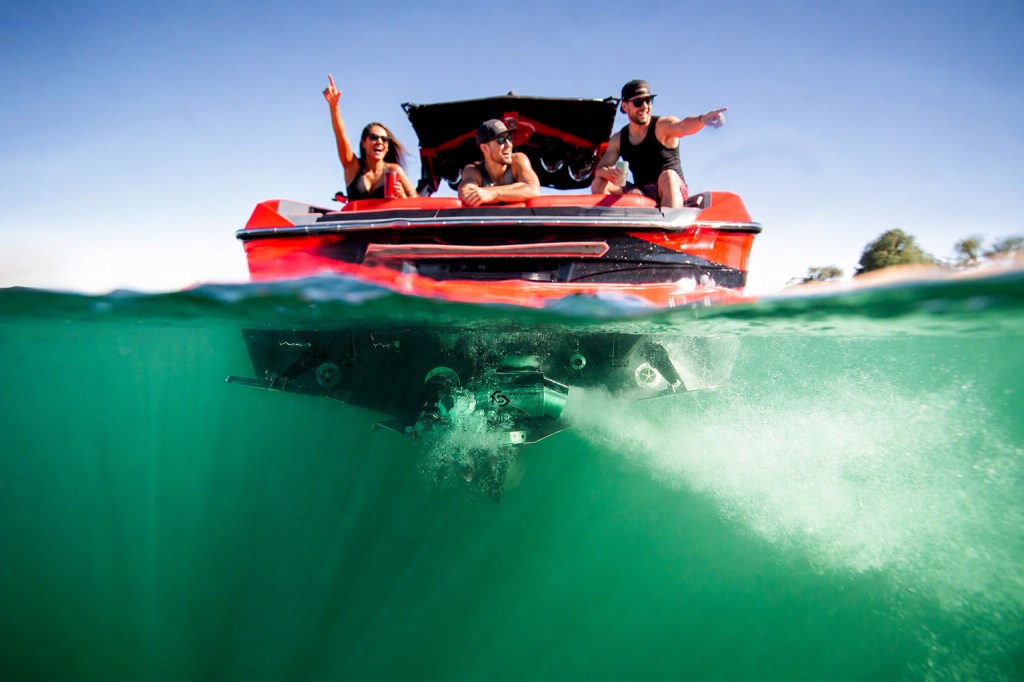
The company has extended similar thinking to the wake sports market, developing an ezDrive thruster system compatible with single-engine wake boats from builders like MasterCraft, giving that segment a level of maneuverability previously reserved for larger, multi-engine yachts.
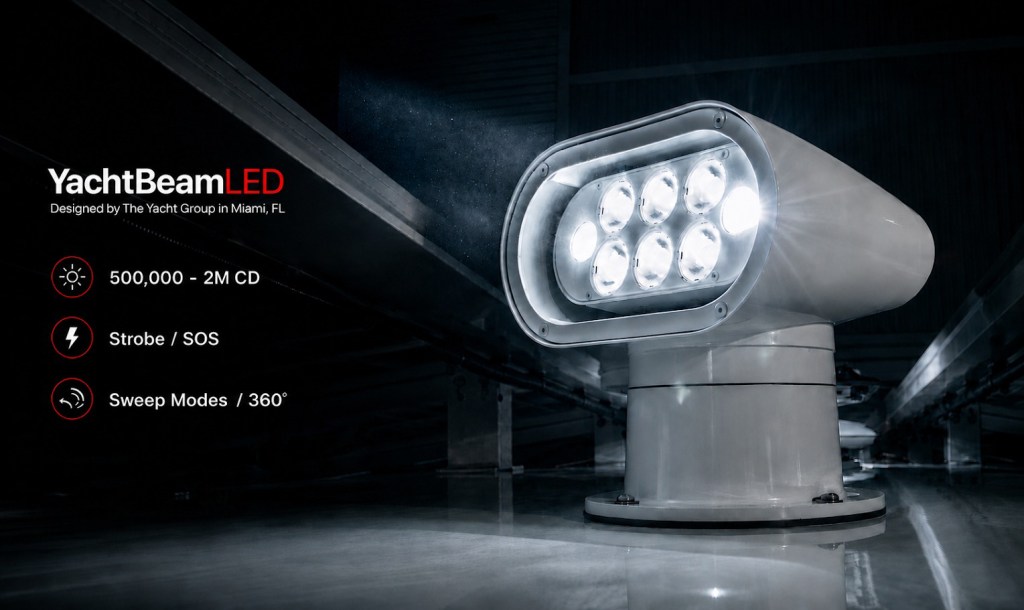
While docking and maneuvering are situations that boat captains have to deal with on every outing, Berton points to another area he believes the marine industry has chronically underserved: nighttime visibility. The Yacht Group’s searchlight line is offered in three tiers ranging from 300,000 to 2 million candlepower and was built around a problem Berton has seen firsthand.
“Searchlights have been neglected for many years, even though we’re having more and more accidents in low light,” Berton said. “You can have a searchlight with 150,000 candlepower on a 100-foot boat, which gives you no range in comparison to the size of your boat. What you really need at night is enough range to avoid collisions.”
Drawing on his own background in Coast Guard search and rescue, Berton says the stakes can become high very quickly and many boat owners are completely unprepared.
“Unless you’re burning on fire, it’s hard to find you,” Berton said. “To be able to find you in a matter of minutes can be lifesaving.” The company’s LED searchlights include self-parking and self-centering functions, obstacle scanning, and a built-in strobe and SOS signal. These features are all designed to make the light as useful in an emergency as it is for routine night navigation.
Technology, of course, has limits, and is no substitute for proper training and common sense. “If you’re single-handedly operating a craft, it’s dangerous to work solely off a screen,” Berton said. “You need your own eyes laid on what’s in front and around your boat. You can’t just rely on instruments to do all the work. Things change in the water, and you need fundamental skills.”
The throughline across every product The Yacht Group builds comes down reducing the anxiety that keeps people from enjoying their boats.
“We make happy customers,” Berton said. “No more tense arguments with family while you’re trying to back into the slip. Safety improves the boating experience and makes it all less stressful. Our biggest goal is to increase the safety and enjoyment of boats,” he said.
That philosophy extends to Berton’s own boating life. He’s operated everything from a 16-footer to a 150-footer and his current 70-footer, and says it’s the small habits that separate a stressful docking from an effortless one.
“You have to take time to set permanent lines for your boat in your dock space,” Berton said. “People never spend the time to do this. If you properly set all lines, you can get away and get back in and tied up without any grief.”
He applies the same discipline to anchoring, a maneuver he says trips up even experienced boaters. “I see people all the time out on the water having to move multiple times to get their anchor set. If you have a Yacht Controller, you can stand and see the anchor going and put the boat in gear, so when you know it bites. Then you have complete control. It takes me two to three minutes to anchor a big boat.”
The ezDrive.ai system, which brings smartphone-based control to smaller center console boats, is one signal of where Berton sees the next wave of growth. “Tech will revolutionize the small boat industry,” he said.
Ultimately, though, Berton’s philosophy has less to do with gadgets than with mindset. “I’d like to see more people boating and having fun and being safe,” he said. “You can’t rush a boating trip. You can’t count on exact times in the water. Have the attitude that it’s not a train with a schedule, and you’ll have more fun and stay safer.”