

Story + Photos by Jim Sprague
My parents, in their 80s, had never been aboard our first trawler, Perseverance.
We had one chance to change that, if we could overcome some obstacles.
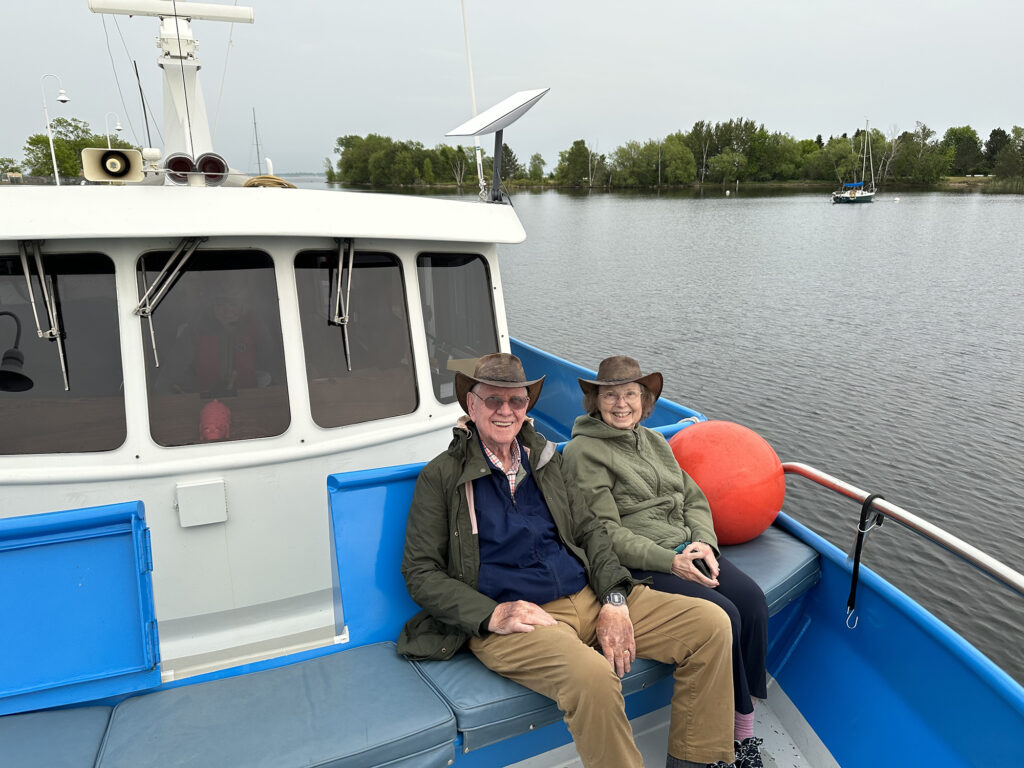
We’d never had my octogenarian parents on board our 49-foot passion project, Perseverance, and if we were going to do it, the time was in June, in Chicago. They’d be passing through on their last epic driving vacation from their home in Connecticut to our region in the Midwest, and we wanted, at least once, for them to experience all the great things that have made owning this boat worth it.
Logistics for meeting them in June dictated that we start our cruising season with our longest-ever-attempted voyage. Chicago is about 260 miles south of our winter quarters in Marinette, Wisc., so we planned to traverse Lake Michigan with several stops along the way. We built in slack for the inevitable weather and equipment delays, and we got buy-in from everybody who was going to try to see us at our various ports of call.
Our itinerary would include a nearly full circumnavigation of Lake Michigan with the boat fresh out of the barn for the season, after several repairs and upgrades, and no shakedown cruise.
We had a plan, which means that God had already started laughing.
Long Time Coming
Our youngest child, Juxta, had discovered Perseverance online. We’d purchased it during a period of pandemic-
induced insanity.
The first glimpse my wife, Lori, and I had of this steel-hulled boat was early in the Covid lockdown, when we were all sitting around, trying to take our minds off dread and death. Lori asked Juxta to “find us a good boat with a nice galley,” while I requested it be stout enough to handle the Great Lakes.
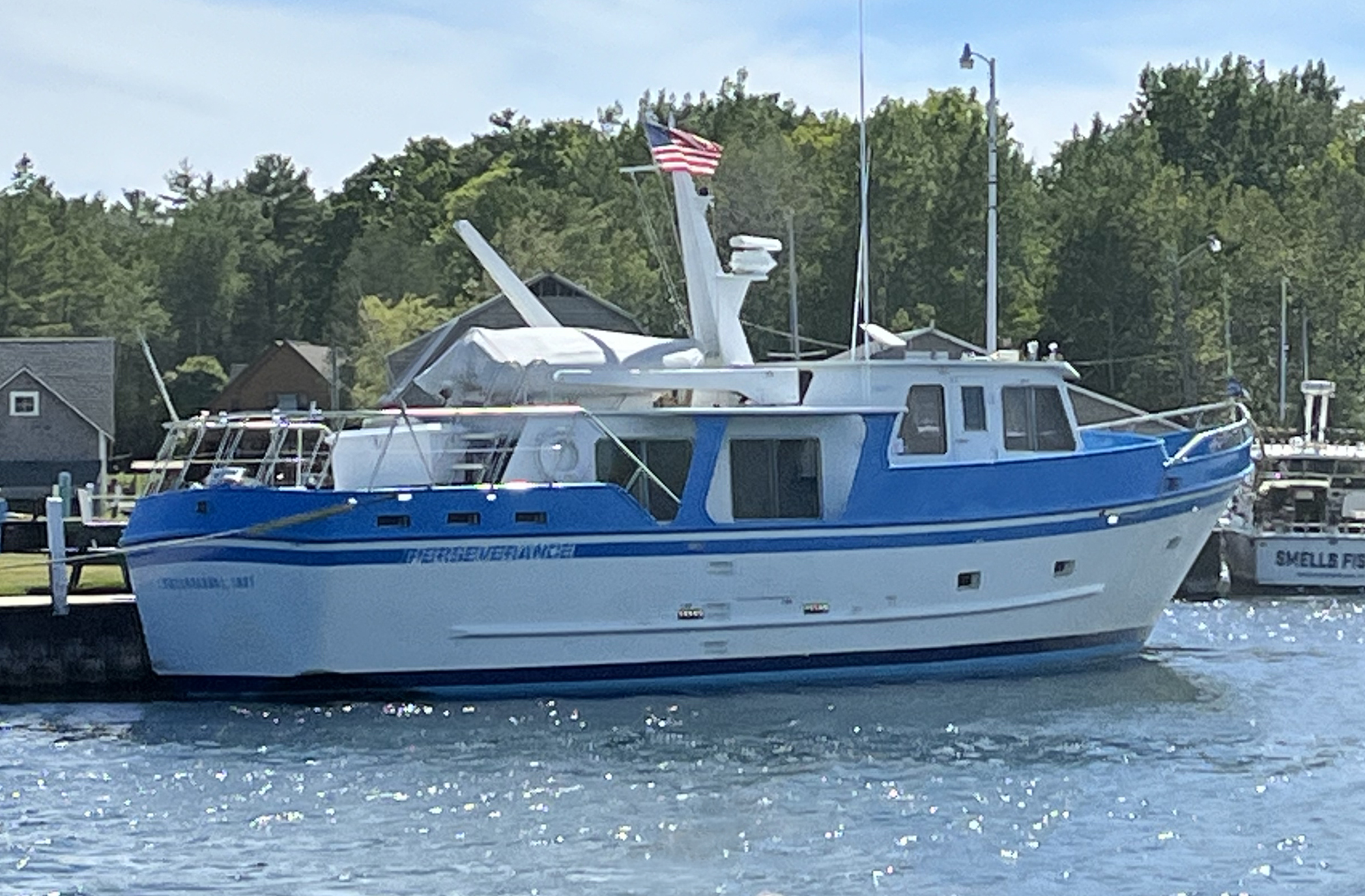
Juxta’s keyboard clattered for a few minutes. We heard: “Found it.” The next thing we saw was a photo of a pretty blue trawler kicking up a neat bow wave.
For months, we tried to find a smaller, better or more sensible boat. We failed.
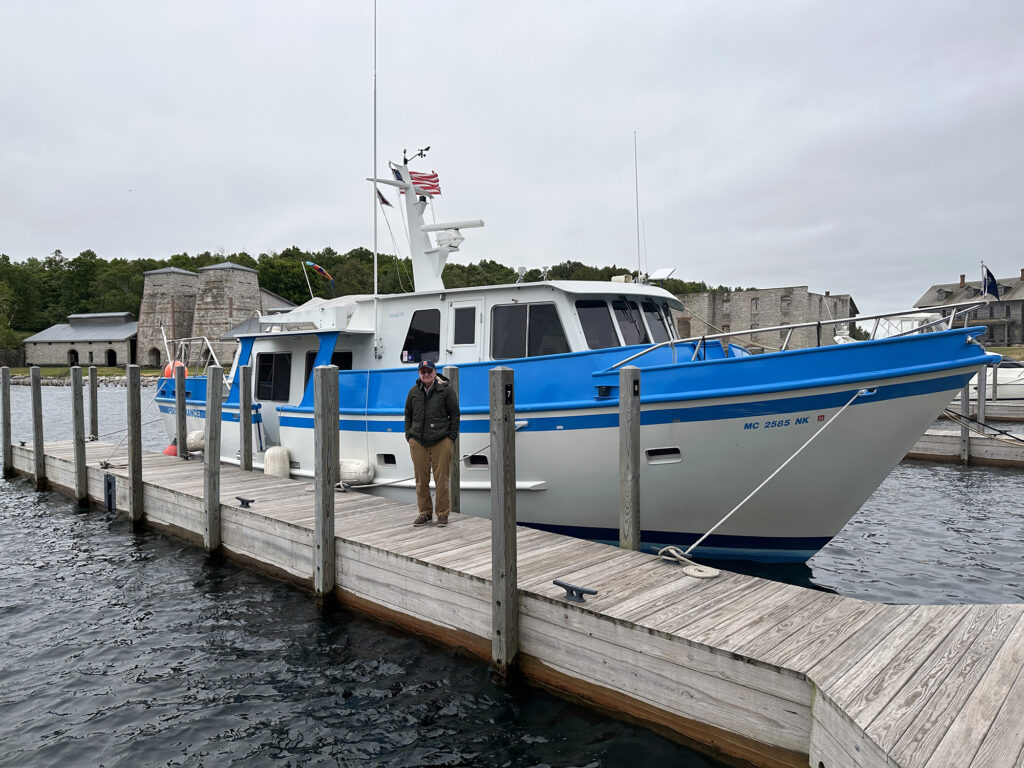
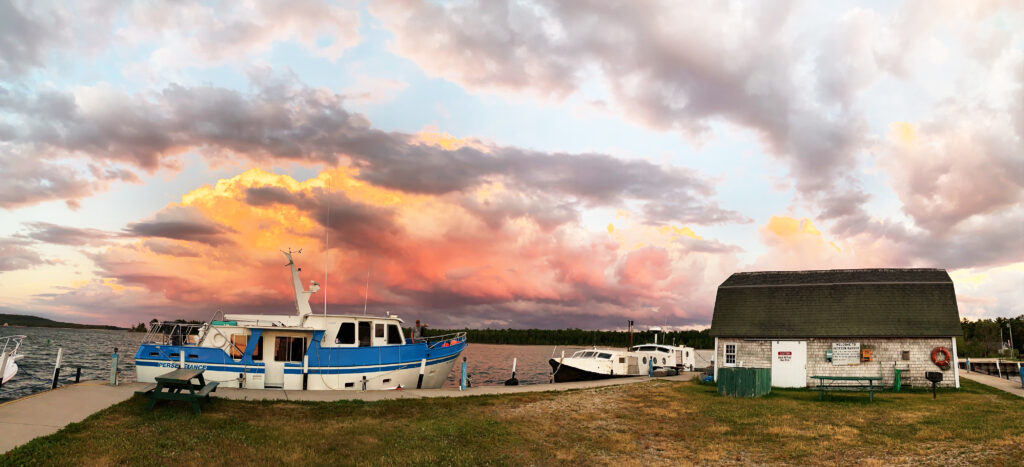
Perseverance was designed and hand-built by Roy Ness, a World War II and U.S. Coast Guard veteran and businessman. The boat was a competent and comfortable Great Lakes cruiser. Her wide side decks and spacious engine room with a workbench make quarters tight elsewhere, but the layout is clean and efficient.
Amazingly, Ness started building Perseverance at age 70 and launched her 18 months later, in 1993. Ness did much of the work himself but also relied heavily on talented family members and local welders with shipbuilding experience. She has a well-equipped galley and sleeps six people comfortably in three staterooms.
Perseverance also has a full keel for protection of her single, 30-inch prop. Power comes from a 180-hp Cummins turbo diesel drawing from twin 550-gallon integrated steel tanks. Ness filled the hollow skeg with 1 ton of lead ingots for roll stability.
Ness was fond of hydraulics, which actuate fin roll stabilizers, and also power her bow thruster and anchor capstan. Prop walk is negligible, while a brief throttle burst at full rudder can thrust the stern smartly to port or starboard. The efficient hull and drivetrain let Perseverance cruise at 7 knots for a 2,000-nautical-mile range. She’ll top out at just over 9 knots.
Before we purchased her, Perseverance spent several on-the-hard seasons in the Ness barn after Roy died. The Ness family performed their usual maintenance before launching for our sea trial, and mostly everything worked fine.
During the first two seasons, we worked hard at learning the boat and performed upgrades on several of the 30-year-old systems. LiFePO4 battery banks and a high-capacity alternator have replaced the original hydraulic generator (we left the old genset in for ballast). Navigation has been modernized with AIS, but the classic Raytheon radar unit with its awesome green CRT display proudly and reliably remains. There are new VHF radio units, and a great deal of onboard lighting has been replaced with more efficient LEDs, thanks to our son Kent.
The boxy, original, shop-built water-lift muffler made of 3/16-inch mild steel was replaced with lighter and stronger 1/8-inch 304 stainless steel, buffed to an almost mirror finish in the engine room. Aside from a new gyro for the fin-type hydraulic roll stabilizers, all other critical systems remain solid and functioning as designed in 1993.
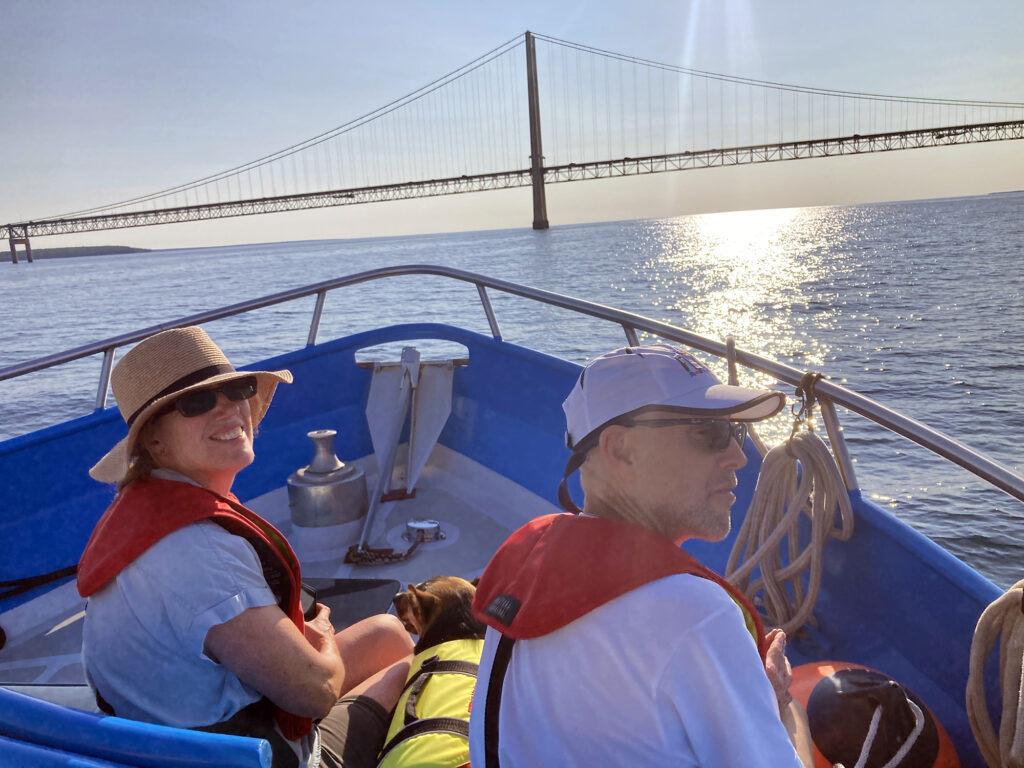
It was a giant step up for us to a 49-foot, 35-ton vessel. Our previous fleet consisted of sailboats under 20 feet. We’re competent sailors and had rented diesel craft abroad. We hoped that our experience, plus some studying and quality coaching from the Ness family, would help us get by.
By the time we were ready to cast off to meet my parents, it was our third season with the boat. Generally speaking, we were able to operate Perseverance in a manner that didn’t terrify us or others.
The Best-Laid Plans
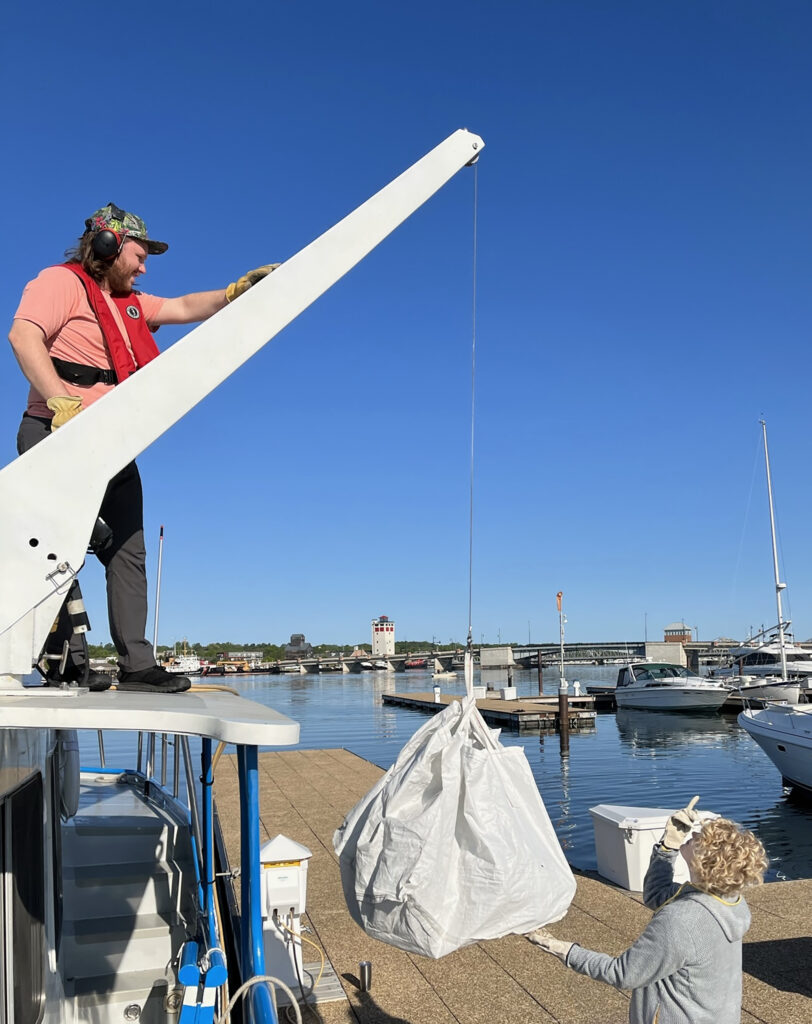
On a Friday in late May with Kent aboard, we had a windy but safe departure from Marinette and spent the night in Sturgeon Bay. The next day, we navigated to the open waters of Lake Michigan and headed south to Sheboygan. Lori has keener eyes and a better weather sense than I do, so most navigation and helm duties are hers. I tend the lines and fenders, and inform her where the bow and stern are heading through our radio headsets.
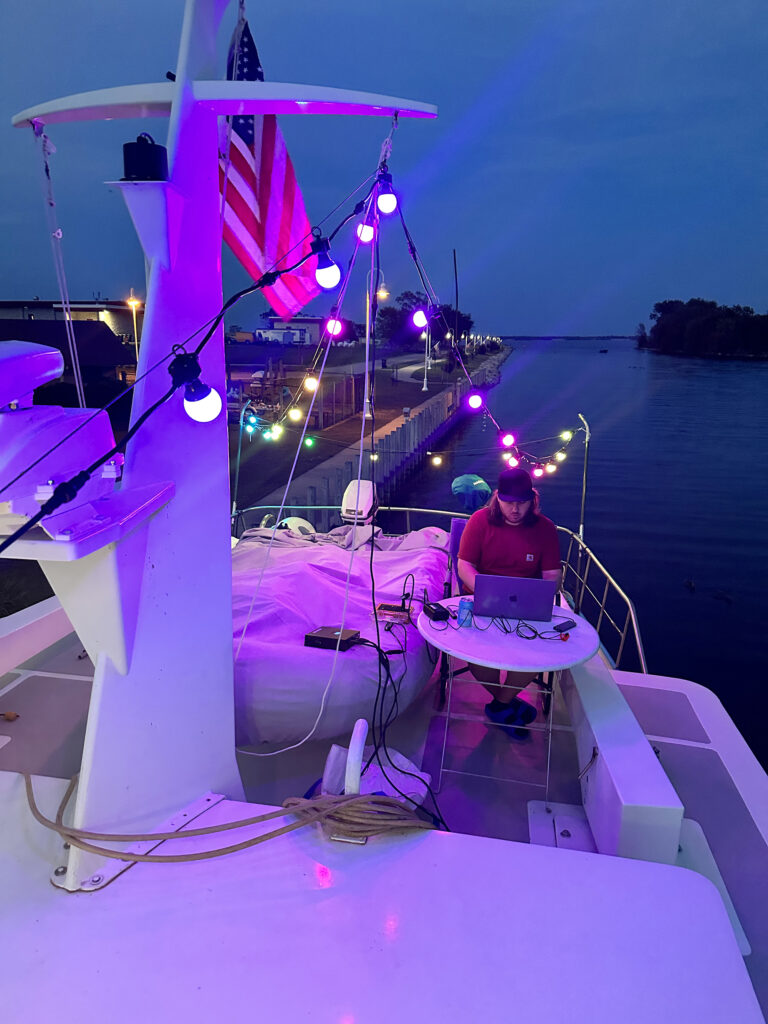
Kent and Juxta, along with their spouses Hanna and Lauren, help with projects and as crew. In Sheboygan, for instance, we enjoyed the riverfront and fired up the 90 feet of programmable colored lights that Kent had just designed and installed for us.
We were on schedule, and things were looking great. We arrived in Milwaukee without issue and explored the area on bikes. Kent and his wife, Hanna, who had joined us in Sturgeon Bay, caught the train for Chicago, where they both had a week of work waiting for them. We waved goodbye, bragging about how we might beat them to Chicago.
Lori booked us a slip in Waukegan, Ill., a 50-mile jaunt south of Milwaukee, putting us within easy striking distance of Chicago. Without the extra crew on board, I cleared the lines myself and Lori slowly maneuvered 69,000 pounds of Perseverance into the marina exit channel.
After clearing the harbor, Lori set the speed and autopilot, and I went below to check the mechanicals. I opened the door and stumbled into a haze of choking fumes.
There was also a moderate geyser of water shooting out of our new muffler.
I took some quick photos and scrambled up to inform Lori of the situation, which I did in an exceedingly incorrect fashion. Had I thought before speaking, I would have asked her to step away from the helm, calmly told her we were in no immediate danger, and started a discussion about the possible merits of turning around.
Instead, I came up the stairs and said, “We’re taking on water.”
She instantaneously disengaged the autopilot and spun the wheel to full port rudder while still at cruising speed. This caused Perseverance to wallow like a hog. Roll stabilizers screamed in protest as the boat leaned hard to starboard, dumping the contents of our unlatched fridge and freezer onto the galley sole.
After making it clear to Lori that we weren’t sinking—the twin bilge pumps were easily keeping up with the flow—and explaining that the lake water being pumped into our boat would halt once we stopped the engine, she calmed down and docked us at our previous spot. I tied us up and went back to the galley to contemplate the grisly mess congealing in the galley.
We made some calls and wrestled the 90 pounds of leaking steel muffler out of the engine room, into the bed of a welder’s Ford F-350. Unwilling to let the muffler out of her sight, Lori rode along.
Hours later, she sweet-talked the shop employees into heaving the repaired muffler into an Uber XL before the driver could protest. We reinstalled it ourselves with only one nut lost to the bilge gremlins.
Try, Try Again
Good to go, we again exited Milwaukee harbor, bound for Waukegan, Ill., now on a tight schedule. At this point, we could just make Chicago in time to meet my parents and local relatives. I checked the muffler carefully once we had cleared the harbor and were underway. It looked fine, but I could see that the flat sides were pulsing.
I happen to know a bunch of good metallurgists, so I called a couple. I learned four key points: the flexing steel was fine; bad welds happen, and one likely caused the failure; we couldn’t rule out fatigue or defective muffler design; and the safe choice would be abandoning any plans to cross Lake Michigan with two octogenarians aboard until we had more answers.
Lori and I thought hard about turning back to our home port. Then I went below for another visit, and the decision was made for us. By golly, we had ourselves another gushing leak, in a new spot.
This meant two weld failures on two different edges of a brand-new muffler, both within 12 hours of installation. My conclusion? Fatigue failure, chiefly due to my design error. It turns out the muffler’s new stainless steel resonant frequency matched the engine vibration. Damn.
Defeated, I climbed the stairs and told Lori that I had broken the boat again. She sighed and immediately (but calmly) changed course for nearby Racine, Wisc. There, we repeated the task of canceling reservations and finding a welder.
The next day, we trudged back to our blue boat with a no-longer-beautiful muffler. My formerly svelte, sleek and polished box was now a scratched and weld-spattered Frankenmuffler. Stout reinforcing brackets were MIG-welded on speedily and solidly, and a stiffening girdle was on several of the most vibration-prone faces. It’ll probably last forever, but the repeated failures had doomed our trip.
Starting at first light the next morning, we ran for 12 solid hours from Racine to Manitowoc. Across the calm seas, we contemplated the fickle nature of boats and life. I was keenly disappointed that my parents were going to have to return home to their reliable medical providers, having never seen nor boarded our vessel. They had been excited, finally, to experience our ridiculous passion project, but my design failure had dashed everyone’s plans.
On a Monday in early June, after five harrowing hours pounding through 5-foot swells from Manitowoc to Kewaunee, the reinforced muffler proved solid and vibration-free. Then came an unexpected call from my parents informing me that they were tired of Chicago but had decided to keep driving west, “because we’ve never seen Devils Tower.”
“Um, isn’t that about a thousand miles in the wrong direction from Connecticut?” I replied.
Dad acknowledged that, yes, this national monument in Wyoming was a bit out of the way, but they were feeling good at the moment.
“Maybe we can swing by Escanaba on our way back home and see your boat. Do you think you could get it there?” he asked.
Dumbfounded, I assured him that if they got to that part of Michigan, so would we.
And Then, It Happened
We meandered on home via Marinette for further electronics diagnosis. Once back in our home port of Escanaba, we tried to recover our wits and did more repairs. Meanwhile, the GPS tracker that my sister had planted in Dad’s car informed me that my parents were indeed making their way to, and then eventually back from, Wyoming.
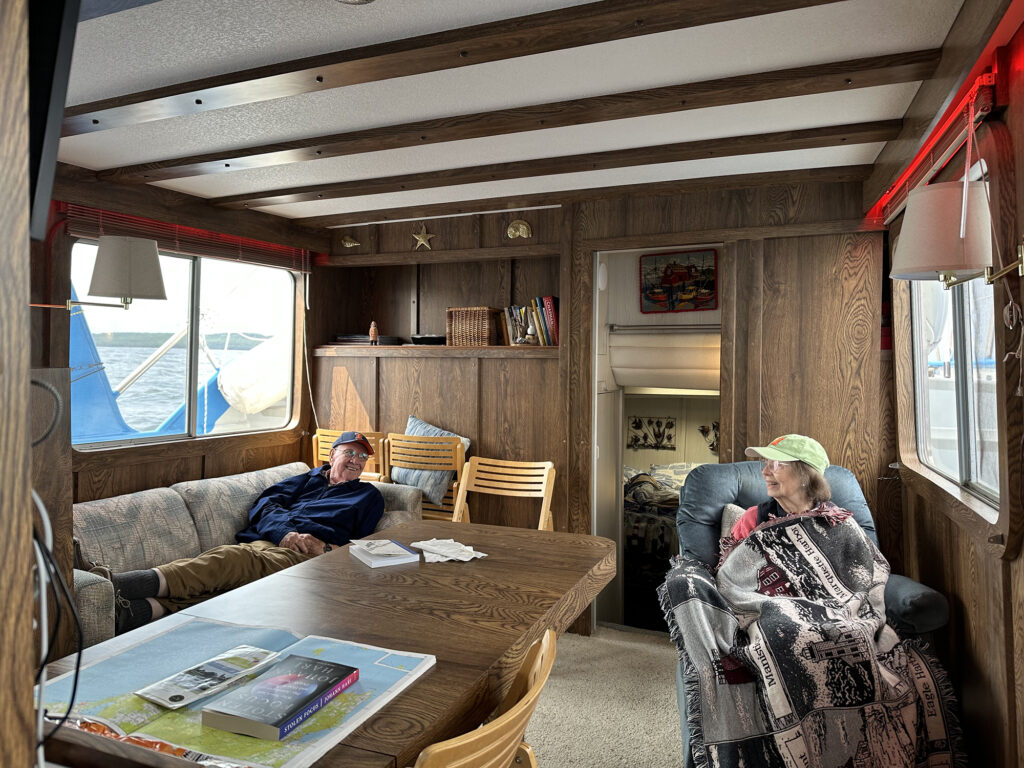
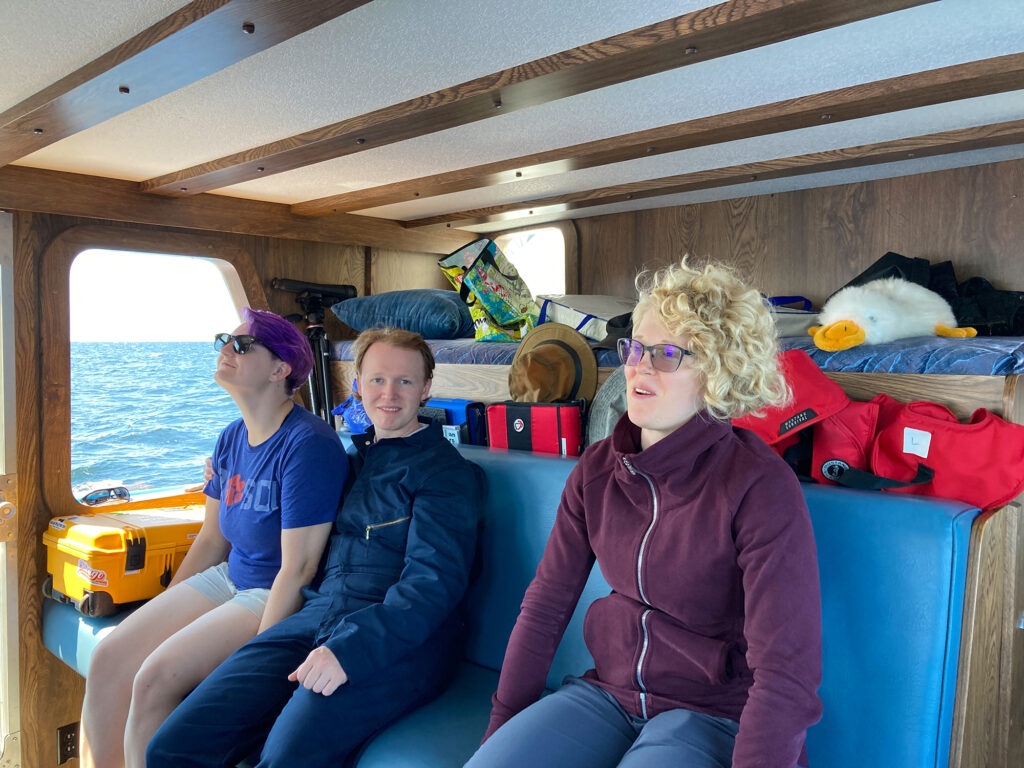
Finally, on a Wednesday in mid-June, my road-worn parents found Escanaba’s Sand Point Lighthouse just yards from our berth. We welcomed them aboard and put them in the easier stateroom. We got Mom’s balky portable oxygen concentrator to function, though it protested mightily. After breakfast, Lori piloted the boat in Little Bay de Noc onto Fayette’s gorgeous Snail Shell Harbor a few hours later.
It was a rough crossing, windy and cold, but they were troopers. Once docked, Dad, a lifelong amateur geologist, happily explored cliffs and the ancient cedar trees unique to this part of the Niagara escarpment. Mom walked a little before retreating to the cozy, heated cabin.
The next morning, a friendly Michigan Department of Natural Resources employee offered my folks a golf cart ride up the monster hill to their car. We got them loaded in, pointed them east toward the mighty Mackinac Bridge, and waved goodbye.
That left us alone with Perseverance and no evidence of our recent trials and tribulations, save the outlandish Australian brim hats my parents forgot to pack.
We said a quiet “thank you” to the boat before Lori pointed the bow back toward Escanaba.
Every boat failure we experienced that season seems to have resolved or somehow paid some sort of dividend. Failures are part of the boating experience, and I dare say that overcoming them is part of what makes us glad we chose this journey.
Perseverance Specifications:
LOA: 49ft. 3in.
Beam: 16ft.
Draft: 4ft. 7in.
Displacement: 69,000 lbs.
Fuel: 1,100 gal.
Water: 200 gal.
Engine: 1x 180-hp Cummins B6T5.9M
This article originally appeared in the May/June 2025 issue of Passagemaker magazine.