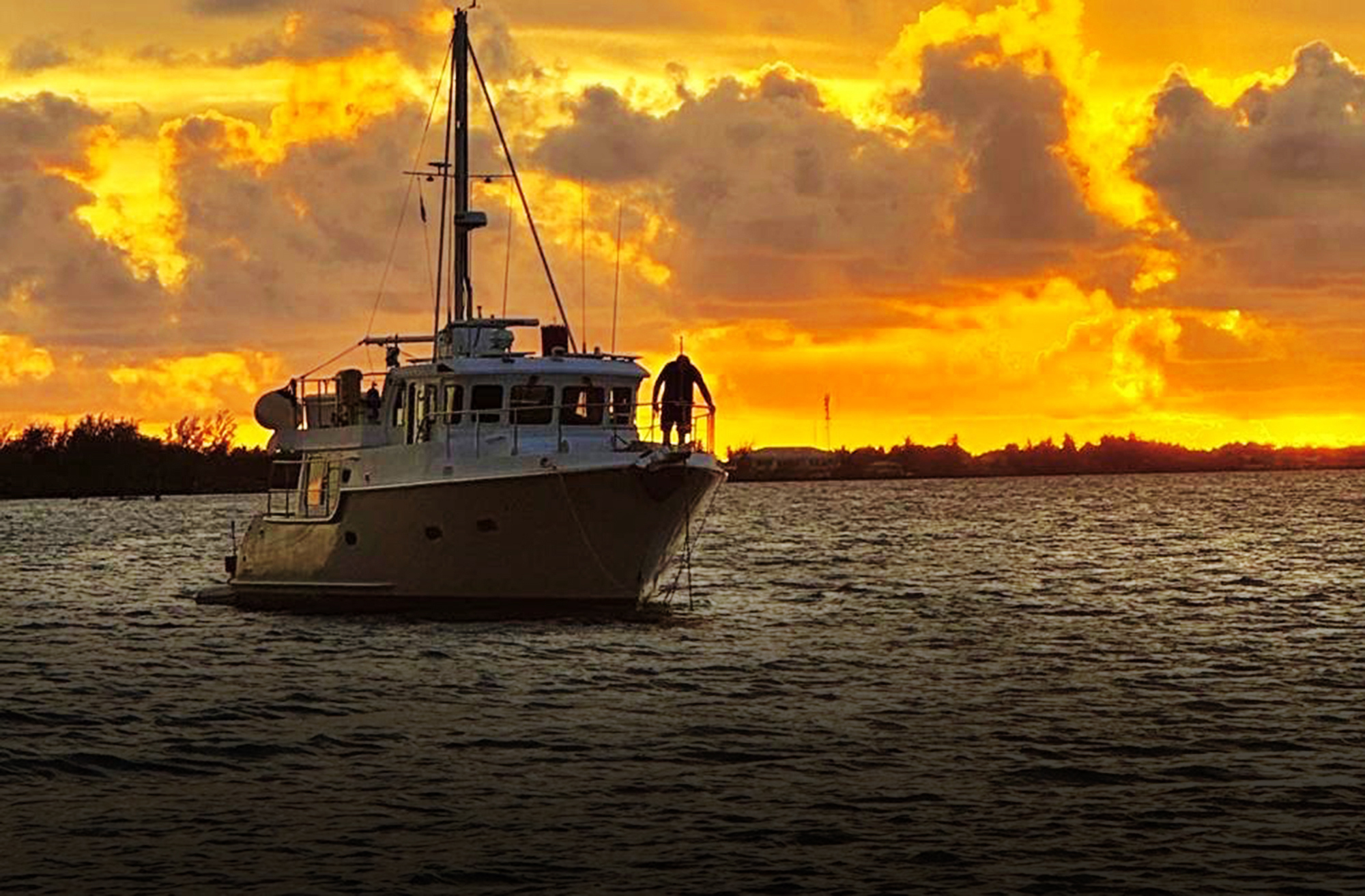
My husband, Gerry, and I are four days into a seven-day passage to Bundaberg, Australia. It’s a continent we’ve never visited, and our arrival will be a special milestone, happening exactly one year to the day from when we left Jacksonville, Fla., aboard our Nordhavn 43 Celt.
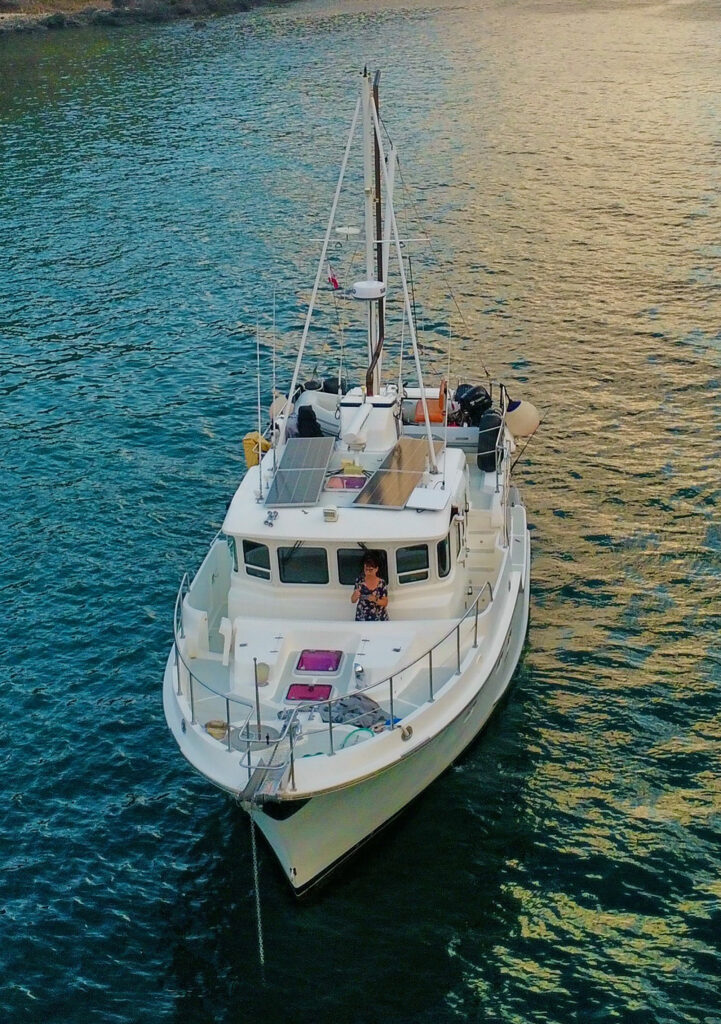
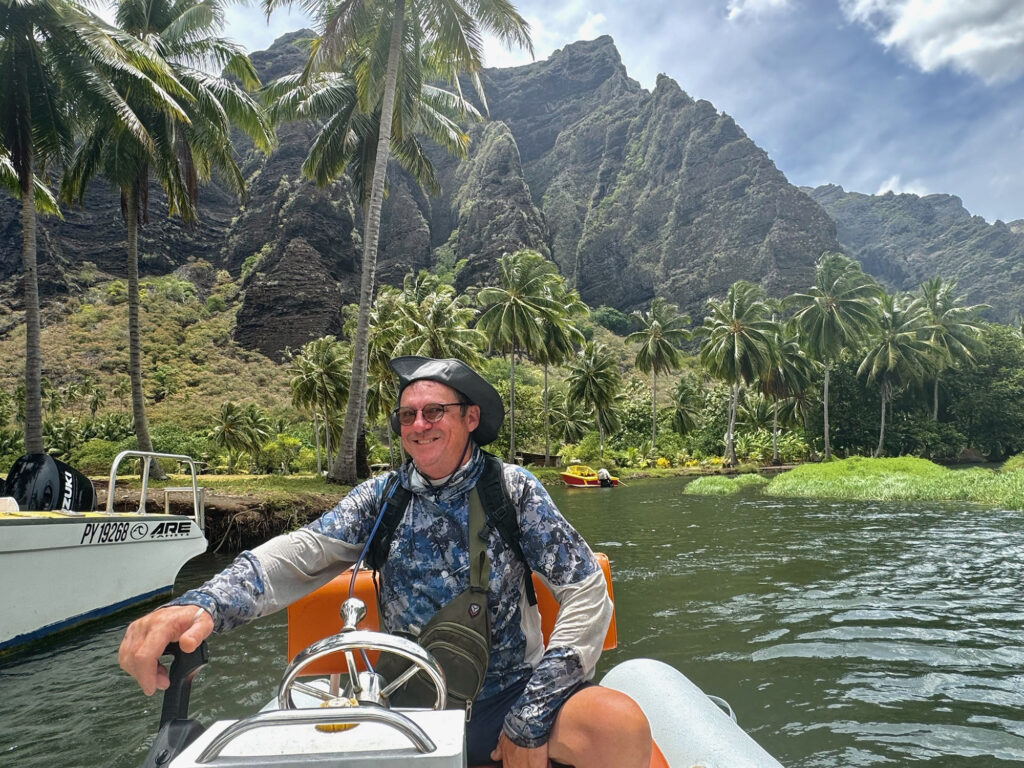
Between then and now, we have experienced so much of what makes the South Pacific a bucket-list destination for so many boaters. Our 3,900-nautical-mile run from Panama included only one stop, for 20 hours to top up fuel in the Galapagos. We’ve spent far more of our time in the Marquesas, the Tuamotus and the Society Islands. We wanted to see the incredible landscapes with towering, lush mountains and sparse coral lowlands. The people, the culture, the sea life, the magical sunsets—all of it is worth enduring the constant threat of strong winds, the reef dodging, the infamous atoll passes and the thrashing swells that tormented our dinghy at the dilapidated docks.
The camaraderie of fellow cruisers kept us going after several months of navigating this wild and dispersed landscape. At Papeete Marina in the capital of French Polynesia, we felt excited to be in a city again. Docked stern-to the busy street, we often just sat there, taking it all in. We were a five-minute walk from French baguettes, the marché (which even had tomatoes) and our favorite restaurant, Gobie on Rue Émile Martin. We watched the Olympic torch pass through the marina to the proud beating of drums as the surfing competitions began in Teahupo’o, 10,000 miles from the host city of Paris.
We even met a couple of sailors from Dublin, Ireland, our home nation, traveling with their dog, Jake. We spent many a long night with so much to chat about, beginning with happy hour over tapas at Meherio Tahitian Bistro, and ending hours later for a nightcap at Gobie.
WhatsApp became a daily communication tool with dozens of boaters. Chat groups named “The Coconut Milk Run,” “Going to Fiji” and “Going to Australia” provided inspiration and buddy-boating opportunities. Dave and Sherry McCampbell’s website, svsoggypaws.com, is a brilliant answer to the lack of cruising guides in these areas—and it alerted us to a problem.
The biosecurity issues around importing dogs had changed, making it almost impossible to continue traveling with Ellie, our much-loved Yorkipoo. We decided to take her back to Florida, where our generous neighbors offered to foster her until we finished our boat travels. We were crestfallen, as she had been such a great support for us as we grieved the recent loss of our son. She made us laugh when we didn’t feel like it, especially when she balanced along the side of the dinghy at 8 knots or whined for some leftovers after dinner. When we had guests over in the evening, she would start giving her stare and little bark about 9 p.m. to let them know it was our bedtime.
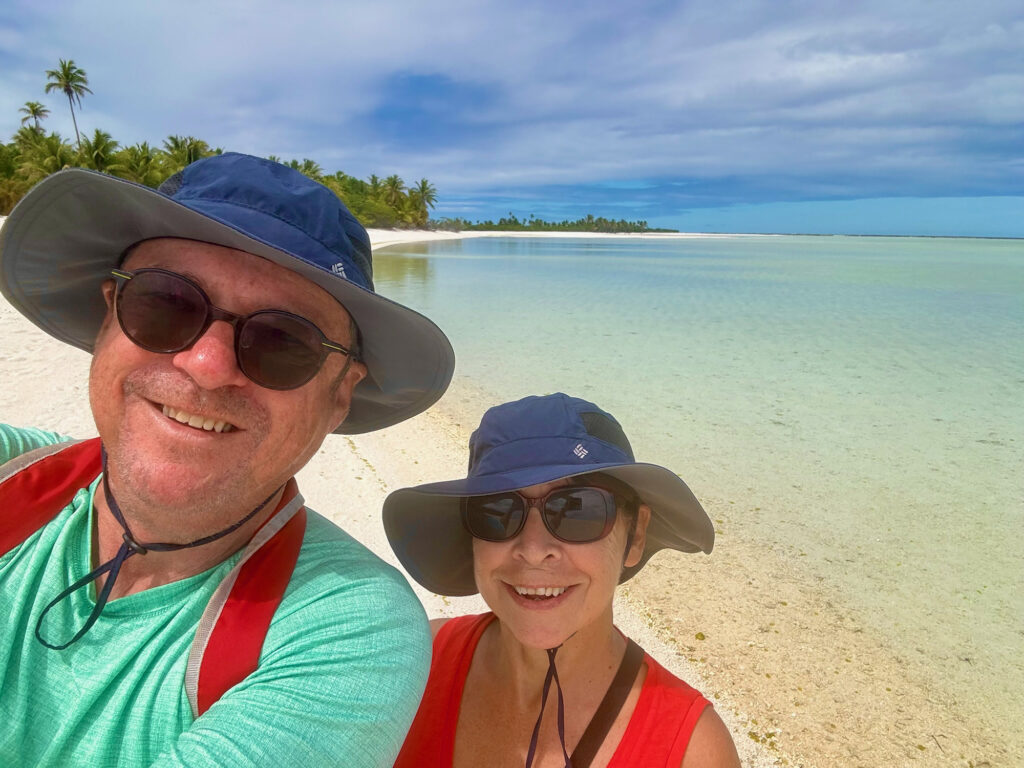
I made the long trek back to Florida with her, took three flights each way, and was back on the boat within a week. Our next stop was Bora Bora, where we circumnavigated the island by dinghy, avoiding reefs and snorkeling in the clearest water we have ever seen. We dined at the Bora Bora Yacht Club with spectacular sunsets every evening.
We then cleared out of French Polynesia and did an overnight trip to Maupiha’a. The narrow pass to get in at this atoll is quite intimidating, with a strong current and virtually no channel markers. There are only nine full-time residents, and the supply boat came about once a year. We ended up being weather-bound here for three weeks, along with eight or so other boats. One evening, we had a potluck supper and singalong to Irish ballads with a cruiser from New Zealand who played the guitar. The crew from Cushla Na Mara were on the tin whistle and harmonica.
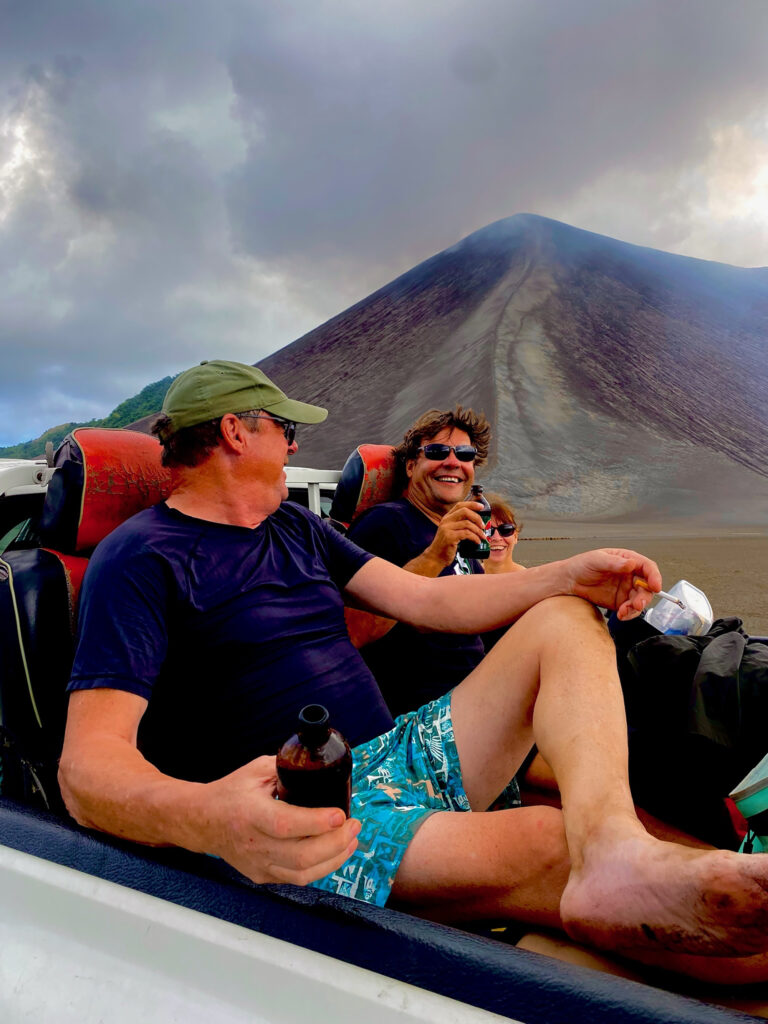
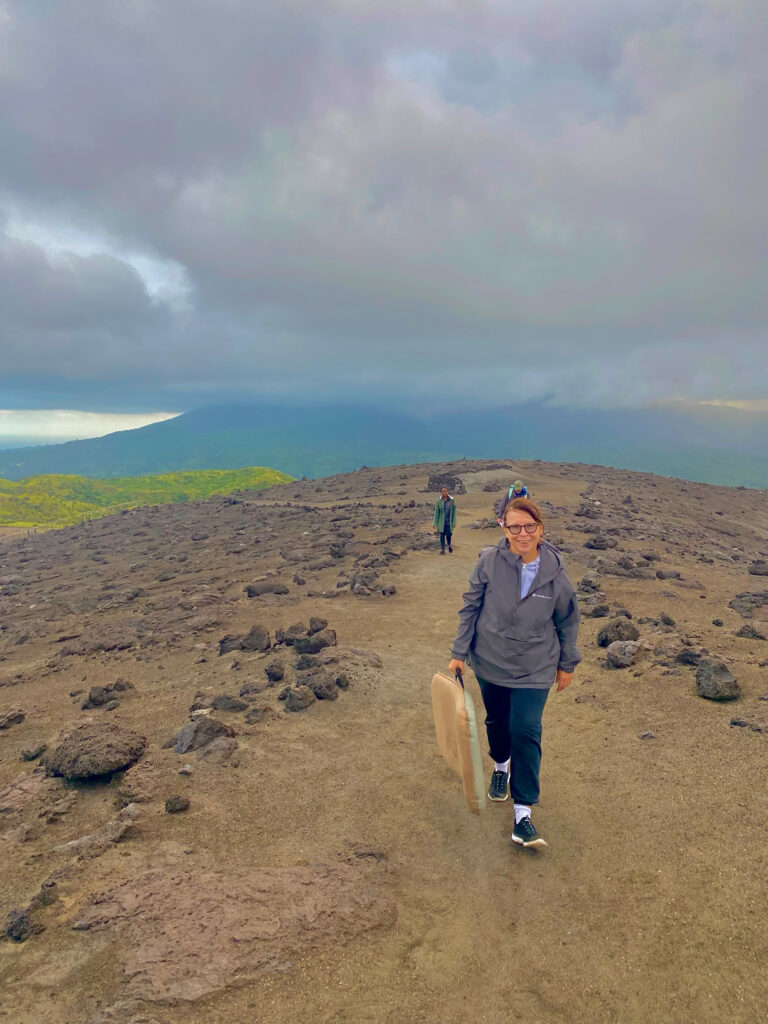
The Jeep ride was only part of the journey up Mount Yasar in Vanuatu, an active volcano. They were dropped off for a steep climb on rough steps to the crater’s rim to watch the show.
Our hope had been to go from there to Tonga, but weather made it a better choice to head toward Apia in Samoa. After two days of lively, 10-foot seas, the forecast improved considerably, so we kept going and made the long passage to Fiji. Twelve days later, we arrived at Savusavu, Fiji, to an absolutely stunning sunrise. At Nawi Island Marina, we couldn’t wait to get off the boat, but we would have to stay awake and wait a few hours for customs, immigration and biosecurity to arrive.
Savusavu was made even sweeter by our Dutch friends on the 56-foot Lagoon Samadhi, whom we had befriended three years earlier in the Caribbean. They were buddy-boating with a Swedish solo sailor on Saoirse, a Dufour 40. A special moment for us was as we waited in the customs dock: Our Scottish friend from Jus Do It, an X55, paddled up beside us with fresh bread and eggs for breakfast. Later, we rekindled our friendship with the now-7-year-old Jack from Samadhi, who fondly says we are like his sailing grandparents.
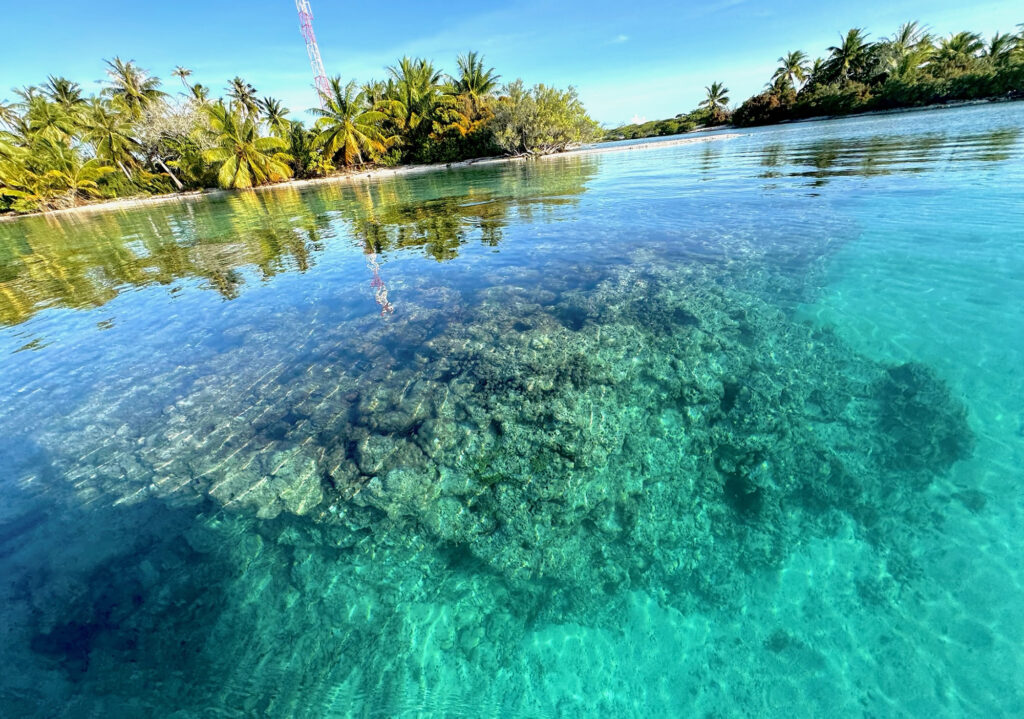
In one of the online groups we joined, we learned about another small motoryacht out here: Opal Lady, a Nordhavn 43 from Australia. We caught up with them in the Blue Lagoon Beach Resort in the Yasawa Islands, where sailors in the anchorage must have been surprised by the two powerboats.
Our last stop in Fiji was Vuda Marina, a large facility that accommodates boats during cyclone season by way of “pits” dug out to fit each boat’s keel. We left well before those kinds of storms came. We had more than 1,000 gallons of diesel bunkered to us at our slip, and were delighted when a group of marina workers came over to sing us a sweet goodbye.
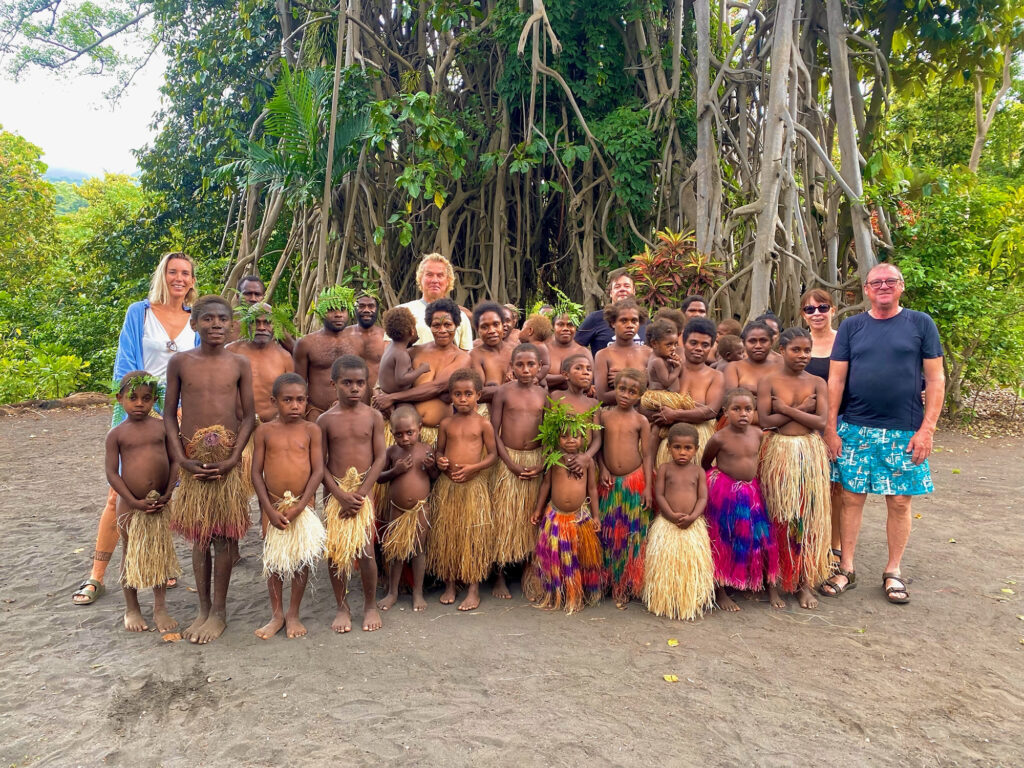
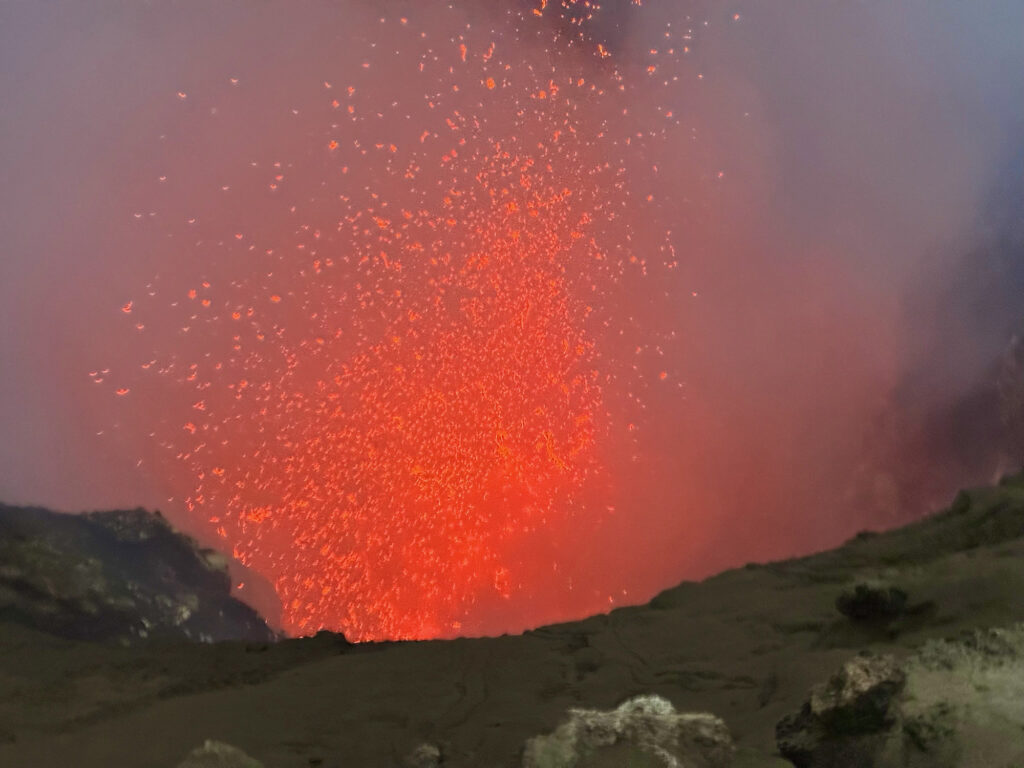
In Vanuatu, we periodically met up with our buddy boats. We cleared in at Tanna, where the port is named Resolution, after Captain Cook’s ship. Legend says Cook was drawn to a fire and rumbling sound in 1774. It turned out to be Mount Yasur, which is still an active volcano today.
We made the adventurous 45-minute Jeep journey to see the caldera. The narrow road was dug out with walls of lava soil on both sides. The driver dropped us off for a steep climb on rough steps to the crater’s rim, which rises to nearly 1,200 feet. The spectacular show of lava rocks shooting into the sky every few minutes seemed to happen in slow motion, accompanied by explosions and bubbling magma. Thick smoke rose high into the evening sky, and an odor of sulphur gas was all around us. We stayed until dark, when the sky was almost completely red, then made our way back down with flashlights in hand. We were exhausted, covered in lava dust, and absolutely awestruck.
We celebrated Gerry’s 63rd birthday for three days at Vanuatu’s capital, Port Vila. Two nights in a row, we dined on Wagyu steak at the Stonegrill, a rare treat in the tropics, and spent the third evening at the Banyan Beach Bar.
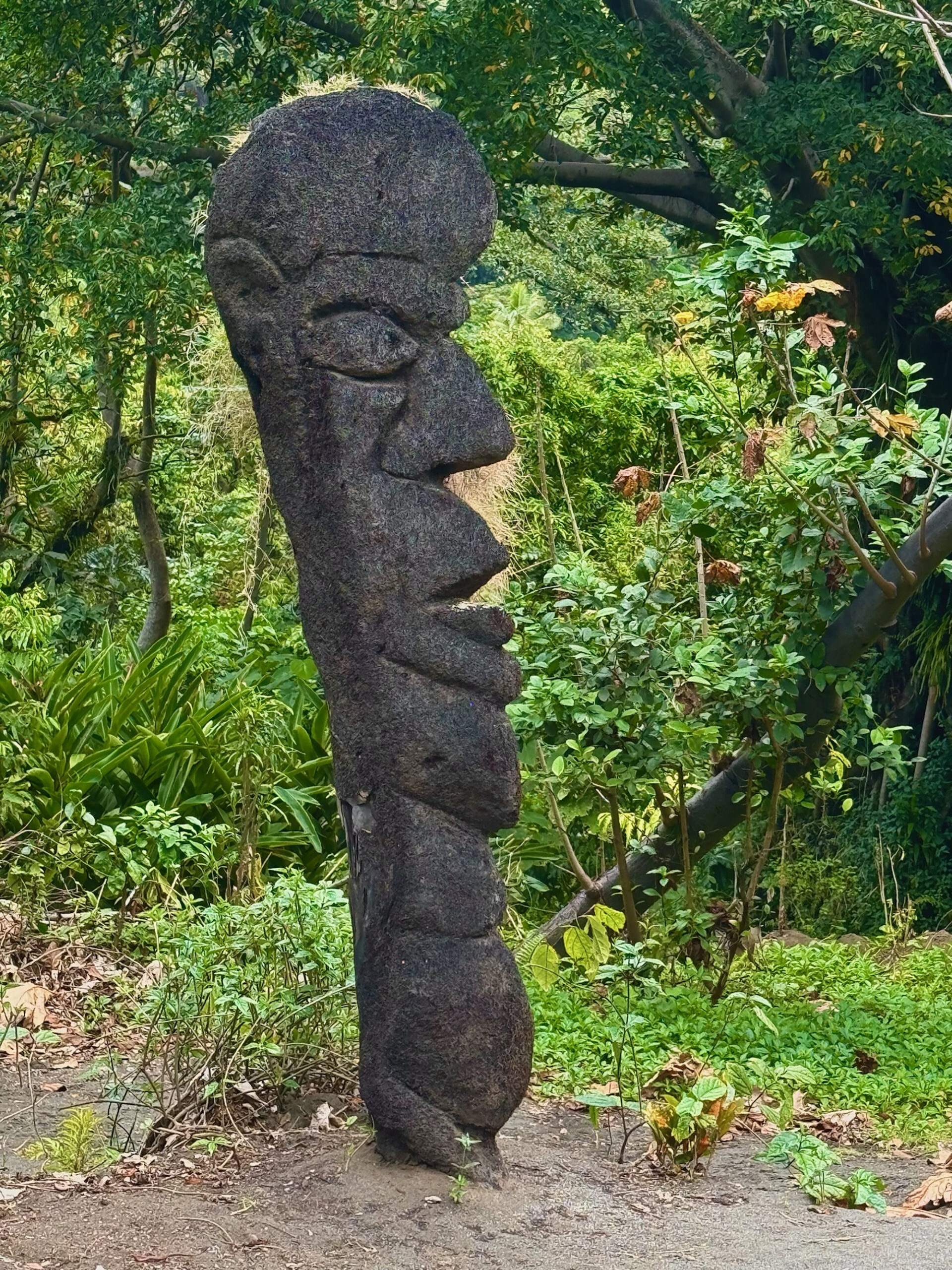
Our next anchorage was Malekula, the second-largest island in Vanuatu. We anchored in a calm bay beside the mangroves and watched dugongs, a cousin to manatees, swim about. Children yelled toward our dinghy and beckoned us in French as they balanced on the mangroves, machetes in hand. Samadhi also visited the site of the death-defying “land divers,” a cultural ceremony that supposedly determines the success of the yam harvest based on men who bungee jump from wooden structures with vines tied around their ankles.
En route to Luganville, we started to roll and realized both stabilizers were out of action. Luckily, the sea was calm. Later, Gerry figured out that we needed a new solenoid, which would take about 10 days to arrive and then another three to clear customs.
While we waited, we rented a car and drove to the blue hole along with the stunning Champagne Beach. It was our last stop in the tropics before setting off for a new continent—and what I’m sure will be an equal number of new adventures.
This article originally appeared in the May/June 2025 issue of Passagemaker magazine.