A dockmate complained to me recently that having paid a fat bill to have his boat waxed, he was confounded by a stream of black streaks rolling down the hull from the rub rail to the waterline. He wanted the boat to look clean, but he worried that a commercial cleaner might remove the wax he had just added.
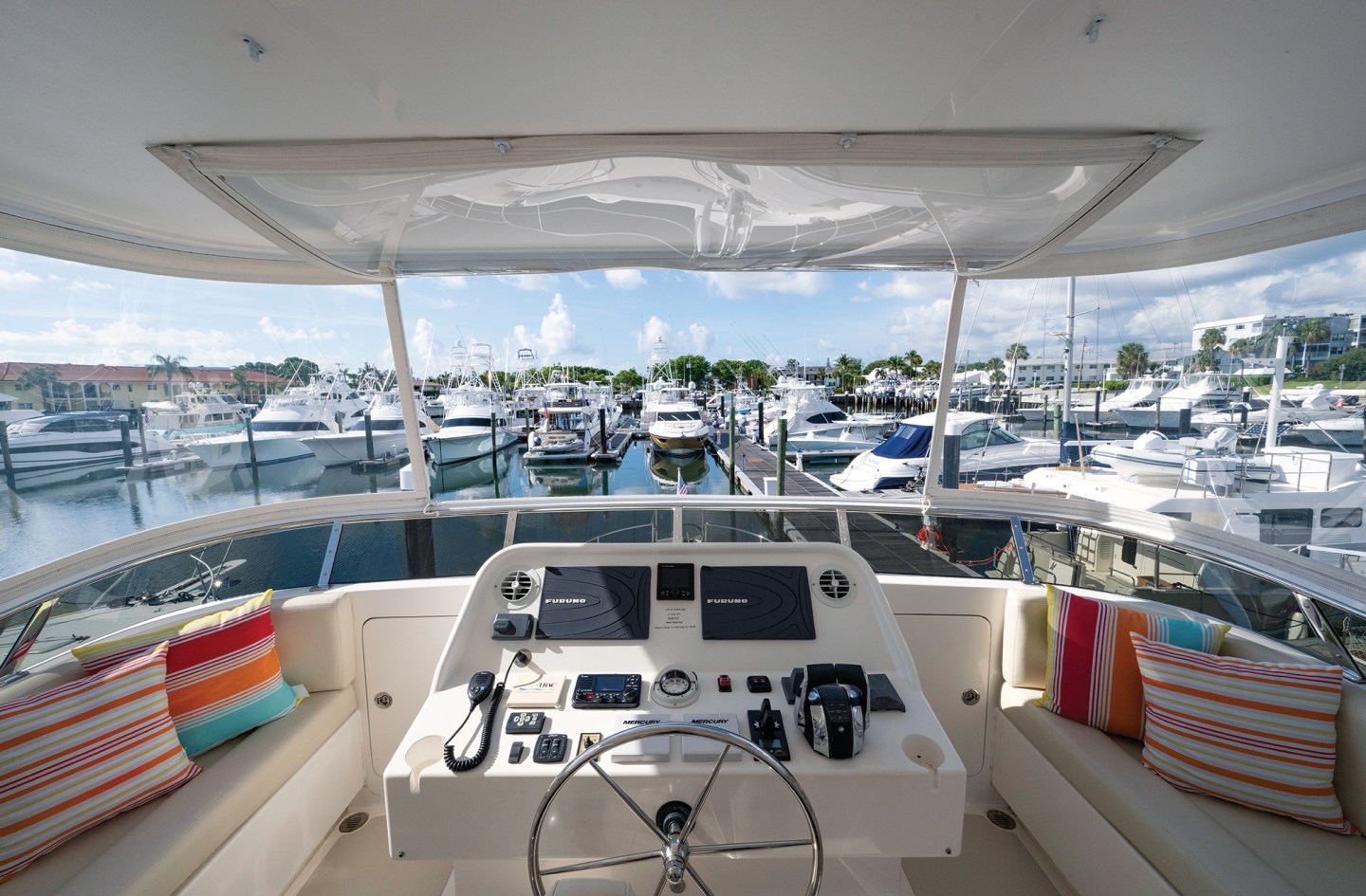
As it turned out, the problem was that the black streaks had found a home in the wax. Grime that had collected on the flybridge worked its way south to the waterline thanks to rain showers, humidity and infrequent general cleaning.
Boats need more maintenance than an occasional wax treatment. Keeping your boat clean is an ongoing challenge that requires a bow-to-stern commitment. The goal is to counter the onslaught of exposure to the environment where boats live.
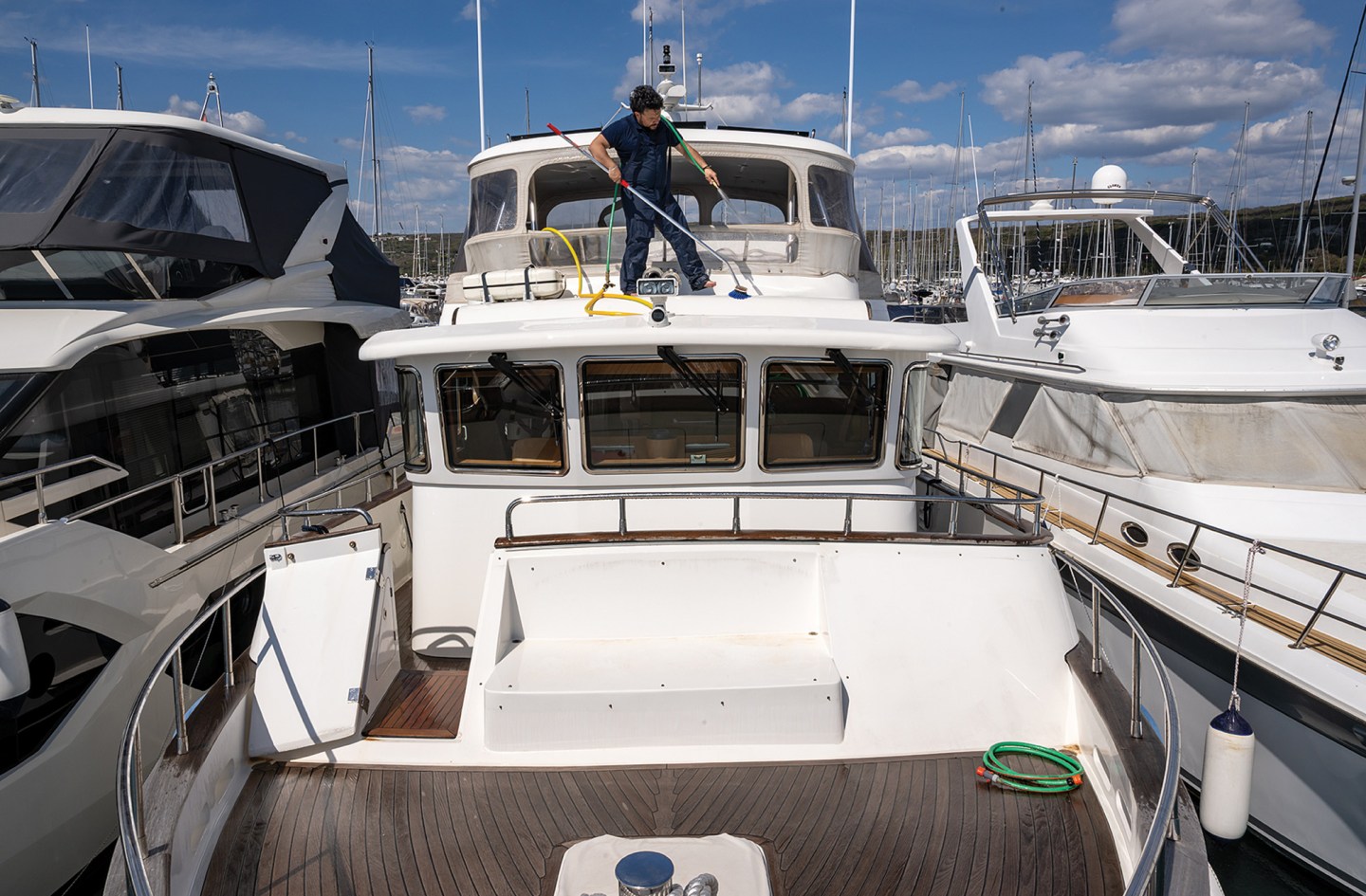
I have long washed my boat after every use, particularly on fishing trips. This practice removes the salt and the residues of bait and fish gurry that, if left to dry, would become integral to the fiberglass.
Boats stored in the water also need a good soaping weekly to remove atmospheric debris and bird droppings. I only use soaps that are mild and formulated to protect wax. Still, those pesky black trails will often resist a gentle cleaning. If telltale streaks remain, then try a quick, gentle swipe with a damp chamois while the surface is still wet. Gentle is the word: Too much wiping with a chamois will wear away the wax. If you wring out the chamois in a bucket of water that becomes cloudy, you’re seeing the wax.
Another dock buddy keeps his boat on a lift with its bottom unpainted. While barnacles and other marine life never get a chance to adhere, the white bottom has acquired a distinct yellow cast after several months of regular use in salt water. Rather than paint the bottom, he uses a liquid hull and bottom cleaner that contains an acid formula. It can be brushed on and quickly rinsed to restore the showroom-white bottom.
This also is a good procedure for addressing the fiberglass bottoms of dinghy tenders that spend part of their life in the water being towed or moving from an anchorage to a shore landing. Fast-acting cleaners also do a stellar job of removing waterline stains, algae, oil and exhaust residue, and they can bleach out the yellow mustache that boats on the Intracoastal Waterway often develop. However, once these cleaners do their job, it may be necessary to add a few coats of wax to seal the gelcoat against future staining.
Rust stains pose a different scenario. When I was younger and working on wooden boats, it was common by midseason to see rust stains bleeding from the metal fasteners. We’d apply a pink liquid (whose name I can’t recall) to the rust streaks, followed by a freshwater rinse. The results were instant.
These days, I find that Goof Off Rust Stain Remover is good to use on fiberglass, and unlike that pink stuff, it’s safe and biodegradable. It takes only a minute to work before a thorough rinse.
More time will be needed for rust stains on fiberglass that appear near metal fittings, such as exhaust and bilge pump through-hulls, hasps, latches, hatch pulls, handles or other hardware. This rust indicates that the sealant beneath the fitting is failing. Moisture eventually causes corrosion.
Go ahead and remove the rust, but also inspect the fasteners and hardware to see how and where the water is getting through. You may have to replace the sealant and fasteners. A dab of sealant on each fastener will help, too.
There are no shortcuts to maintenance, but modern products and ample elbow grease will help keep your boat in Bristol fashion.
This article originally appeared in the May/June 2026 issue of Passagemaker magazine.