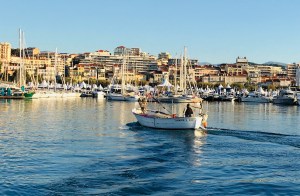


I live just off the Intracoastal Waterway in Florida, but nothing could get me on the frothing waters over the Fourth of July weekend.
Instead, I sat at my favorite yacht club, watching the mayhem unfold as every other boat in South Florida fought to get under a drawbridge. The times of its raising were clearly controlled by a bridgekeeper with a malicious sense of humor. I was surprised that no masts fell, although I did see a radar dome knocked askew, not by a bridge too far, but by a bridge too low.
Most skippers think there are only two sets of rules of the road: international and inland. Technically, that’s correct, but over a period of 50 years, I’ve also developed Caswell’s Rules of the Road. My rules are far simpler. And safer.
The official rules, of course, are the International Regulations for Preventing Collisions at Sea and the Inland Navigational Rules of the United States. The COLREGS, which stretch to no fewer than 200 pages, apply on outer coastal waters and the high seas, while the Inland Rules cover lakes, rivers and near-coastal areas. If you read all of these rules, you will learn things like the fact that you do not have the right of way over a seaplane towing a barge while engaged in fishing.
Confusing? Very.
By comparison, Caswell’s Rules of the Road can be summed up in just 10 decrees. The CASREGS are as simple as the tablets handed to Moses, which also had 10 rules.
The CASREGS are based on the reality of life that anytime two boats are on the water, there is a chance of collision. My rules combine COLREGS, Inland Rules and the Golden Rule to avoid scrapes on the water.
Big Boats Always Have the Right of Way
You’ll lose every time if you try to sneak in front of a tanker or a tug pushing a barge. Your engine can die or you can misjudge their speed, and the only winners will be your heirs and some lawyers. The four most dangerous words in boating are: “We can make it.” If you ever look at a ship and say those words, your crew should slap you silly, just like Capt. Queeg in The Caine Mutiny.
Assume They Don’t See You
You’ll never get in trouble if you always assume that the other skipper doesn’t see you or is too stupid to know that you have the right of way. Defensive driving works just as well on the water as on land. As they say, you can be dead right just as easily as dead wrong.
Make Course Changes Early and Substantially
It’s hard to judge angles and distances on the water. If you plan to keep clear of another boat, change your course enough so that your move is readily apparent to the other boat. And do it early enough that they know what you are doing. Too many accidents happen when boats get trapped in an “after you, Alphonse” series of back-and-forth course changes that end with a collision.
When in Doubt, Slow Down
Pulling back on the throttles gives you time to think, as well as time for everyone involved to act intelligently. Remember that even at 10 knots, you’re moving at almost 17 feet a second.
Boats on Your Right are Right
Why do you think they call it “right” of way? Technically, your danger zone is from directly ahead to 112.5 degrees on the starboard side. But don’t push your rights with that 80 mph speedster approaching from 113 degrees on the starboard side. He may not see you.
Keep Right
When two boats meet head-on or nearly so, each should turn to starboard, just as you would on a one-lane road in your car.
Overtakers, Stay Clear
When two boats are moving in the same direction, the passing boat must keep clear. If you’re on a waterway like a canal or the ICW, it’s nice if both boats slow down a bit so the wakes don’t spill the drinks.
Know the Flow
On inland waters, know which way the current is moving, because it affects right of way. Boats going downstream have the right of way over those that are upbound, and boats going across a river must stay clear of those going up or down. Don’t worry about the reasoning. Just do it.
Remember to Honk
Unlike in a car, honking your horn on a boat signals your intentions to other skippers. One blast means starboard, and two blasts is port. If the other skipper agrees, they sound a similar signal. If they don’t, they’ll sound the danger signal of five or more honks. Slow down until you both figure out what you’re doing.
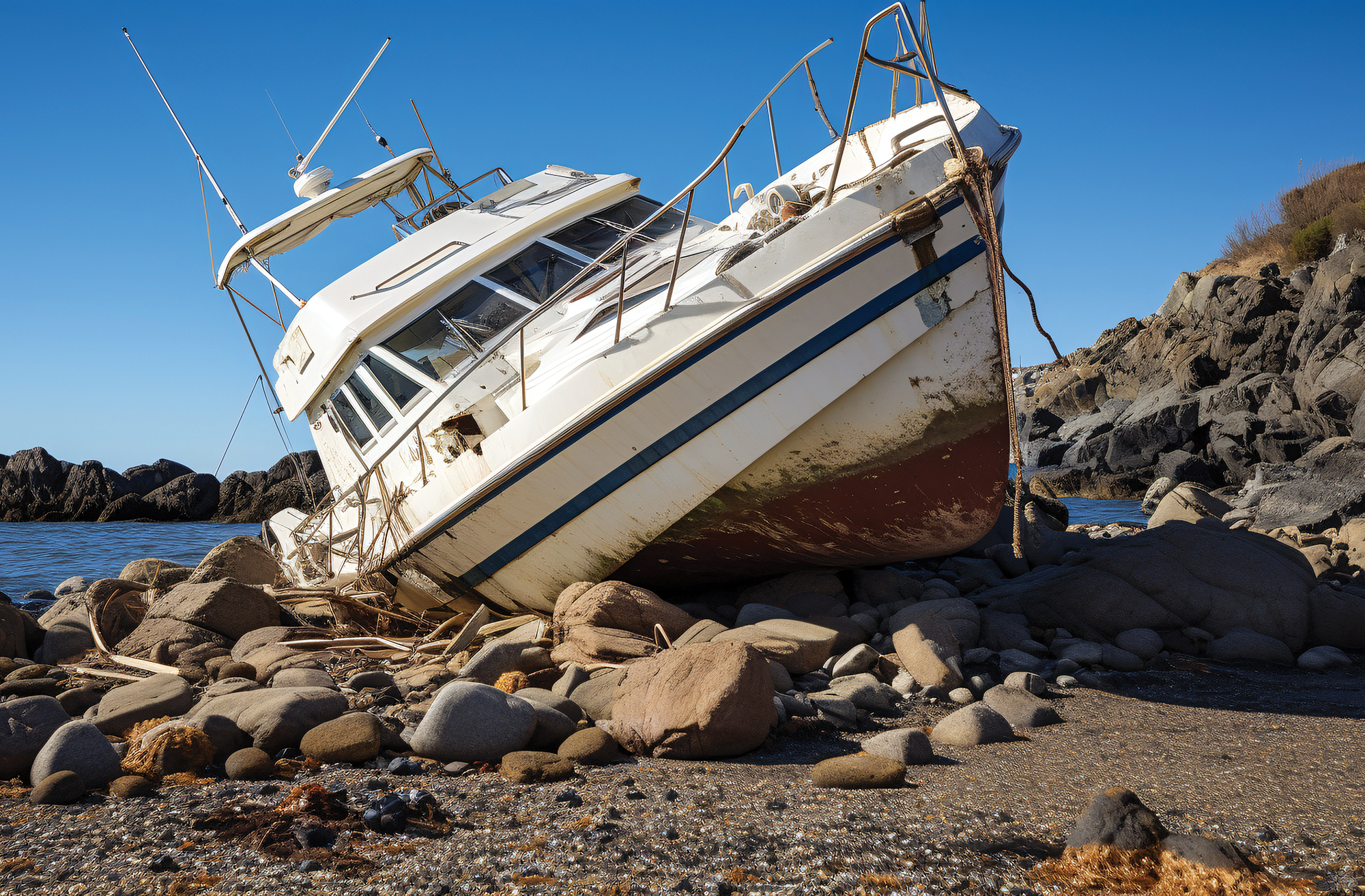
As they say, a collision at sea can ruin your whole day, so there is one last Caswellian rule: Play nice. This rule covers every situation you might encounter. Leave road rage on shore, and don’t use the official rules of the road like a hammer to force other people to give way. Avoid situations that can lead to problems, and give way even when you don’t have to by the book.
As the police sergeant on the old Hill Street Blues television series always warned his officers at the end of each morning briefing: “Hey, let’s be careful out there.”
This article originally appeared in the October 2025 issue of Passagemaker magazine.