

Story + Photos by Alexander Worms
The Amsterdam-Rhine Canal is a mostly dead-straight, restless, hectic and dull trip. This motorway for commercial shipping connects the port of Amsterdam with Germany. But near Maarssen in the Netherlands, there’s a small gap in the canal embankment. Under a fixed bridge just over 11 feet high, a narrow waterway leads through a (usually) open lock into the Vecht.
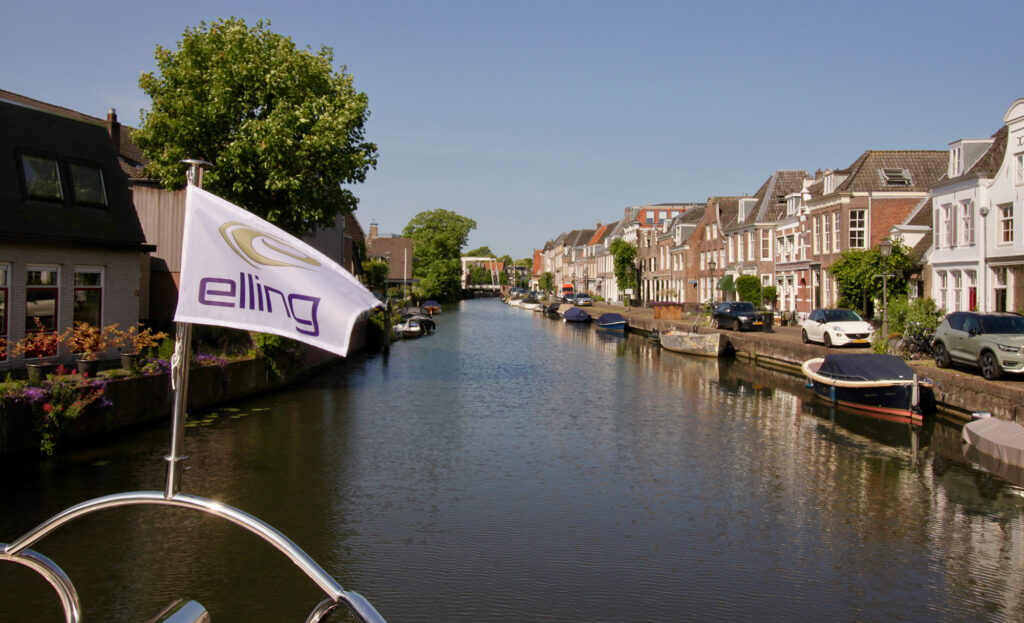
This channel is perhaps only 250 feet long, but the contrast could hardly be greater. This connection releases boaters into a completely different world: on one side the busy canal, on the other the idyllic Utrechtse Vecht, where nature, charming towns, stately mansions and water sports are seemingly everywhere, just a stone’s throw from the bustling cities of Utrecht and Amsterdam.
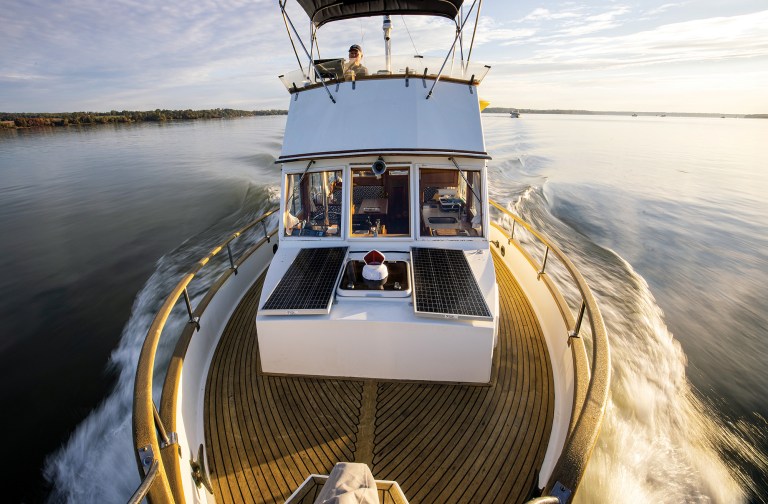
The speed limit here is about 5 knots, a slight challenge for the 600-hp Elling E4, which idles a bit faster than that. Then again, that slowness is perfect because there is so much to see along the riverbanks. This former vital link between Utrecht and the old Zuiderzee Works (a system of dams and dikes, land reclamation and water drainage works that keep the sea at bay), now the IJsselmeer Lake, is a true gem.
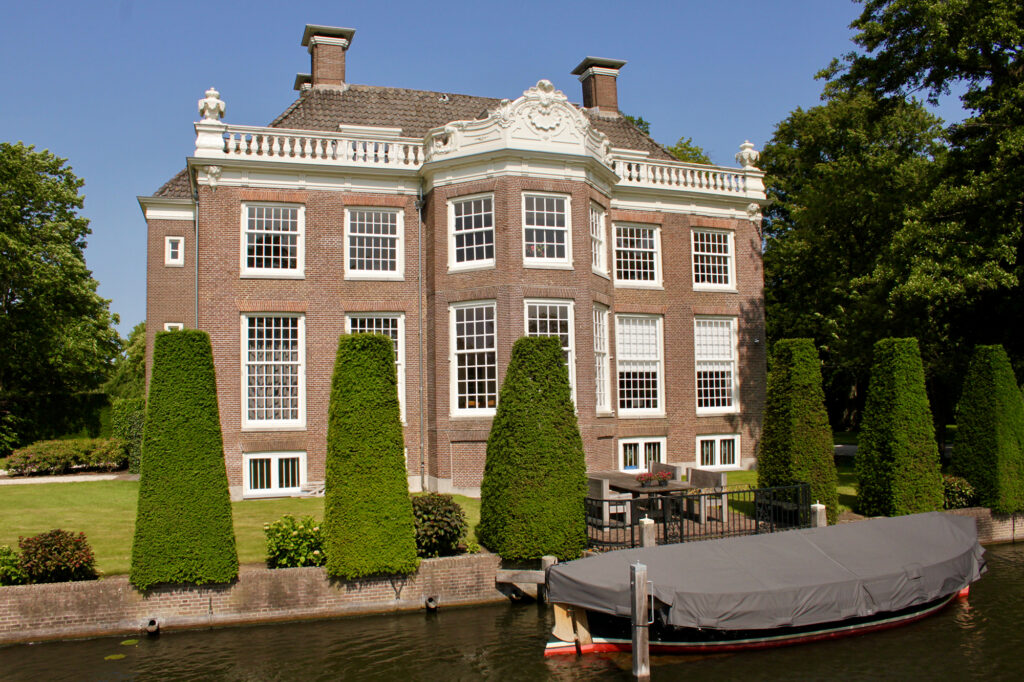
While the Vecht played a role in Roman times, the 29-mile-long river only gained its current charm in the Golden Age. Wealthy Amsterdam merchants built grand summer estates along the river, where brick-making also flourished. The proximity to Amsterdam as a growing market, combined with the availability of peat from the Loosdrecht and Vinkeveen lakes as a fuel source, made Maarssen and Breukelen major hubs of brick production well into the 19th century.
Nothing of that remains today. The Vecht now holds significant value for recreational boating, even more so since 2010, when extensive efforts to improve water quality began. The entire river was dredged to remove polluted sludge left by the industrial past. Today, the water that flows toward either Utrecht or Muiden, depending on Markermeer lake water levels and rainfall, is of good quality. Nature is reclaiming the river, with birds and aquatic plants returning in abundance.
The river is nearly current-free along this entire stretch. Several bridges are under 12 feet, so air draft is an important consideration. Even so, all bridges between Maarssen and Muiden are movable, most by a VHF radio call to the bridgekeeper. Others, like the railway bridge, are on a schedule. There are mooring spots along the banks, some with electricity and water, and sometimes with waste disposal facilities (such as in Breukelen). Some are free while others have a nominal fee. There are also marinas with transient slips near the Loosdrechtse Plassen and in Weesp.
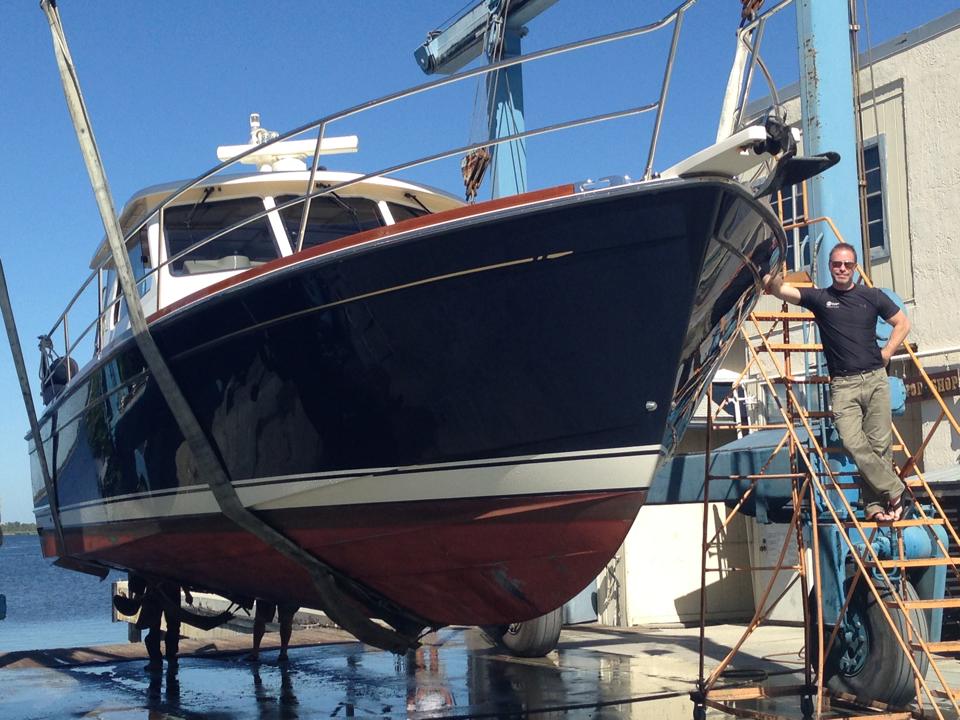
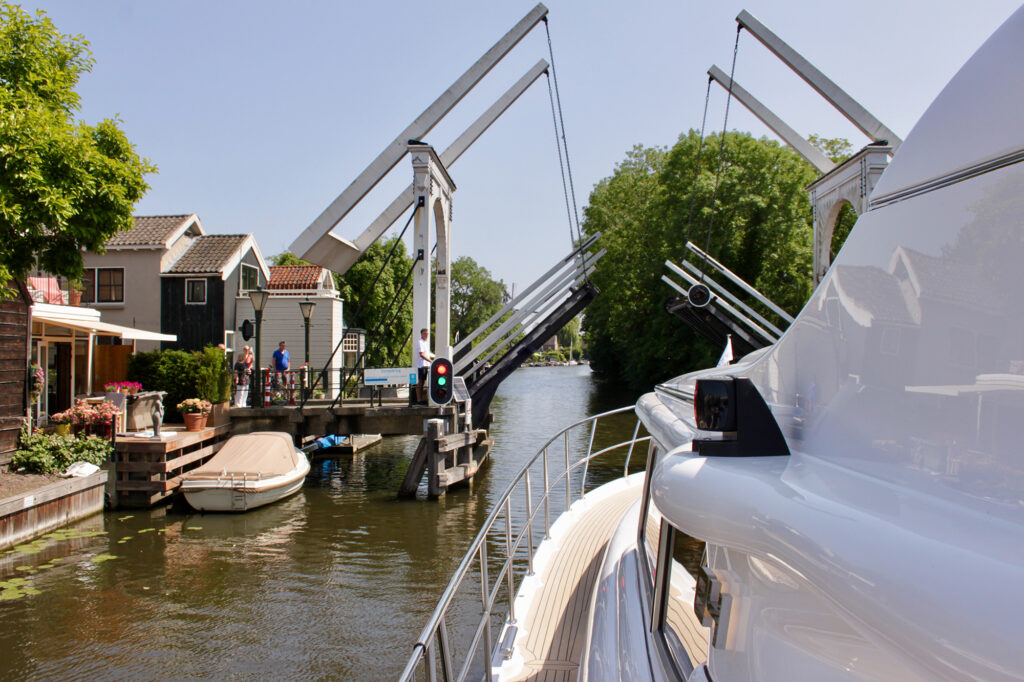
The Elling E4, with her recently modernized design and visual highlights, fits beautifully into this environment. She glides silently past houseboats of every kind, elegant homes, cottages, anglers, cyclists, paddleboarders and pedal boaters. Everyone is either on or near the water. People tend their gardens, enjoy the fine weather, work or read the newspaper with a cup of tea by the riverside.
Life here is slower, but far from boring. Much like New Yorkers who retreat to the coastline on warm days, Amsterdammers are drawn to the Vecht. It’s fitting that the Elling, en route to be loaded in IJmuiden for shipment to the United States, sails under the U.S. flag. More than once, we’re asked in English if we like it here. Our typical reply, “It’s absolutely gorgeous,” is a fine summary.
The interaction with locals is wonderful. We had a friendly chat with the bridgekeeper in Breukelen that complemented our handling skills, as the already narrow drawbridge is even tighter because of construction. Cyclists ring their bells and wave as they pass along the banks. A gardener pauses his sweaty work, leaning on his rake to watch the yacht in admiration.
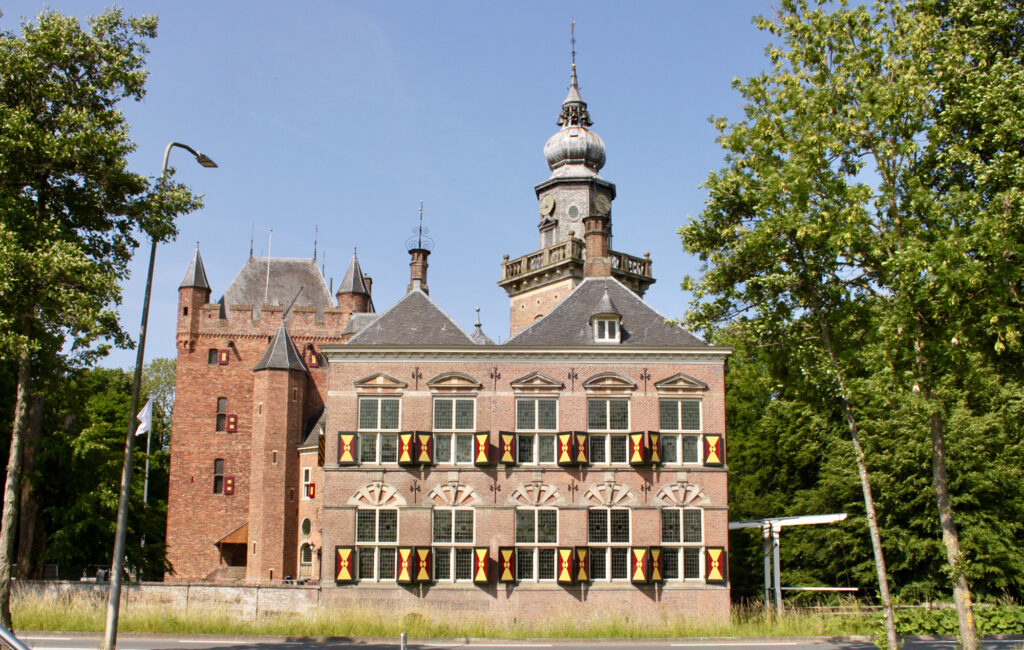
The Elling’s engine is barely audible. Only the gentle ripple of the wake betrays that we are underway. We leave Maarssen with its three bridges and follow the meandering river past the historic Kasteel Nijenrode, now home to a private business school, on our way to Breukelen.
Beyond the town, the river widens and nature takes over, until a narrow channel at Nieuwersluis offers an unexpected connection to the Amsterdam-Rhine Canal. We wait at the bridge on the Vecht when suddenly another boat emerges from the poorly visible side channel. That this narrow stretch is a navigable waterway may be hard to believe, but it is. Bow thrusters roar, but everything resolves itself.
Everyone laughs and waves. The Dutch are relaxed. A bit further on, the Mijndense Sluis, on our starboard side, provides access to the Loosdrechtse Plassen created through peat extraction, now a true water sports paradise. Among the luxe vacation homes are many quirky-looking houseboats. All the people get along swimmingly, united by a love for this stunning part of the Netherlands.
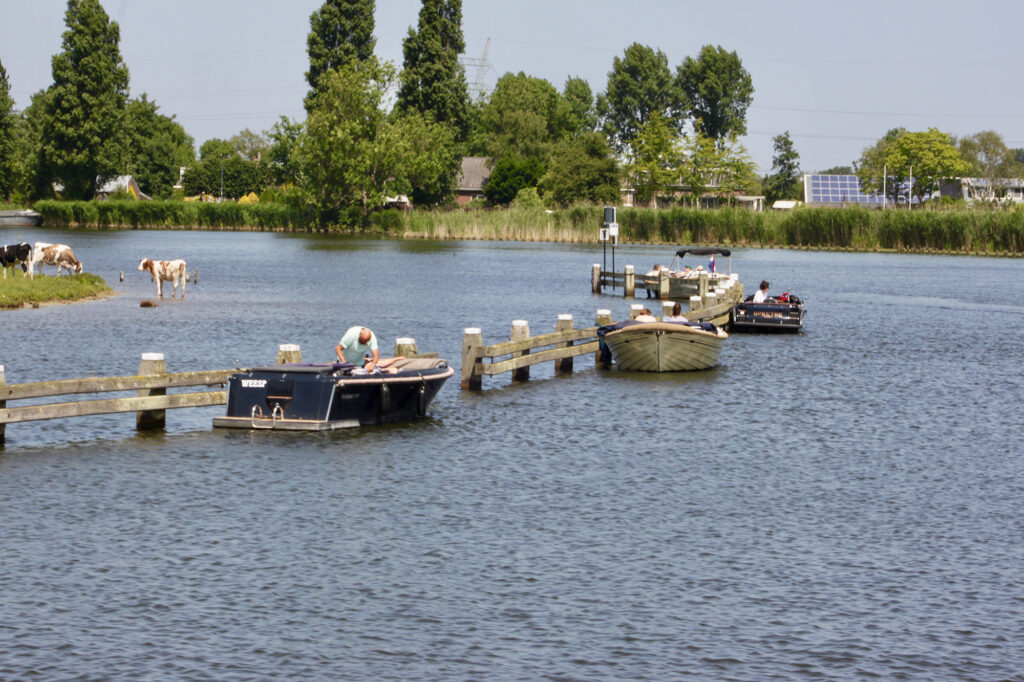
Following significant cleanup efforts that started 15 years ago, the Utrechtse Vecht has become a water sports and boating destination just outside of Amsterdam.
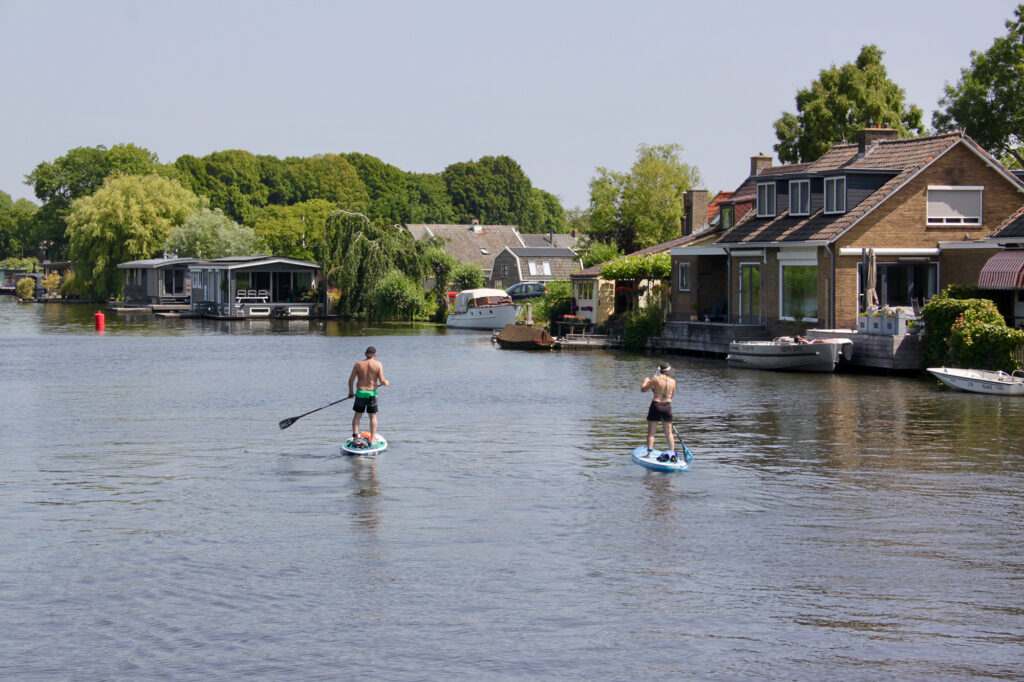
We continue past the junction to the lock toward Loenen and Vreeland and reach Nigtevecht, where another lock provides access to the major canal. Along the entire river, we pass countless cafés, many with jetties for visitors to moor and enjoy coffee, beer or wine, and a portion of bitterballen, those delicious fried meat-and-potato croquettes, while watching the river traffic. Wonderful.
Eventually, we reach Weesp. Now part of the municipality of Amsterdam, the city presents boaters with two challenges. First, technically, a permit is required to navigate Amsterdam’s waters (though in Weesp only if you moor there). Second, the railway bridge only opens infrequently and can be a real bottleneck for taller vessels. The first issue is currently resolved, and the second we solve in our usual way: by folding the radar arch back with two simple movements, allowing us to pass under even a closed bridge. A fine audible.
After a few more bends, we reach the aqueduct that carries the Vecht over the A1 motorway, another bottleneck solved by Dutch engineering. All too soon, the final highlight of this tranquil river journey appears: Muiden. Here, the Vecht flows into the IJmeer, the southern part of the Markermeer.
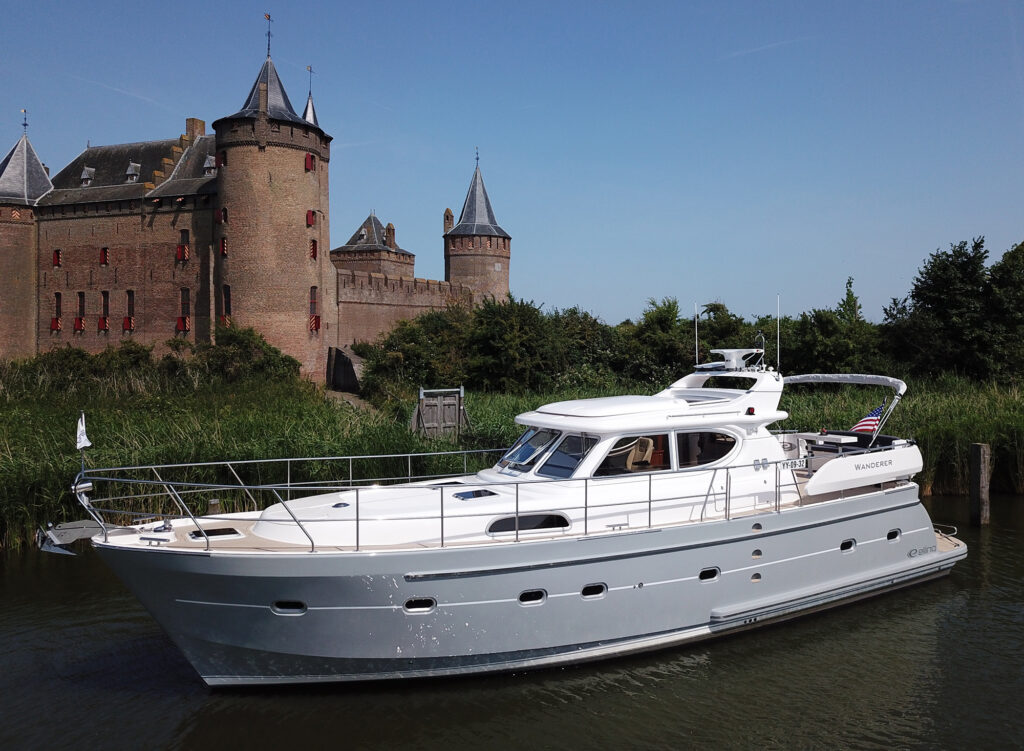
But first, we pass through the large sea lock, built at the end of the 17th century. Its three grand brick chambers, friendly lockkeepers and the crowd of onlookers on summer days create a terrific atmosphere. But two other features make Muiden special: the Muiderslot and Café Ome Ko. The former, part of the Rijksmuseum, dates back to the 13th century and can be visited along with its magnificent gardens. The café, meanwhile, simply must be visited. It’s a legendary skipper’s pub, filled with maritime memorabilia.
With a cold beer in hand, I find it the perfect end to a journey along the Vecht.
This article originally appeared in the October 2025 issue of Passagemaker magazine.