

Story + Photos by Suzanne and Steven Webster
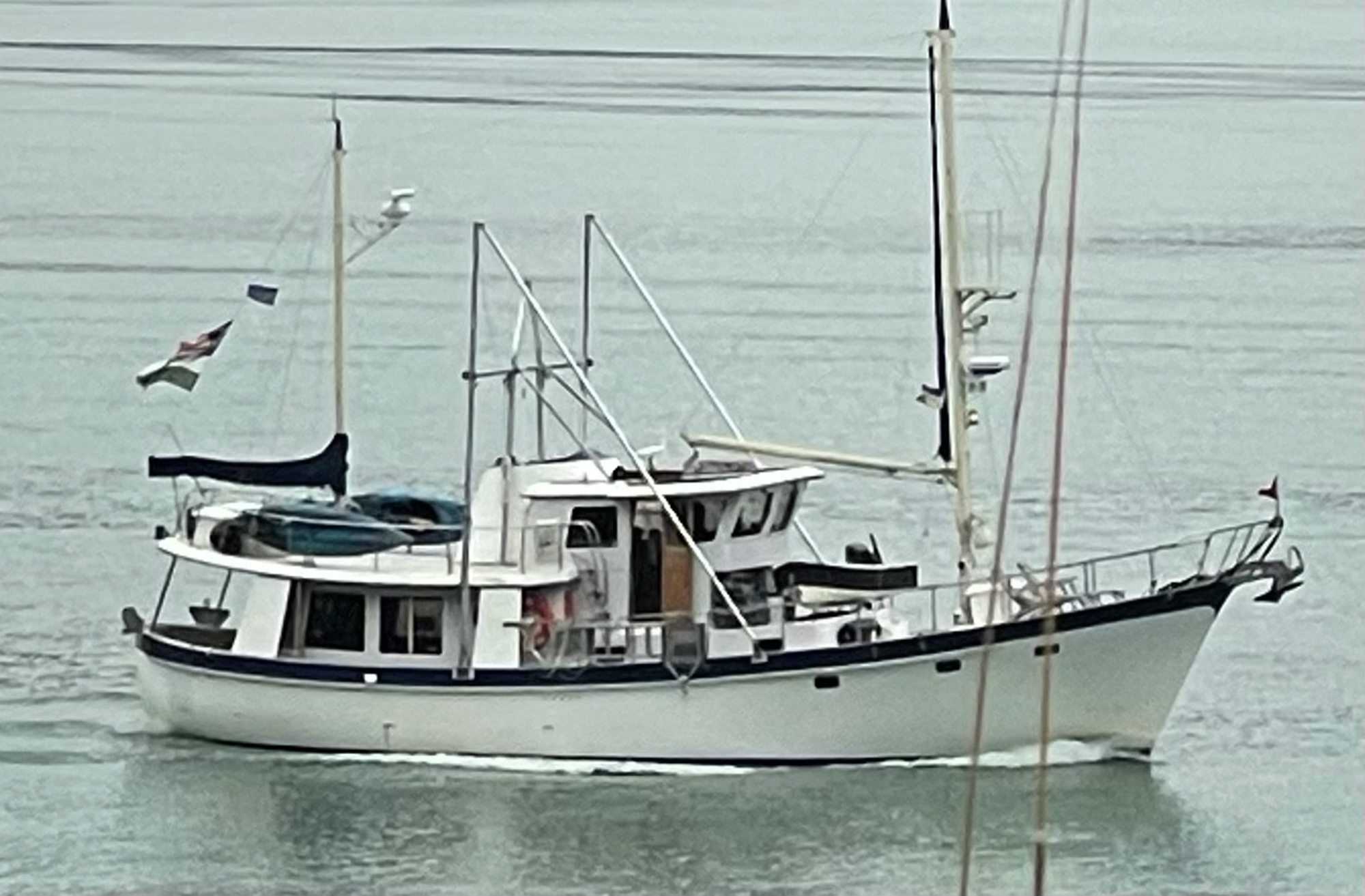
For years, we toyed with the idea of adding paravanes to Fortitude, our 1991 Kadey-Krogen 54. The thought would come up most often after a long, rolly crossing, and after half of our two-person crew had retreated below to wait out seasickness, leaving the captain alone on watch and to grind it out through hours of confused seas.
Like many long-range cruisers, we had dreams of going farther—multiday offshore passages, new waters, and more remote anchorages. At first, we told ourselves that our sails would be enough. After all, the Krogen 54 was designed with a ketch rig precisely for that reason: to help dampen the roll at sea.
To be fair, it did help. At a steady 15 knots or more, with the wind abeam, we could reduce the roll by about half. But outside of those particular conditions, the sails were nearly useless. In light air or confused seas, the sails might as well have been laundry flapping on the line.
It became clear that if we truly wanted to expand our cruising horizons, we needed more stability than the sails could provide. The obvious modern answer would be active stabilization. We looked seriously at fins and less seriously at gyros, the two most common solutions. After much consideration, neither option suited us.
Fins would have required major surgery on our 30-year-old hull. Engineering the fit, installing hydraulics, cutting new through-hulls and wiring controls—all of it came with a price tag that quickly soared into the mid-five or even low-six-figure range. That was just the upfront cost. Fins protrude from the hull, waiting to snag kelp or debris, and they rely on hydraulics and sensitive electronics that aren’t always easy to diagnose or repair when you’re hundreds of miles offshore.
A gyrostabilizer wasn’t much better. The purchase price alone was eye-watering, and the system’s constant demand for generator power was a deal-breaker. Fortitude is a remarkably efficient trawler, sipping fuel at a steady clip, and we weren’t about to undercut that efficiency with the drone of a generator running 24/7. Anchoring in a quiet cove is one of the joys of cruising, and we didn’t want to spoil it with the endless rumble of machinery.
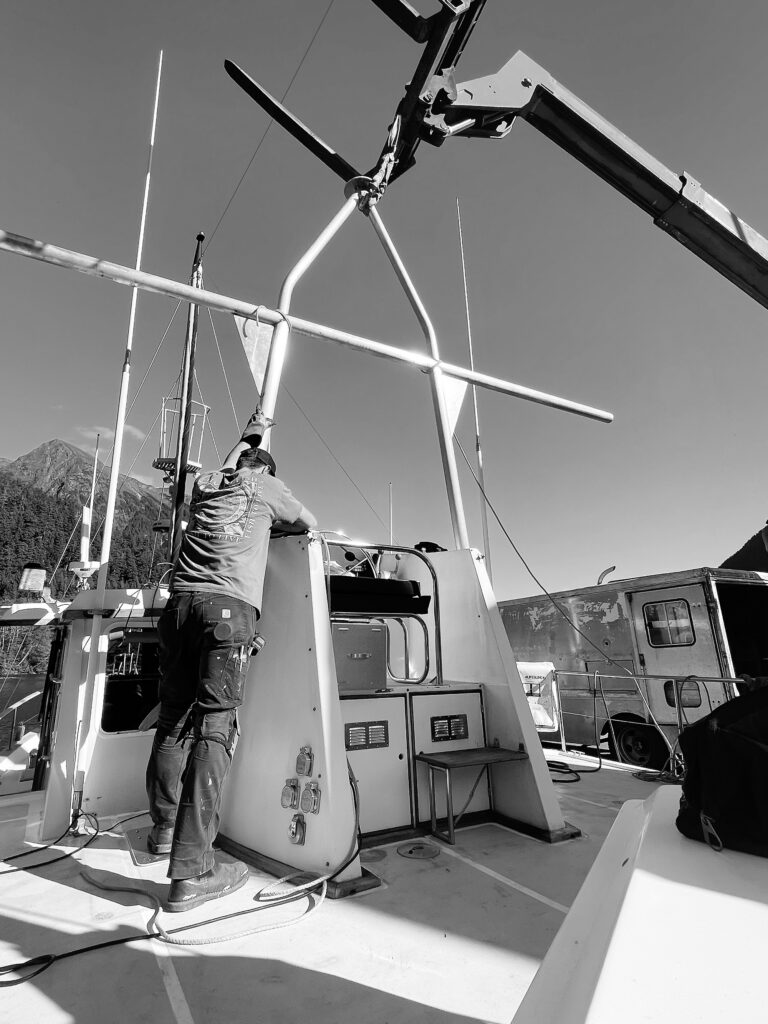
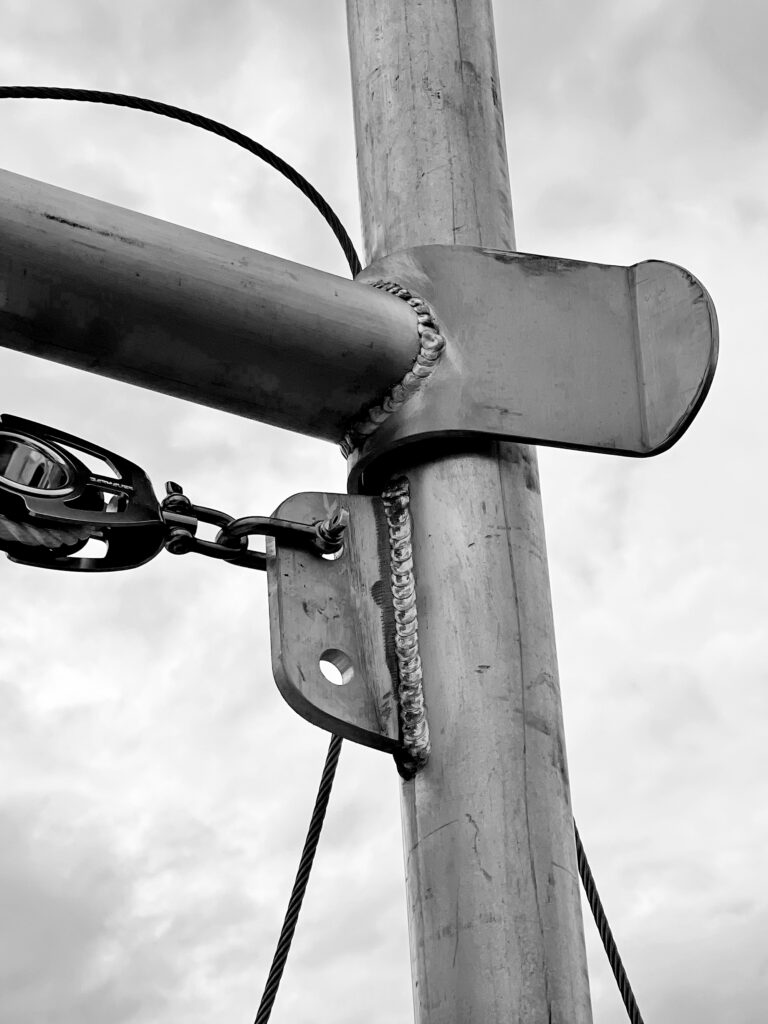
By contrast, paravanes live entirely above the water. They can be inspected at a glance, and maintained with basic tools. If something bends or breaks, any welder or rigger can repair it. The system is totally analog—no computers, no hydraulics and no black boxes. Just block and tackle, poles and fish, a tried-and-true system. At anchor, the same rig could calm a swell with flopper stoppers. At sea, the fish would tame beam seas and make long passages less punishing. When not needed, they’d be out of the way, stowed high and dry.
Most important, the cost was a fraction of any active system. That sealed the deal.
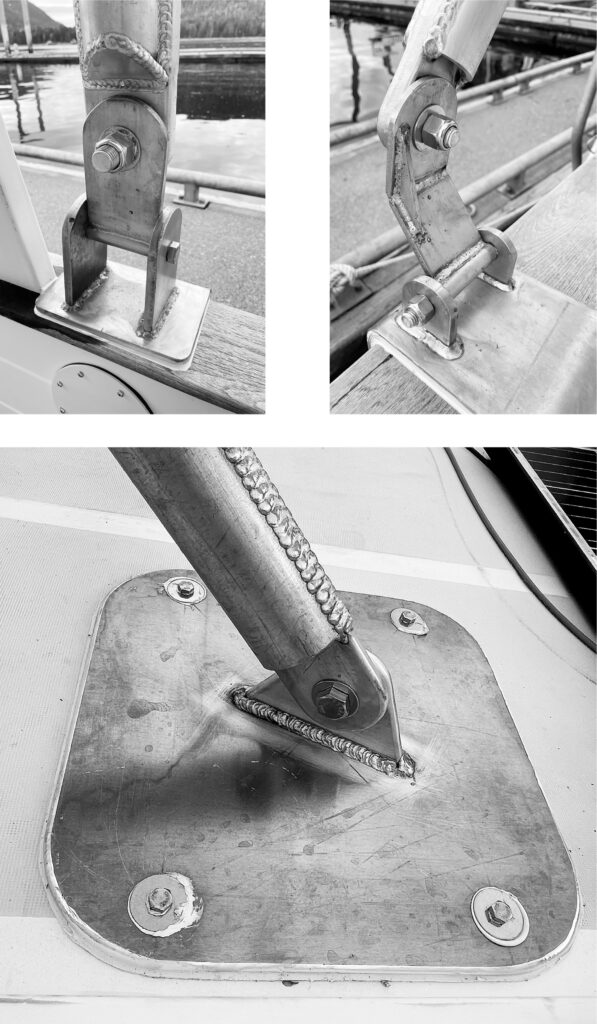
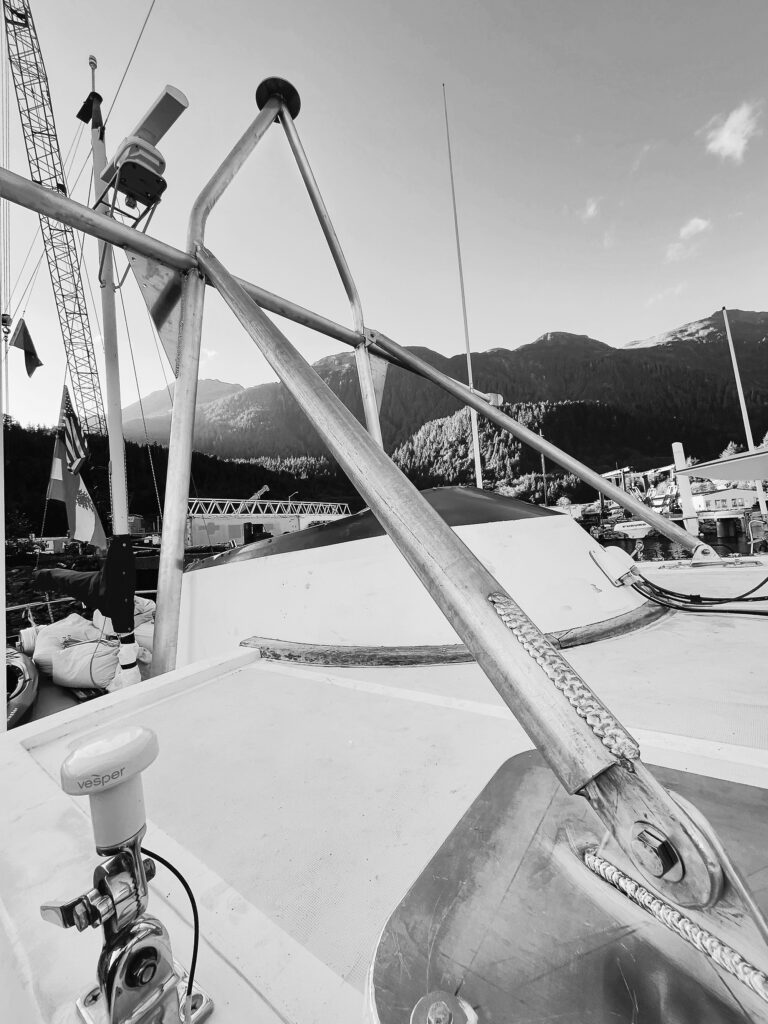
The salvaged mounts, poles and fish blended seamlessly with the newly fabricated structure.
Choosing poles was the easy part; finding someone to build and install them turned out to be much harder. Our first attempts at yards in Washington state were met with puzzled looks when we described what we wanted. A few offered outlandish solutions, like removing masts altogether or building ungainly superstructures. It became clear that, at least on the recreational side of the industry, paravanes had become something of a lost art.
The breakthrough came in Wrangell, Alaska, where a couple of seasoned shipwrights pointed us toward Sitka. “That’s where the troller fleet is,” they said. “If anyone knows poles, it’s the Sitka guys.”
They were right. Sitka is the beating heart of the Southeast Alaska troller fleet, home to generations of fishermen who rely on poles and birds every day in weather most cruisers wouldn’t dream of venturing out into. We asked around town and heard the same name again and again: Jeremy Serka at Sitka Custom Marine.
When Serka came aboard Fortitude in July to scope out the project, we knew immediately that we had found the right person. A former fisherman, he understood the gear inside and out, carrying the kind of practical wisdom that only comes from real-world experience on the water. We handed over the 54’s scantlings and the original paravane designs that Jim Krogen had penned for the KK42. A few weeks later, Serka returned with a refined plan that struck the perfect balance between strength, function and respect for our salty queen’s lines.
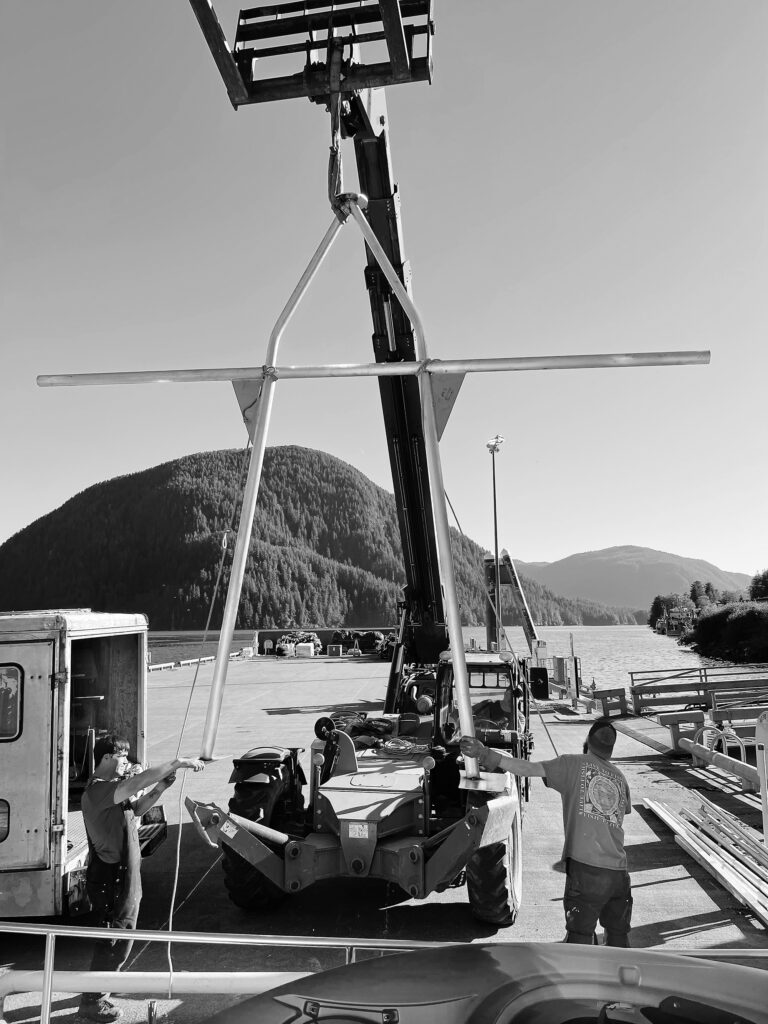
The work took place at Gary Paxton Industrial Park just south of Sitka. Mornings were quiet, with welding and fabrication humming away in the shop and Coho salmon jumping nearby, readying themselves for their late-summer run up Sawmill Creek. Afternoons turned frenetic as the installation team descended on Fortitude with drills, grinders, welders and measuring tapes. Every step was a conversation: how we used the boat, where we needed clear passage, how the tender was launched, how boarding was handled. The design evolved on the fly, shaped by Serka’s expertise and our experience as liveaboards.
We’d come prepared with hardware salvaged from a retired troller—poles, fish and brackets—and Serka was able to recondition some of it, fabricate new structure where needed, and create custom mounts for Fortitude’s rounded hull. The result was solid, functional and built with the same no-nonsense quality you’d expect to find on a working troller. The poles not only worked, but they looked right.
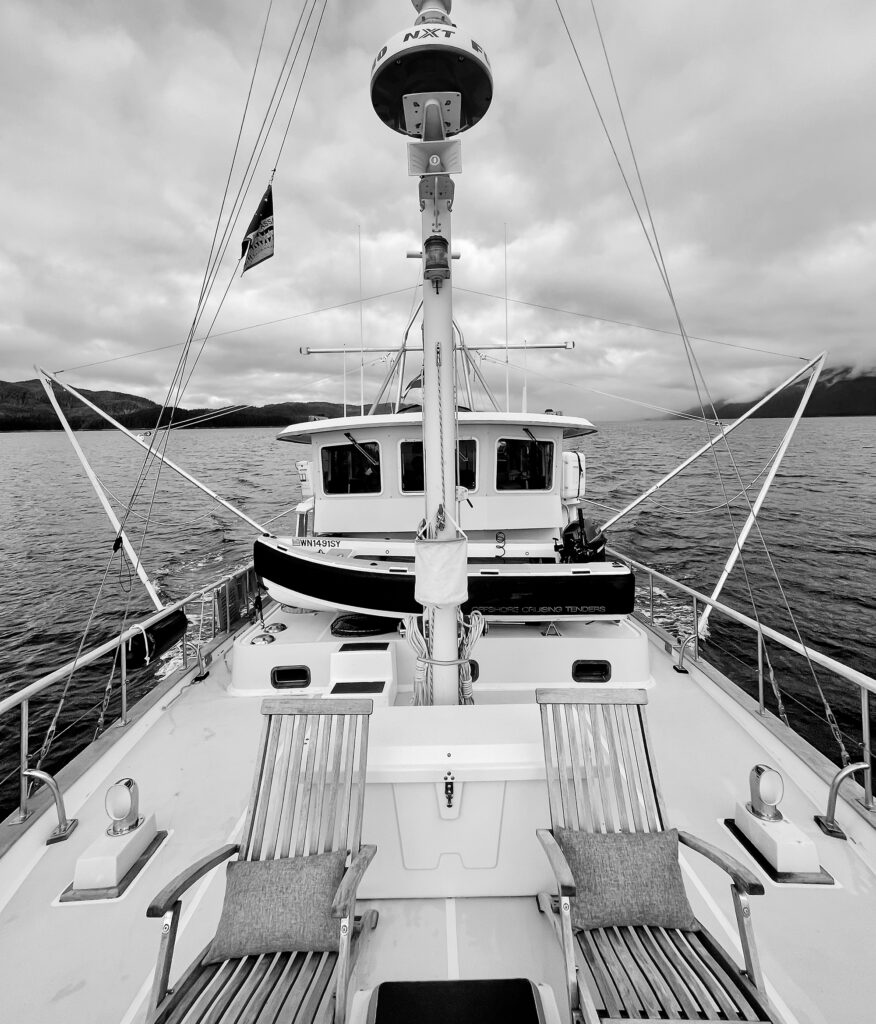
For years, this project had lived in our imaginations, always accompanied by a nagging worry that the rig might spoil our Krogen’s classic lines. Instead, the poles seemed to enhance them, giving her an even more purposeful, North Sea workboat feel. Where some active systems hide away, paravanes make their presence known, and on Fortitude they add a certain authority, a suggestion that this boat is meant to go places.
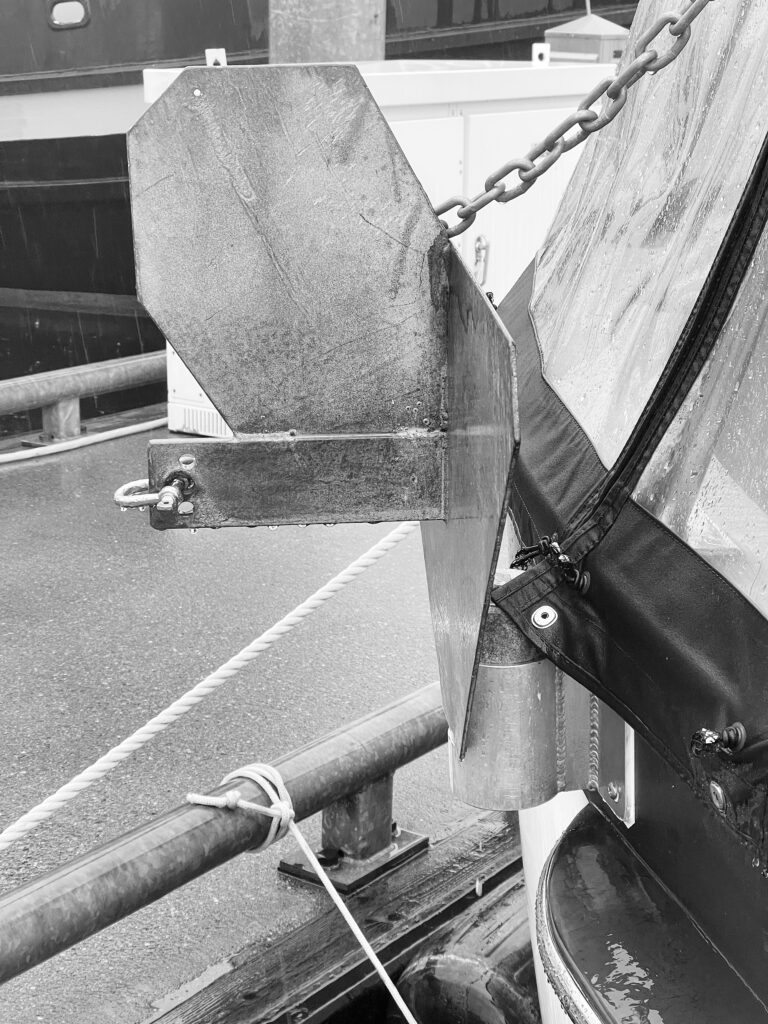
As of this writing, the fish are rigged and ready for their first real test. We’re eager to see the difference they make in a rolling beam sea, and equally excited to deploy flopper stoppers at anchor, enjoying calm nights in swelly coves that would otherwise send us searching for alternatives.
Even before the first deployment, the sense of confidence is unmistakable. The poles give us options—and options mean comfort, safety and peace of mind. When we eventually point Fortitude’s bow farther offshore, toward more challenging passages and remote destinations, we’ll do so knowing that the crew will arrive less frazzled and better rested, having enjoyed the journey and ready to enjoy the destination.
In the end, that’s why we chose poles: not because Fortitude needed them to be seaworthy, but because her crew needed them to be comfortable. And if they add a little extra purpose to her salty profile along the way, all the better.
This article originally appeared in the January/February 2026 issue of Passagemaker magazine.