Story + Photos Vincent Daniello
The problem was simple: A loose lock nut, unnoticed deep in the lazarette, let the steering system’s hydraulic ram shaft unscrew itself. With just a large adjustable wrench and needle-nose pliers, anyone with basic mechanical inclination would have had us back underway in 15 minutes. Or significantly quicker if the boat hadn’t been wallowing in 6-foot seas.
Unfortunately, the inadequate tool set aboard had neither. That left me steering with twin throttles while the rudders flopped side-to-side in the following sea for 30 miles west to Port Canaveral, Fla.
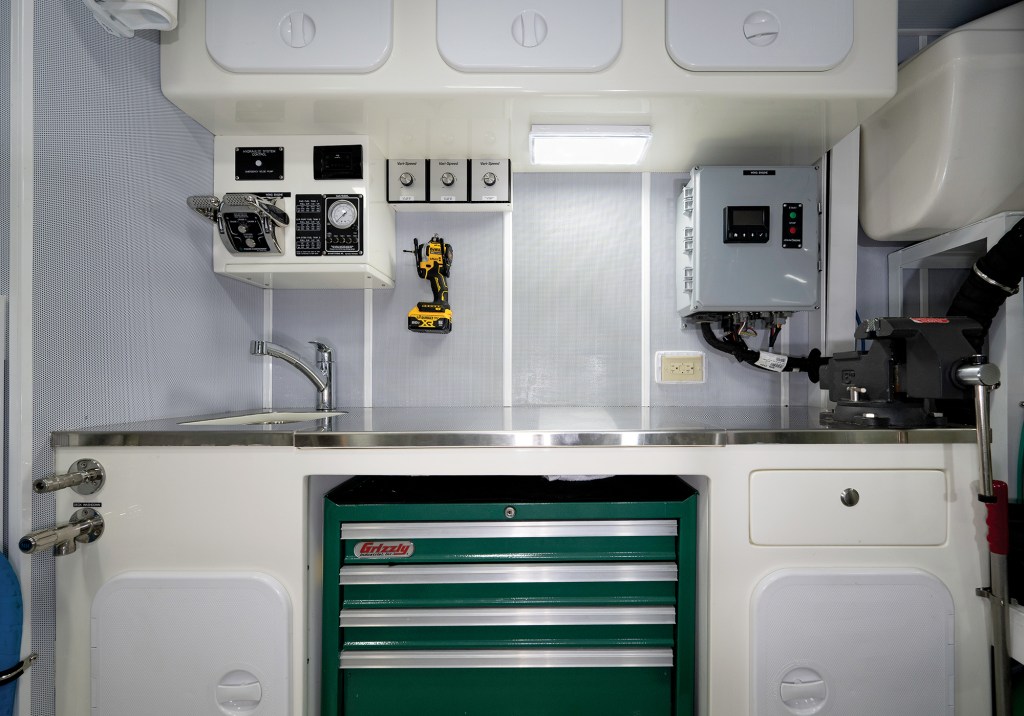
That experience, some three decades ago, inspired a complete, yet compact tool bag that has traveled with me from Canada to the Caribbean. An expanded set has gone into half a dozen engine-room tool chests aboard boats I captained.
The goal—worth attaining on any traveling boat—is having tools to handle nearly any repair aboard and adequately equip a captain or mechanic flying in with minimal gear.
Wrenches
Since that steering incident, I’ve noticed a yachtsman’s corollary to Murphy’s law: Whatever wrench size is missing will be required to complete the simplest repair causing the greatest inconvenience.
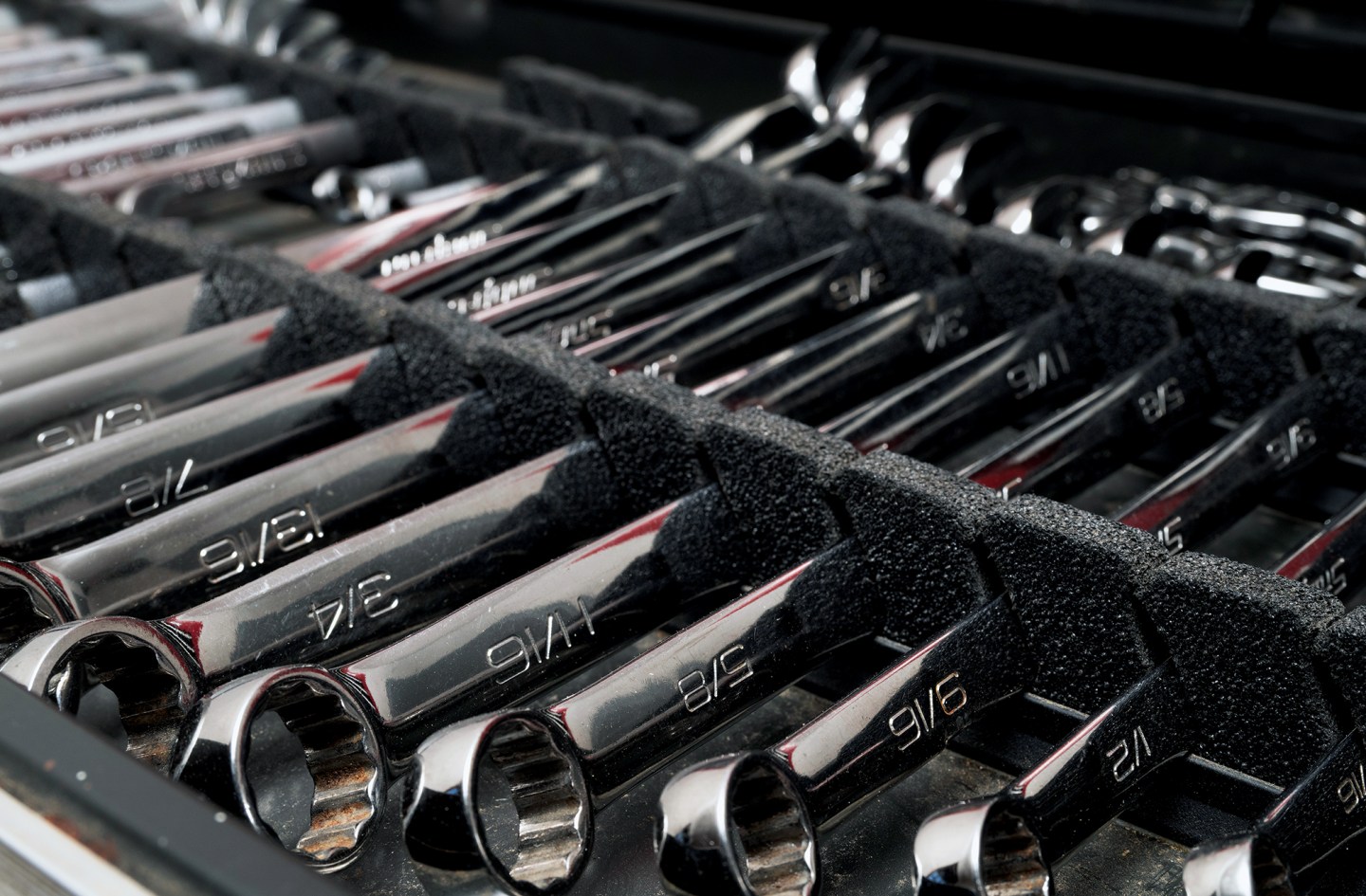
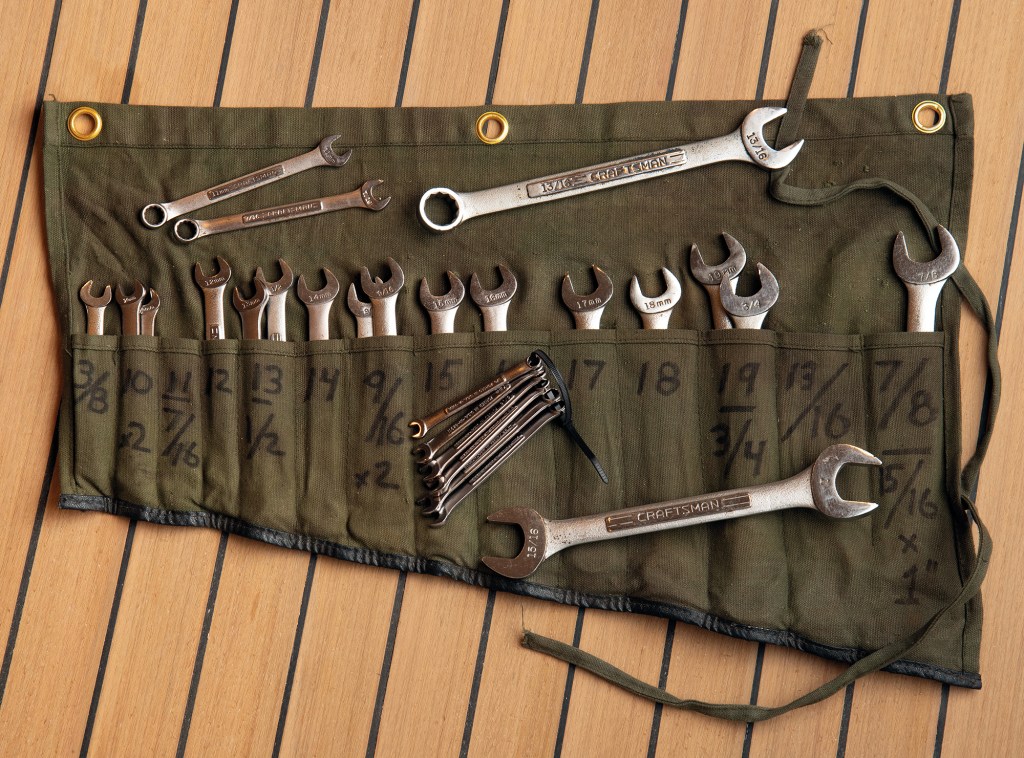
To avoid that, my kit starts with two sets of combination wrenches from 1/4- through 1 1/8-inch, and 7-mm through 28-mm sizes. It’s tempting to buy just metric wrenches, but don’t. A 7/8-inch wrench replaces 22 mm, for example, but a 22-mm wrench is too tight to fit a 7/8-inch nut, while 23 mm is too loose. Add to those the appropriate large open-end wrenches needed to cover your boat’s engine mounts and steering gear.
I’m admittedly a wrench snob, but that’s because countless instances have shown me that professional-grade wrenches (such as Snap-on) turn rusted or stripping fasteners when homeowner brands won’t. Many consumer sets also lack an 11/32-inch wrench, which is common on marine gauges. They also skip 18 mm, which is seemingly unheard of worldwide, yet is mysteriously prevalent on boats and marine components built in Europe.
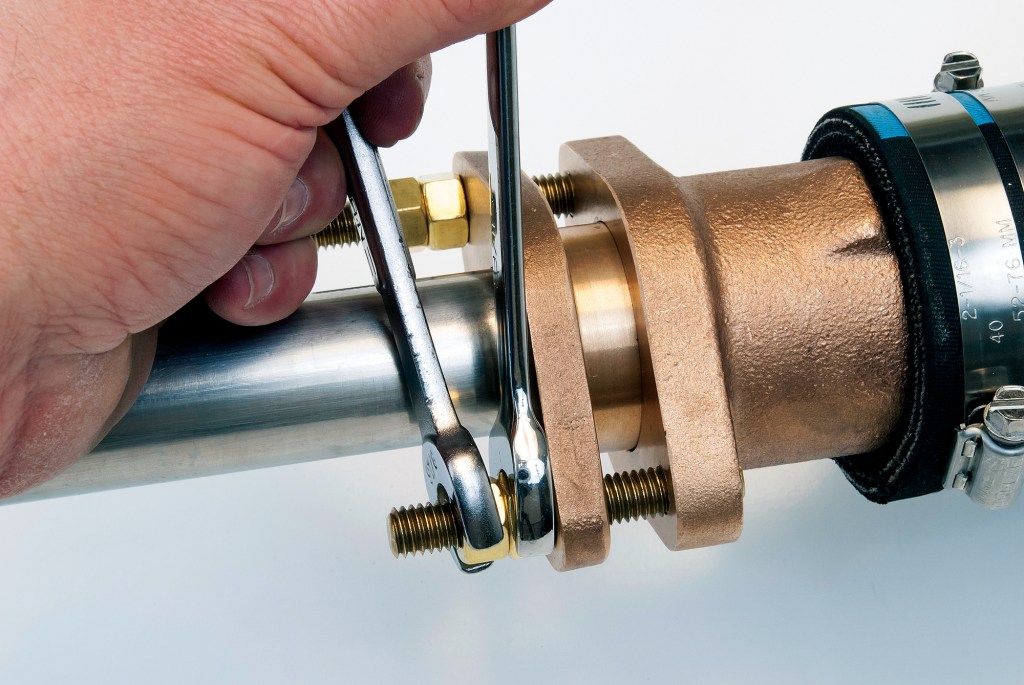
Even two full wrench sets, one in inches and one in millimeters, still come up short. Fuel and air systems, and even many stuffing boxes, often require two identical-size wrenches, usually in tight quarters where adjustable wrenches won’t fit. While 13-mm and 1/2-inch sizes are close enough to interchange, key sizes like 10-mm and 9/16-inch don’t have cross-equivalents. Play it safe with additional wrench sets covering 3/8-inch through 7/8-inch, and 10-mm through 19-mm sizes.
To cover all contingencies, add 6-inch and 10-inch adjustable wrenches. Find the ones that open wide and have rubberized handles for working on battery terminals. A 12- or 15-inch adjustable duplicates large-wrench sizes (when tightening lock nuts on steering ram shafts, for example). A pair of pipe wrenches, one large and one medium, fit propeller nuts and stuffing box glands. They also immobilize a broken prop shaft for emergency repairs.
Sockets and Drivers
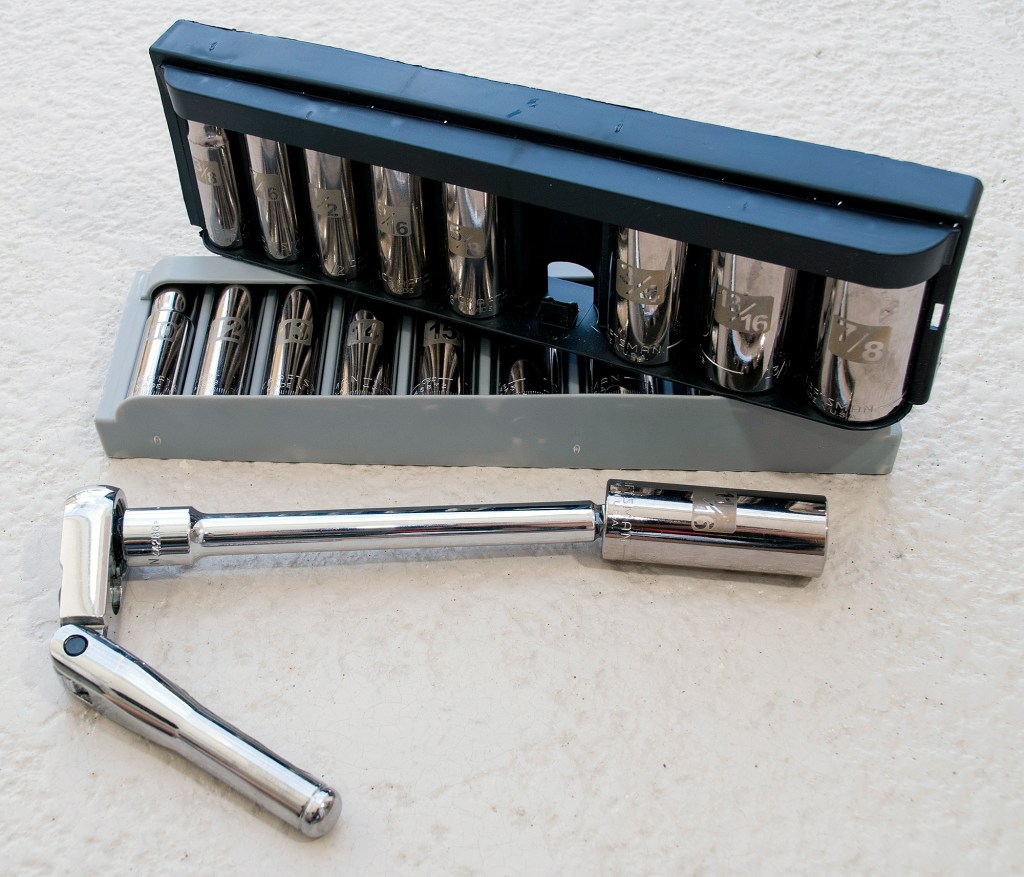
A set of 3/8-drive deep-well sockets turns most nuts. Start with a set in sizes by including 3/8-inch, 10-mm, 7/16-, 12-mm, 13-mm, 14-mm, 9/16-, 15-mm, 16-mm, 17-mm, 18-mm, 3/4-, and 13/16-inch sizes. Six-point configuration turns stubborn fasteners with the least chance of stripping. Add similarly sized shallow-well sockets to fit where deep sockets won’t. Get those as well as 12-point sockets that turn both hex-head bolts and 12-point fasteners that are surprisingly common, particularly on engines.
In 1/2-inch drive, shallow-well sockets from about 7/16-inch through 1 1/4-inch and 14-mm through 32-mm handle most needs. A similar range of deep-well sockets comes in handy.
I prefer a stubby flex-head ratchet handle that fits where others won’t. An extra-long ratcheting handle, also with an articulating flex head, provides clearance to avoid bruised knuckles. In 1/2-inch drive, a long flex-headed driver and a long breaker bar tackle everything. Wobble extensions reach into tight places while allowing just the right amount of wiggle—16 degrees—between extension and socket, yet they also lock straight with a nudge.
Engine work requires both 3/8-inch and 1/2-inch-drive torque wrenches covering about 10 to 250 foot-pounds (stored to avoid shock and set to zero). Mechanics also need go-no-go feeler gauges and the oversize socket or specific barring tool required to rotate your engine.
Nut drivers, from 3/16-inch through 1/2-inch, and from 5-mm to 11-mm, are particularly helpful. Their hollow shafts fit over long protruding bolts when deep-well sockets don’t, and they make installing small nuts easy. Most important are 7-mm, 5/16-inch and 1/4-inch sizes that won’t slip off hose clamps the way slotted screwdrivers do.
To turn corners nut drivers can’t, 1/4-inch drive sockets starting at 5-mm and 3/16-inch pair well with a wobble hand driver, similar to a screwdriver handle, but that allows the socket to wiggle.
Ball end Allen wrenches, which similarly fit into bolts at an angle, are indispensable. Many sets skip sizes; you’ll want 10-, 9-, 8-, 7-, 6-, 5.5-, 5-, 4.5-, 4-, 3.5-, 3-, 2.5-, 2- and 1.5-mm sizes, as well as 3/8-, 5/16-, 1/4-, 7/32-, 3/16-, 5/32-, 9/64-, 1/8-, 7/64-, 3/32-, 5/64-, 1/16- and 0.05-inch sizes.
Screwdrivers
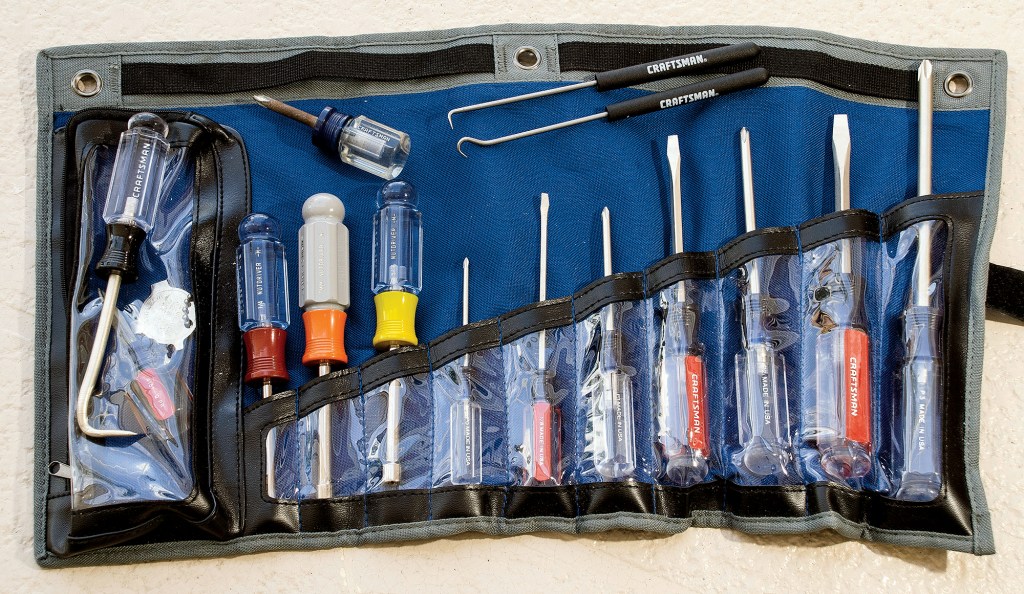
Most jobs fall within Phillips screwdriver sizes #0, #1, #2, #3 or 1/8-, 3/16- and 1/4-inch slotted screwdrivers. Add 1/4-inch and #2 Phillips stubby and offset screwdrivers for tight places. A ratcheting screwdriver handle with bits for Torx (star-drive) sizes T10, T15, T20, T27 and T30, as well as #0 through #3 Robertson (square-drive) covers those fasteners. Add a set of bits to drive tamper-proof fasteners, as well as assorted tiny-size jeweler’s screwdrivers.
Pliers
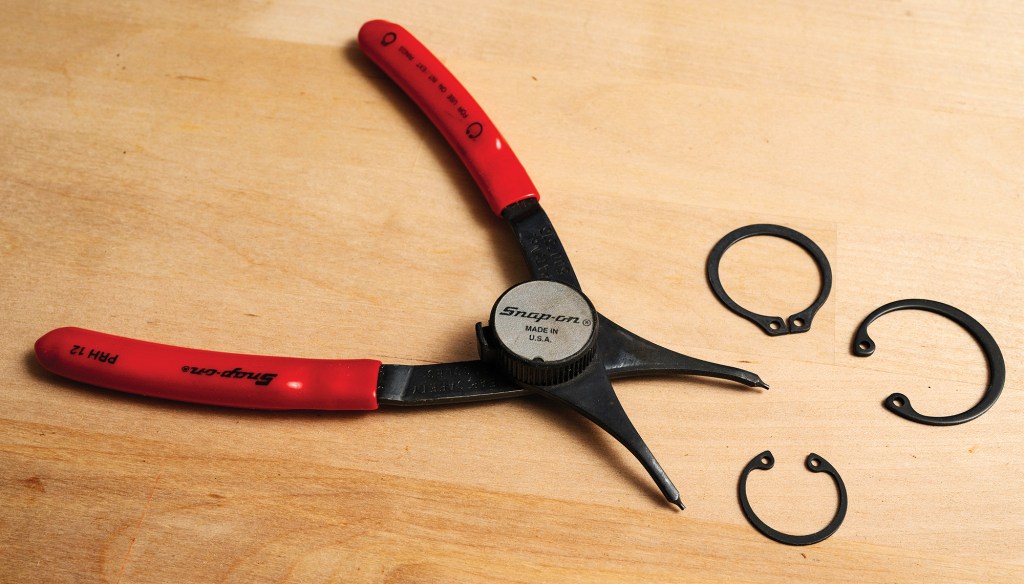
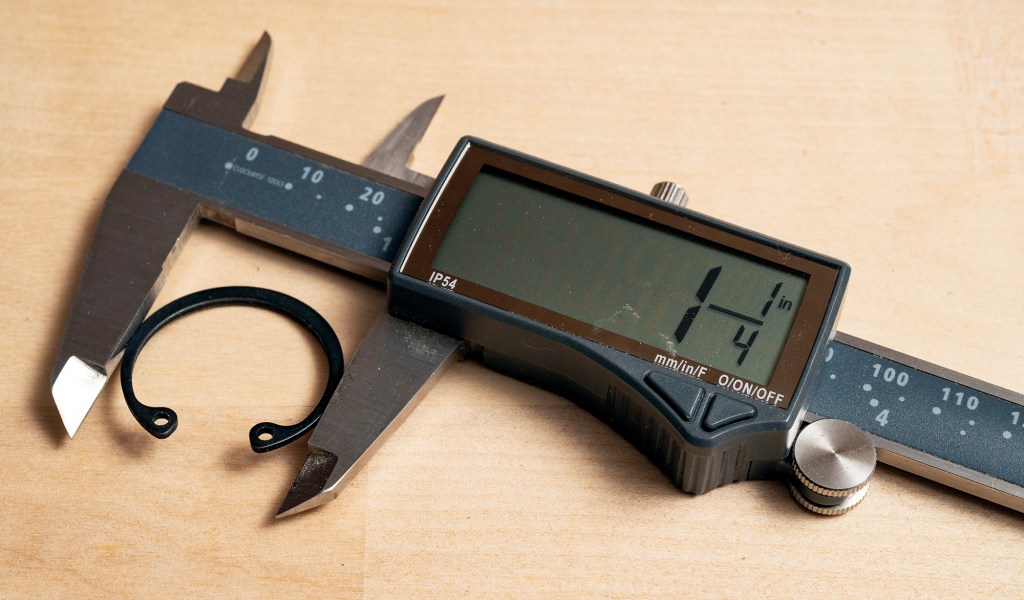
Arc-joint pliers, best known by the Channellock brand, are handy in 8-inch, 12-inch and giant 16-inch sizes. Common 10-inch slip-joint and 6-inch needle-nose pliers; locking Vise-Grip pliers in 10-inch curved jaw and 6-inch long-nose varieties; heavy-duty wire cutters; and wire stripping and crimping tools handle most needs. Assorted small-size pliers help with delicate work, while pliers to squeeze internal retaining rings and spread external ones are essential for countless repairs aboard.
In addition to specific filter wrenches for your boat, Klein Tools 6-inch and 12-inch aluminum strap wrenches with rubbery, slip-resistant straps cover unforeseen sizes.
Handy Odds and Ends
A painter’s five-in-one tool or stiff putty knife, sharpened with a file, removes old gaskets without damaging parts or knuckles. Slide a hose hook (mine is a cotter pin puller) around the inside of a hose to break it free for easy removal. A hacksaw with extra blades, assorted stainless steel wire brushes, dental picks and a snap-blade utility knife round out sharp and pointy necessities.
You can’t fix what you can’t see, so a telescoping mirror and a small, bright flashlight are essential, along with a strong telescoping magnet to retrieve dropped tools or fasteners.
Avoid repeat trips to the hardware store (or duplicate FedEx charges) with Thexton thread pitch gauges that include holes to identify a bolt’s diameter. Screw extractors, along with taps and dies in inch and metric sizes, often salvage parts. A tape measure, plastic calipers and 6-inch stainless steel machinist rule help identify replacements.
A 16- or 24-ounce shot-filled dead-blow hammer, 3-pound hand sledge, and assorted punches and pry bars, including mechanic’s lady slippers, persuade stuck parts to loosen.
I also carry anti-seize Ultra Tef-Gel to keep parts from sticking, along with thread-lock (the blue semi-permanent variety), pipe-thread sealant, assorted gasket compound, Teflon lube, Teflon tape and colored electrical tape, which doesn’t turn gummy over time the way the cheap black tape does.
Boat-Specific Tools
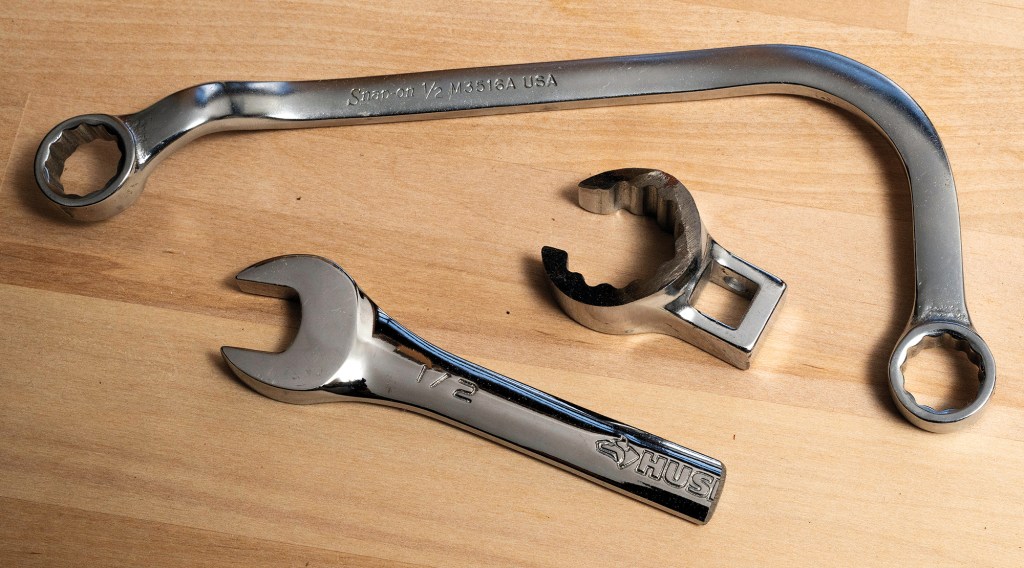
There is an unusual 12-point, bent, twisted, crooked 1/2-inch wrench that is absolutely required to change the fuel supply pump on vintage Detroit Diesels. Without it, you’re stuck, and I can say unequivocally that there are at least two similar specialty tools required, somewhere, on every boat. Ask service techs about specialty tools your boat might need, and keep an inventory list to share before a mechanic flies in.
A traveling boat’s toolbox is never full. Mine expands as shortcomings crop up. There is a particular satisfaction, though, in the self-reliance that comes with always having adequate tools to get the job done.
This article originally appeared in the July/August 2026 issue of Passagemaker magazine.