Photos courtesy of Northrop & Johnson
A few years ago, I started to follow a slow and erratic trickle of information about an in-build, 78-foot, custom yacht that was slated to come to the United States before embarking on an Arctic excursion. I didn’t have a name, deck plans or a port of call, just a smattering of promising leads that kept me wanting to learn more.
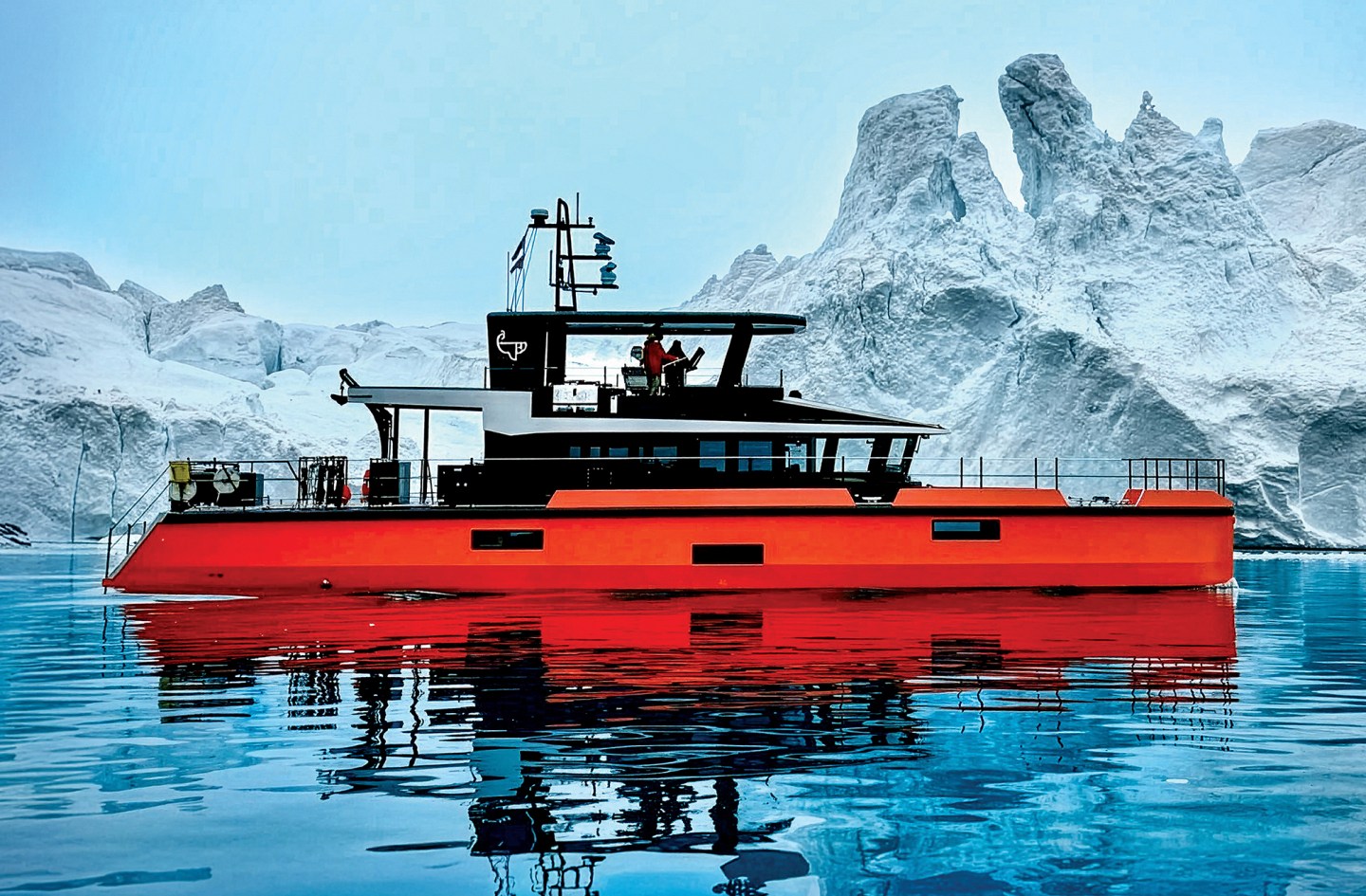
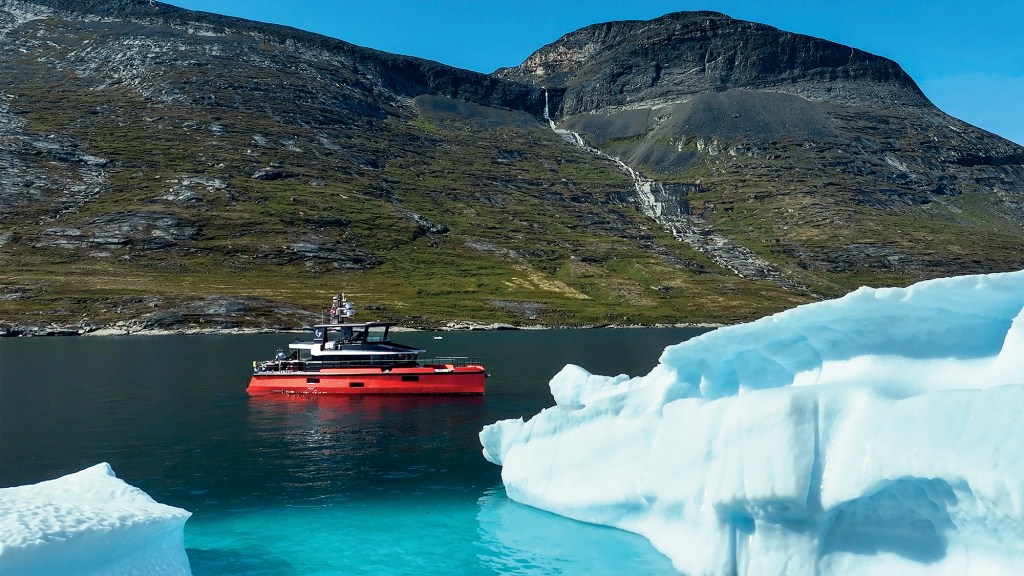
The pedigree was first class: an aluminum passagemaker based on Steve Dashew’s Functional Power Boats as interpreted by Turkey-based Naval Yachts. We had covered a sistership, Möbius (see “Project Goldilocks” at passagemaker.com) and knew that the builder’s line of aluminum explorer yachts, known as XPM for Extreme Exploration Passage Maker, were proven off-the-grid cruisers. Sometime later, a few photos began to appear on social media of a streamlined, bright-orange beauty.
Is this the boat? I thought, only to have the evidence disappear like smoke when my feed updated.
But luck was on my side last winter at Trawlerfest in Fort Lauderdale, Fla., when I stood, awestruck, by a tangerine dream: The elusive, 78-foot custom XPM was slowly backing into her slip to participate in the show. The name on her transom was Vanguard.
It took some self-control not to board her as soon as the mains were turned off. After Vanguard was safely secured, I approached a salty-looking fellow who was lingering near the transom door that led to her machinery spaces. Good fortune continued to reward me: It was the boat’s owner, Chris Leigh-Jones, who invited me to board.
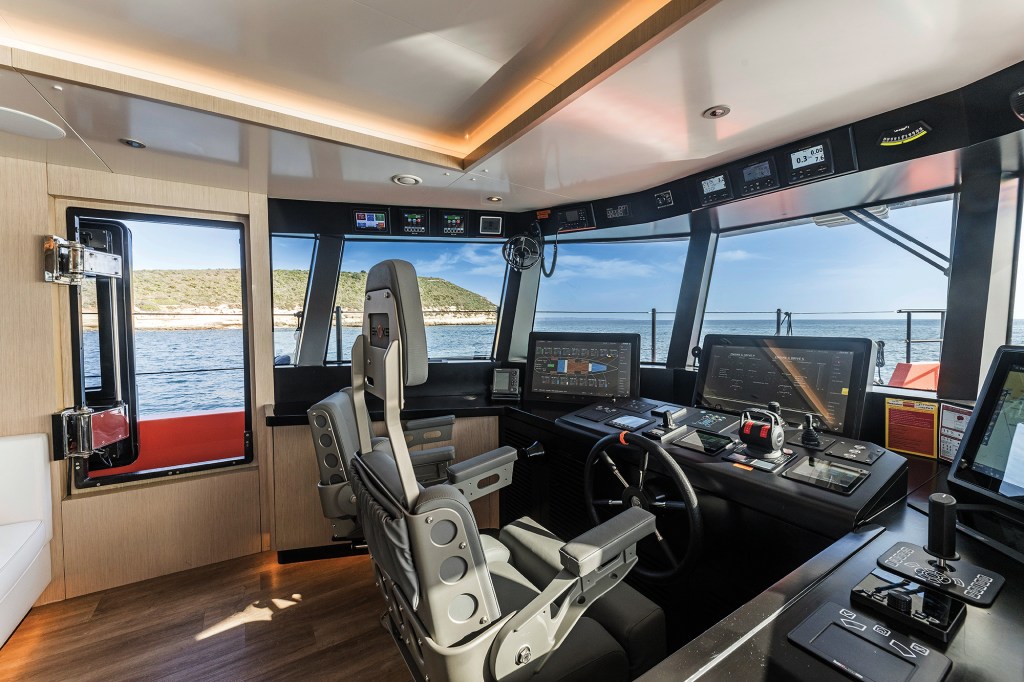
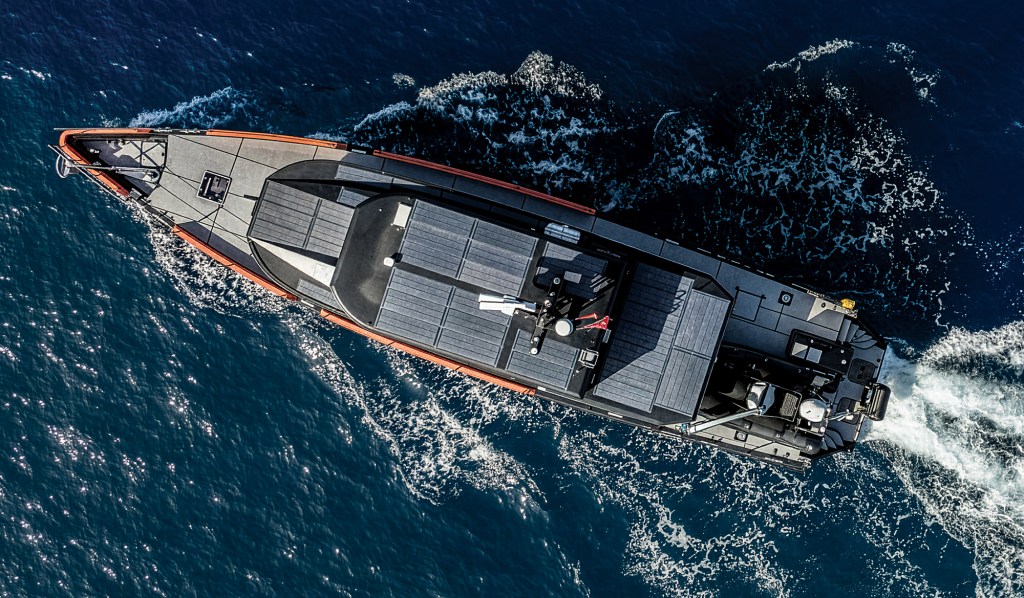
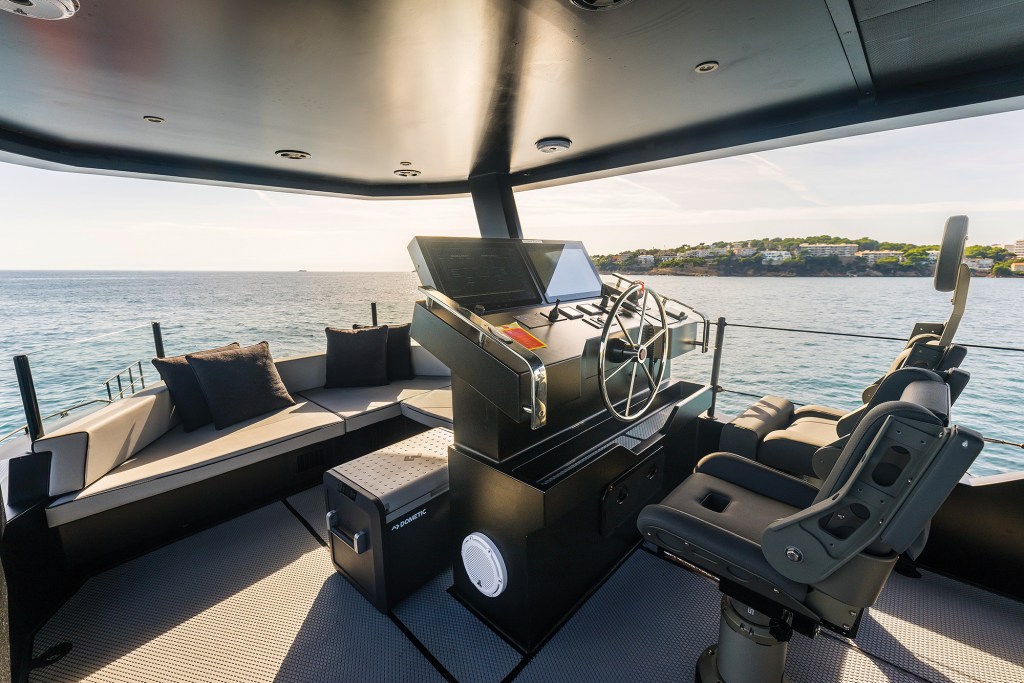
The equipment I spied in the immaculate mechanical spaces and at the helm would be at home on working craft. It included a Praxis diesel-electric hybrid propulsion system, a commercial-grade dynamic positioning system and beefy Wills Ridley hydraulic steering. High-capacity alternators were fitted on the commercially rated, 160-hp John Deere engines to replenish house batteries quickly. A Victron energy management system kept everything on the up and up. She also had a 6.5-kW solar array and more than 140 kWh of electrical storage, with the goal of total independence from shore power.
Her matte-black Treadmaster anti-slip deck is a fine match to the orange hull, and with a 17-foot Highfield RIB dominating the cockpit, her expedition bona fides are on full display (to continue her explorer vibes, both upper and lower helms are fitted with Shoxs suspension seating). A seating area and BBQ occupy the forward area of the cockpit, with flybridge access on the starboard side.
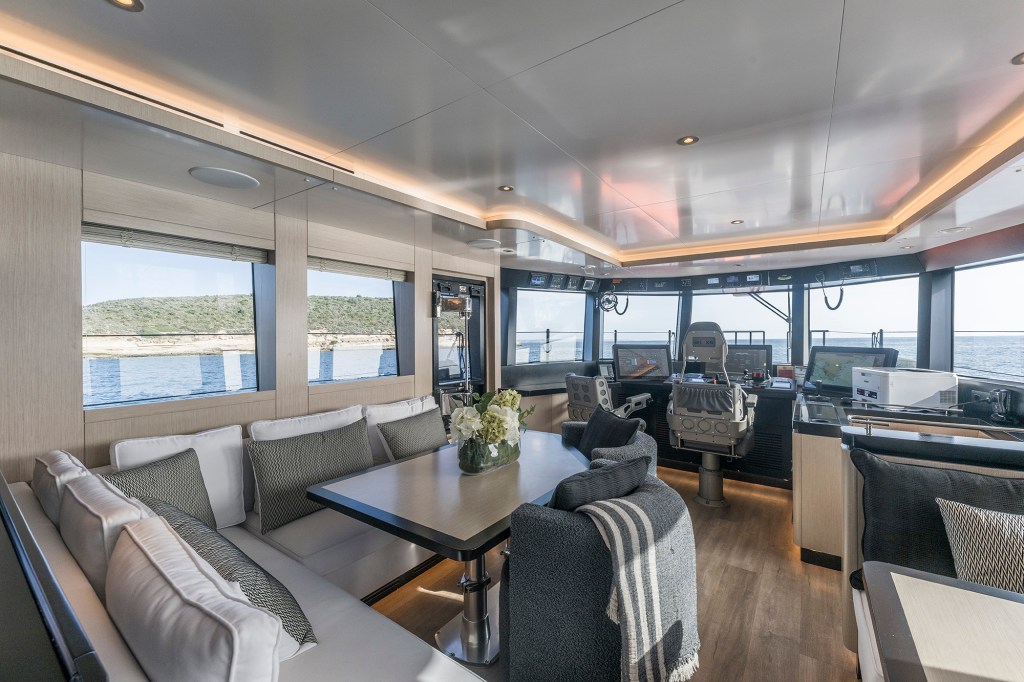
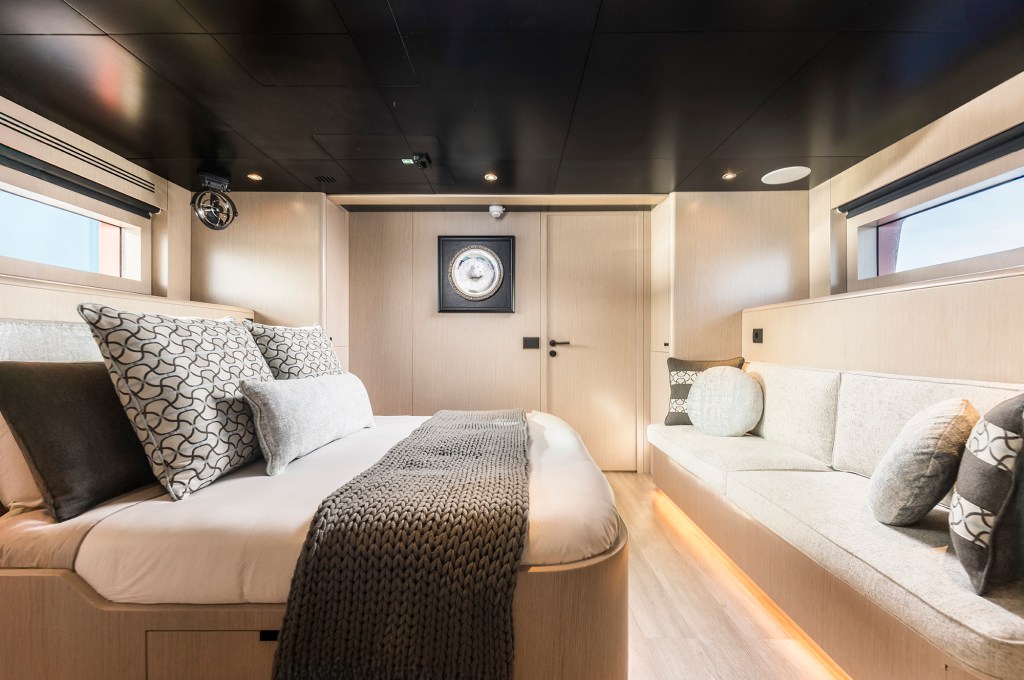
Vanguard’s above- and belowdeck spaces feel open and airy. The light woods and soft goods in the salon are a nice contrast with her aft galley that is finished in ebony. This treatment continues in her three en suite staterooms: The amidships master with king berth and the VIP forward are accessed via a forward companionway, and the guest stateroom’s twin bunks share an aft staircase that also provides engine room access. Dark, veiny marble grants the baths with a luxe touch.
Leigh-Jones graciously walked me through the boat and, in his Welsh accent, filled me on how he got here. “I didn’t like small-town North Wales, so I ran off to sea when I was a kid,” he said. “I was 16, I went to Liverpool, and off we went.”
After serving in the Merchant Marine and having a successful career as a marine engineer and homebuilder in the United States, he began to formulate a plan to do some bucket-list, long-range cruising on his own vessel. “‘I went to Bimini for breakfast from Fort Lauderdale’ is not much,” he said. “So, you need something that’ll go to places where your very nice but inappropriate cruiser will not go.”
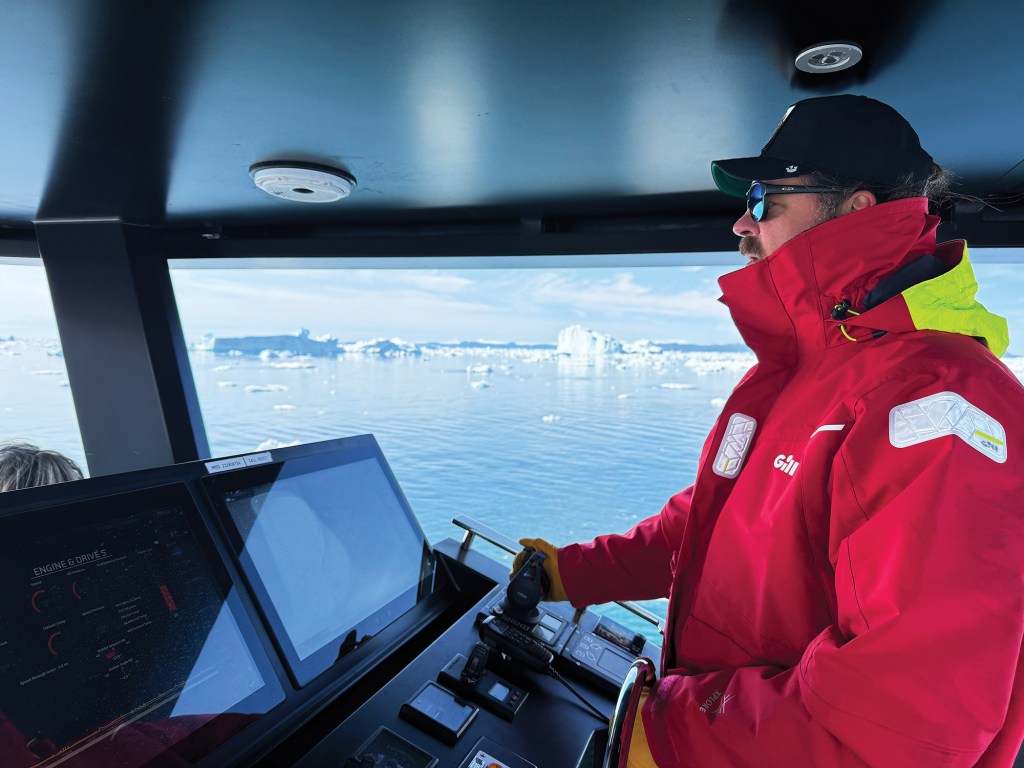
That kind of thinking eventually led him to Naval Yachts, and to build the 78-footer. After her Mediterranean launch and wring-out cruise to Spain, Leigh-Jones had her shipped to Fort Lauderdale with plans to head north. Vanguard was certainly capable of coming across on her own bottom, but that type of trip held little interest to him.
“Ocean crossings [are] crushingly boring,” he said. “It’s a routine. You get into it. It’s like you’d like to be in suspended animation … and this goes on for weeks. Is it like checking off a box for people. … I’ve noticed in the yachting circles those who have gone transatlantic or transpacific, they’ll tell you pretty quickly.”
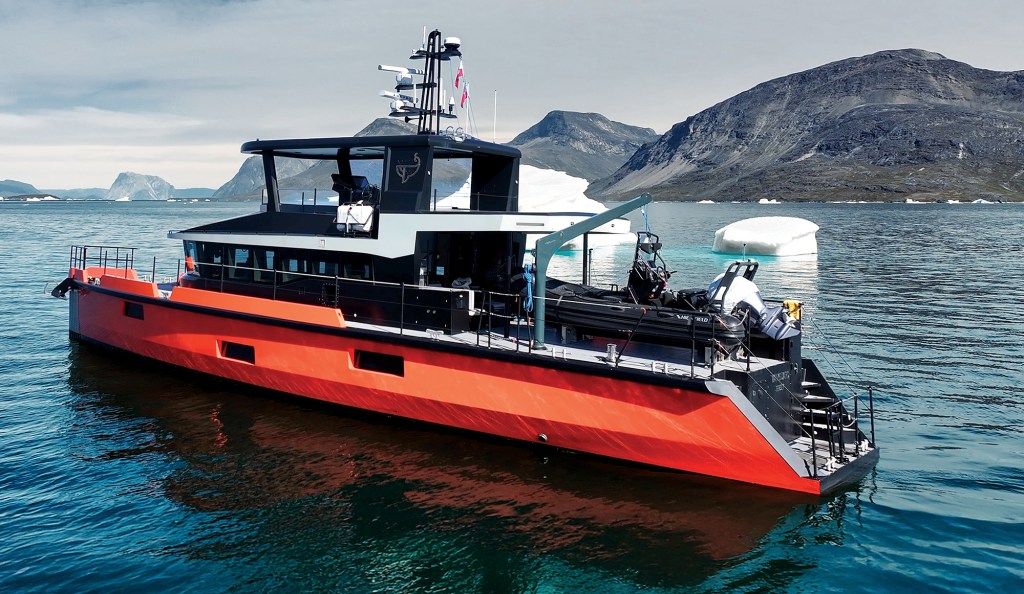
Instead, he planned a round-trip journey from Fort Lauderdale to Greenland that would take the small crew several months (“Halifax to Halifax in three months,” Leigh-Jones said), spending a large chunk of time in the ice. They “bumped up the coast” until they got north of the Canadian Maritimes, where they encounter locals who live close to the bone and whose existence is inexorably tied to the sea.
“[We’d] hide amongst the fishermen, talk to people and [see] societies and the cultures changing as you went further north,” he said. Nearly everyone they met was inordinately generous, with one man offering the haunch of a caribou he’d just butchered, and another loaning the crew a Mercedes-AMG to run some errands.
The crew followed the Baffin Island Current in the Labrador Sea, setting a course for the west coast of Greenland. Before they began to feel dwarfed by the ice, the biggest obstacle was cruise ships and fishing trawlers, one of which almost ran them over. “We realized because [they] had these big spotlights on, he couldn’t see us,” Leigh-Jones said. “I put all the work lights on to get him to change course.”
As they got near Greenland, they maneuvered between the 100 miles or so of scattered ice on the way to Disko Bay. From there, it was “a totally different paradigm,” he said. “I’ve never seen anything like it. You can’t push this stuff out of the way and [get] through it.”
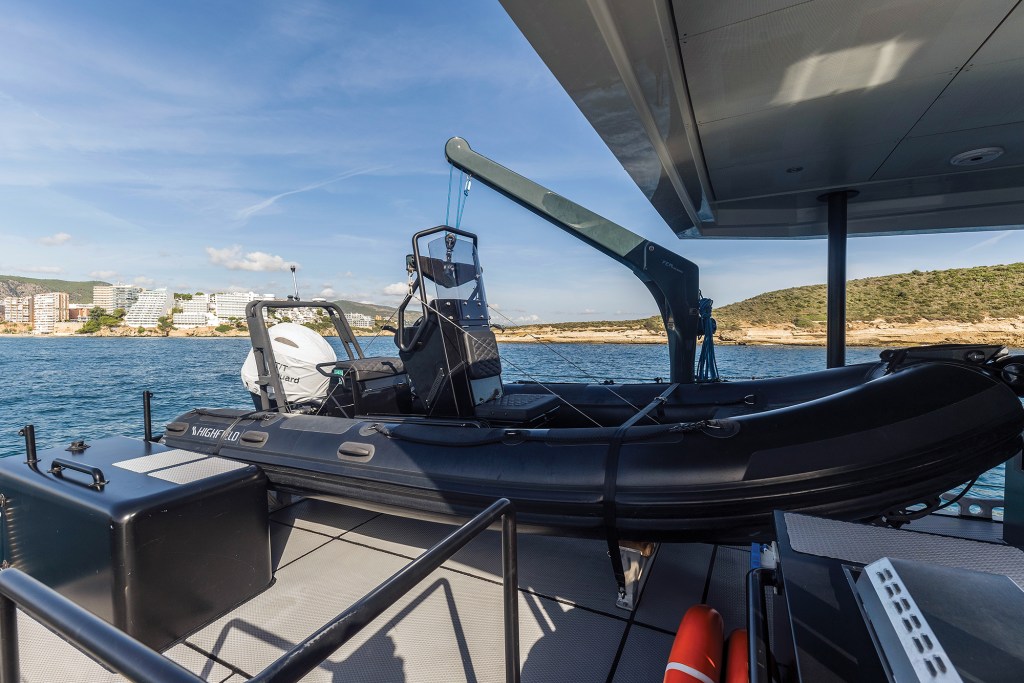
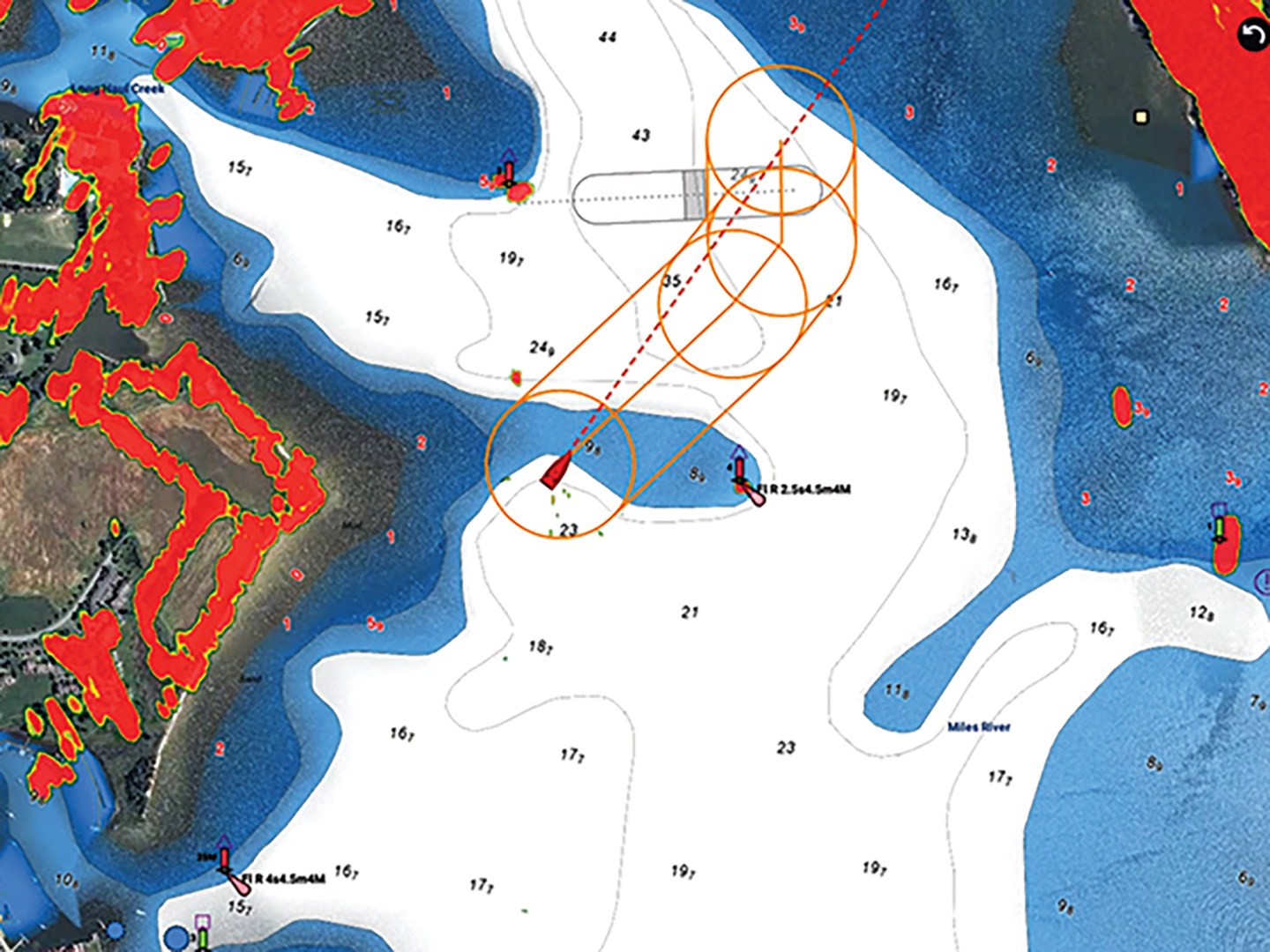
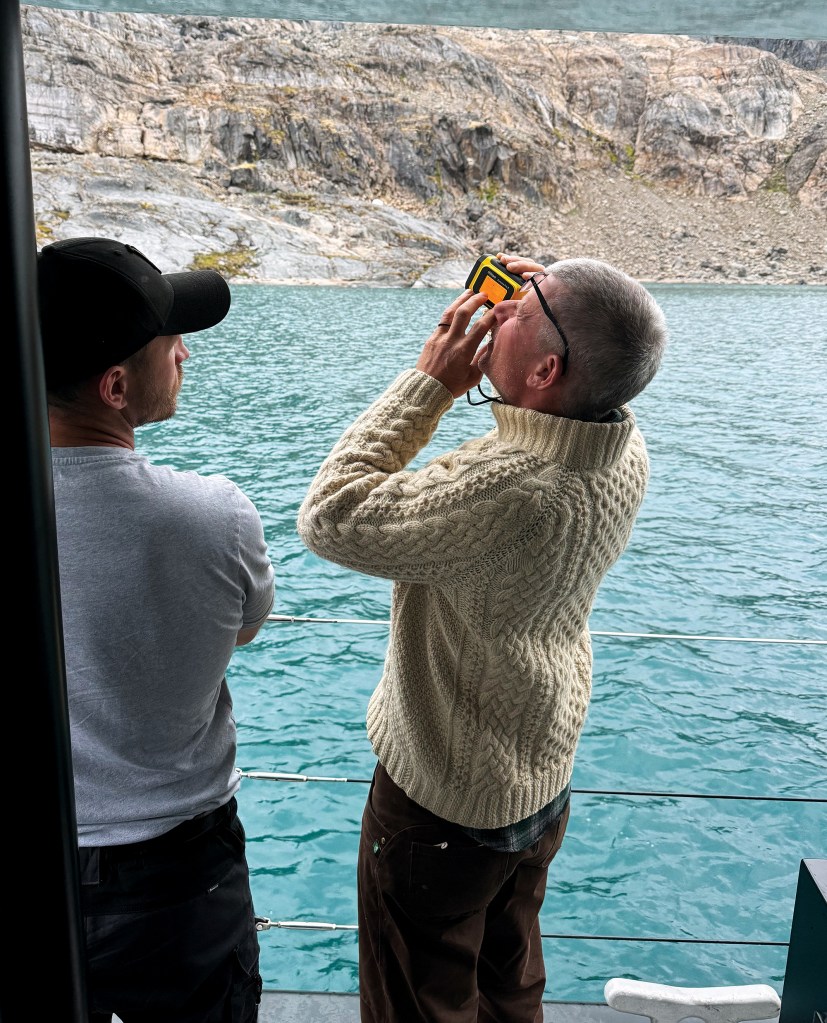
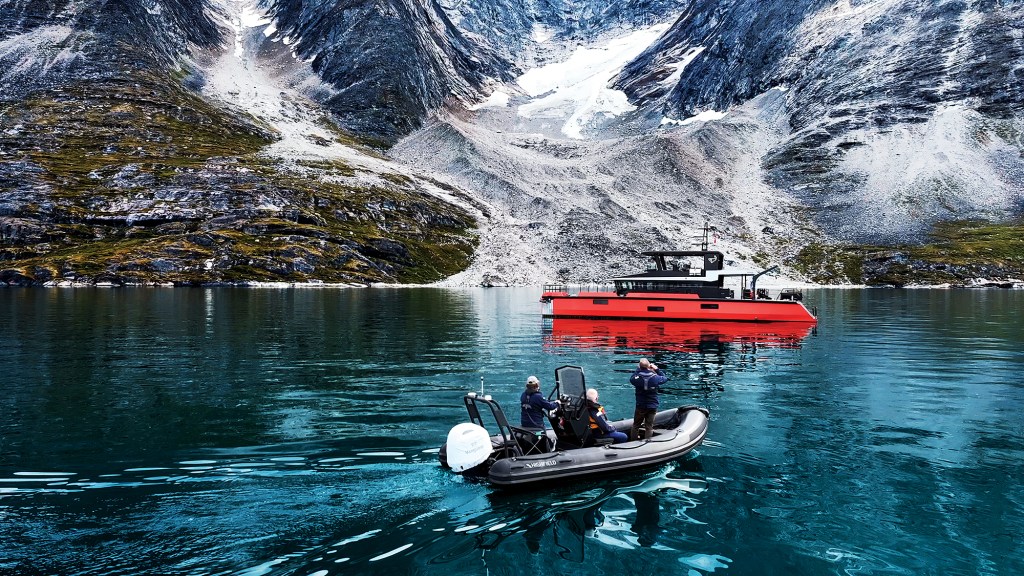
The crew picked their way slowly through the hundreds of miles of ice fields, navigating by sight, as the radar was useless. Leigh-Jones’ son, Rhys, would act as a forward scout on the RIB, guiding them through the floes.
Along the way, Vanguard’s ice-reinforced hull and equipment took some dings. They ducked into coves and endured 100-mph winds. Somewhere in the ice, perhaps on the Labrador Sea, they lost one of the big boat’s two MagnusMaster stabilizers. And at one point, the engine room hatch was stoved in when a weld gave way, flooding the mechanical spaces.
“When you stuff the hatch into the engine room in the dark and the alarms are going off and you step into a foot of water, it’s just a bit disconcerting,” Leigh-Jones said. Vanguard has several watertight compartments, but, he added, “the one you don’t want flooding was the engine room.”
As the first snows of winter came in, the crew were in Nuuk and knew it was time to head back. They surfed down the Labrador Sea for many miles until, in the pitch-black, they began to broach broadside to the following sea. “It was a scary few minutes that would last a lifetime of a lesson. As far as surfing, you don’t surf at night, I got that out of it,” Leigh-Jones said.
With about 9,000 nautical miles on her bottom, Vanguard is now in South Florida, having undergone cosmetic and mechanical repairs. She has proved herself time and again to Leigh-Jones and her various crewmembers. “No one was seasick on the boat in those five months,” he said, already thinking of his next adventure after summering in the Chesapeake area.
Maybe it will be the Lofoten Islands in Norway, as well as Antarctica. “I’d like to go there,” he said of Antarctica, in particular. “I’m not sure I have the will, to be honest, but I would like to give that a go.”
For more on Chris Leigh-Jones and his trip to Greenland, listen to “Vanguard of the Ice” on the Trawler Talk podcast.
Vanguard Specifications:
LOA: 78ft. 4in.
Beam: 16ft. 11in.
Draft: 4ft. 4in.
Displacement: 147,840 lbs.
Fuel: 2,611 gal.
Water: 1,981 gal.
Power: 2x 160-hp John Deere 4045 AFM85 M1
This article originally appeared in the July/August 2026 issue of Passagemaker magazine.