I grew up around boats, and racing was part of our family life. Weekends were spent in small, single-handed dinghies like the Optimist and Europe. Later, I was in keelboats such as the J/22 and Dragon. I eventually logged offshore miles on bigger race boats.
Sailing gave me independence. I loved being at sea and finding my own course. Later, I studied naval architecture and worked for years on the design of commercial vessels, which are built to do a job. What they taught me carries into yacht design: Comfort is part of performance. If people function, then the vessel can do what it is meant to do, from standing watch offshore to cruising farther as a family.
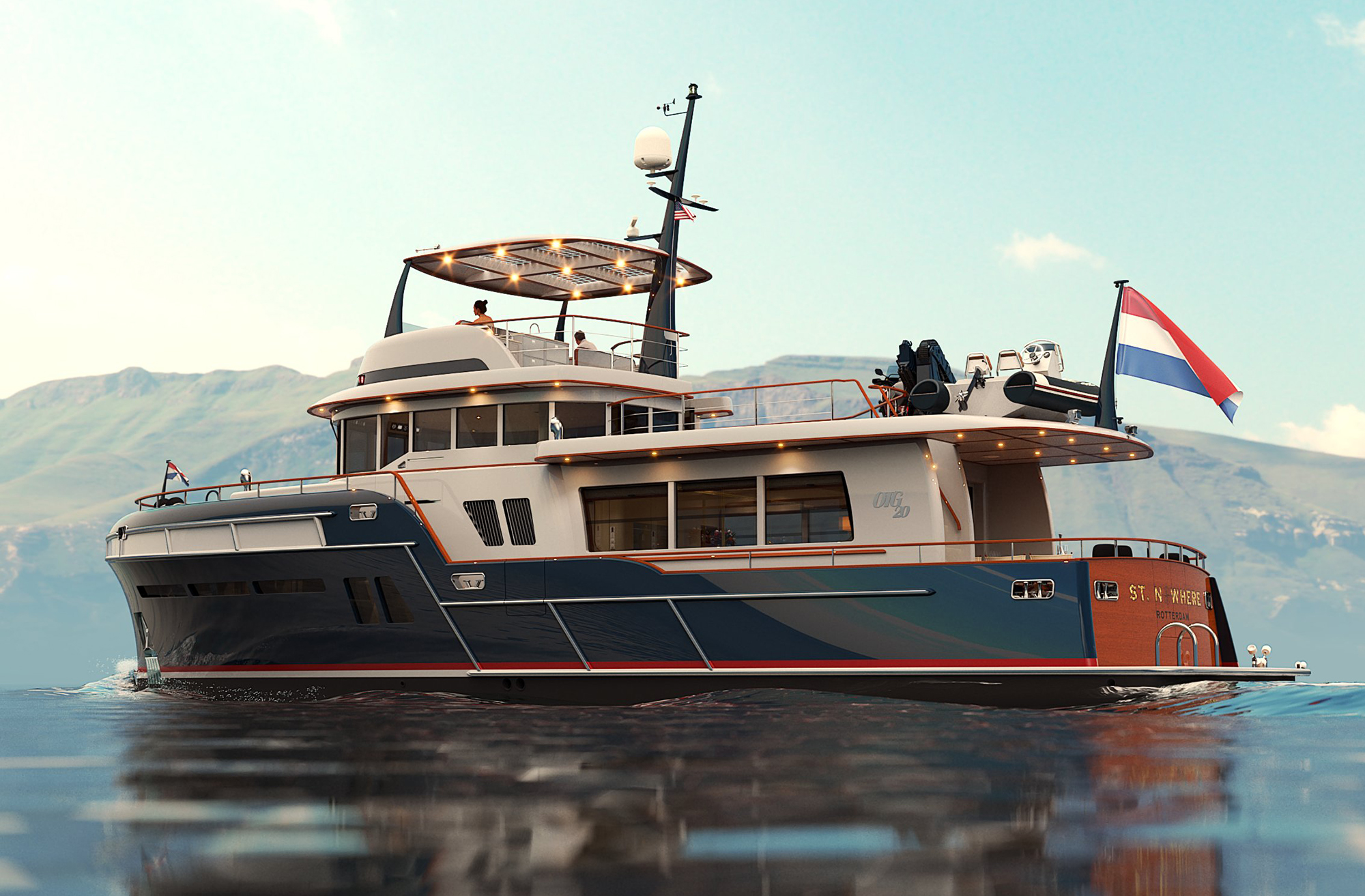
My idea for the OTG 20 comes from all of these lessons. It’s a timeless trawler concept, but drawn as a new build from the keel up.
Commercial Naval Architecture Meets Yacht Design
In commercial shipbuilding, you start with use: sea state, speed, endurance, crew and maintenance. From there, you build a concept that stands up technically in terms of hydrostatics, weight plan, appendages and propulsion. Only then do you shape the design so it reads clearly and ages well. You also show visuals early, to align decision-makers.
I applied that same design rhythm to the OTG 20: prove the function, then let the form tie it all together. The catch is that people do not fall in love with hydrostatics or battery capacity. They fall in love with the whole. That is why aesthetics come first and make you want to step aboard, even as the technical work carries on underneath.
The OTG 20 is conceived as a hybrid passagemaker. It has an electric drive with generator-backed range. The exterior has a finished level of detail, and we are refining the underbody, transitions and volumes. We’re also tightening the hydrostatics so the boat trims and carries her weight as intended across different load cases.
Why Choose a Hybrid Drivetrain?
Why hybrid? It’s ideal for long passages, time at anchor and short coastal hops, sometimes including places without shore power. Those scenarios drive the balance between batteries, generator strategy and hotel loads. The goal is quiet running when it matters, dependable range when it’s needed, better efficiency over mixed profiles, fewer hours on main machinery, and compliance with tightening harbor rules. Hybrid means an electric drivetrain sized for real passagemaking profiles, with generators set up as range assurance.
Deck Layout and Exterior Design
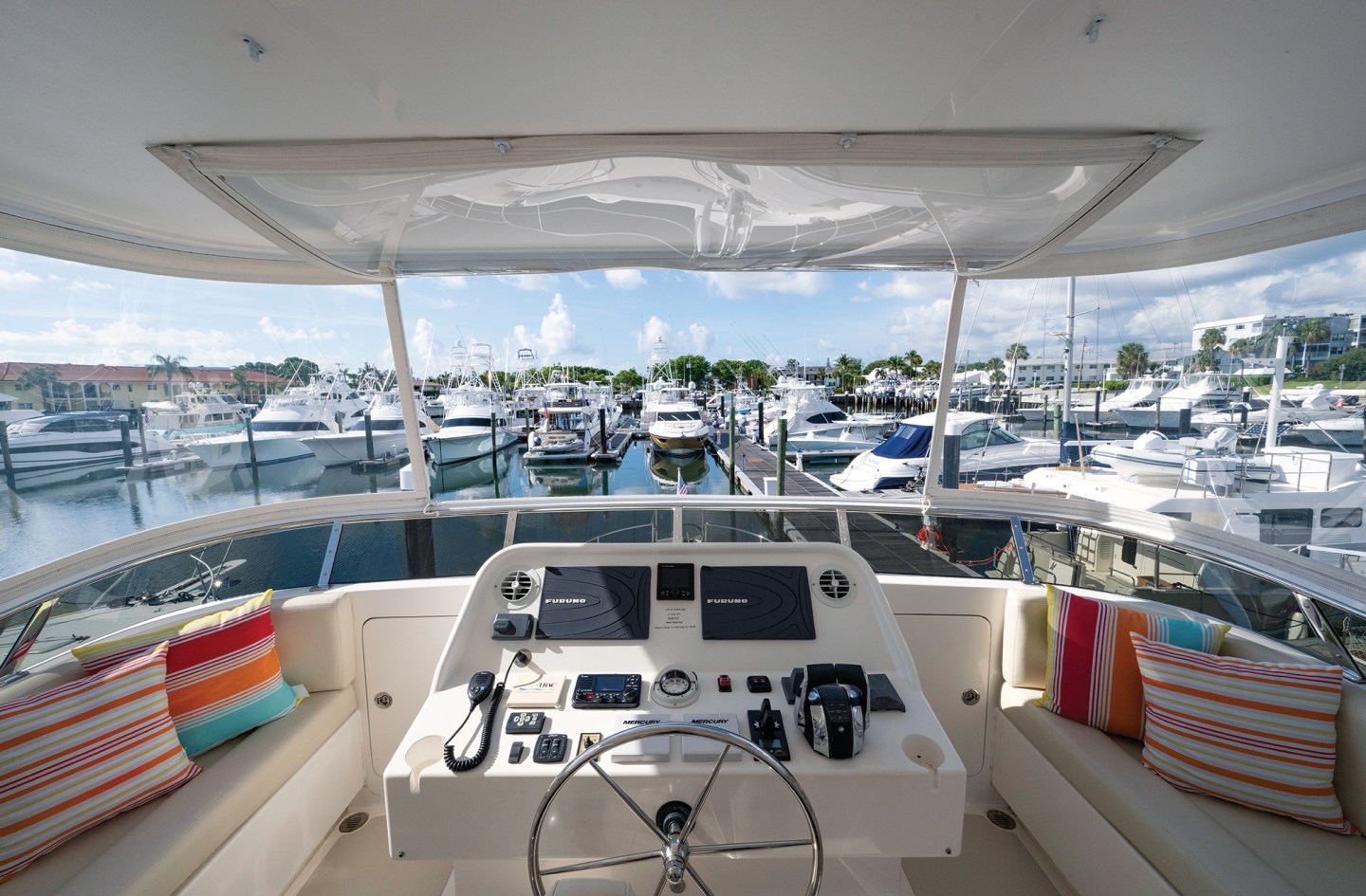
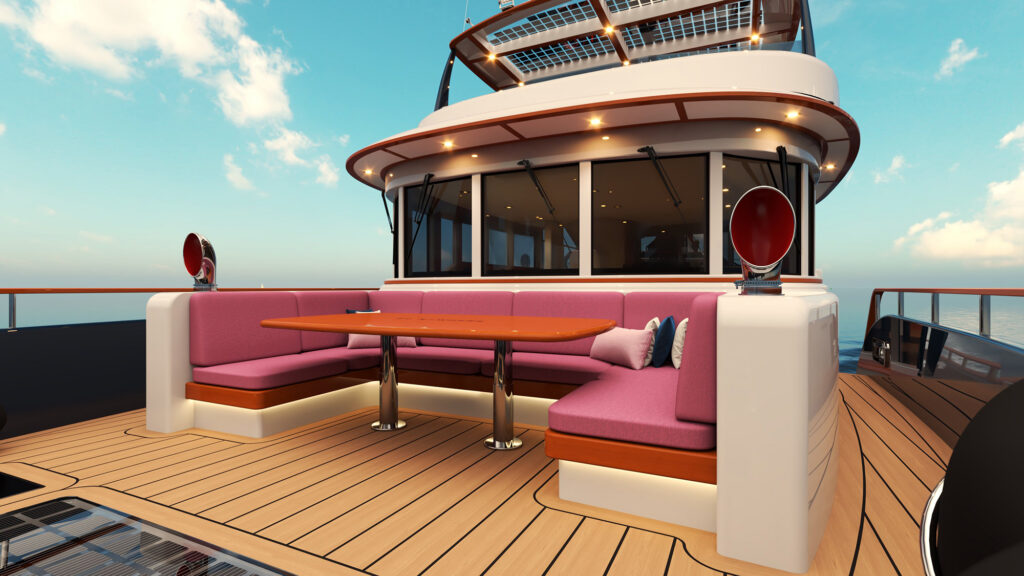
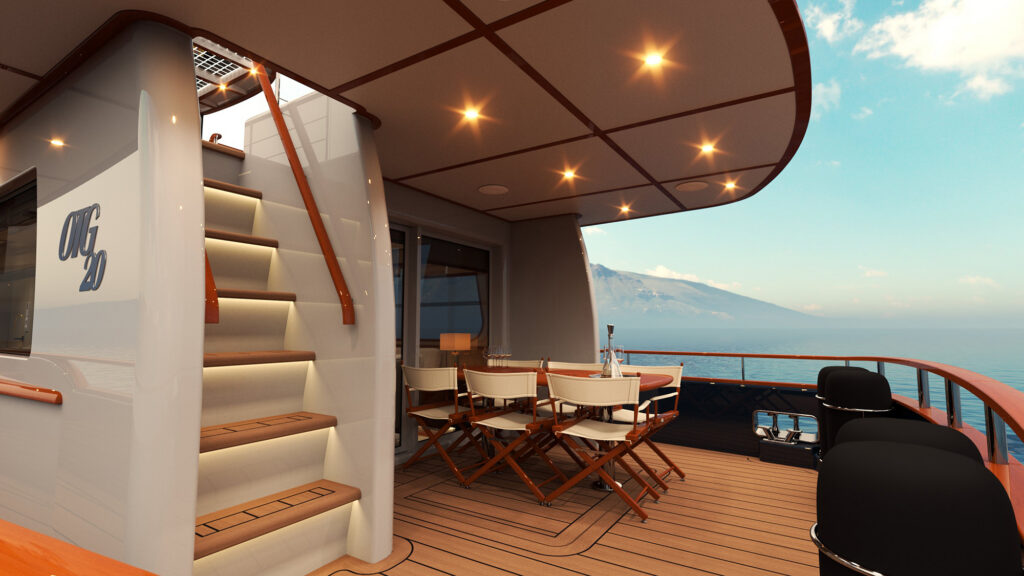
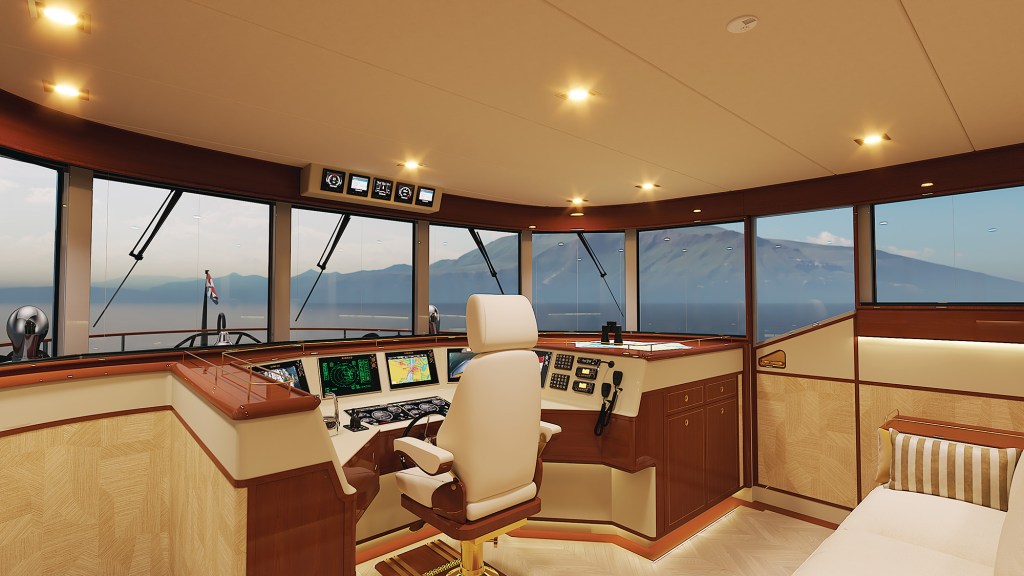
Abovedeck, there are good sightlines from the helm forward and aft. The glazing works in foul weather as well as fair. The side decks are sized so crew can move along at sea, with handholds where people reach without thinking.
The flush foredeck is a real working space and accommodates solar to ease hotel loads. The bridge deck carries proper stowage and a serious crane for tenders and gear. On the flybridge, a starboard helm gives clear visibility. There’s seating and shade for guests, along with cupholders and grab points. The aim is a silhouette that feels familiar on day one and makes more sense the longer you live with it.
Below the waterline, we want the boat to remain steady as tanks and stores change. Service access is designed rather than squeezed in. Again, it’s the commercial mindset applied to a yacht.
Rob, my best friend and a former classmate, is a crucial sounding board. He helps me reflect on the process—from the design itself, the path forward and searching for a commercial partner to making sure I do not get lost in details. That kind of sparring keeps the project balanced. The next steps are to finalize the machinery layout and construction plan, run Computational Fluid Dynamics and seakeeping iterations with partners, and then freeze the weight plan.
Today, the OTG 20 exists fully in 3D. The exterior is essentially locked, and the interior is modeled. The underbody is being set with care.
For interested parties, a general-arrangements plan and technical brief are available. Some details are still open to personalization without losing the core idea.
OTG 20 Hybrid Propulsion System Explained
Most trawlers are designed around a familiar assumption. Diesel engines sit on the shafts, forming the mechanical heart of the vessel. Everything else is arranged around that fixed condition. Layout, tankage, sound insulation and interior volumes are optimized within those boundaries. It is a proven approach, but one that fixes the architecture early.
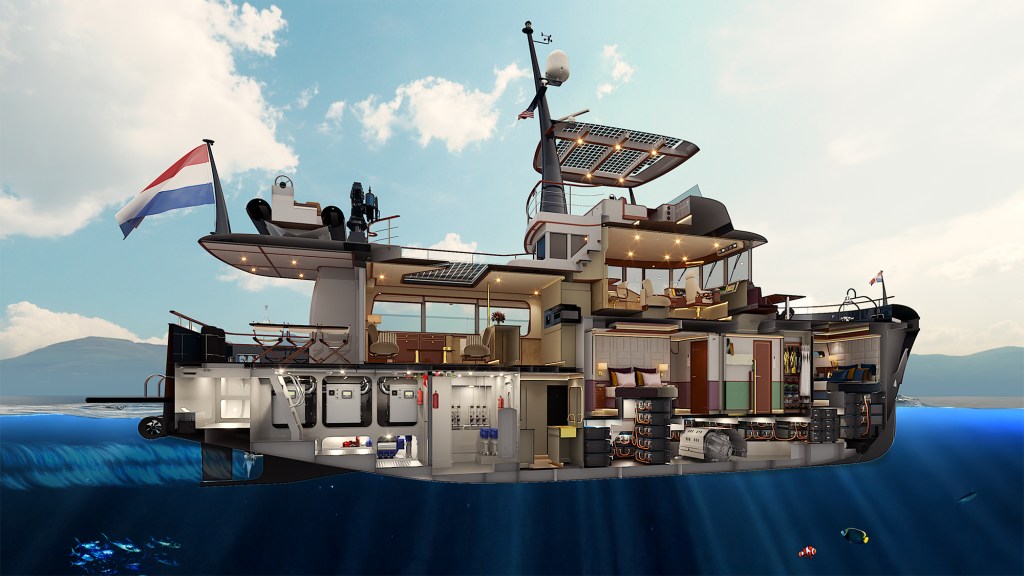
The OTG 20 started from a different premise. The design was conceived without diesel engines on the shafts and with liveaboard use as a core assumption from the outset. Rather than adding a hybrid system later, the vessel’s layout and spatial logic are direct consequences of how energy is produced, managed and used on board, and of how daily life is expected to unfold at sea and at anchor.
Removing diesel engines from the shafts changes the hierarchy of spaces: energy production and storage move to the foreground of the design process, and what is normally hidden deep in the machinery space becomes a defining architectural element. This shift influences propulsion, but also how space, safety and comfort are organized throughout the vessel.
Propulsion on the OTG 20 is provided by twin 200-kW electric motors. Electrical power is supplied by six diesel generators, roughly 100 kW per unit, operating in a series-hybrid configuration. Between generation and propulsion sits a battery installation of about 0.9 megawatt-hours, buffering energy and enabling different operating modes.
This architecture does not claim that electric transmission is inherently more efficient than direct mechanical drive. At steady loads, the opposite can be true. Instead, the system is designed for consistent performance across mixed operating profiles, allowing generators to operate within favorable load ranges.
What has been added is energy storage. That battery capacity enables operating modes not available on a mechanically driven trawler.
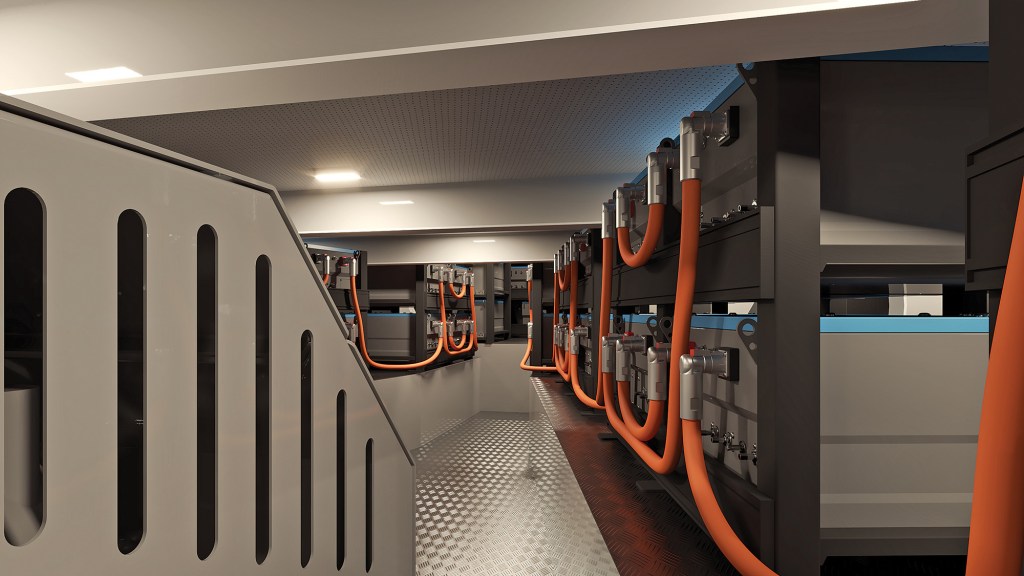
At low displacement speeds, the OTG 20 can operate fully electric and silent without generators during daylong passages, such as gentle island hopping or slow cruising with a family aboard. In practice, this changes how the boat is used on a daily basis, making silence a functional operating mode rather than a novelty.
The result is a different acoustic environment overall. Noise and vibration are reduced by how and when power is generated, and not only by insulation.
Importantly, adopting a hybrid architecture does not come at the expense of conventional tankage. Fuel and water capacities remain in line with established long-range trawlers of similar size. Usable diesel volume is on the order of 2,650 gallons, preserving true passagemaker range and supporting extended stays aboard. When distance or conditions demand it, the generator-backed electric drive provides endurance and redundancy comparable to traditional passagemakers, without forcing main machinery to operate outside its optimal settings.
This approach comes at a higher initial cost than a conventional trawler, depending on system choices and the level of customization. That investment is made deliberately, prioritizing efficiency, longevity and reduced operational impact over short-term simplicity.
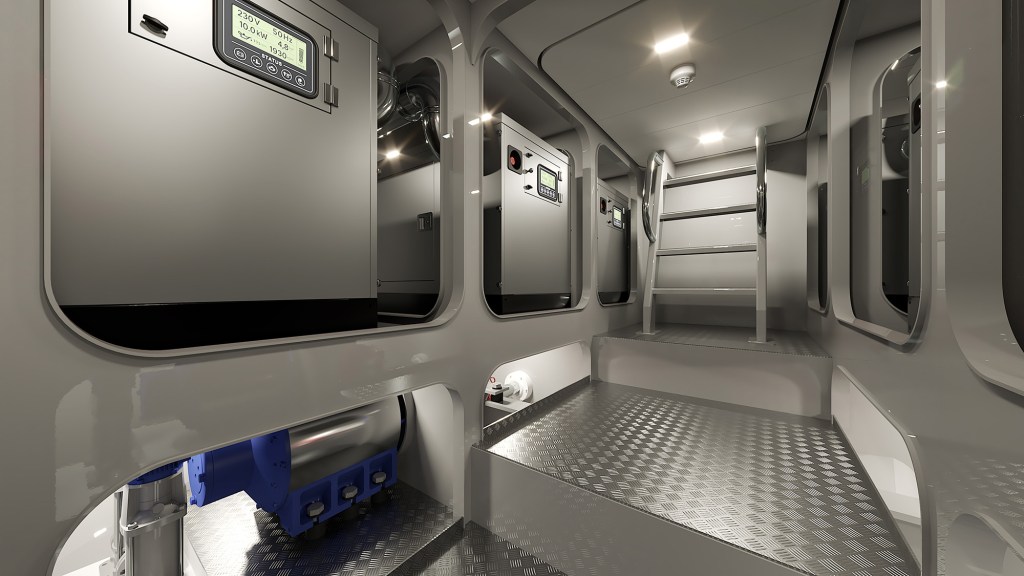
The vessel is designed around long-term adaptability, with major components able to be replaced or upgraded without invasive structural work as technologies mature. By accounting for weight, volume and access from the outset, the design remains serviceable and effective over a longer operational lifespan, making the overall concept more sustainable in use rather than optimized for a single moment in time.
Designing around this dual requirement—silent operation where it matters and dependable range offshore—inevitably introduces additional volume and mass. The OTG 20’s hull form has been developed to carry that displacement efficiently at realistic passagemaking speeds, with stabilization integrated to support comfort underway and at anchor. The vessel is optimized for operation in the 5- to 7-knot range, and resistance is governed primarily by hull geometry rather than installed power. In this context, increased displacement becomes a design parameter rather than a penalty.
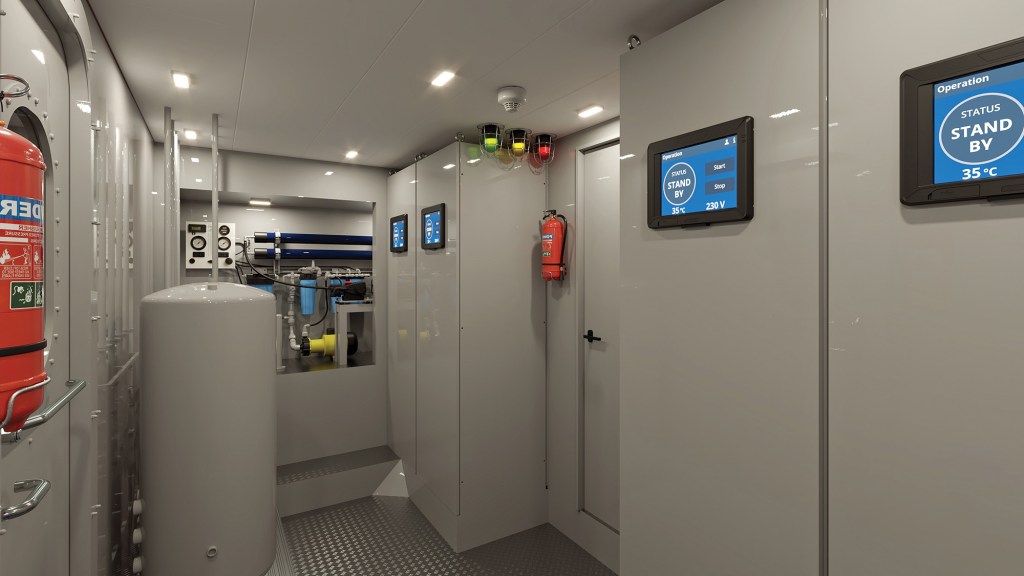
These choices directly shape the vessel’s internal architecture and the way spaces are used. Once energy storage, noise control and fire boundaries are treated as primary design drivers, the machinery space can no longer be approached as a single open compartment. On the OTG 20, this led to a layered machinery concept. A watertight bulkhead separates battery and machinery spaces from the accommodations, with the design developed against the highest applicable regulatory standards, such as Lloyd’s Register or equivalent.
Immediately abaft this boundary sits a dedicated control room, allowing systems monitoring and management without direct exposure to heat or noise. Beyond that, an additional sound-insulating partition further limits acoustic transmission into the living spaces.
Interior Layout and Accommodations
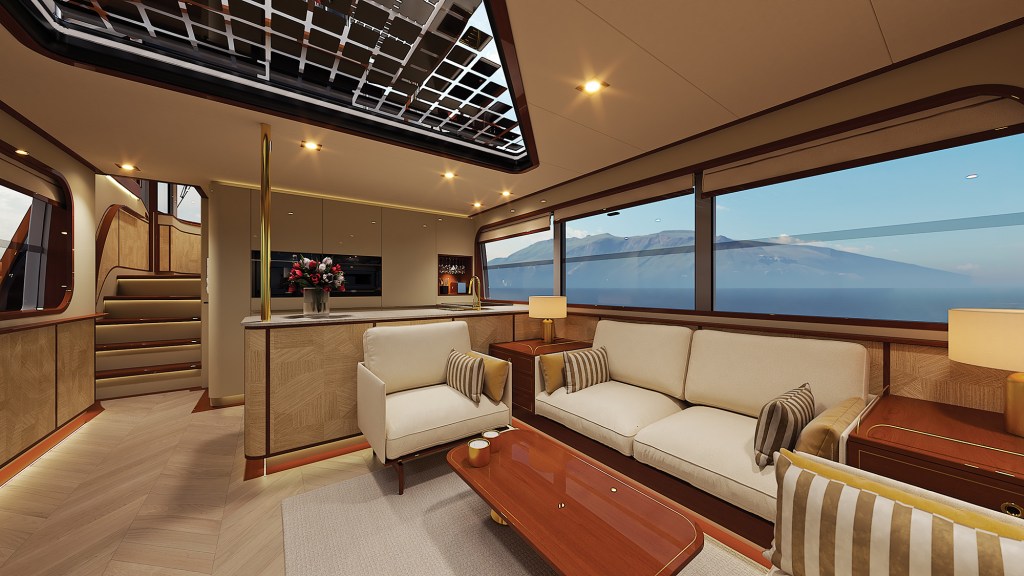
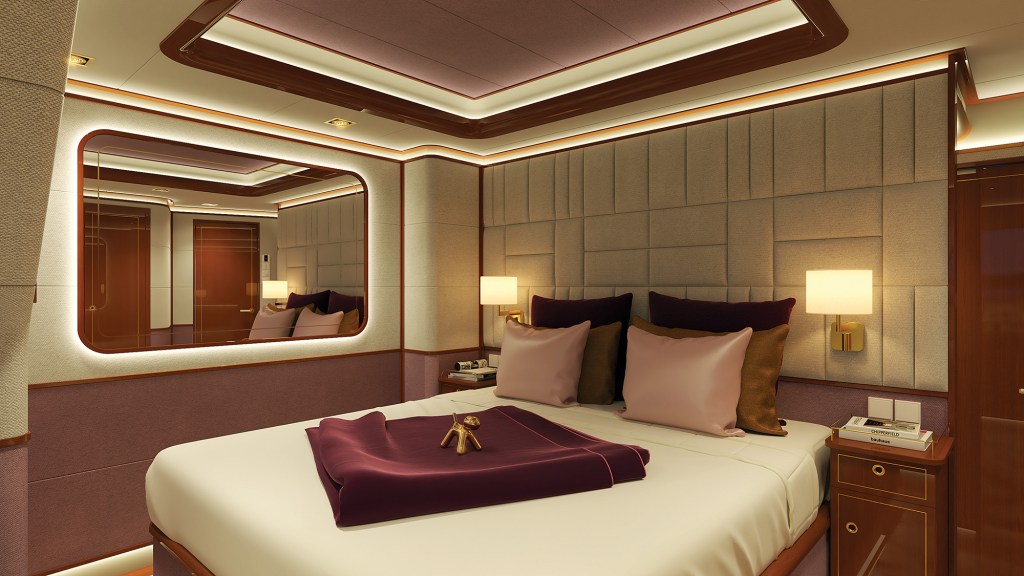
Above this technical backbone, the interior could be organized around clarity rather than compact machinery constraints. Because the energy architecture defines separation, access and noise behavior early on, service functions are positioned to support daily routines without intruding on life on board. The layout reflects that logic, with a dedicated day head, an en suite owner’s stateroom with a steam shower, an en suite guest stateroom, and a separate kids’ or crew bunk cabin, also en suite.
Storage, utility areas and a dedicated laundry space are integral elements of the layout, enabling autonomy during extended stays aboard. The OTG 20 also has a dedicated bridge with uninterrupted sightlines in all directions, separated from the primary living spaces, reflecting passagemaking and commercial heritage rather than contemporary yacht fashion.
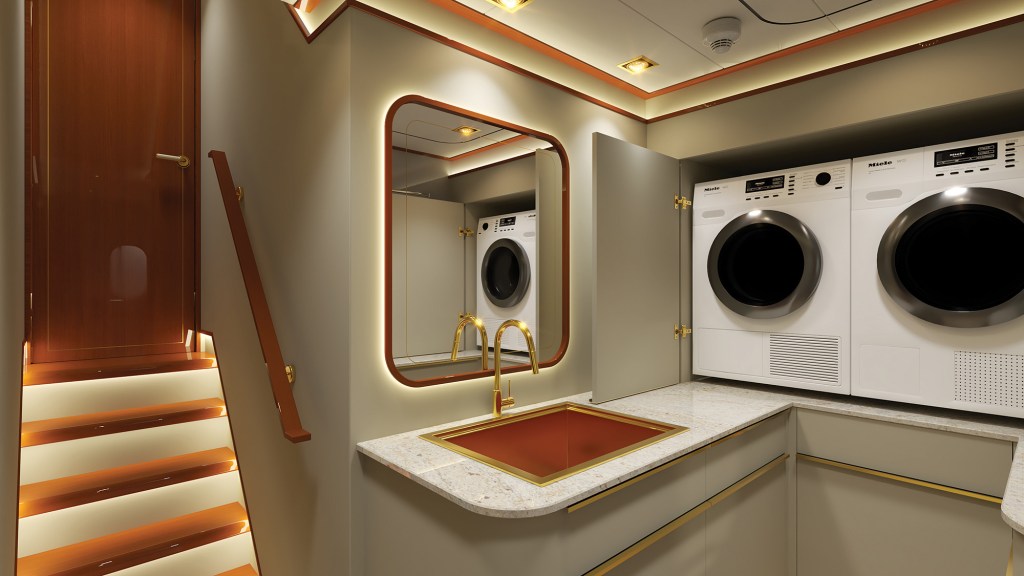
For builders or owners looking to engage at this stage, the systems, structure, layouts and safety boundaries are aligned with realistic build scenarios and class-based design principles. Conceived without diesel engines on the shafts and explicitly for liveaboard use, the OTG 20’s displacement, hull form and spatial logic are tuned for quiet, comfortable cruising with efficient energy use, while retaining true passagemaker range and enabling new experiences, not limiting them.
OTG 20 Specifications
| LOA: | 67ft. 11in. |
| Beam: | 19ft. 7in. |
| Draft: | 5ft. 11in. |
| Displacement: | 253,000 lbs. |
| Fuel: | Owner’s Choice |
| Water: | Owner’s Choice |
| Engines: | 2x 335-hp electric motors |
This article originally appeared in the January/February and April 2026 issues of Passagemaker magazine.