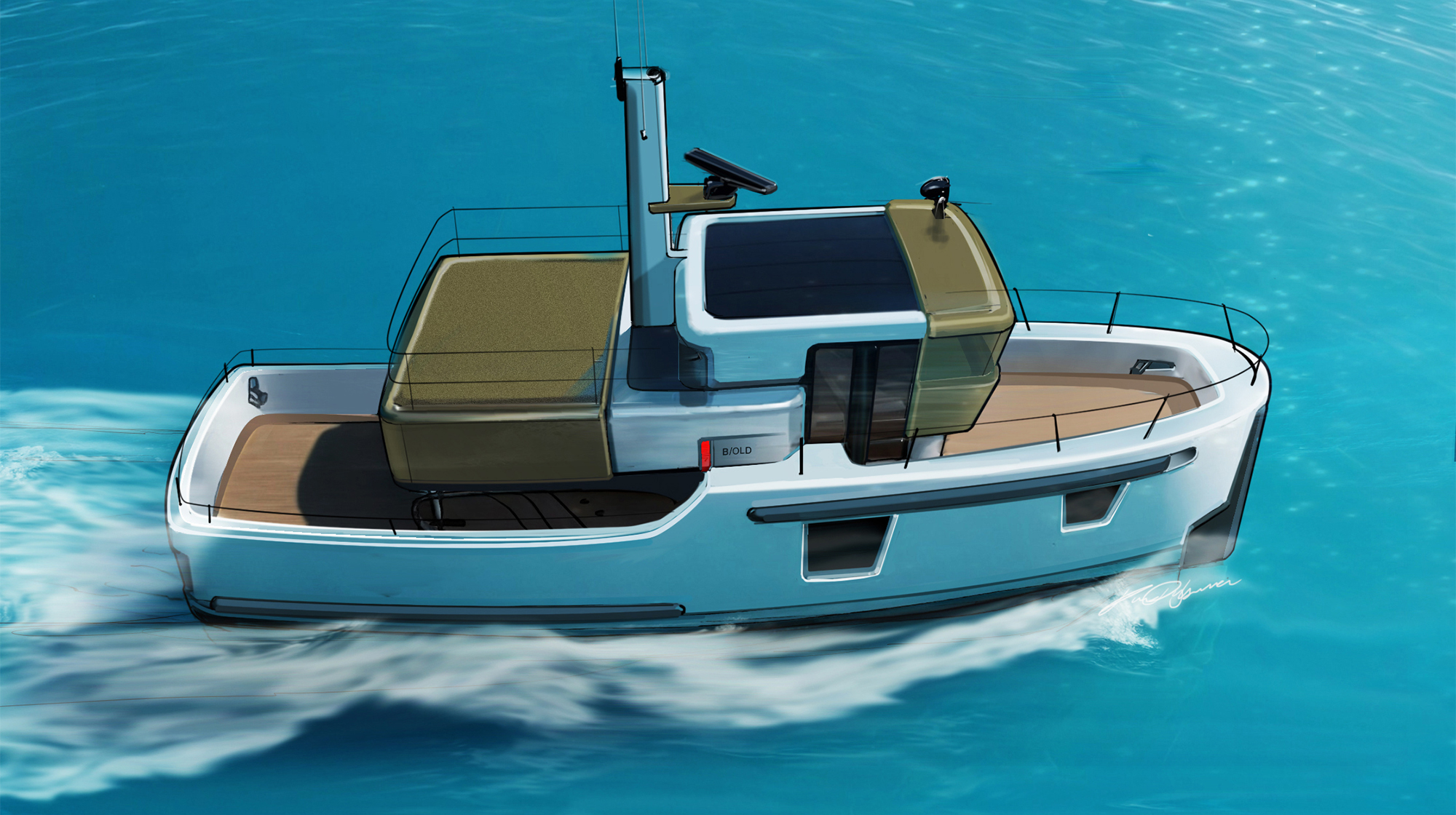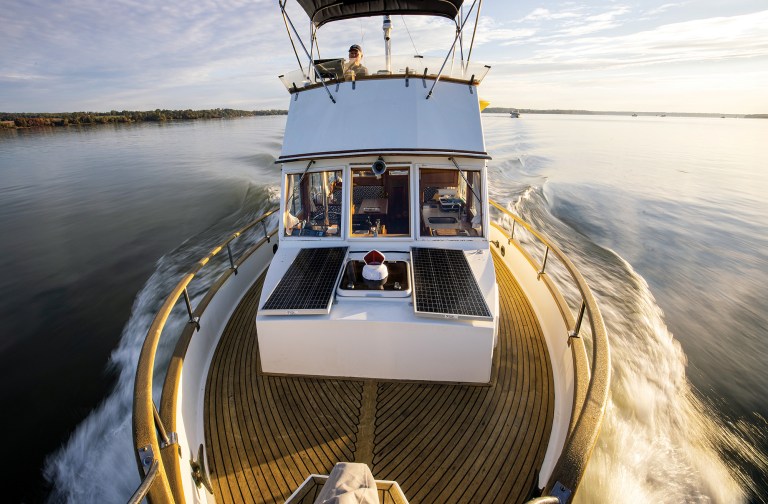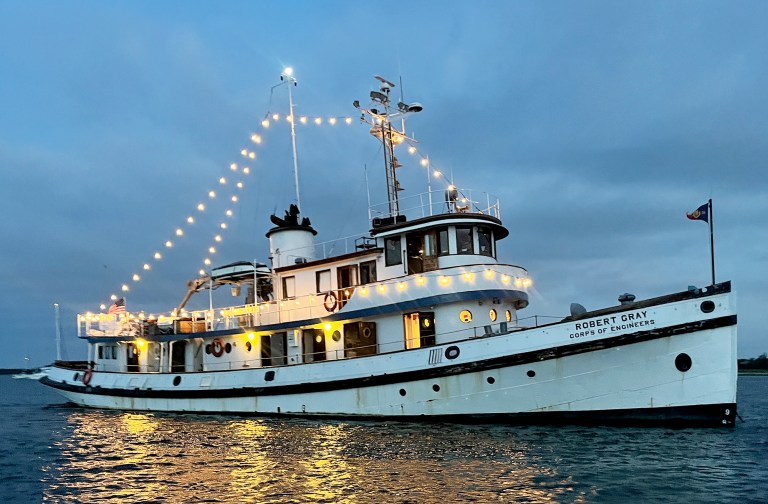


I was standing in the cockpit of my double-ended Frisco Bay trawler, deeply immersed in a St. Vitus dance that would get all the itchy particles of sanding dust and paint chips out of my mechanic’s monkey suit, when I realized I wasn’t alone. An elderly gentleman in faded shorts and weathered deck shoes smiled at me, gestured at the curve of sheerline, and said, “Yare little boat.”
This dumbfounded me, as I hadn’t heard that word in three decades. When I thanked him for the compliment, I added, “You know, most of the boat owners on this dock wouldn’t have known what you said.”
“Probably,” he replied with a grin, “but with this boat, you looked like you’d know.”
Yare (pronounced yahr) is a term I first heard when sailing with my dad on a 6 Metre back in the 1950s. It’s an ancient term, apparently dating back to early England, meaning “nimble and shipshape.” It was a compliment to any yacht that looked proper—a sweet sheerline, a wineglass transom, the right deckhouse—and, more important, that was maintained in the yachting fashion. It meant more than seamanlike, and far more than well-kept. It meant, well, yare. Some yachts have it, some won’t ever get it.
As I worked to refill my overalls with sanding dust that afternoon, I thought about all the words that seem to have left the yachting lexicon, words whose absence diminishes the luster of this sport.
I’m not in favor of making boating any more difficult for novices; we have enough buzzwords and lingo to fuddle even the most literate of skippers. But at the same time, many old salts in the boating biz have abetted this simplification of the nautical language. I was shocked when I first saw some boating magazines discussing the “bathroom” and referring to the “front” and “back” of a boat. Now, I’m just sad to see the proper words disappear.
That said, I’d like to offer some words and terms that you might want to return to your boating vocabulary. Many of them serve to replace with a single word what it would take many words to describe.
Bristol fashion. From the days when this English port was noted for shipshape vessels. It means a yacht kept in pristine condition.
Claw off. Meaning to struggle upwind off a lee shore. This word is perfectly descriptive of the battle to gain every precious foot to safety off a dangerous shore.
Fetch. The most common use of this verb is to clear a buoy or a point of land, as in, “Can we fetch the number two buoy?”
Doghouse. While it first meant a shelter over a hatch or forward in a cockpit, it came to mean the raised area at the after end of a cabin that provided standing headroom.
Flake. Meaning to coil and lay out a line, such as an anchor or dock line, in a careful way so that it can be released to run quickly without kinking or jamming.
Handsomely. This was originally a way of handling a line slowly and in a seamanlike manner, but it came to have a broader sense. Early sailors would be told to “lower away handsomely on the halyard.” You also might, for example, come alongside a dock handsomely, or turn into the wind and drop sails handsomely.
Marline. I didn’t realize this term had disappeared until I used it at a local marine hardware store and drew only blank looks. Marline is a two-stranded, light hemp line used for lashings, lacings and temporary seizings. Pronounced like the fish, it’s often tarred and lasts forever.
Bend. This means to attach a line to something: “Bend a line to that ring on the dock.”
Weather side. This means the upwind side of a boat. I realized this term was gone when I suggested to a crewmember that he’d be more comfortable sitting on the weather side, only to be met by a confused look. The weather side of a boat is the one toward which you never spit or do anything else of a wet nature.
Painter. From the Old English panter or noose, it’s the bowline used to secure a dinghy to a dock or yacht. I didn’t think this word was lost until I heard a skipper say: “Grab that string at the front of the dinghy.” Ah, well.
Well-found. Here’s a term that’s struggling to survive, mostly among cruising sailors and yacht brokers, who refer to a well-equipped and properly prepared yacht as being well-found.
Try using a few of these words and terms. They’ll make your life a little easier and your explanations a little shorter. And don’t hesitate to send in your own nominations for words to be kept alive. After all, I’d hate to see all the traditions of the sea go down the proverbial scupper.
This article originally appeared in the MONTH 2026 issue of Passagemaker magazine.