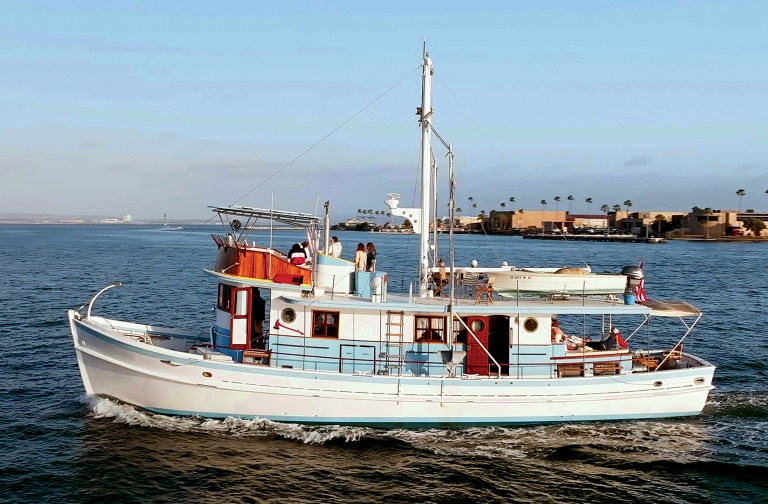


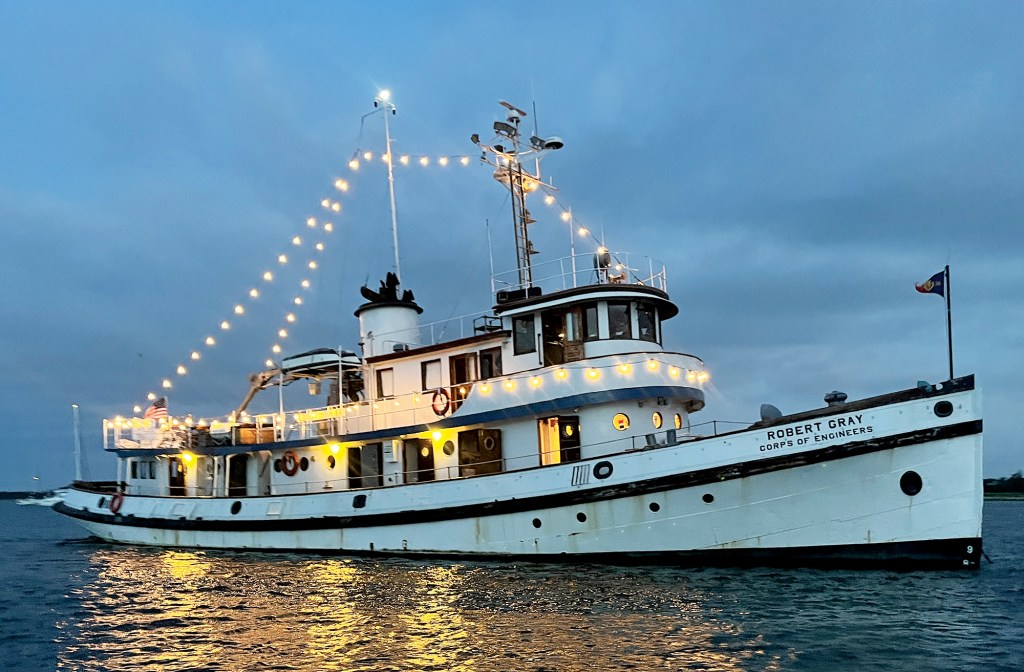
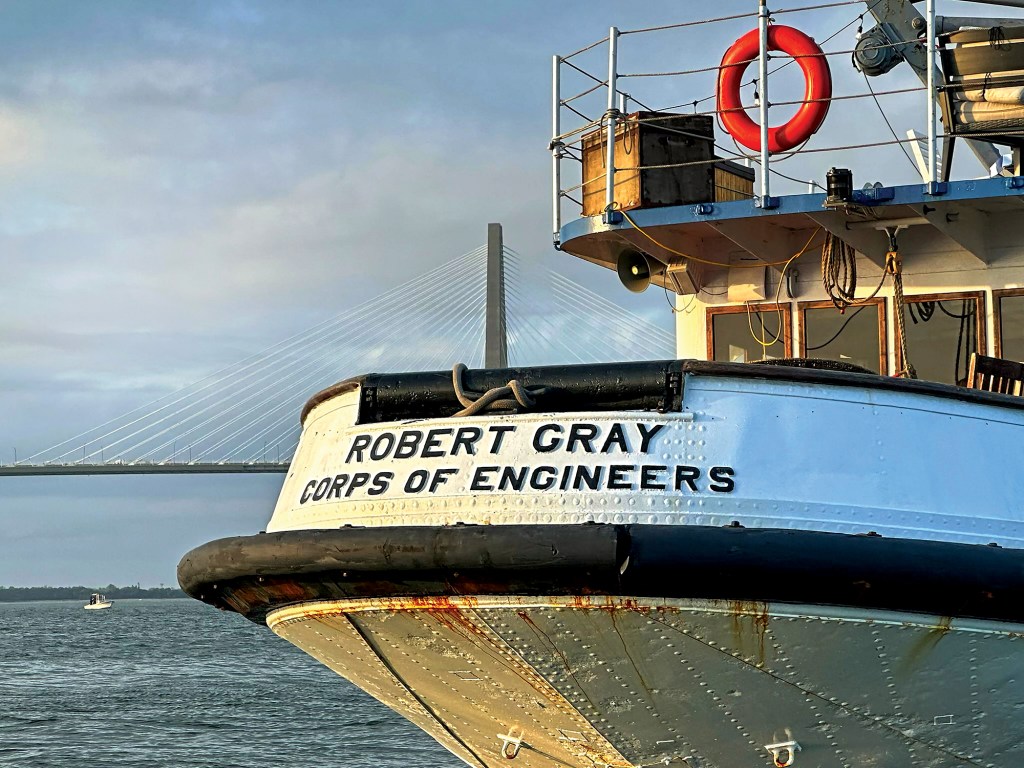
Even in a historic port city like Charleston, S.C., it’s not every day that a 125-foot, 200-ton ship from 1936 ties off at the downtown marina.
Nautical news travels fast here and when a friend alerted me to the Robert Gray ’s presence, I was intrigued. It turned out that owner Leila Davenport Ross and her captain and business partner S. Davis Alford and I share several friends. A few days later, they welcomed me aboard a real-life time machine.
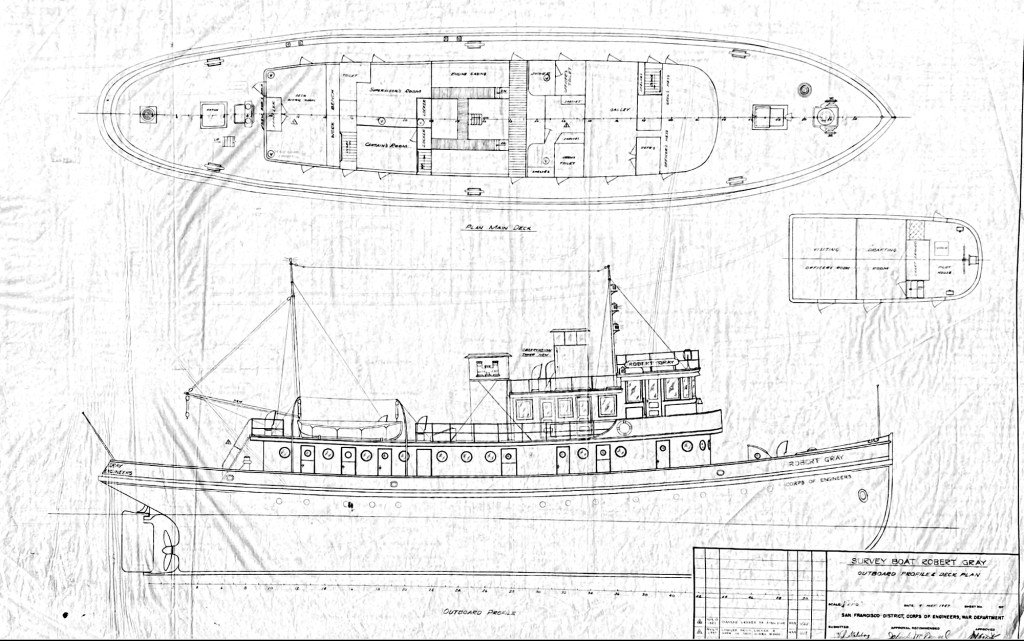
The Robert Gray was commissioned by the U.S. Army Corps of Engineers during the depths of the Great Depression. Alford fills me in: “Storied naval architects Nickum & Sons were the builders and she was built at the Lake Washington Shipyard in Seattle. Her first mission was charting and plotting the Columbia River—which is why she got her name Robert Gray, because Gray was the first Anglo to discover the Columbia River. He named it after the vessel he was captaining, Columbia Rediviva, which was also the vessel that he circumnavigated the world in.”
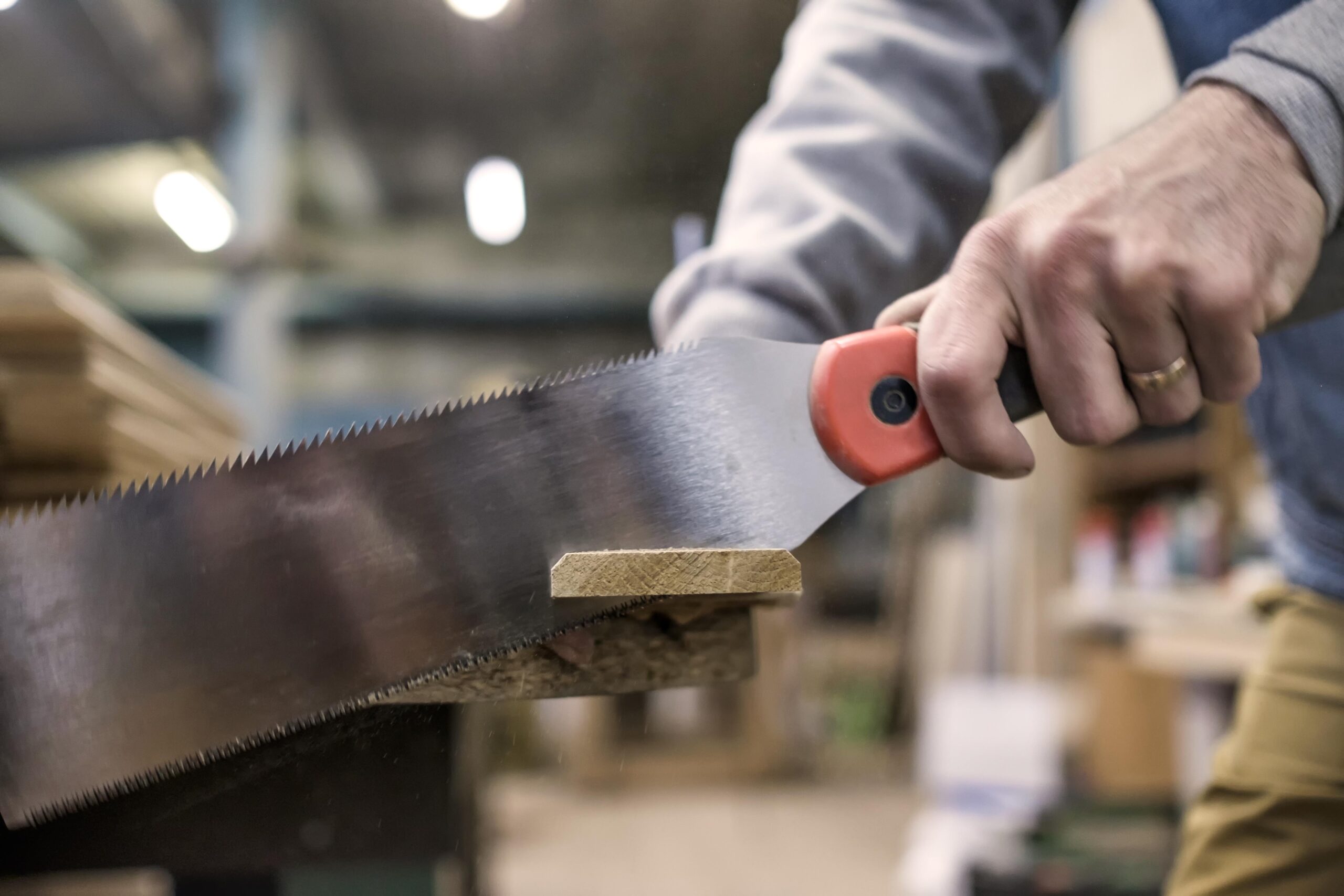
Launched 130 years after his death, Gray’s 400,000 pound namesake was built to handle rough Pacific Northwest conditions. Her classic, high-bowed tug-meets-trawler hull was built of high-iron content, heavy-plate American steel. It’s so thick that it took Alford and three crew three hours with a heavy-duty circular saw to cut a single six-inch hole in a cabin wall for an A/C duct. “That wasn’t even a stabilized bulkhead, just a wall,” Alford says.
All that steel was stitched together with 200,000 rivets. “Riveting is this lost art,” Davenport adds. “It’s there in the [Gray’s] historic registry, but it takes four humans to put each rivet in.”
The architects designed her with single propeller that is spun by a Westinghouse electric motor powered by dual six-cylinder, 360-horsepower diesel engines. The electric motors granted low-speed, fine-point operation for surveying while giving full, instant torque as needed. They made her the first diesel-electric hybrid ship ever built.
Through the decades, that electron-driven screw would propel the Gray on U.S. Coast Survey charting missions all along the Inside Passage. During World War II, she did duty escorting and hunting submarines around the Aleutians and after that, she went to work for the U.S. Geologic Survey, exploring for oil and minerals from San Francisco Bay back up to Alaska.
In 1970, her trusty old drive train was replaced with a 850-hp Caterpillar D-398. The stout motor’s compression is still within factory spec today and tops the ship out at 10 knots. It’s remarkably efficient too. At an 8-knot cruise, the Gray consumes under ten gallons of diesel an hour, giving her a range of over 6,000 nautical miles.
Alford took a circuitous path to the Gray. Over a decade back, he had a career in medical device sales while also occasionally piloting vacation sailing charters out of the Caribbean. “It was a way to go on paid vacation, three, four times a year,” he says. “It was stimulating, it was engaging. But then, if I’m being honest, I drank myself out of that position, got sober, and then started taking captaining seriously.”
After a stint captaining for Barton & Gray in 2022, an offer came up taking the helm of the 140-foot tall ship Spirit of South Carolina. Launched in 2007, the schooner is a local icon hand-built by the Lowcountry’s deep well of shipwrights. “That was a great honor and a great privilege,” says Alford. “I hadn’t captained a tall ship before. My crew went from two individuals, maybe three, to 14 very quickly, because you need 12 men or women just to hoist the main sail.”
Captaining Spirit was a visceral experience far removed from an amenities-laden yacht, and Alford loved it. While still working charters, he’d begun to mentally map out an organization he tentatively called The Voyager’s Club. Spirit further evolved the idea. “My initial vision, in a box, was a sober sailing adventure between Charleston and Bermuda. Offshore adventure sailing [and] hopefully detaching from society, maybe even centered around a 12-step program.”
In 2024, Ross went to an event aboard Spirit. Now divorced and with a pair of sons 16 and 20, she was captivated by the teaching and adventuring possibilities a ship like Spirit presented. “I’ve been in the Lowcountry for 20 years,” she says. “I have a lot of friends with boats. I’ll never forget walking on that ship, and being like, ‘Oh, my God, I want more of this.’”
Alford approached her about going into business, laying out his rough outline for The Voyagers Club. “At first I was like, absolutely not,” Ross recalls. “I have no idea about the marine industry. I have no business being in that business. But then I really started thinking. I just turned 50. I’m at a perfect point in my life. Our planet is on fire and I want to do something meaningful. Something with a purpose.”
Alford found his dream ship for The Voyagers Club last year in San Francisco. Sacajawea and was serving as a sturdy Bay Area private charter yacht. When the duo flew out to check her out, it was immediately clear that while a bit rough around the edges, she retained all of her charm.
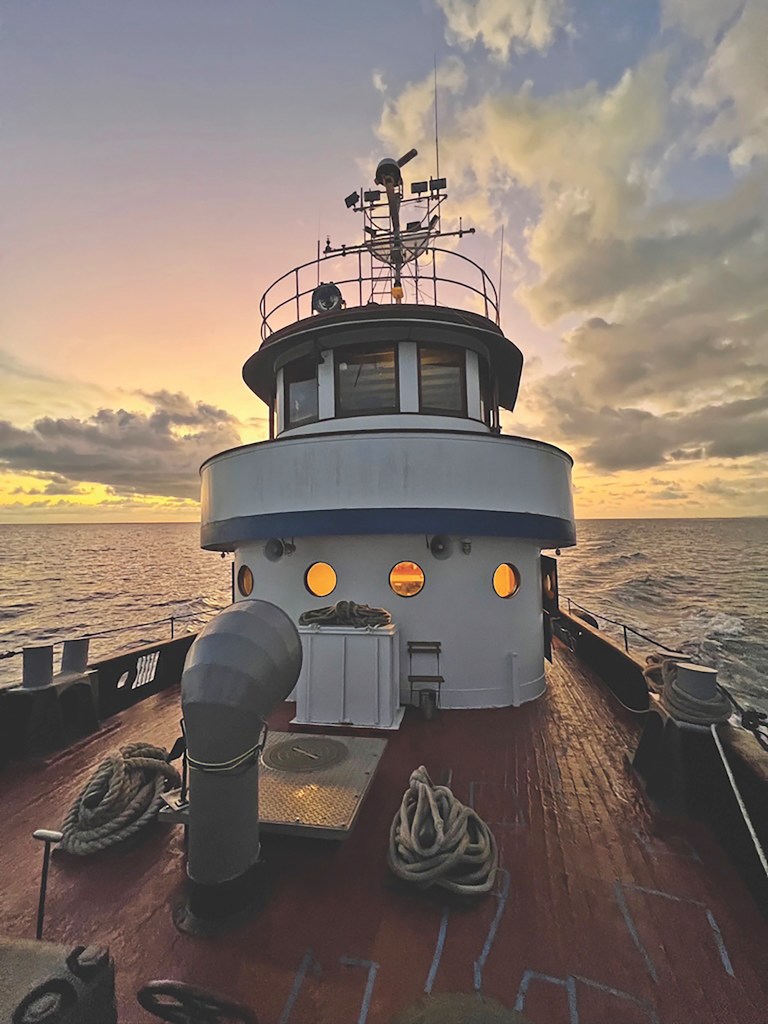
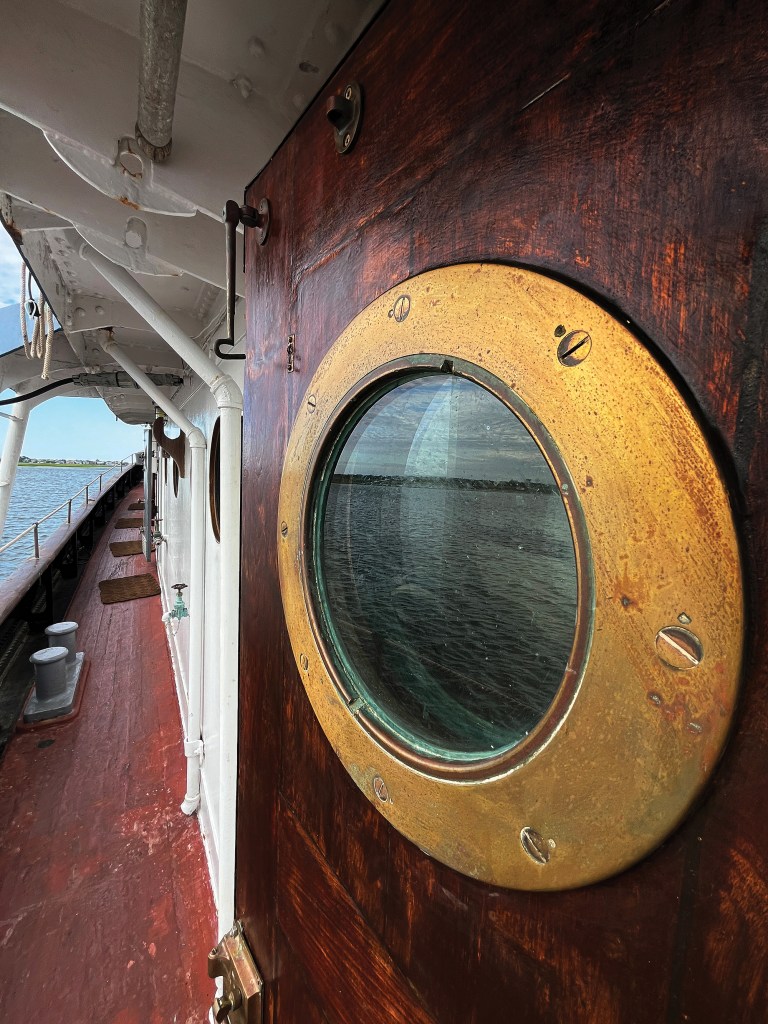
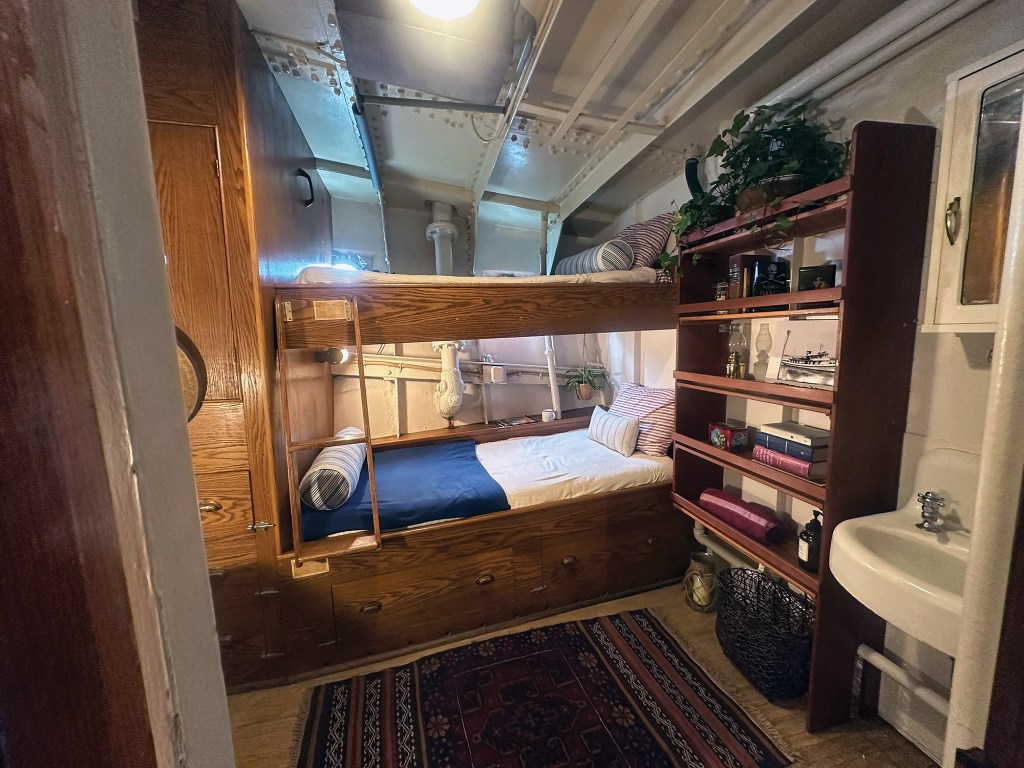
Her six staterooms and railings were trimmed in gorgeous Northwestern fir, a fine contrast to the bronzework—from hatches to skeleton key doorknobs to the hook latches that kept her original screen doors in place amidst wind and sea. The pilothouse was a stunning mix of old and new: The vintage magnetic autopilot and one-knob electric steering still functioned perfectly along with her 40-year-old Furuno depthfinder, which was flanked by modern radar, AIS and Starlink.
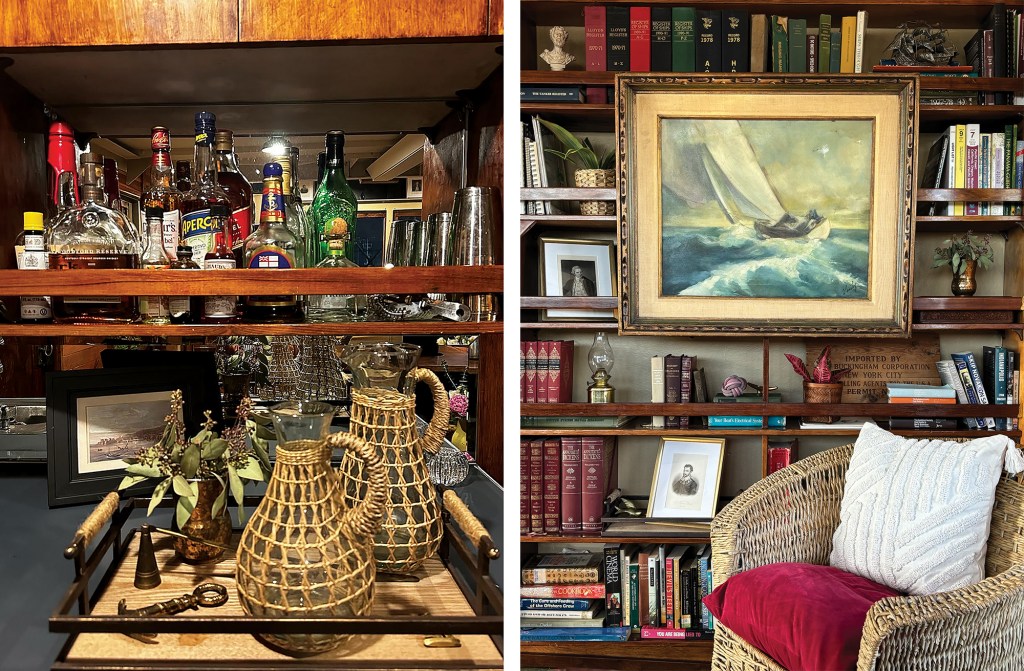
When Alford saw the gleaming varnish of the captain’s quarters right behind the pilothouse, he nearly fell over. The main rear fantail deck offered a perfect entertainment space—and it backed up to an aft salon outfitted with a full bar, copious shelving for a library of nautical books and coffee table built around her mammoth towing binnacle. Out front, a 90-year-old windlass effortlessly reeled in 300-plus feet of anchor chain. She ran beautifully too—with gobs of excess electricity provided by a trio of Northern Lights generators.
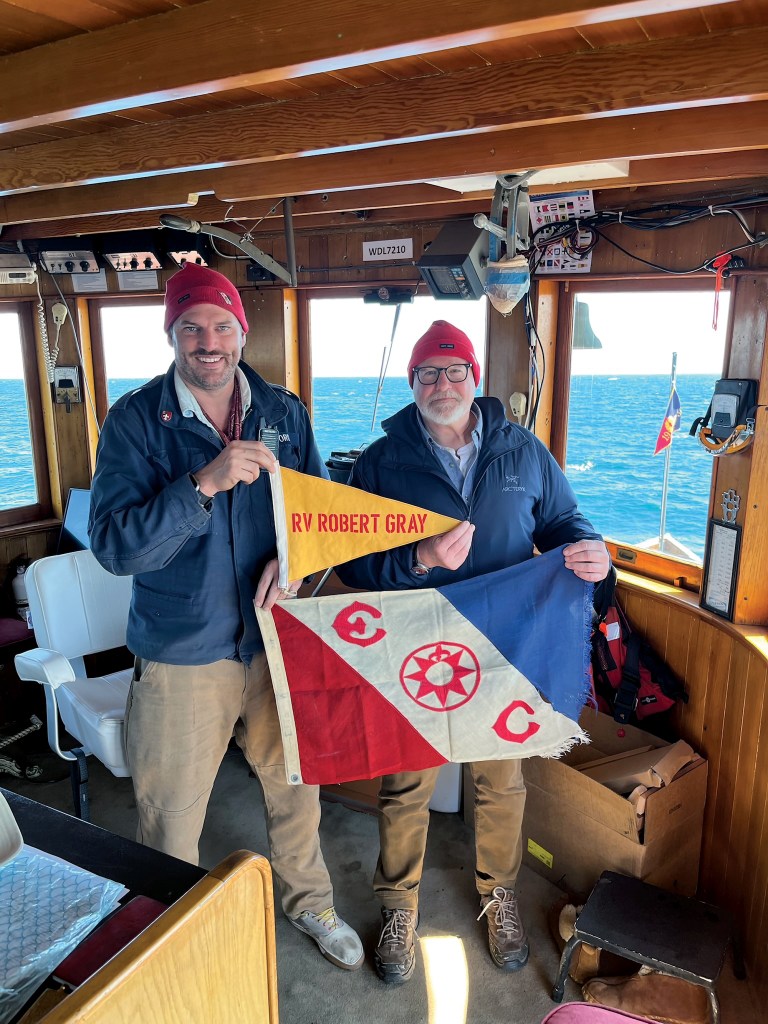
The boat was remarkable, the sellers were eager, the price was very right and there was nothing, anywhere quite like her. Ross wrote a check. “I’m privileged enough to be able to make crazy decisions, like to go into business with a friend and buy a historic military vessel from 1936,” she says.
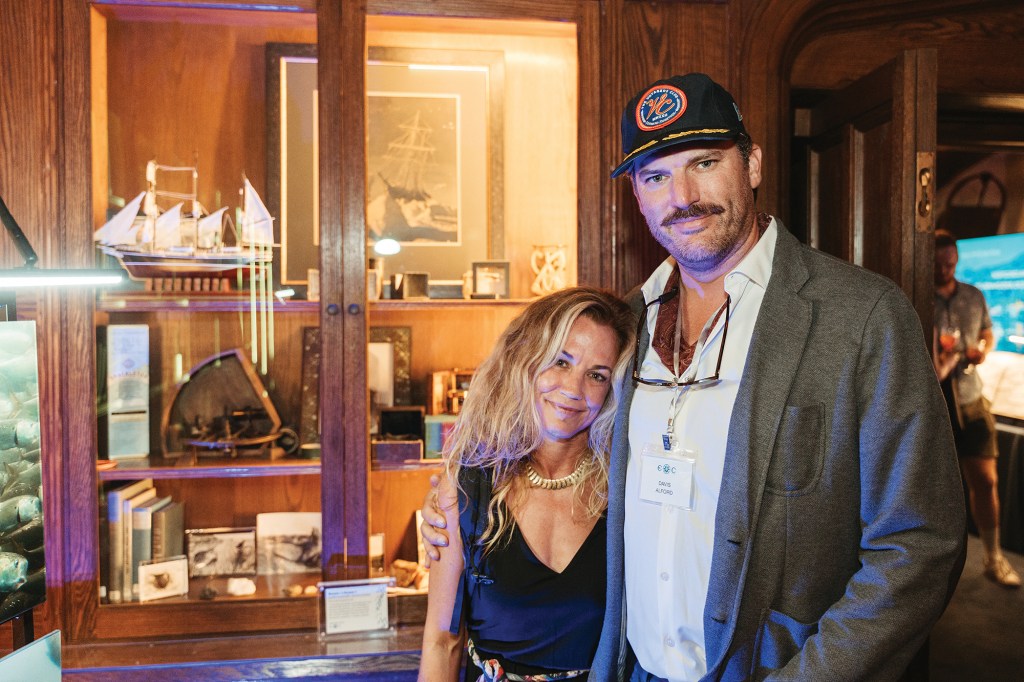
The ship’s first stop was a dry dock in Ensenada for a refresh. Though she hadn’t been hauled out in 30 years, Alford was relieved to learn that her hull plates were still solid. Ross added period-correct furniture along with antique books and nautical paintings to the stateroom and salon walls. Staterooms were named after explorers including Sylvia Earle and Earnest Shackleton.
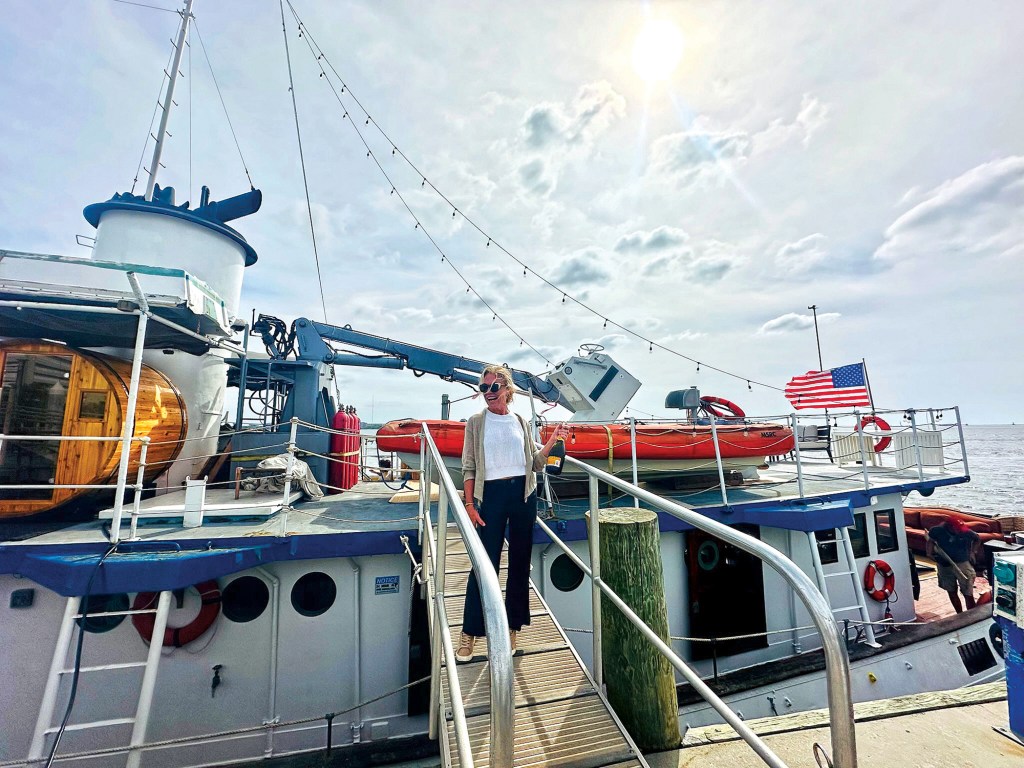
Ross and Alford re-christened the ship Robert Gray and established The Voyagers Club, which operates the vessel and will offer private charters for excursions throughout the Western Hemisphere. Its science and educational component—VC Expeditions—offers researchers a platform to embark on fish population samples, shark tagging, dive and submersible work.
When an invite came to stay in the Earle suite for a passage to Wrightsville Beach, I leapt at the chance. Loading up a surfboard, I hoped to score some waves at a shoal well off the coast along our route, and maybe at our destination.
With a salvo from her mighty horn, the old ship smoothly passed through the Charleston Harbor jetties. Cruising with a two-foot groundswell on our stern was sublime. Pods of dolphins cavorted with us, surfing the pressure wave off the Gray’s bow. Alford dexterously nudged the old ship up to Cape Romain shoal and we continued north, setting a course well outside of Frying Pan Shoal.
We spent the next day anchored up just off Masonboro Inlet behind Wrightsville Beach. The weather was blustery but beautiful. We fielded queries from curious boaters and I took a deep dive into the Gray’s systems with the crew. After an on shore dinner, we readied for the surf that was slated for the next morning.
Before dawn, we pulled the tender into a sandy anchorage behind Masonboro Island. A short walk over the dunes revealed a dreamscape and we feasted on perfect, head-high waves for a couple of hours. Afterwards, I marveled at my good fortune.
Alford and Ross are also reflective of the serendipity of finding the Robert Gray while fine-tuning The Voyagers Club business model.
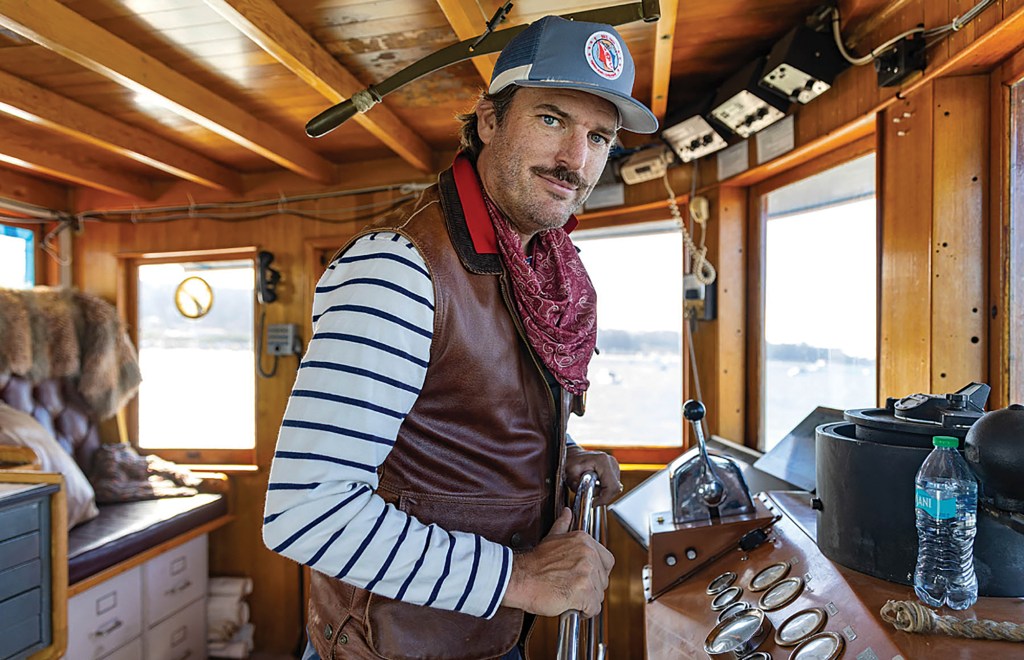
“The idea is to get people out on the water and experience it in the way that I would prefer them to experience it, which is not beach shopping from party to party. It’s enjoying the vessel that you’re on … the surroundings that you are in and hopefully giving back to Mother Ocean and Mother Nature in the process.”
“And giving people a really meaningful travel experience, one they’ll never forget,” adds Davenport Ross.
If my time aboard is any indication, I’d say mission accomplished.
Robert Gray Walkthrough Video
You can also find this video here ▶
This article originally appeared in the July/August 2026 issue of Passagemaker magazine.