Recently, a colleague was preparing for a night watch, brewing up some coffee, when an errant swell tipped the near-boiling coffee pot. In an attempt to save the precious java, the skipper sustained a stinging, painful burn to the hand. Even with the hand in ice, the pain became intolerable.
Burns can have many causes: fires, smoke inhalation, explosion, electrical injury or chemical exposure. Knowing how to recognize and stop the burning process, and how to provide initial care, are skills as important as recognizing the seriousness of the injury. In some cases, a burn injury could mean diverting your voyage or requesting an evacuation.
Scene Safety
Before treating the sailor, prevent additional casualties by shutting down the engine, generator, shore power, propane or fuel source. Extinguish burning clothing using “stop, drop and roll,” a fire blanket or water. Move the sailor out of harm’s way—but never touch someone who remains in contact with electricity. Disconnect the power first.
Maintain vessel control and be prepared to think about managing navigation, communications and emergency response. Be aware that electrical injuries may cause serious cardiac, muscle or neurological damage, even when the external burn appears small.
For ordinary thermal burns, first remove the heat source, then jewelry and tight clothing before swelling develops. Remove clothing near the burn unless it is stuck to the skin, then cool the injured area with clean, running water that is cool but not icy cold for 20 minutes. This will remove heat from the burned area and reduce swelling.
Begin cooling immediately, but do not use ice, an ice-water slurry, extremely cold seawater or frozen packs directly on the skin. Excessive cold can further damage tissue and constrict blood vessels. Also avoid cooling the sailor’s entire body, as this can cause hypothermia.
Do not apply toothpaste, fats, grease, butter or oil-based items to the burned areas, as these products prevent release of heat from the burn. Do not break blisters, as everything under the blister is sterile.
Types of Burns
Thermal burns are common, stemming from cooking oil, steam, hot cookware, engine coolant, exhaust components, turbochargers, manifolds and machinery.
Chemical burns may include battery acid, cleaning agents, solvents, fuel additives, antifouling products and maintenance chemicals.
For chemical exposures, the rescuer should wear gloves and eye protection, brush off visible powder before adding water, prevent runoff from contacting unaffected skin, and consult the product’s safety data sheet for additional information. Chemical burns warrant medical attention, as tissue injury may continue after the initial exposure.
Electrical burns can produce deep internal damage, cardiac arrhythmias, falls, fractures and muscle injury despite a small skin wound. Victims should receive immediate medical attention.
Smoke and heated gases may cause an inhalation injury to the airway and lungs. Warning signs include facial burns, singed eyebrows, eyelashes or nasal hair, soot around the mouth or nose, sooty sputum, voice change, persistent coughing, wheezing and an increasing shortness of breath. Be aware that airway swelling may worsen after the sailor initially appears stable. Have a finger pulse oximeter available, and seek immediate emergency consultation and evacuation planning.
Rather than relying on “first-, second- and third-degree” terminology, mariners can use practical descriptions. A superficial burn is red, dry, painful skin without blisters. With a partial thickness burn, the skin will be red or mottled, moist and markedly painful, usually with blisters. The most severe is a full-thickness burn. The victim’s skin will appear white, brown or black, charred, leathery or waxy. Reduced pain can signify nerve destruction rather than a minor injury.
Estimate the size of the burned area, using the sailor’s palm excluding fingers, as approximately 1 percent of body surface area; the number of palms that fit the burned area is the approximate percent total body surface area. This method is best for small burns, and less accurate for large, complex burns.
Initial Treatment
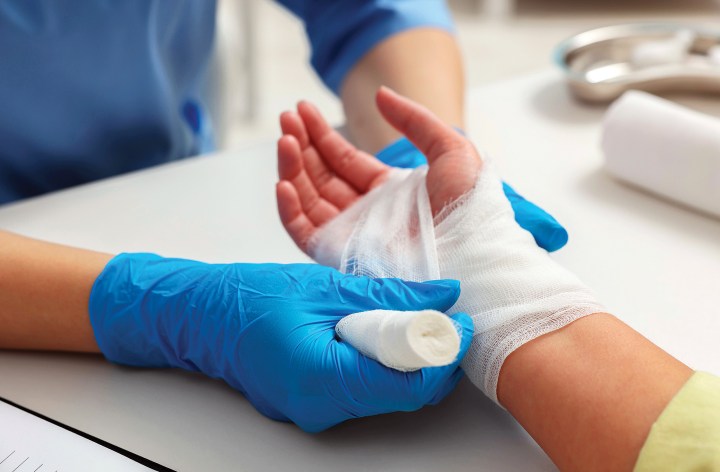
For minor burns that can be managed on board, begin by gently cleansing the area with soap and clean water. Apply sterile non-adherent dressing, or consider using a hydrogel-based burn dressing product for minor to moderate burns where the goal is to cool the burn, soothe pain and protect the wound area.
These products are particularly useful for a drug-free, non-irritating option that avoids ingredients such as lidocaine or antibiotic ointment. Wrap the area loosely enough to permit swelling. When involving an arm or leg, elevate if it’s practical. Change the dressings regularly, especially when they’re wet or contaminated.
It is important to to reassess the healing process frequently by monitoring circulation, sensation, movement, pain and swelling. If there is increasing redness, warmth to the area, swelling, drainage, fever or worsening pain, red streaking or foul odor, seek immediate medical attention.
Burns containing damaged or devitalized tissue are tetanus-prone wounds, so medical consultation should be sought within 48 hours of the injury to determine whether a tetanus vaccination or immune globulin is indicated. A tetanus booster is generally given every 10 years and may be indicated after five years for severe, contaminated wounds or burns.
Pain management for mild to moderate burns may include acetaminophen or ibuprofen, and may be appropriate when the sailor has no contraindications. For severe or escalating pain, pain that is disproportionate to appearance, or pain that remains uncontrolled, seek immediate medical attention.
Mariners must initiate emergency communications, seek medical control and consider immediate diversion or evacuation for a number of situations, including difficulty breathing; burns of the face, mouth, neck or airway; and chemical burns, especially involving the eyes or an unidentified chemical. Also initiate emergency procedures if you notice things such as altered mental status, fainting or signs of shock.
Prevention and Awareness
The best practice to avoid burns is awareness of the environment. Maintain extinguishers suitable for your vessel’s hazards. Keep fire blankets near the galley. Turn pot handles inward, and use stove restraints or gimbals.
Avoid carrying hot liquids while underway. Wear gloves and eye protection when opening hot cooling systems or handling batteries and chemicals. Never open a pressurized coolant cap while the engine is hot. Store fuel, solvents and chemicals in labeled ventilated locations. Regularly inspect shore-power cords, plugs, inlets and galvanic damage. Train passengers to shut down fuel, electricity, engines and propane.
The threshold for obtaining professional advice is lower while at sea than at shore because clinical deterioration may occur while your vessel is hours from definitive care. Conducting fire and medical drills before extended voyages, and identifying burn centers and emergency landing points along the intended voyage route, is prudent advice for the prepared mariner.
This article originally appeared in the October 2026 issue of Passagemaker magazine.