Photos by Billy Koehler
CF Koehler is one of a vanishing breed. As a shipwright and second-generation owner of Koehler Kraft, a boatyard and custom builder in San Diego, his life’s work is dedicated to the creation, restoration, preservation and enjoyment of classic wooden boats. The yard is among the few remaining in America that repair and restore wooden boats outside of Port Townsend, Wash., and New England.
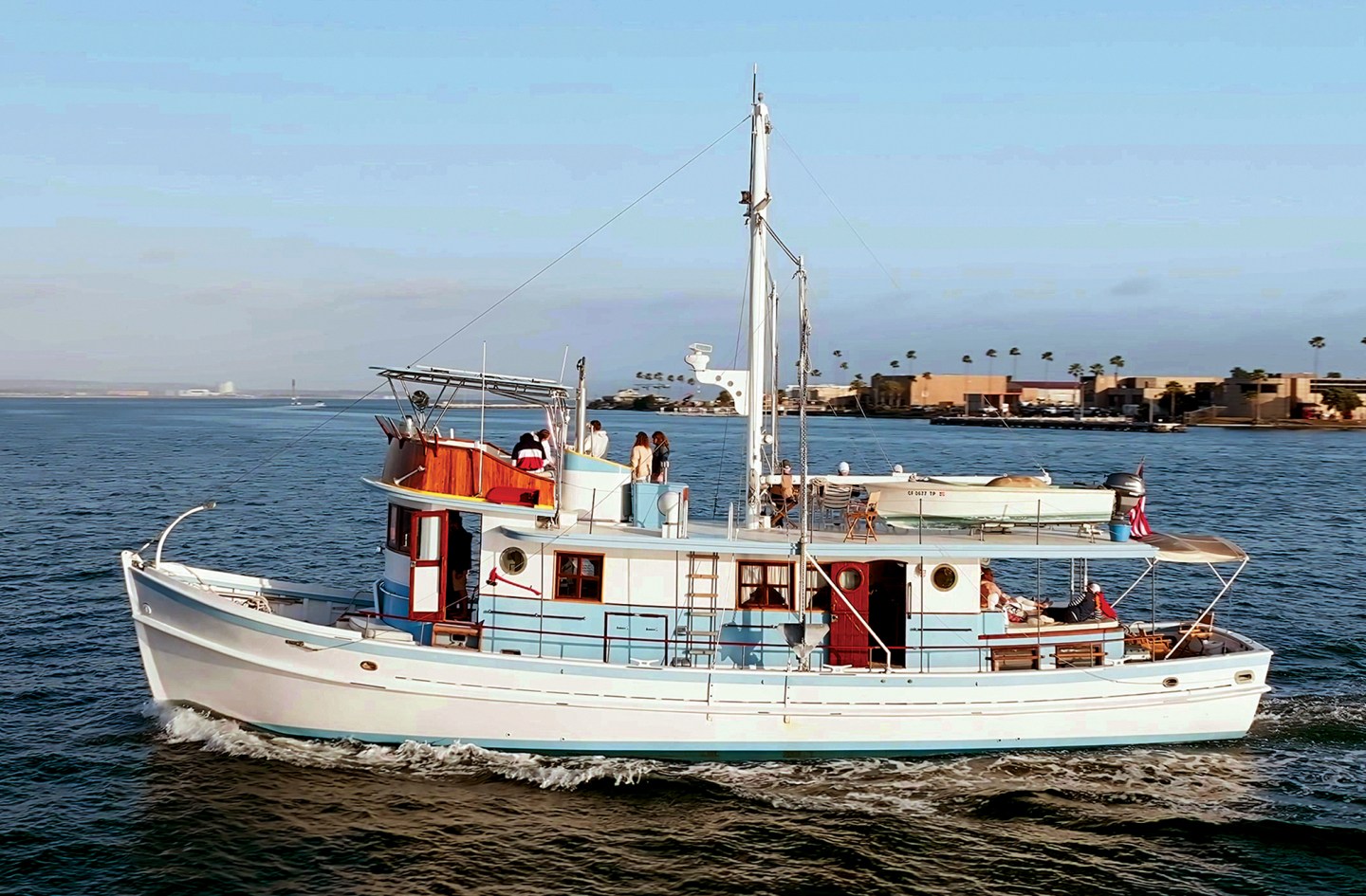
Among his company’s charter fleet of luxury wooden yachts is the graceful Dickie Walker. The 65-footer (with an 18-foot beam and a 6-foot, 6-inch draft) is well-known to San Diego Bay regulars. Visitors on tour boats and the Coronado Ferry jockey for position to take in a ship that, for a moment, makes you feel like you’re in a different era.
Dickie Walker’s story is common among classic wooden craft that still ply the brine: Interested parties stepped in at opportune times to put her on a different path. The first time was during her construction in the early 1950s. Launched in Jacksonville, Fla., and based on an Eldredge McInnis design, the boat was destined for life as a shrimp trawler. As the story goes, her original owners saw the incomplete shrimper hull and intervened, redirecting her finishing designs to Hugh Engelman to be outfitted as a yacht. The fish hold became accommodations, and her workaday abovedeck spaces were transformed into a salon.
Koehler came upon Dickie Walker first in 2006 when her owner, Jerry Montreal, commissioned the yard for a significant refit. The hull was originally double-planked with long-leaf yellow pine and Philippine mahogany, and fastened with galvanized iron boat nails. Koehler set about to replank and reframe the entire thing, with frames and double planking set in epoxy to create a cold-molded structure.
As a result, the waterline was lowered nearly a foot after her hull was rebuilt. Koehler says she lost a lot of “water weight,” as traditional planking methods allow the wood to swell and tighten, sealing the hull with compression and friction.
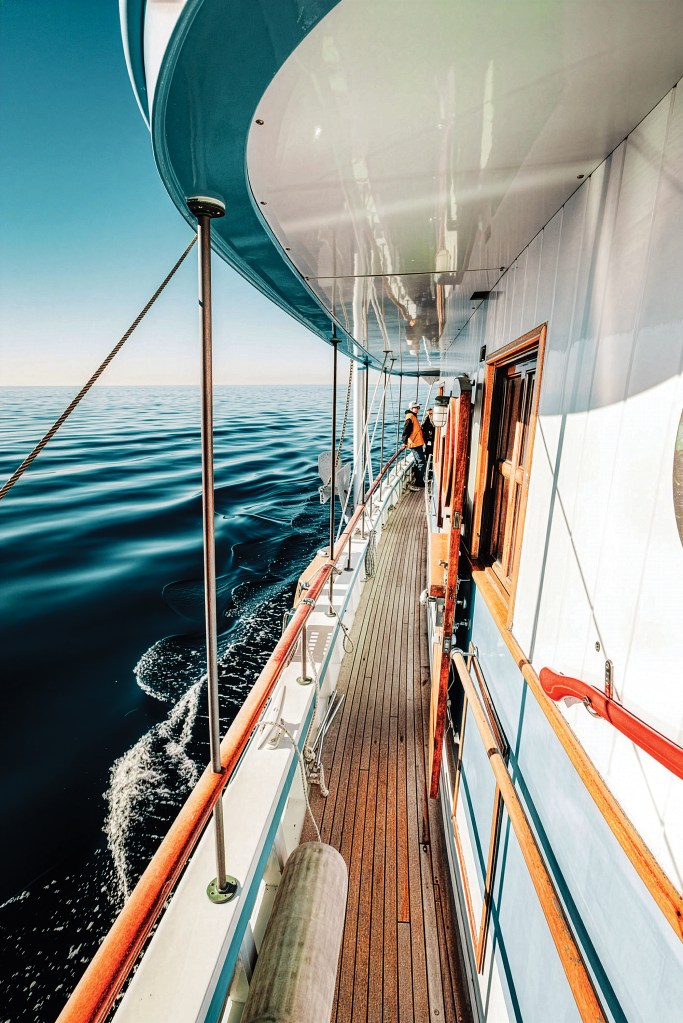
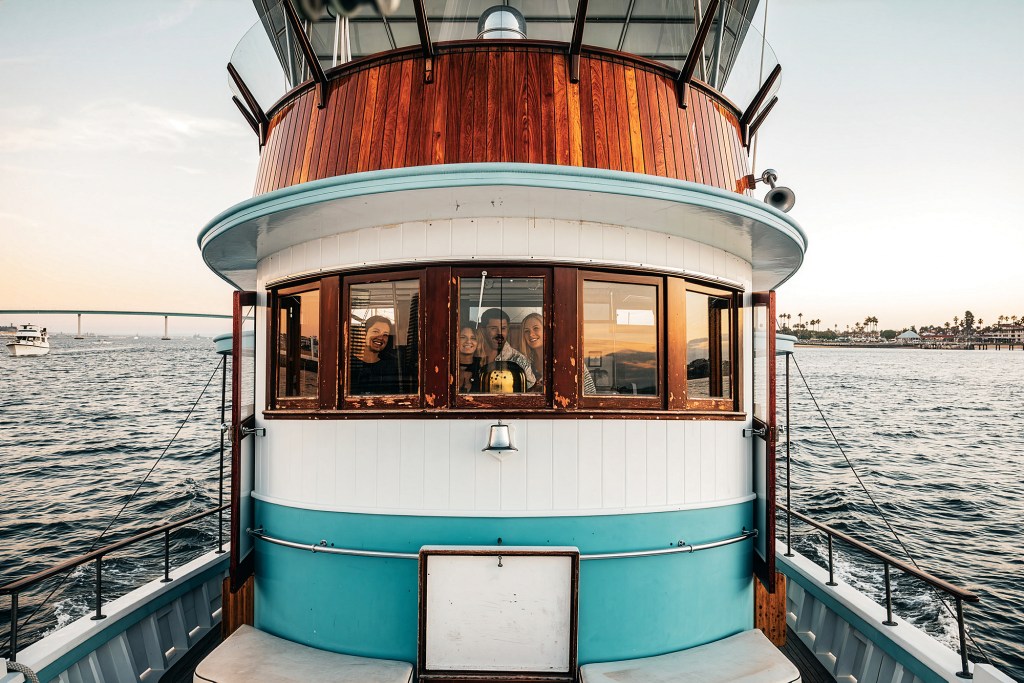
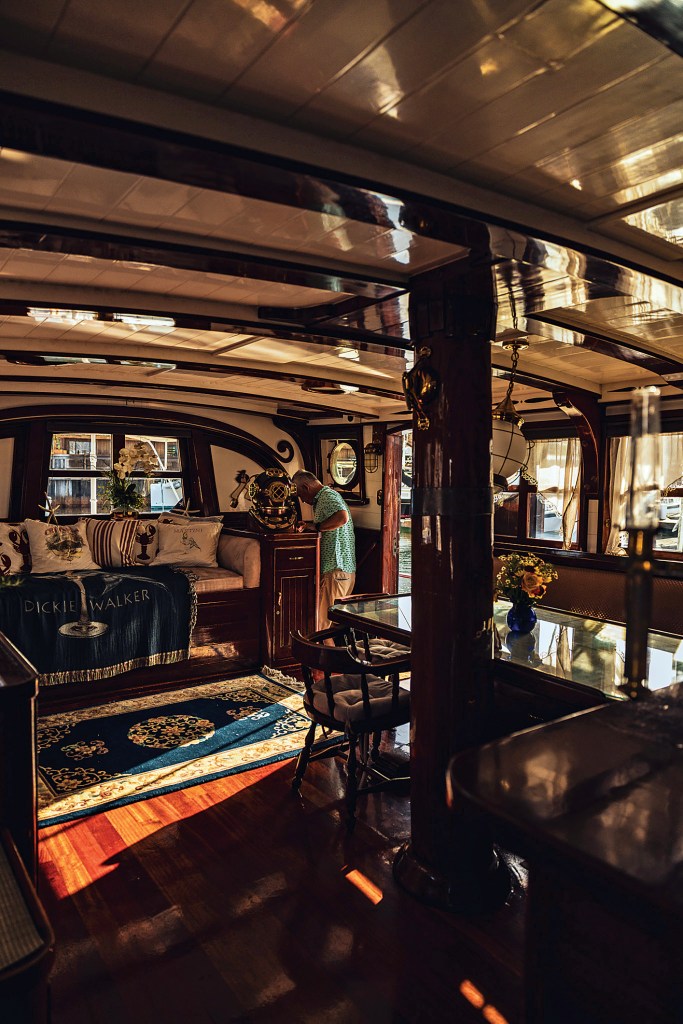
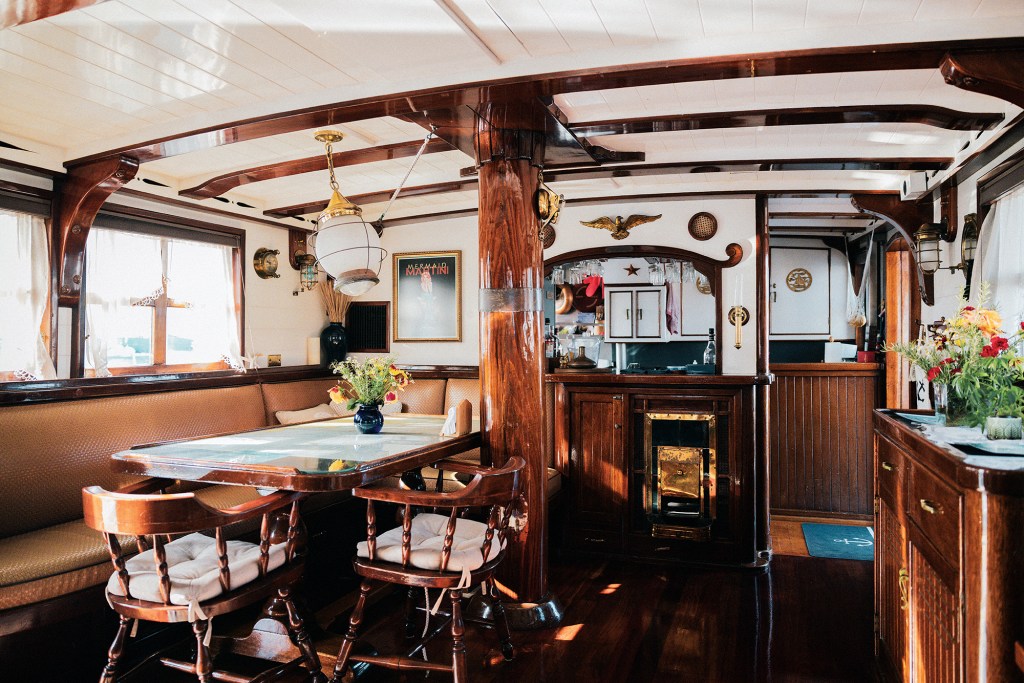
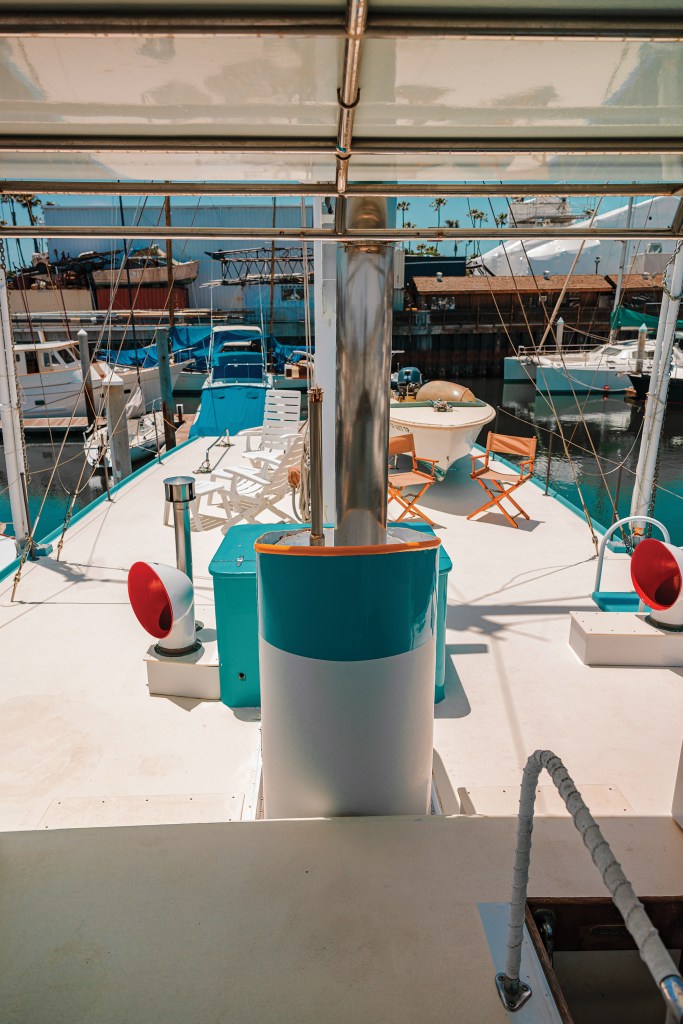
Ten years later, he did not pass on the opportunity to purchase her when she came up for sale. While her hull was in spectacular shape, she was languishing from the deck up. During the next several years, an extensive refit included a new deck, a new house and exterior cosmetic work. Her interior is now adorned with Brazilian cherry sole, polished brass, ornate glasses and carvings, and an antique bronze dive helmet. Her midship, full-beam galley is well suited for serving large parties.
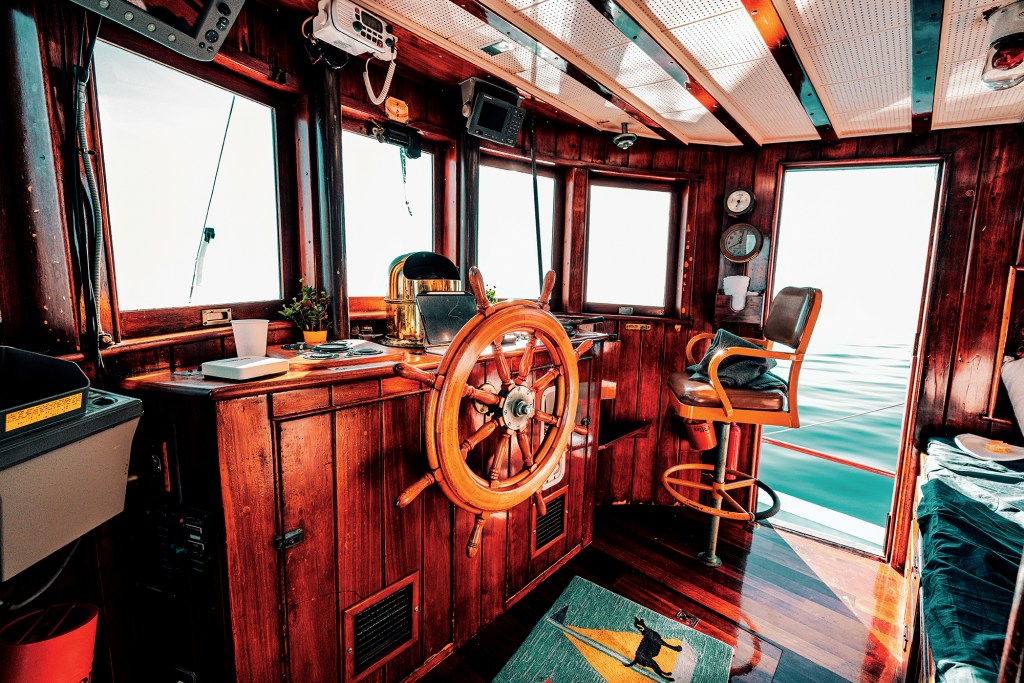
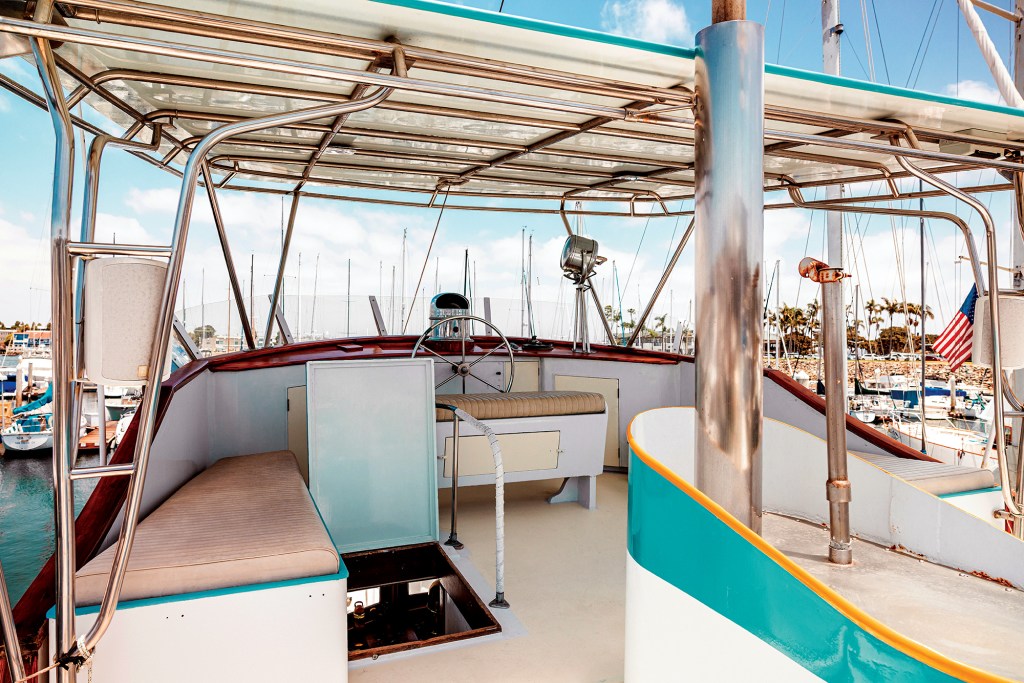
The restored wheelhouse has the simple elegance of a well-kept commercial vessel. Sweetly juxtaposed are analog gauges and bronze decorations, original engine and steering controls, and antique nautical decor. It’s a pleasant place to be, and to consider what life was like on the water years ago. It’s also a comfortable place to relax at the helm.
These themes continue throughout the refit. Her exterior is appointed with traditional life rings, a ship’s whistle that rattles the harbor, and her signature, red-painted fire axe.
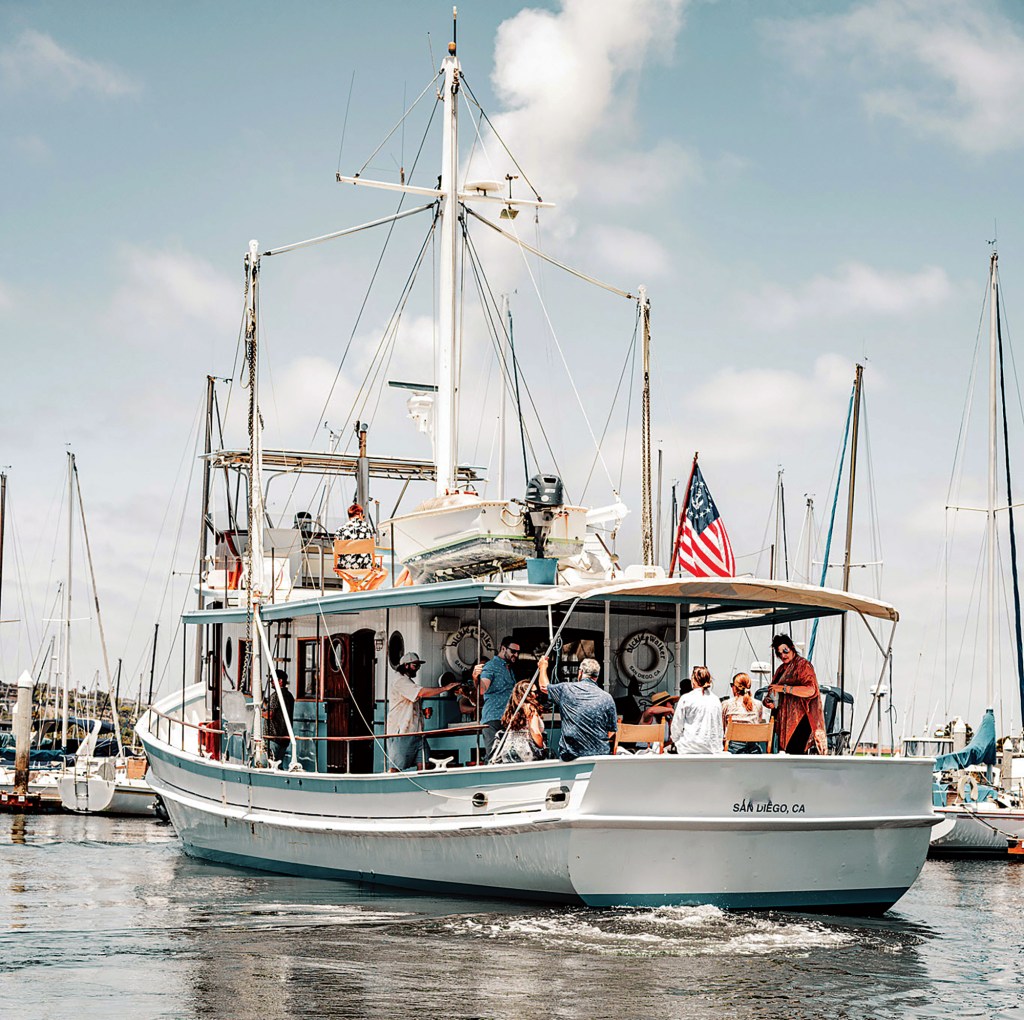
Her salty profile also includes paravane stabilizers, which Koehler kept to have her on an even keel. He recounts his first rough-water passage with delight: Transiting back from Catalina Island in 6- to 8-foot seas and about 20 knots of wind, Koehler went off watch to rest. A few hours later, he awoke to still-sporty conditions. His coffee, left on the wheelhouse table, had not moved. “There’s no replacement for displacement,” Koehler says, while also crediting her flopper-stoppers.

Today, Dickie Walker operates as a private yacht and charter vessel out of San Diego Bay, often for special events as a committee vessel or for race officials a platform. Her original Cat D13000 industrial engine lets her chug effortlessly at 7.5 knots and 700 rpm. She has a range of 3,000 nautical miles.
Her building materials promise centuries of service as long as she has a caretaker to preserve her. Her original internal-combustion start and transmission controls could wake up even the sleepiest engineer, but she sings a beautiful chug-a-lug song as she pushes her passengers and crew in comfort.
This article originally appeared in the July/August 2026 issue of Passagemaker magazine.