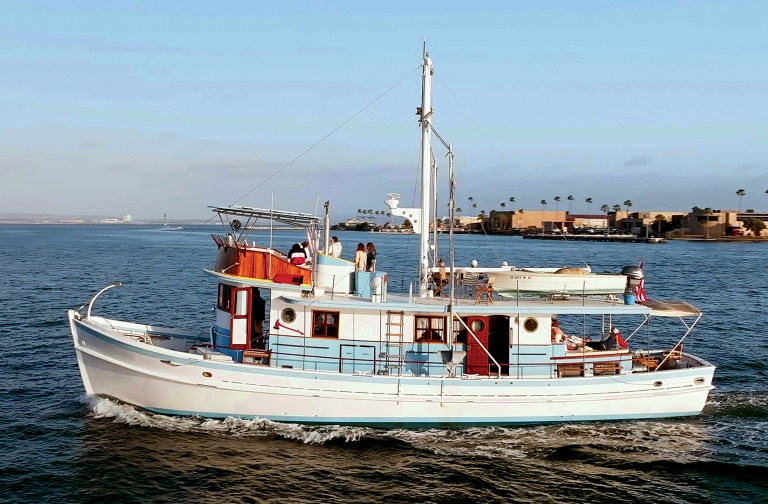


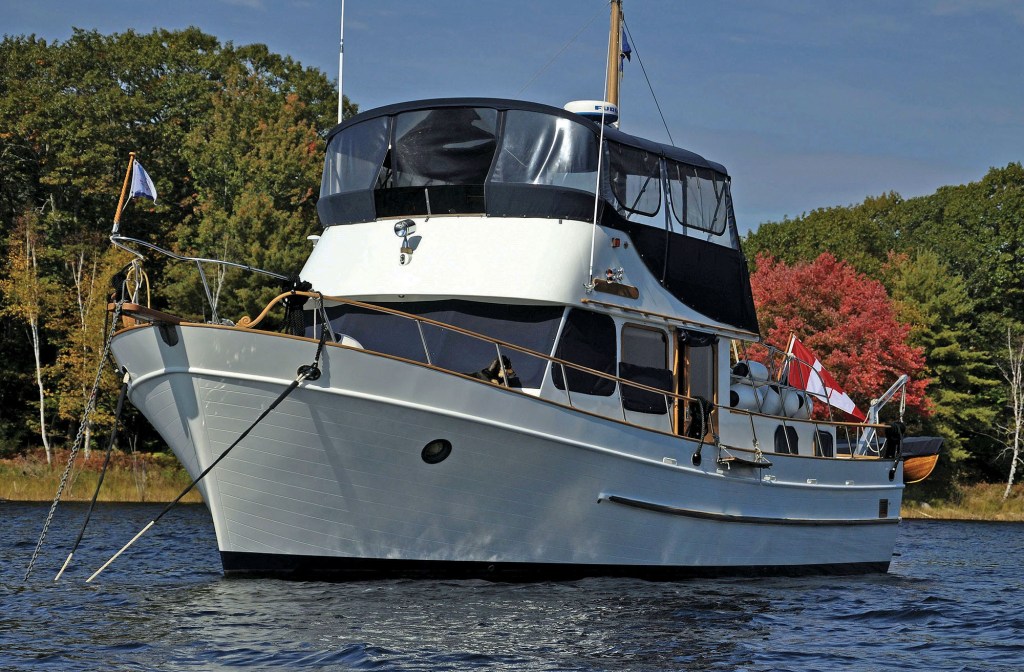
The family aboard the 1976 42-foot DeFever Qajaq needed to provide their dog, Dylan, with easy egress on and off the boat. Having a good system was especially important with the anchor set, the sun lowering, rain falling or mosquitoes swarming.
Story + Photos by Kenneth Russ Lister
In her book The Hidden Life of Dogs, anthropologist Elizabeth Marshall Thomas reminds us that a dog’s identity is defined by pack membership. She suggests that a dog is at the level of a young wolf, accepting and liking its subordinate position. In that role, the dog’s concern is for the pack’s welfare.
Our dog, Dylan, learned her pack’s rules well. She knows that satisfying her natural needs is an outdoor event. Outside is signaled by grass under the paws and a sense of openness.
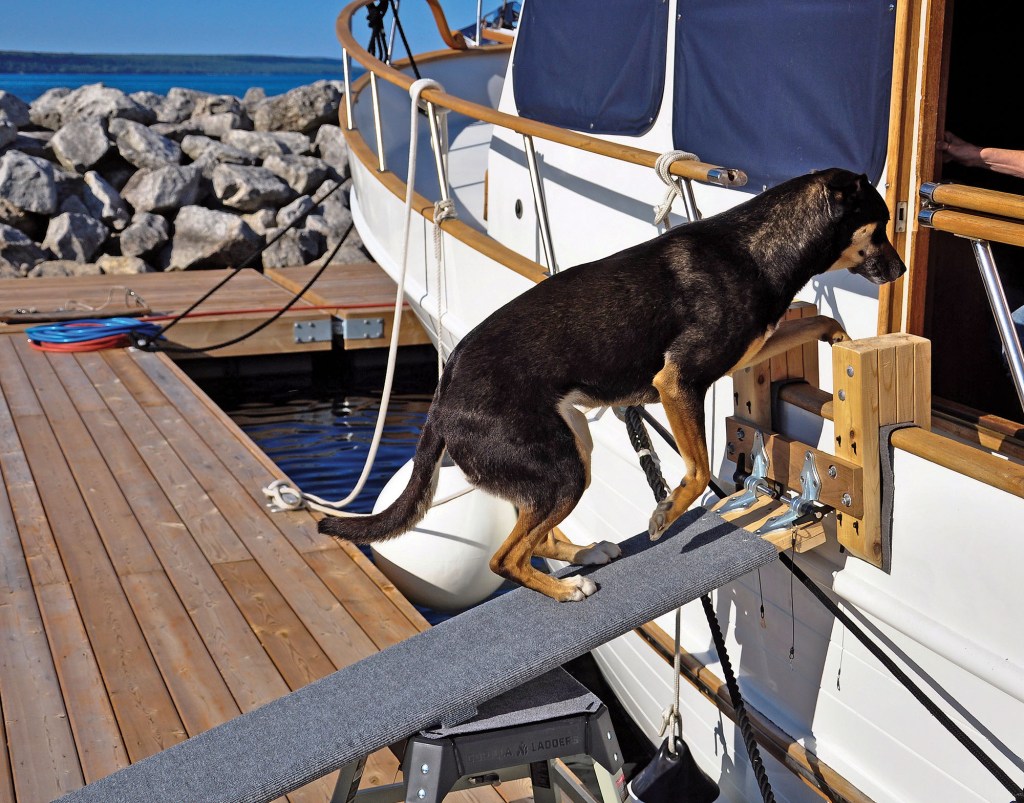
Boat decks, however, are hard underfoot, have walls and lack triggering smells. To Dylan, this is not outdoors. To eliminate on the decks would disrespect her pack, a notion that every instinct of her being inhibits. If I attempt to encourage Dylan to use the decks, am I not inflicting confusion as Dylan anxiously prances? This ultimately generates tension. And, as Thomas wrote, “Dogs are extremely sensitive to human tension, especially when they themselves are the cause.”
After all our boating years with dogs, we needed a change in how we got Dylan down to and up from the swim platform. Dylan is a larger dog, and our transom’s vertical drop to the swim platform was the challenge. The key to our old system was the handle atop the dog life jacket. The lifter would thread Dylan through the stern access to me, standing on the swim platform. In reverse, I would hoist Dylan up to the point where the receiver could grab the handle, and together we would thread her back while keeping her nails clear of the teak gunwale cap and hull surface.
We needed a more practical system. Dylan had to be able to get on and off the deck comfortably. We had to eliminate tension for the handlers and the dog. We wanted no permanent additions or modifications to the boat. We needed something that could be easily stowed when not in use. We preferred a system that required only one person to deploy. And we didn’t want additional steps, such as lowering the tender.
On our vessel, davits carry a cedar-strip tender. Dylan, however, is transported in an Avon dinghy; therefore, our preference is to leave the tender in its lifted position when not in use. With a ramp as our first thought, the stern was not an option. This left the two side entrances across from the port and starboard doors. A side-entrance option, though, is not ideal because at anchor, the calmest water is abaft the stern.
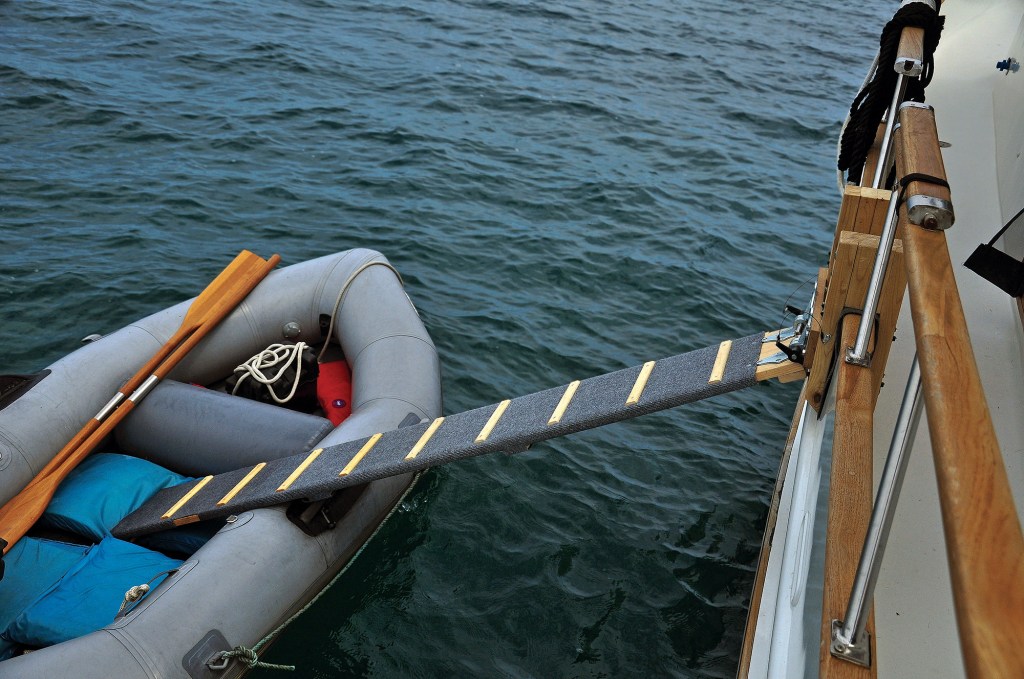
To address this challenge, we designed a gunwale bracket consisting of two legs joined by a horizontal crosspiece. It fit over the gunwale cap. Next, to make a ramp, we attached a board of roofing pine to the gunwale bracket. We used lock pins inserted through stake eye hooks. At the water end, the ramp attached to a polyethylene double float, an element of the Jetfloat modular dock system.
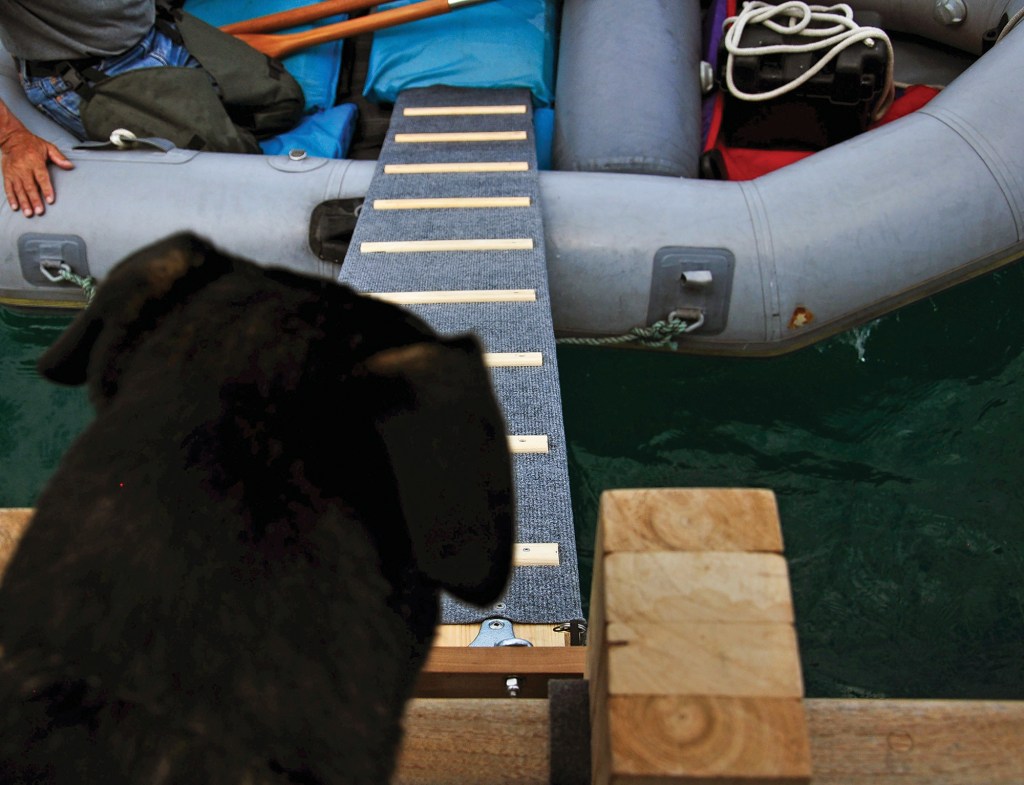
The goal was for Dylan to walk down the ramp to the float, and then hop into the dinghy. We were encouraged by our test at the marina dock. At anchor, however, deploying the ramp quickly became a two-person task. And even in relatively placid water, the ramp was too much like a swinging bridge for Dylan to feel comfortable.
To preserve the better part of the design, we replaced the float with the dinghy. This change reduced the ramp’s motion considerably. But, after a serious attempt, Dylan balked. Her caution is a virtue, and for us, she became our dog who wouldn’t.
We lowered the tender and set up the ramp off the stern access. Here, we had some success, but it still wasn’t quite right. I was sitting in the dinghy and thinking after Dylan departed, and the two stainless-steel steps on the transom drew my focus.
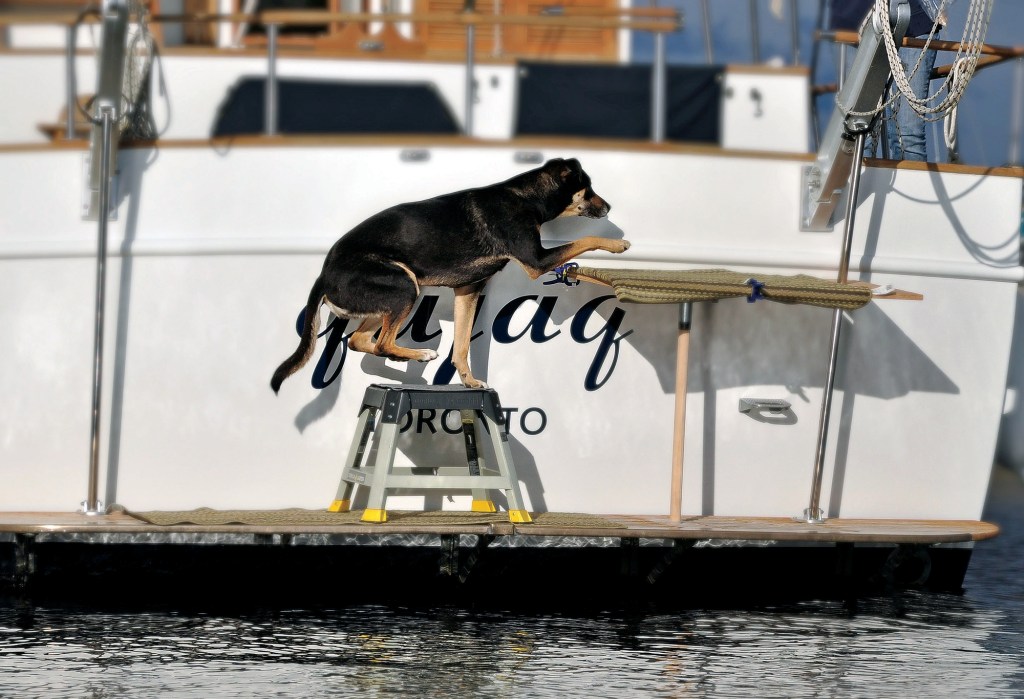
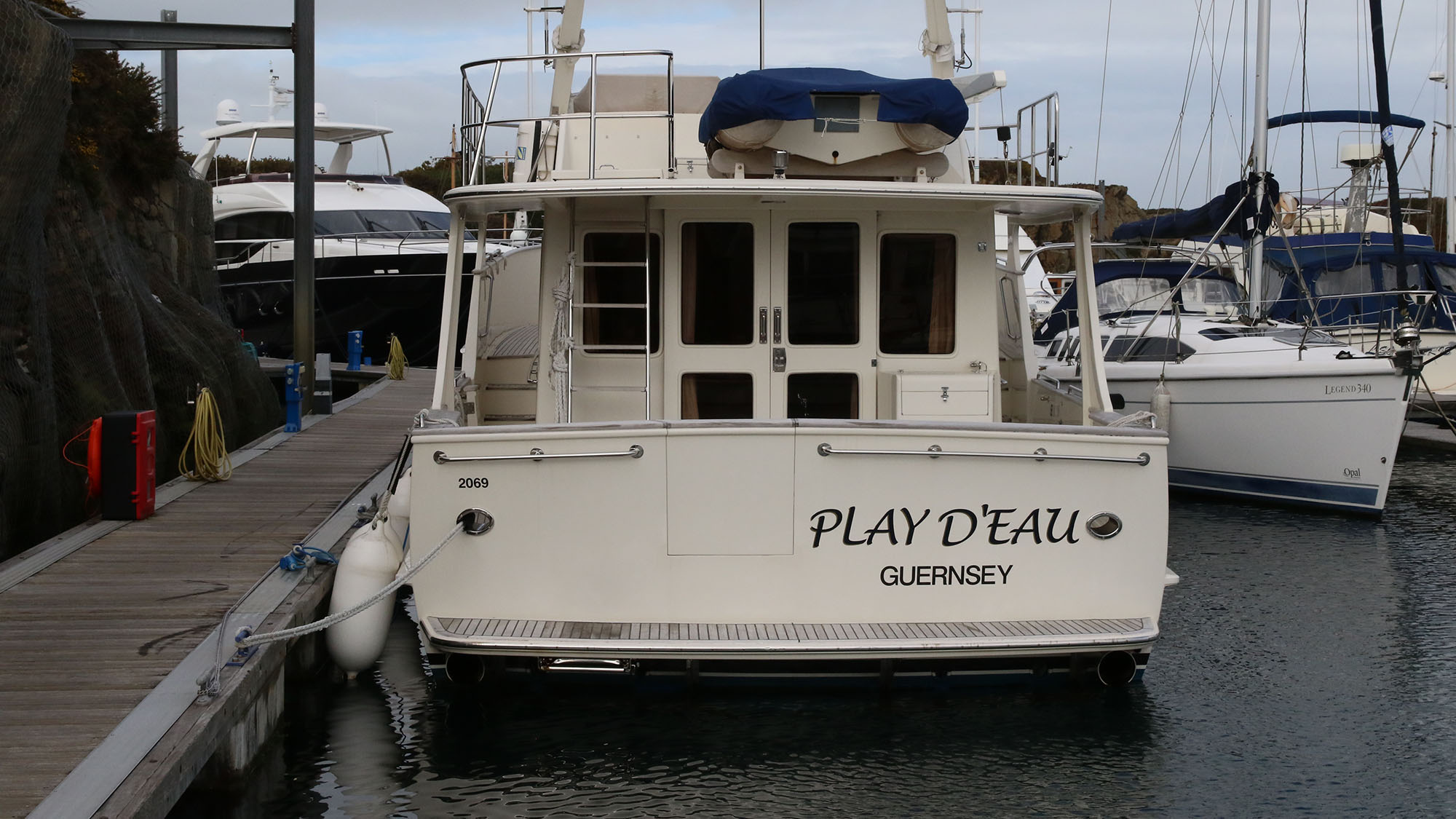
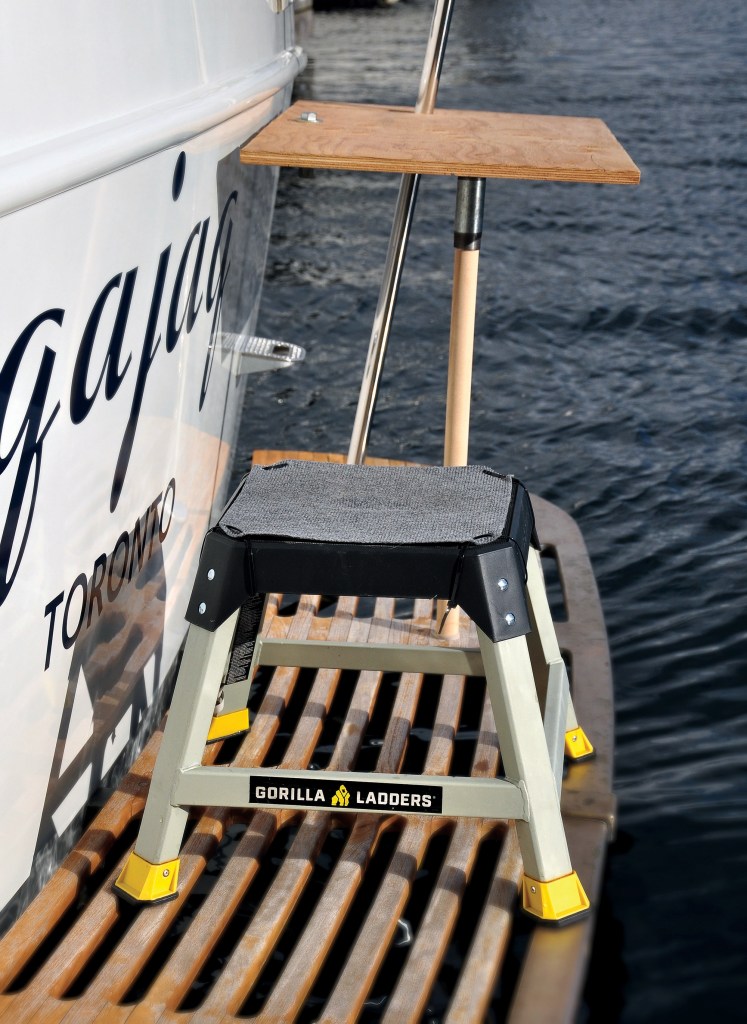
These steps leading down to the swim platform have hand-hold slots. That meant a platform or step could be securely fastened to the transom. The top step would serve as the primary support and attachment point. The platform would then only require the addition of a temporary leg. A midstep is provided by a stable step stool that fits comfortably on the platform.
This setup is ideal. The platform serves as our dock step and already travels with us, and the plywood platform and support leg can be easily stowed under the bridge chart table.
To our delight, Dylan needed little incentive to use our updated design. All the anxiety we had about our previous method was gone. We can now look forward to dinghy excursions without the angst of the in-between effort. Not only does the system serve Dylan, but when it’s in place, it also provides us with access to the swim platform.
A design tested in the anchorage and found wanting is not a failure if it serves as a catalyst for further thinking.
Ultimately, the simple solution was in plain sight. Now, we let Dylan know where we are going—if she does not inform us first—and we meet on the swim platform.
This article originally appeared in the May/June 2026 issue of Passagemaker magazine.