

Story + Photos Matty Solow
I fell in love with boating when I was 11. Sailing a Sunfish on an inland lake in Maine gave me a feeling that I could never find elsewhere. That connection to the water remains with me some 60 years later.
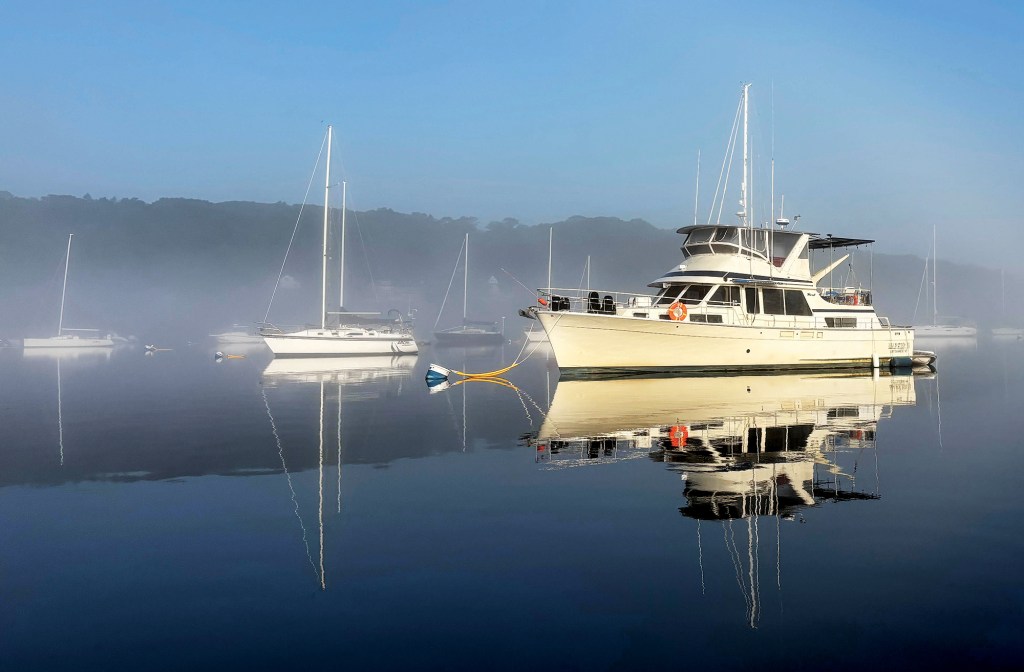
About 25 years ago, I switched from sailing to power and purchased a 1986 48-foot Tollycraft. One of the most peaceful places for me is on my boat, sitting on a mooring or nestled in a beautiful harbor surrounded by the sights and sounds of the sea. I also came to love dropping the hook after I mastered anchoring, learning how to use the right kind of ground tackle, setting the anchor firmly and rigging proper snubbers.
I felt so strongly about this lifestyle that several years ago, I cut my lines to the dock. I now spend the entire boating season moored or anchored. I find a different kind of enjoyment while cruising, but I’m also like many owner-operators who learn that taking on the responsibilities and perils of operating a vessel can be a bit intense. Once moored, I can usually kick back and relax.
One day, years ago, I was moored comfortably in Cuttyhunk Pond in the Elizabeth Islands in Massachusetts. I was en route to Martha’s Vineyard, surrounded mostly by private property. There was a dock with some amenities, including a lobster shack. Corn was sold on a pushcart, with an honor system and a tin can.
While sitting out on the aft deck, enjoying the New England breeze, I suddenly became too aware of the droning and fumes coming from all the generators on the boats, especially mine. That was the moment that started me on my quest to unplug.
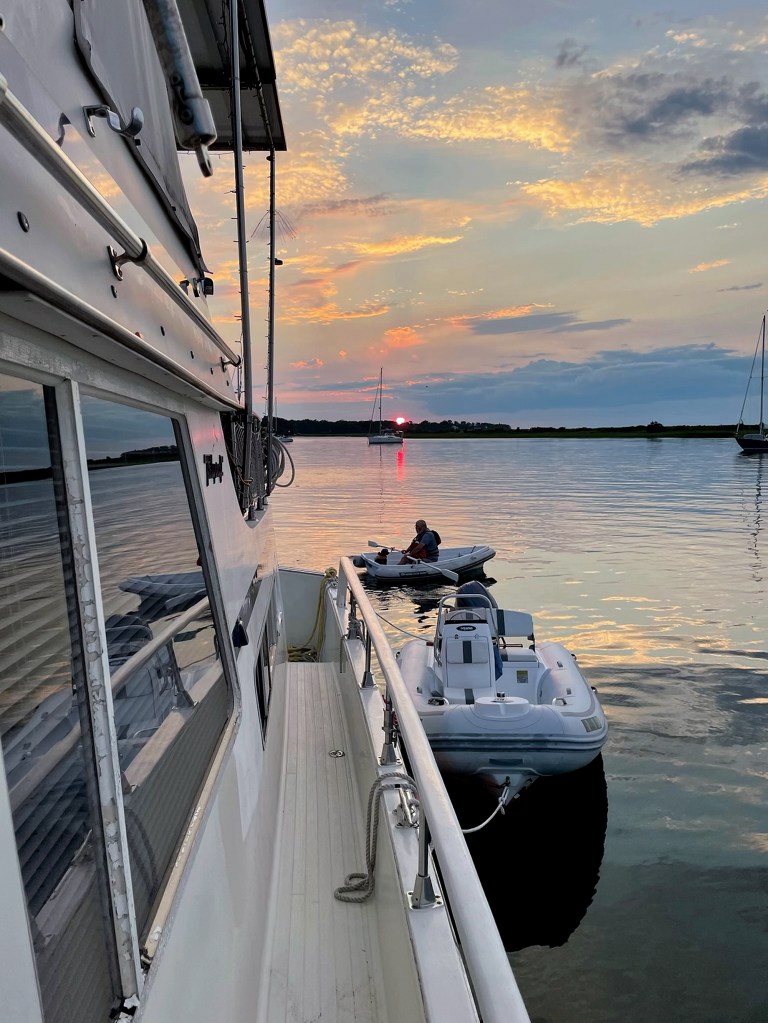
We had installed solar panels at our house and found that system to be reliable and virtually maintenance-free. The panels have a lifespan of 25 years. So I started to research installing solar panels on our trawler.
For the past several boating seasons, we have used a mooring and launch service in Northport Harbor at Seymour’s Boatyard on Long Island, N.Y. Living unplugged was great, but I wanted to stop my reliance on my generator. I also wanted to run the refrigerator full time, ending the task of hauling a huge cooler and ice around. The research was conclusive: Installing a solar-power system would be affordable and could handle all of our needs.
I went with e Marine Systems of Fort Lauderdale, Fla. Its team helped me design and purchase the solar panels, controller and rail mounts. Then, an electrician certified with the American Boat & Yacht Council, Tom Humphrey, assisted with the design and planning process. Later, Humphrey installed my system with the addition of a 2,000-watt inverter and monitoring system, both from Victron Energy. All in, the project came in under $5,000.
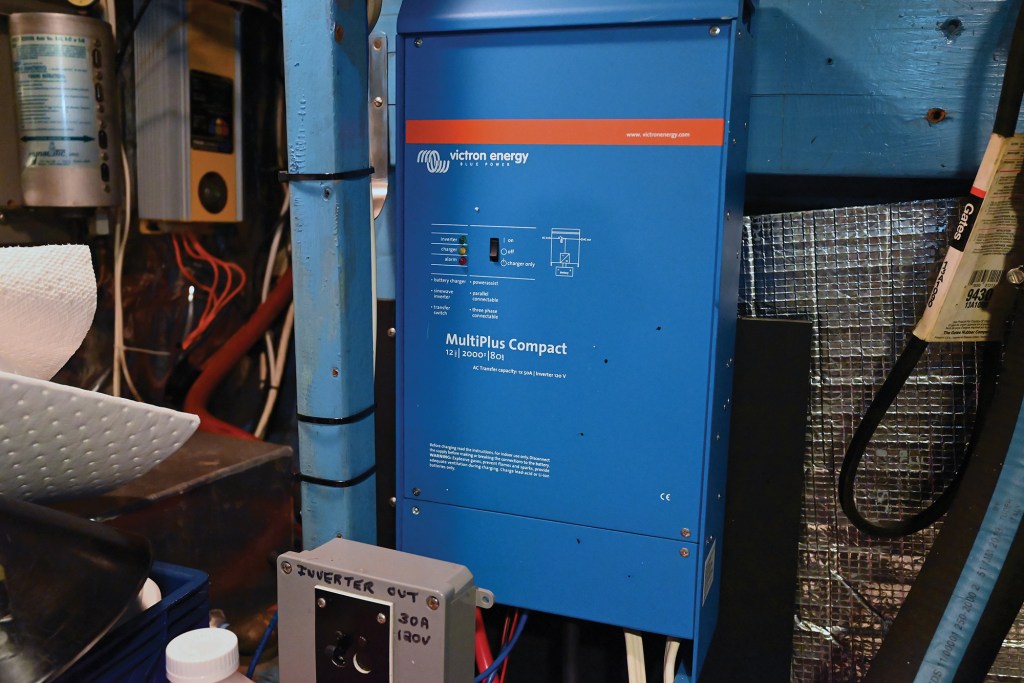
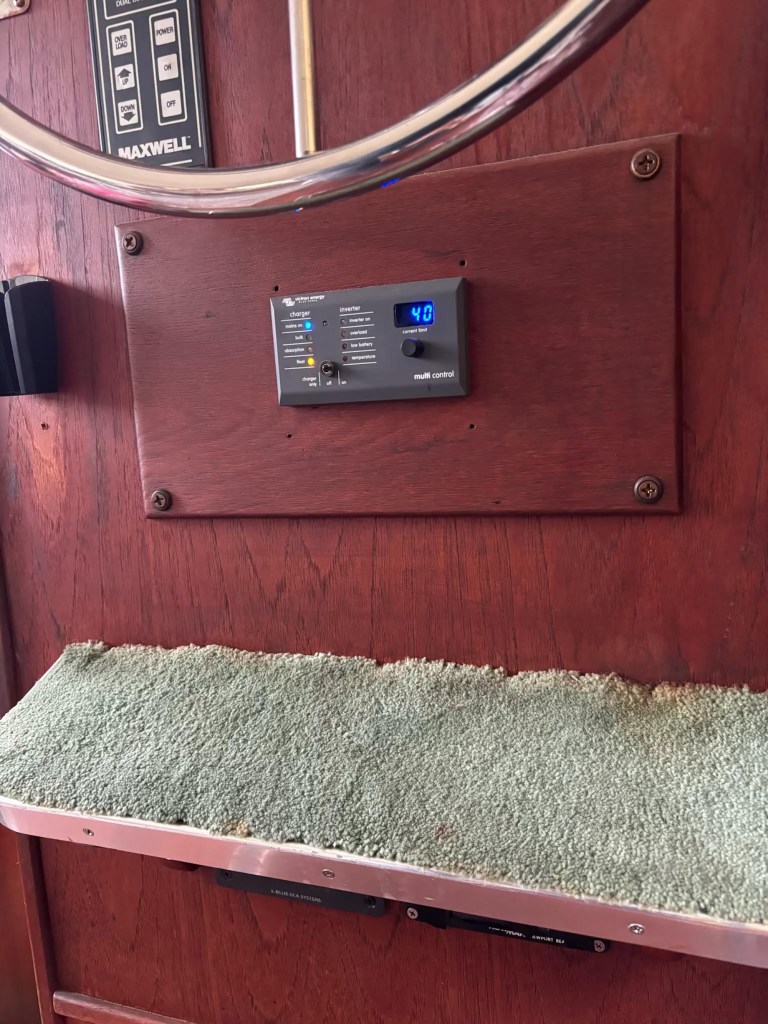
Everything works automatically, integrated into my existing breaker panel and switches. Planning is the key to getting the most benefit from this system.
A boat’s space is always limited, and placement takes ingenuity. Today’s panels come in multiple sizes and shapes. Some are made with flexible material and can be attached to cabin tops, eliminating the need to install supports. Every year, it seems the panels deliver more photovoltaic energy, and that translates into less space and more charging power.
The toaster and microwave oven only run for shorter periods. My current 8D battery box runs along the center of the engine room, two for the engines, two for the house. I just thought that putting a box for two more batteries in line with the existing four made sense. All the wiring and channels to the panel up in the helm station were right there.
The amount of power I needed wasn’t just for the refrigerator, but also to run my diesel-fired heater, which extends my boating season by a couple of months. I wanted to use my microwave and toaster too, along with all the lighting, entertainment, fans, a CPAP machine when sleeping, chargers and power tools. (Air conditioning did not make the cut. I do miss the cool air, but only for about 10 days per season.)
I could comfortably store enough power with one deep-cycle 8D battery. However, after one season, I added another battery because I had failed to calculate that during multiple cloudy days and during the shorter sunlight hours of early spring and late fall, a single battery just wasn’t enough storage. Switching to two gave me everything I needed.

To accommodate the two batteries, I added a certified marine battery case just forward of my four house and engine batteries. I installed AGM and flooded, deep-cycle batteries. I went with the AGM rather than lithium batteries because of price and predicted usage, as I wasn’t going to run high-amperage equipment for long periods of time. My AGM battery is being laid to rest this winter after giving me eight seasons of dutiful performance. I’ve gotten five years out of the flooded deep-cycle batteries, although they require twice-yearly maintenance.
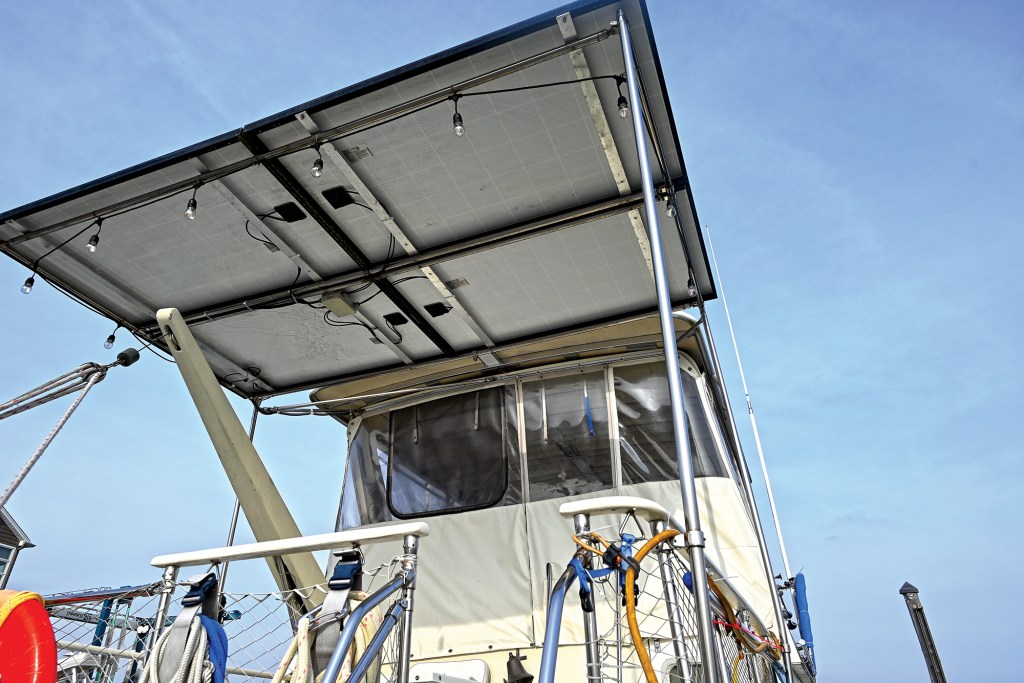
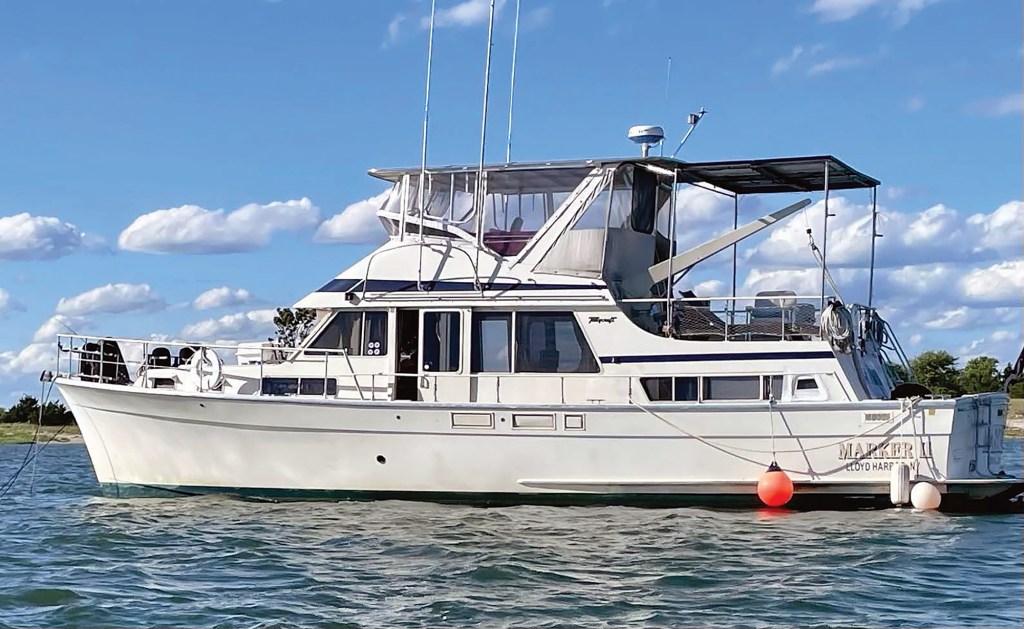
The cabin deck aft was the place that my wife and I spent many hours relaxing, watching and enjoying the sights. It was our patio to the world. However, in the summer of 2016, I was diagnosed with melanoma. So I decided that the solar panels would be placed over the aft cabin sundeck, as a sunshade. Aesthetically, it looked like an extension of my flybridge enclosure. If I had to do it all over again, I would do it the same way.
It has been eight seasons now of maintenance-free, noise-free, cost-free electricity. All of the planning paid off. Most of all, this system has been worry-free. I can’t imagine enjoying my boat any more than we have during these years, averaging about 100 or more days and nights each year aboard.
This article originally appeared in the March 2026 issue of Passagemaker magazine.