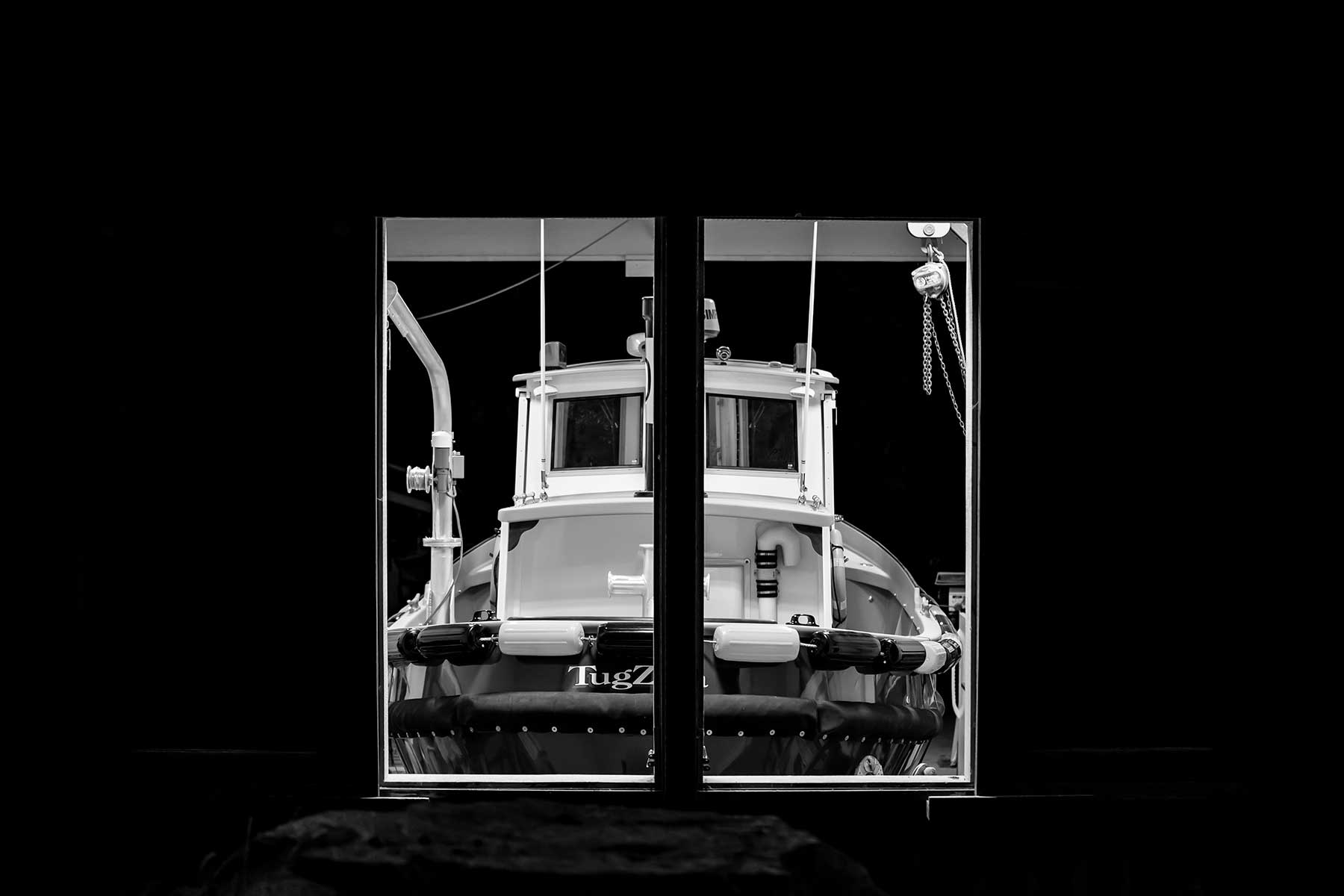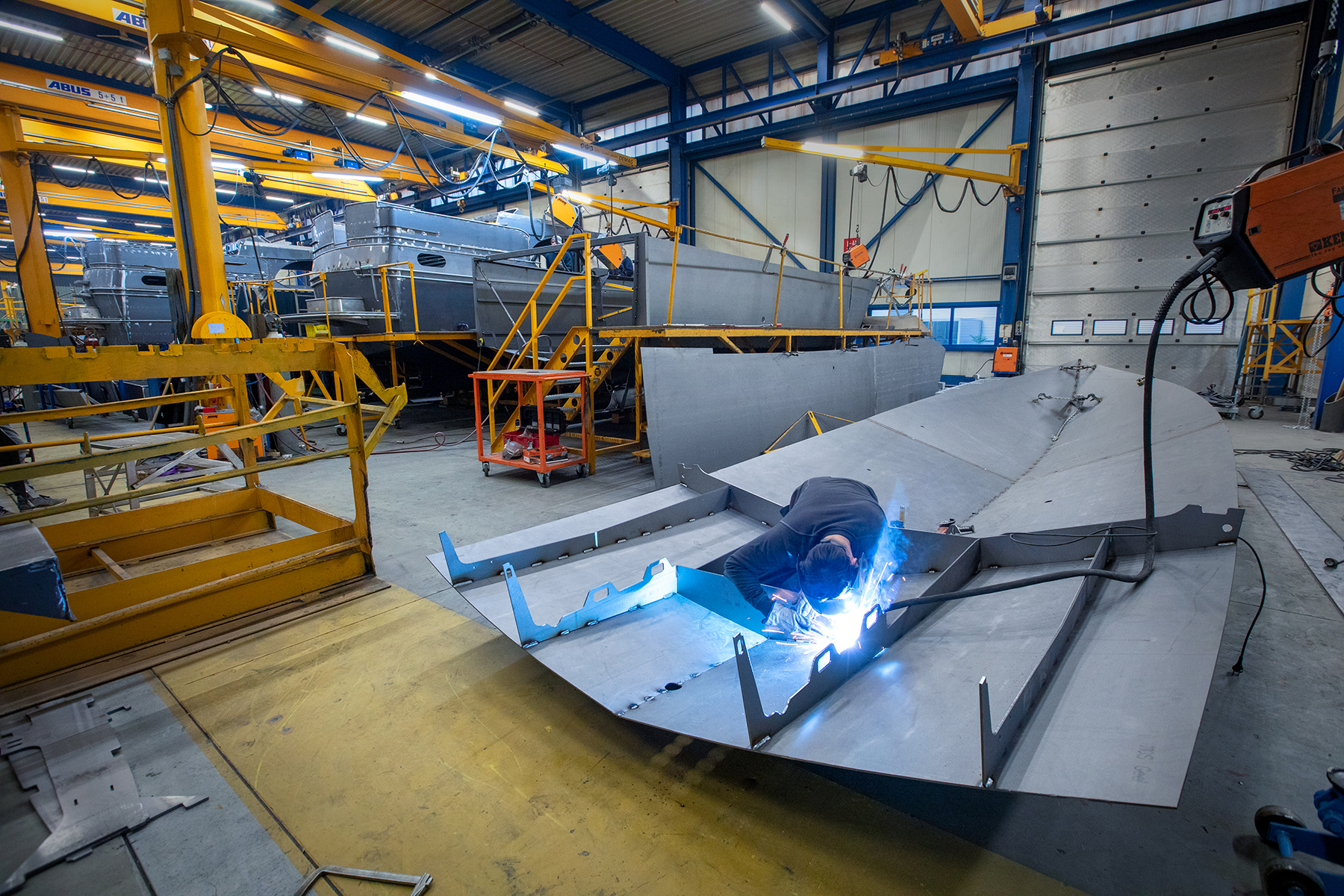


With its new composite manufacturing facility, GB Marine Group now controls all stages of production in one location.
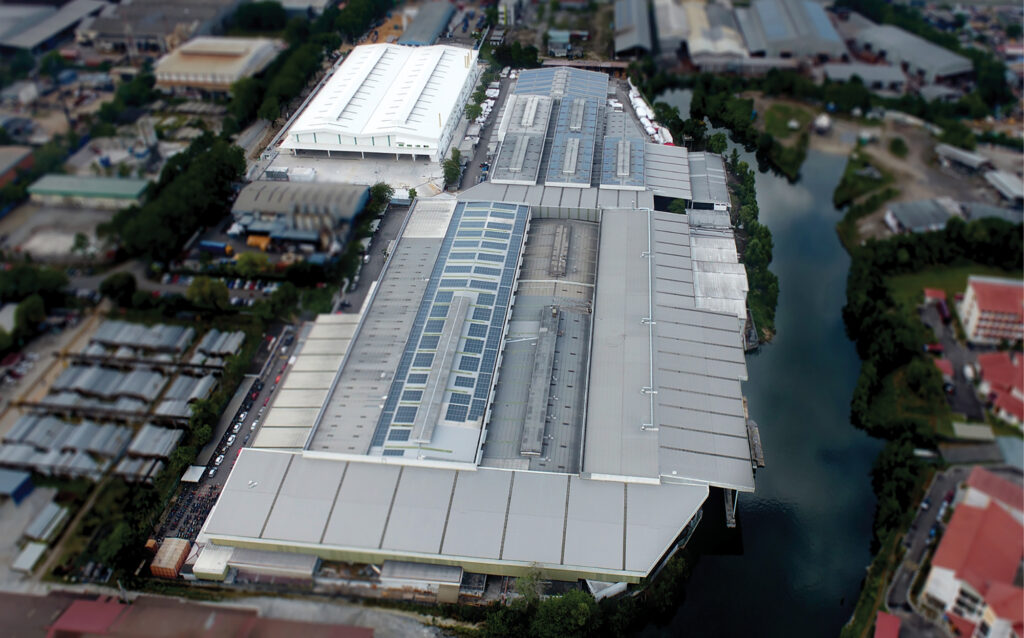
The Strait of Malacca was filled with more commercial ships than I have ever seen at one time. Many were anchored and awaiting assignment, but a good number were jockeying for entry into Singapore. It was a scene that epitomized the vitality of this port in world trade—the place where GB Marine Group now has nearly 700,000 square feet of manufacturing space to become an even bigger player.
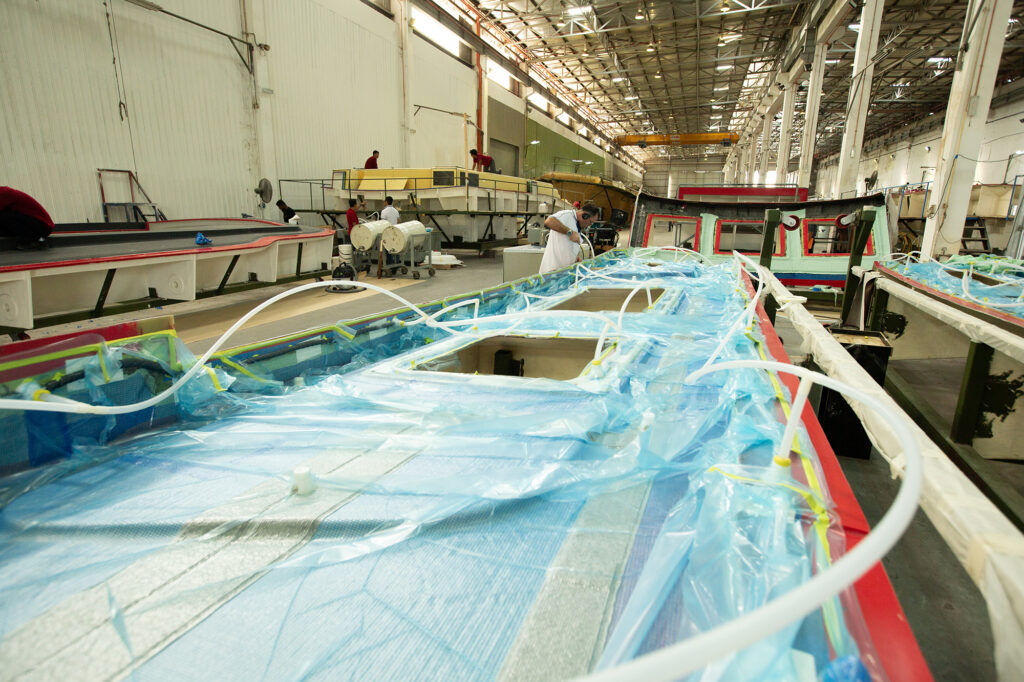
After nearly two years and 2 million work-hours, the 143,000-square-foot expansion means the GB Marine Group now has full control of all stages of production in one location. Production lines can be expanded, and, according to the GB Marine team, the composite cure time can be cut from 10 days to a remarkable three hours.
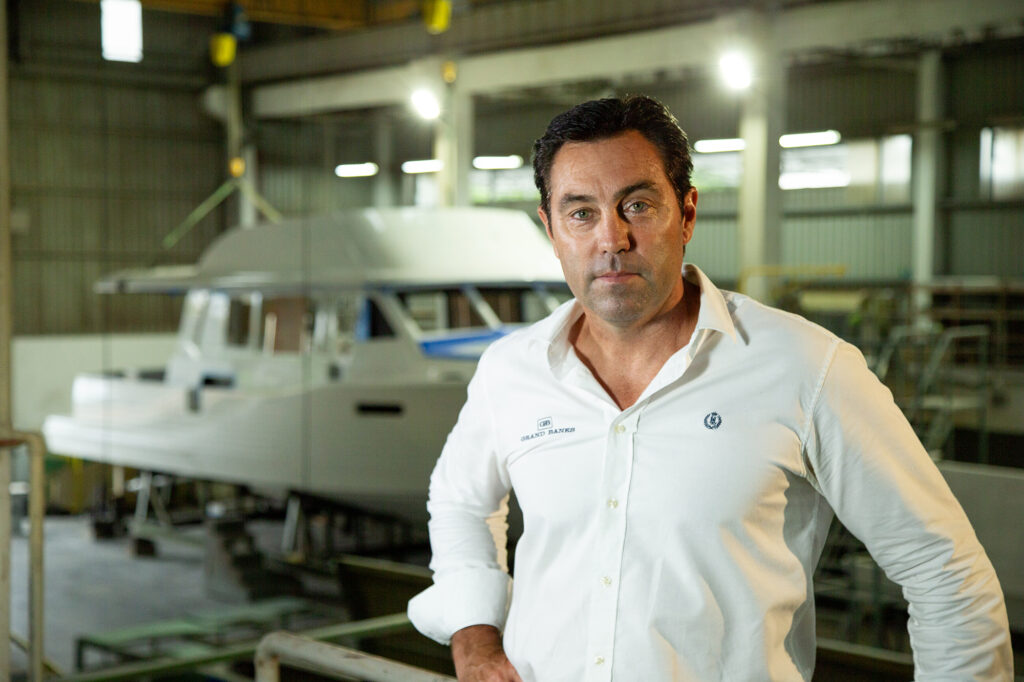
“Don’t try to keep up with me,” GB Marine Group CEO Mark Richards says as he takes a call during a tour. The nine-time Sydney Hobart Yacht Race winner is now the chief designer of the group’s brands—Grand Banks, Palm Beach and Eastbay—and is the company’s foremost advocate, regularly appearing at boat shows around the world.
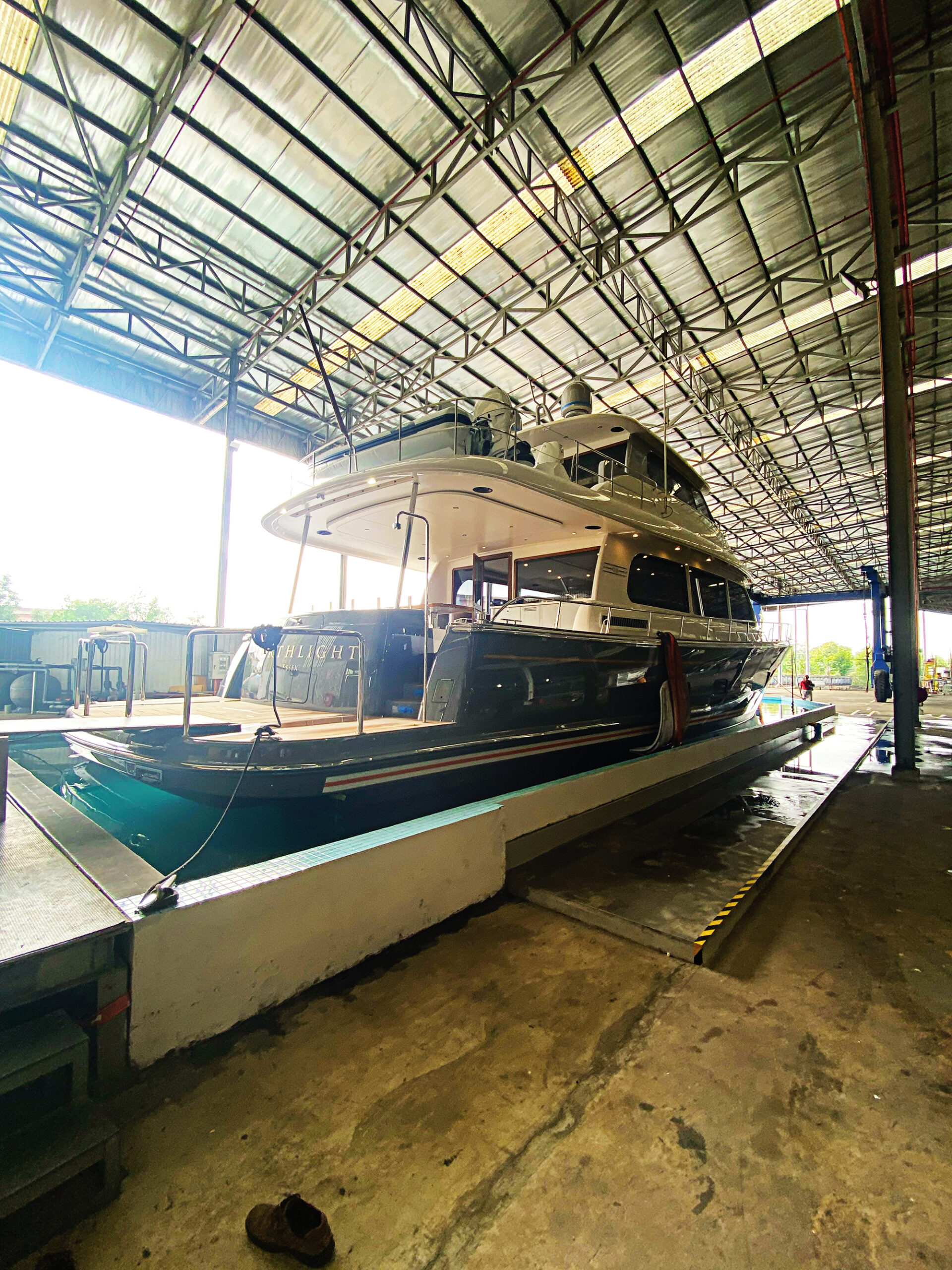
On this day, though, he took us to the testing pool, where a Grand Banks 85 sat for her final fit-out before being shipped to the United States. Things look a lot different, Richards says, than during his first visit to the facility in 2013. The place was a third of its current size and languishing in disrepair. At the time, Richards was still a professional sailor and founder of Australia-based Palm Beach Motor Yachts. On that visit, he envisioned a plan for success.
“We had to start over,” Richards says. “It was all wrong, [but] I think I can make it work.”
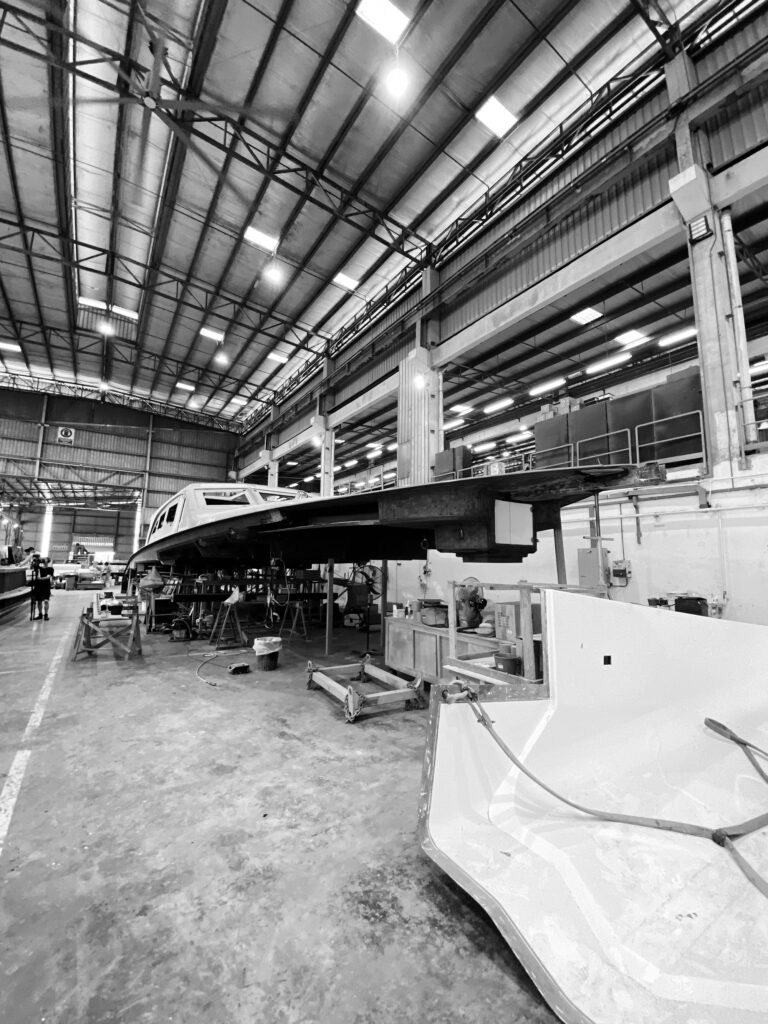
He gathered a group of investors in Grand Banks that, in 2014, acquired Palm Beach and made him CEO of the group. The initial plan was to keep a Palm Beach facility in Australia, but after a $100 million investment in Grand Banks’ Malaysia facility, he decided to streamline production and incorporate Palm Beach’s resin-infusion techniques and V-Warp hulls into Grand Banks. Then, with a shift to a factory-direct model, the publicly traded company saw its most productive years.
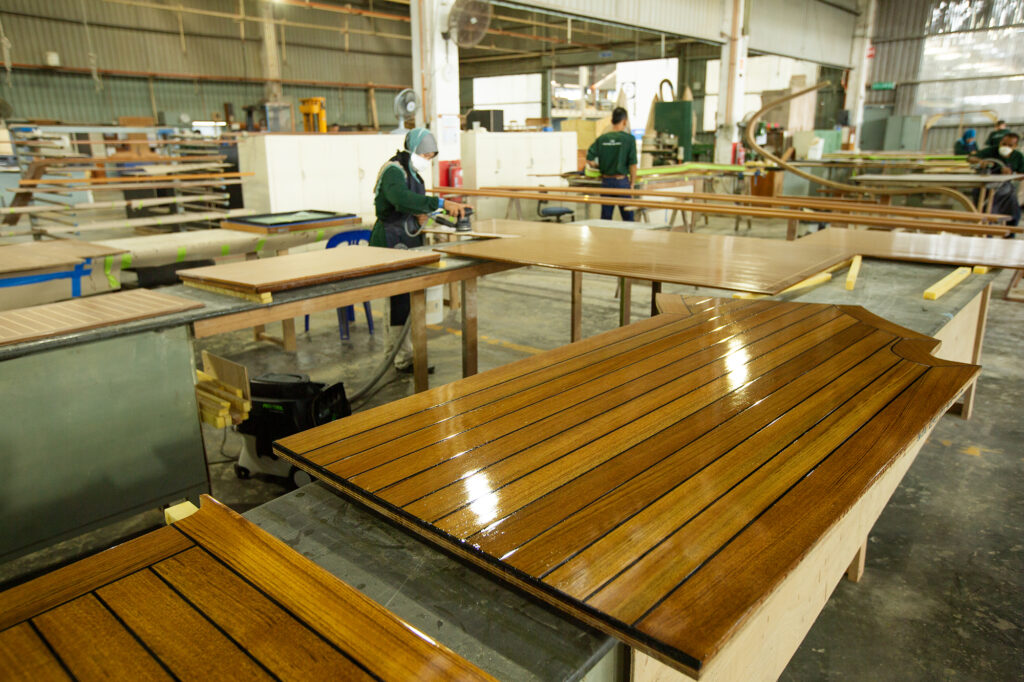
“This is how we roll,” he says as he speed-walks toward the eight-axis rotor robotics and woodworking center, with its breathtaking supply of Burmese teak. The giant sheets of carbon fiber, he explains, have an energy-intensive manufacturing process, but their use is offset by the factory itself. The facility’s power demands are a fraction of what they could be in the subtropical climate: The insulated roof and open-air breezeways significantly reduce workspace temperatures, and a solar array means the facility runs off-grid for long periods of the day.
Efficiency is also reflected in the yachts. Using carbon fiber in the hull, bulkheads, deck and superstructure reduces weight, which equates to less fuel burn. The slippery V-Warp hull sips fuel in comparison to its competitors. Newer technologies such as LiON-powered systems require less power—some 70 percent less in the case of air conditioning.
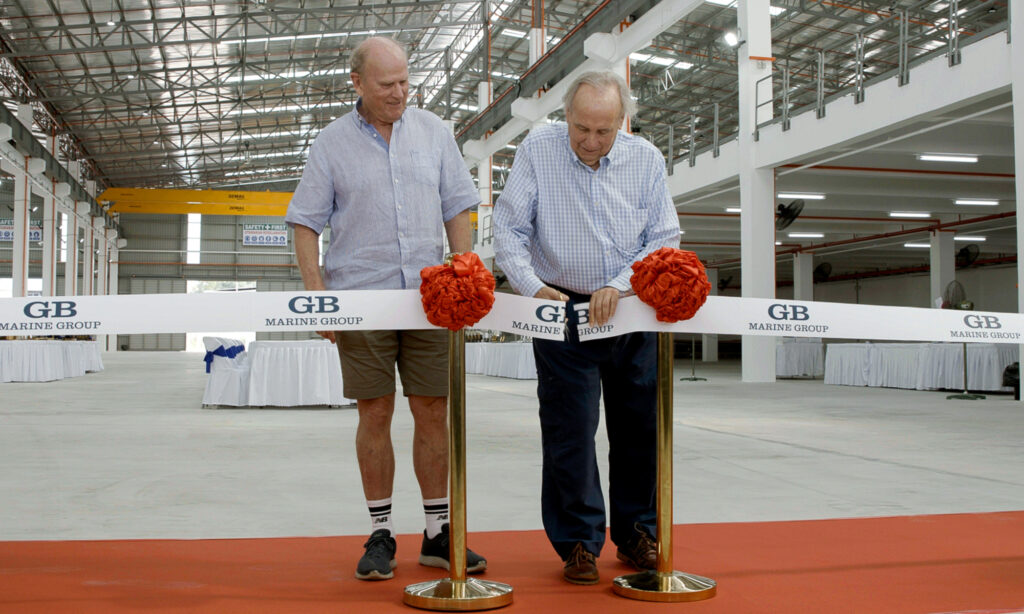
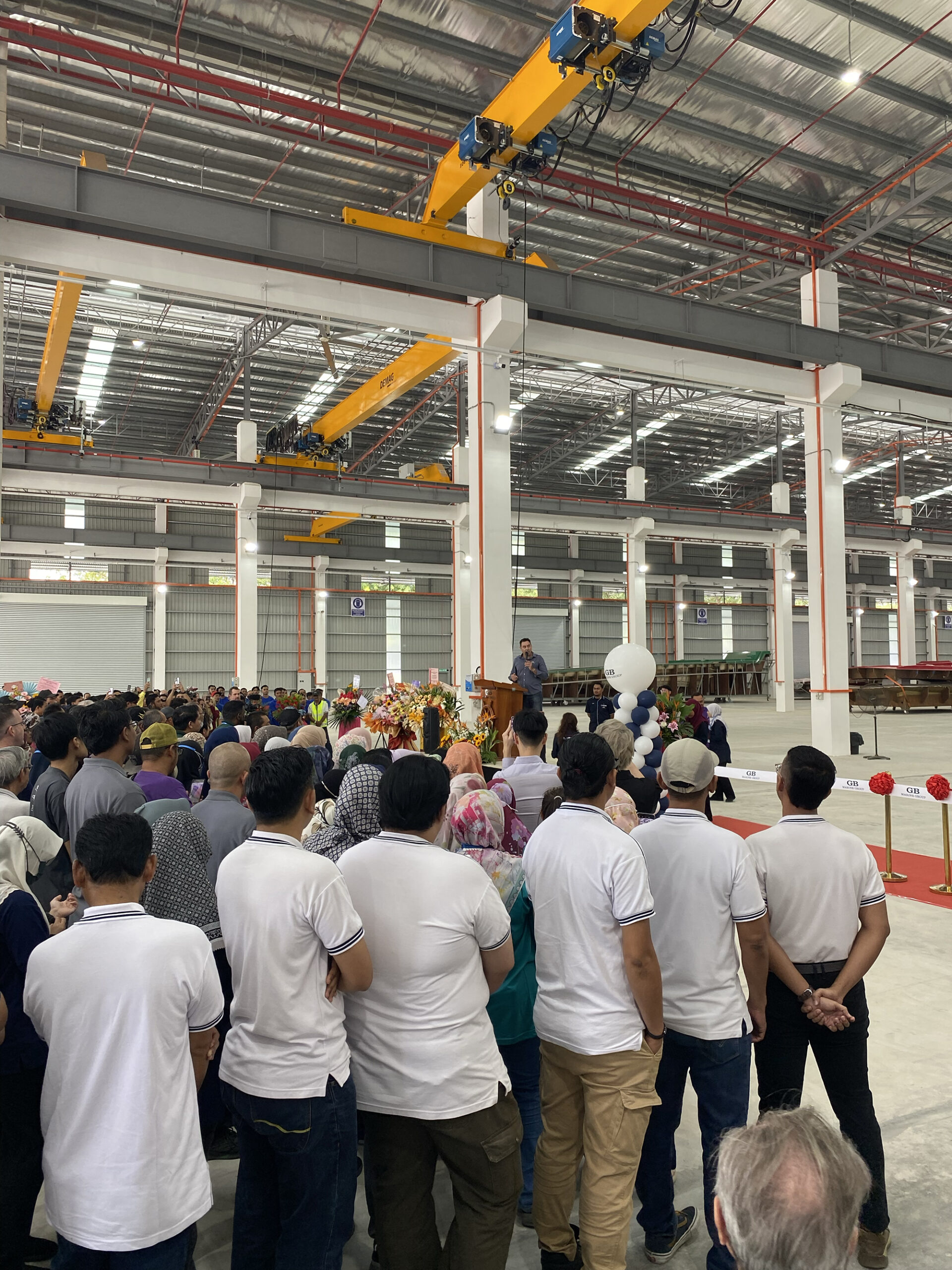
The workforce, more than 1,000 strong, gathered along with local dignitaries, shareholders and customers for a ribbon-cutting ceremony. Richards sauntered to the podium, waved and smiled, and sent the assembled into a raucous cheer. He talked about improved quality, internal efficiencies and long-term shareholder value as onlookers hung on every word.
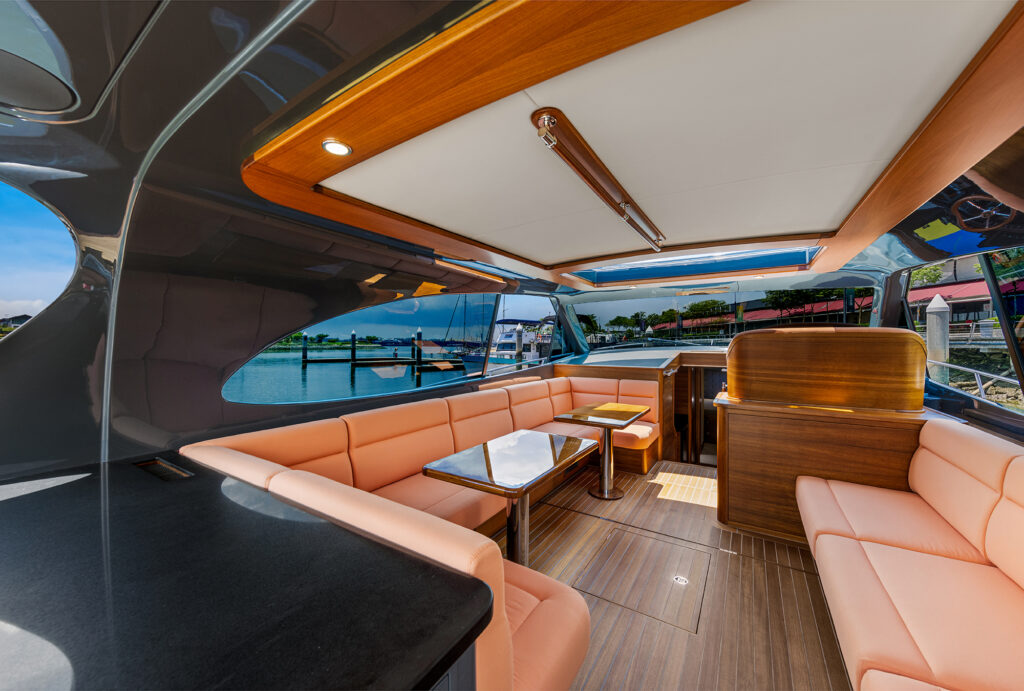
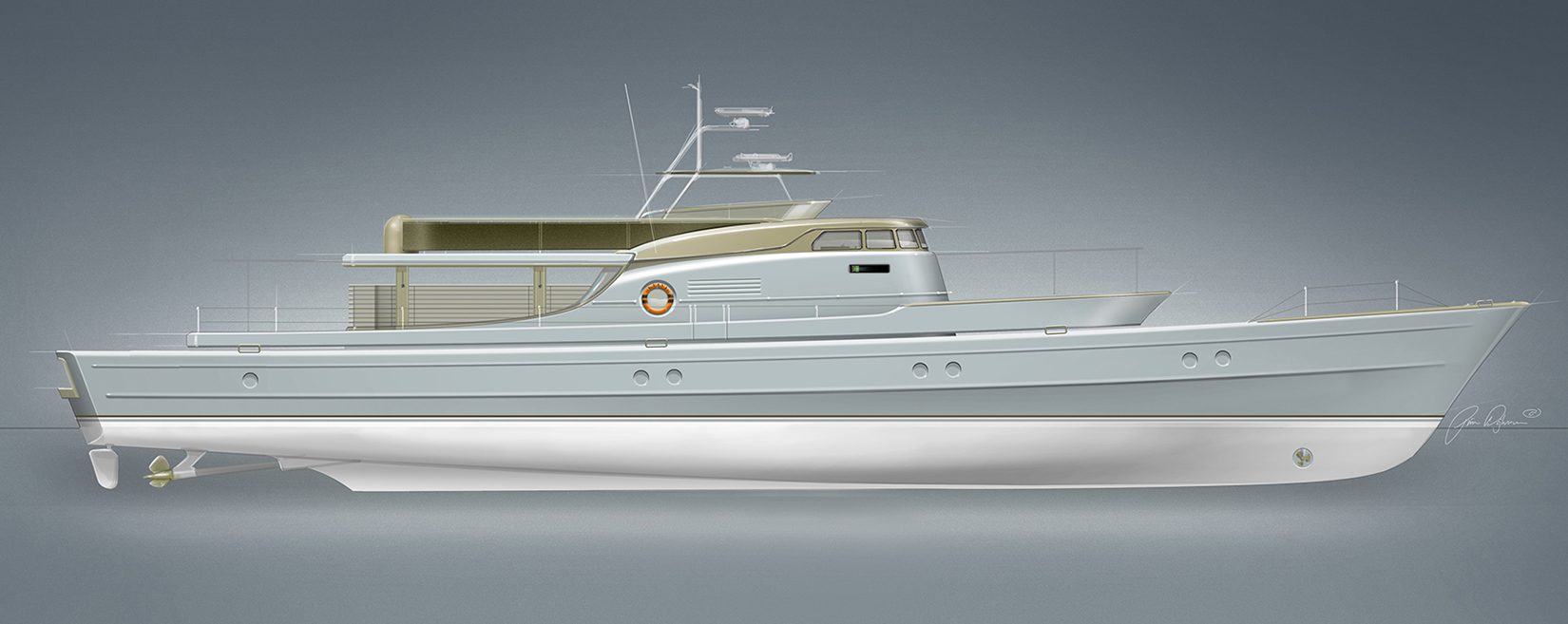
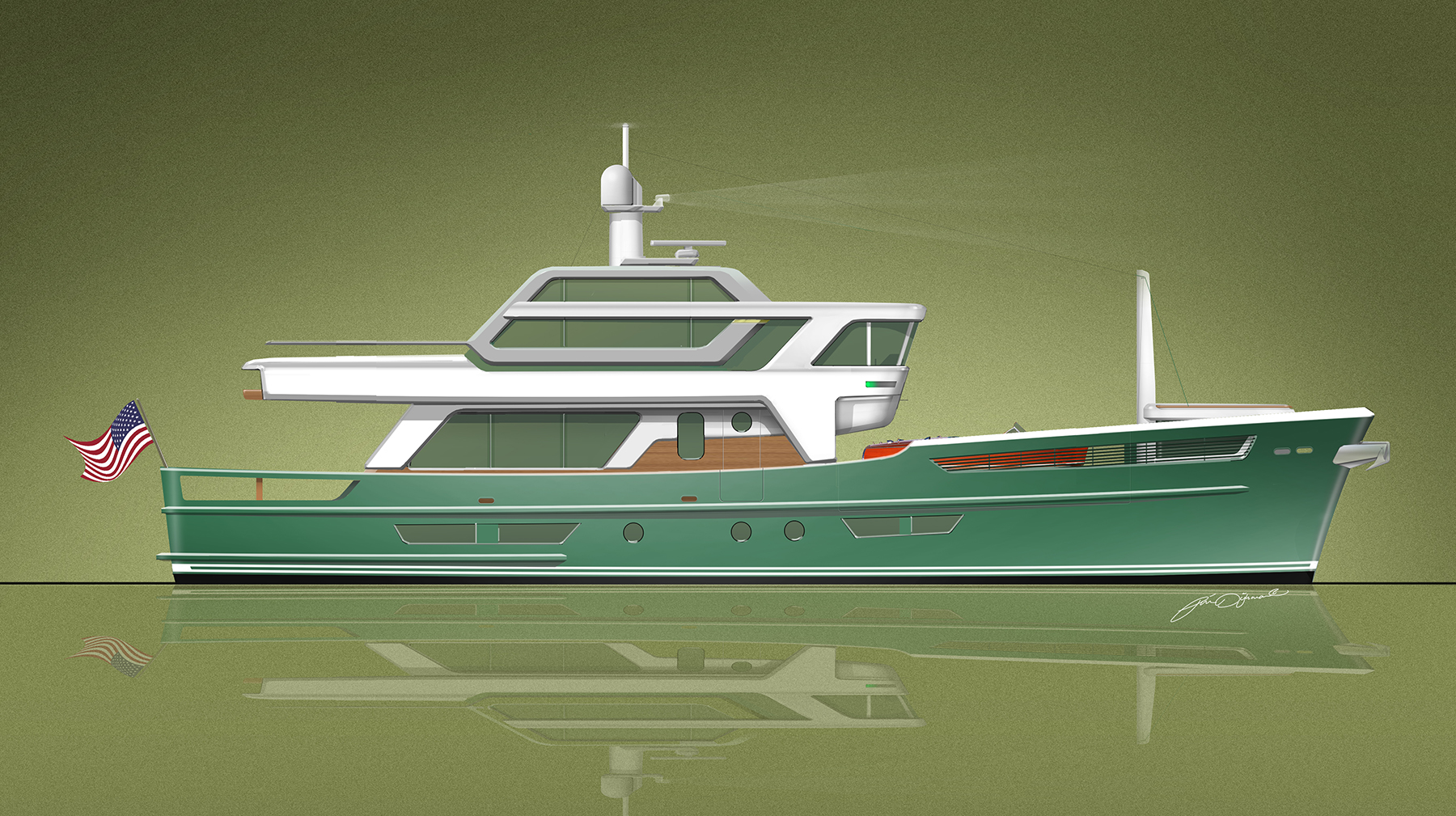
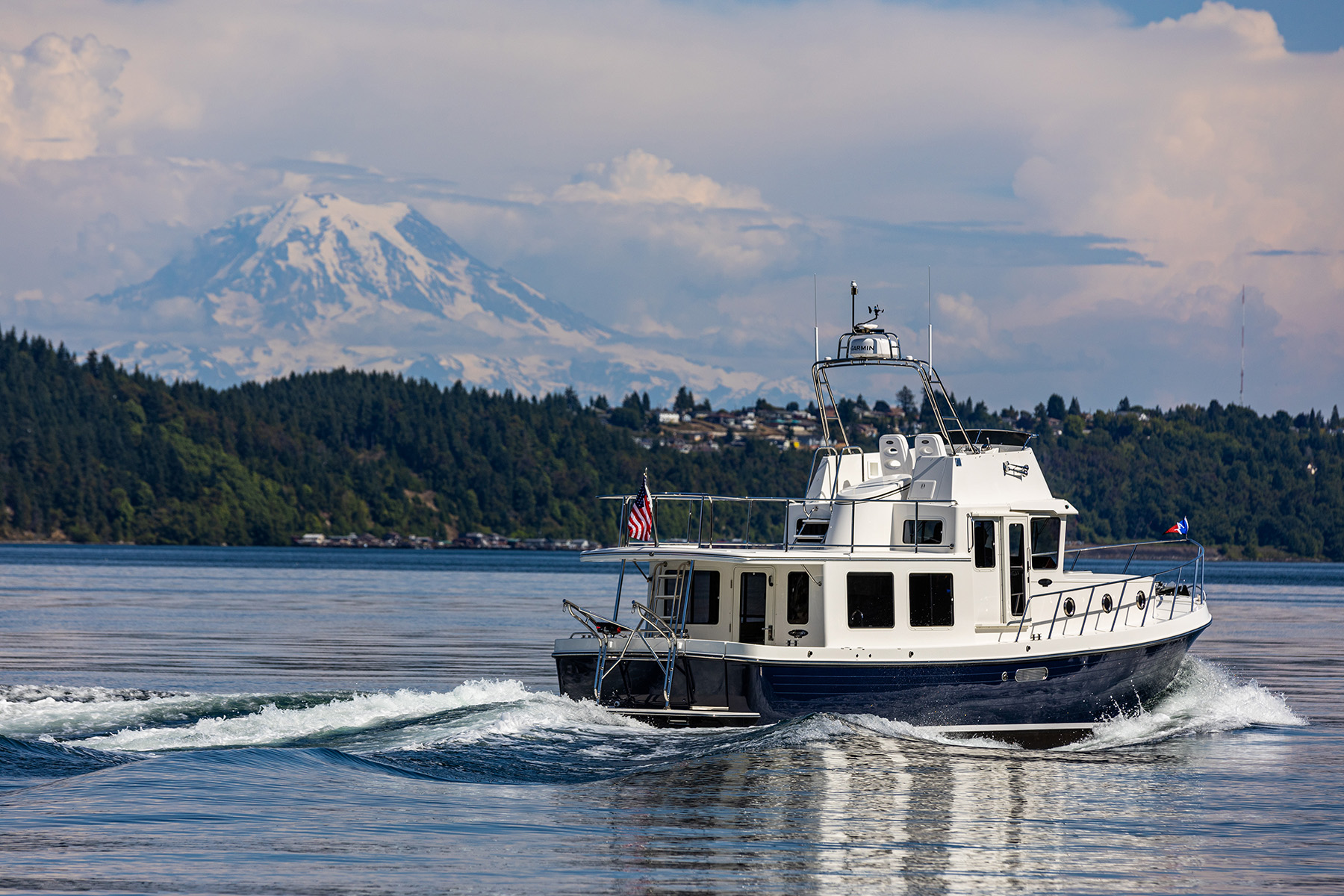
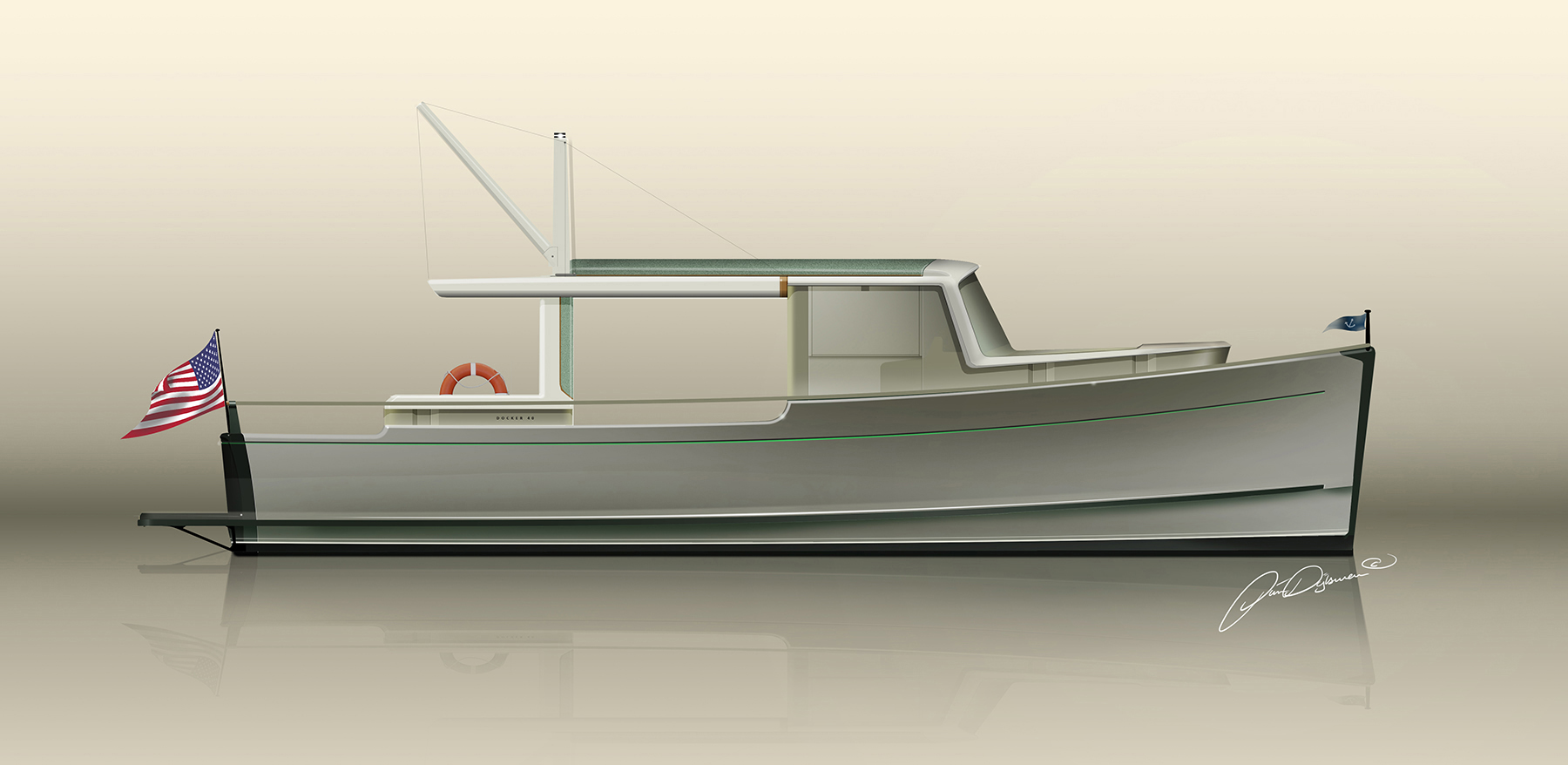
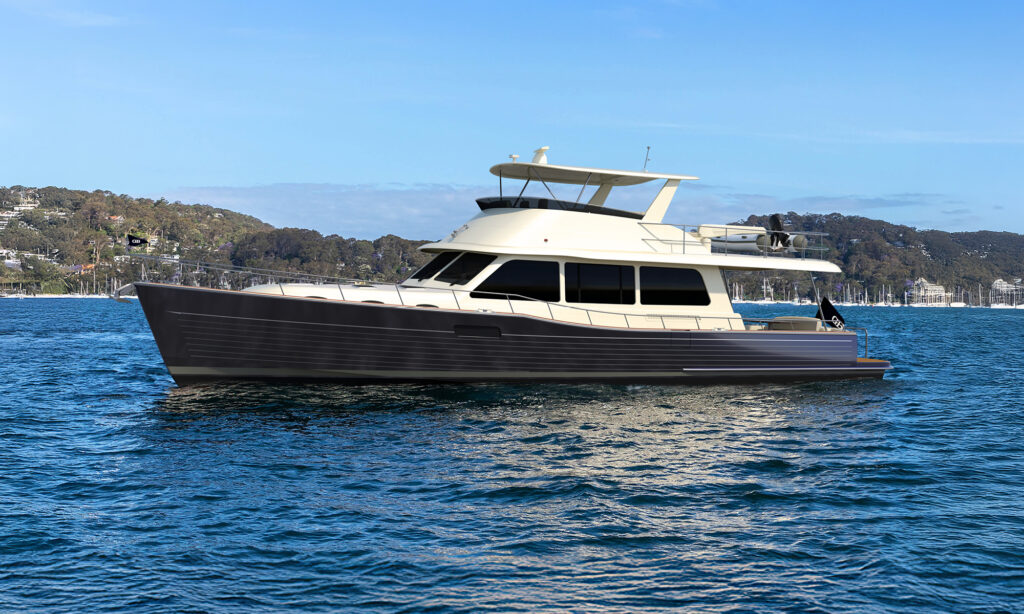
The company continues to expand its model lines. New boats include a Grand Banks 62 that splashed earlier this year, with 70- and 73-foot models on the drawing board, as well as a 42-footer. Palm Beach is following suit with two models over 100 feet and a 70-foot flagship for its GT series.
GB Marine Group now stewards one of the world’s premier and most advanced recreational boatbuilding facilities, able to build larger yachts at a faster pace with the same semicustom approach.
The only question is whether everyone will be able to keep up with whatever Richards envisions next.
This article originally appeared in the July/August 2025 issue of Passagemaker magazine.