

Springtime weather in the Northeast is wild. One week, the docks of my yacht club in New York are frozen in an 18-degree grip. A few days later, it’s balmy, 70-degree sunshine.
The warm day proved perfect to haul out and store our 17 trusty de-icers, the unsung heroes that quietly keep the waters around our boats ice-free all winter. As “Captain Ice Eater,” my mission was to rally a dozen hardy winter wet storage members to haul the 60-pound, sludge-covered units out of the water, power-wash them and cart them uphill to their summer resting place.
It was a well-oiled process—until a thump shattered the rhythm. One of our members had tripped over a cleat and landed with outstretched arms. His wrist, now with golf-ball-sized swelling, was a painful reminder of how easily mishaps happen on the docks.
Boating life is filled with movement: walking, bending, lifting, twisting. Most of the time, we don’t think twice about it. But all it takes is one wrong step, an unexpected slip or a miscalculated lift to cause a strain, sprain or fracture.
A sprain involves the ligaments that connect bone to bone, while a strain affects the muscles. A fracture is when the bone itself breaks.
When an injury occurs, the body reacts by flooding the area with blood, causing swelling, stretching pain fibers, and forming a visible knot beneath the skin. That’s where the PRICE method comes in handy: Protect the injured limb. Rest the area, then apply Ice to reduce swelling. Compress with a bandage for support. Elevate the limb to help prevent further swelling.
Know Your Fractures
Fractures vary in severity. A greenstick fracture is a partial crack, often seen in children whose bones are more flexible. A spiral fracture twists around the bone, usually from a rotating force. A comminuted fracture shatters the bone and often requires surgery. A transverse fracture runs clean across the bone in a straight line. A compound fracture is the most severe, where the bone pierces through the skin—a true medical emergency.
Beyond PRICE, immobilization is key. If you suspect a break, resist the urge to realign the bone yourself. Improper handling can make things worse.
Instead, splint the injured area above and below the break, and watch for signs of shock, such as pale or sweaty skin, rapid breathing or confusion. Lay the person down with the head slightly lower than the trunk. Elevate the legs, and place a blanket over them. If needed, call 9-1-1 or issue a mayday.
Splinting Basics
Splinting isn’t just for fractures. It helps stabilize sprains, strains and dislocations as well as preventing angulation, protecting the area, promoting pain relief and allowing healing to begin.
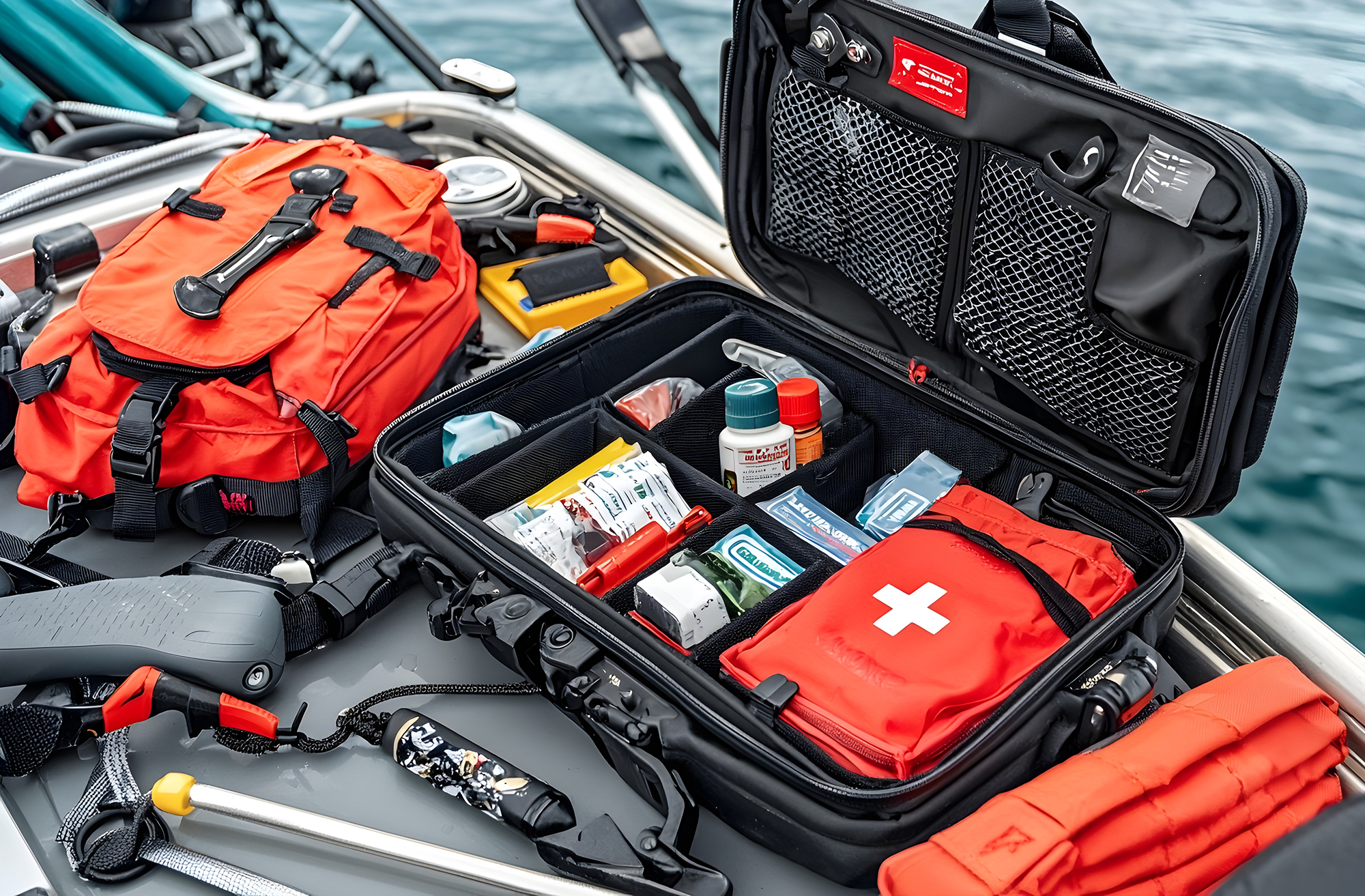
A well-stocked onboard emergency medical kit should include cotton padding, elastic bandages, a foam-covered aluminum splint, and heavy-duty scissors.
To splint an injury, first check circulation and sensation by pressing on the nail bed. It should turn white and return to pink in less than three seconds. Next, size the splint on the uninjured limb first. Wrap the injured area with cotton padding to prevent pressure sores, then apply the splint, and secure it with an elastic bandage. Then, recheck circulation.
Proper splinting must allow expansion of the underlying tissues while providing support of the splinted extremity. Keep the limb elevated, and apply ice to reduce swelling. If fingers or toes turn pale or numb, then loosen the wrap and seek medical attention.
There are many types of splints with demonstrations found on the internet. Search for “volar” with wrist and thumb fractures; “ulnar gutter” and “thumb spica” for the wrist, fingers and thumbs; “long arm splint” for forearms and elbows; and “posterior leg splint” for ankles and feet.
Complications and Aftercare
Splinting mistakes can make matters worse. Too little, improperly and irregularly applied padding may cause pressure areas beneath the splint. A wrap that’s too tight can cut off circulation, while one that’s too loose won’t stabilize the injury properly. Sharp edges can irritate or cut the skin. A tight application or failure to allow for underlying injury swelling could lead to serious complications.
Once the splint is applied, keep the extremity elevated, apply ice packs, and administer an appropriate analgesic medication. Regularly recheck circulation and motor function. Seek medical attention immediately if swelling increases, pain worsens, or movement and sensation decrease.
Learning how to handle injuries is as essential as tying a proper bowline. Whether it’s a twisted ankle or a full-blown fracture, knowing how to respond can mean the difference between a minor inconvenience and a major emergency.
This article originally appeared in the July/August 2025 issue of Passagemaker magazine.