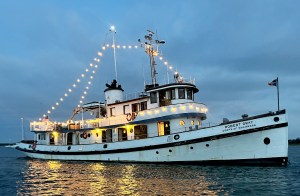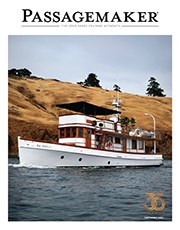


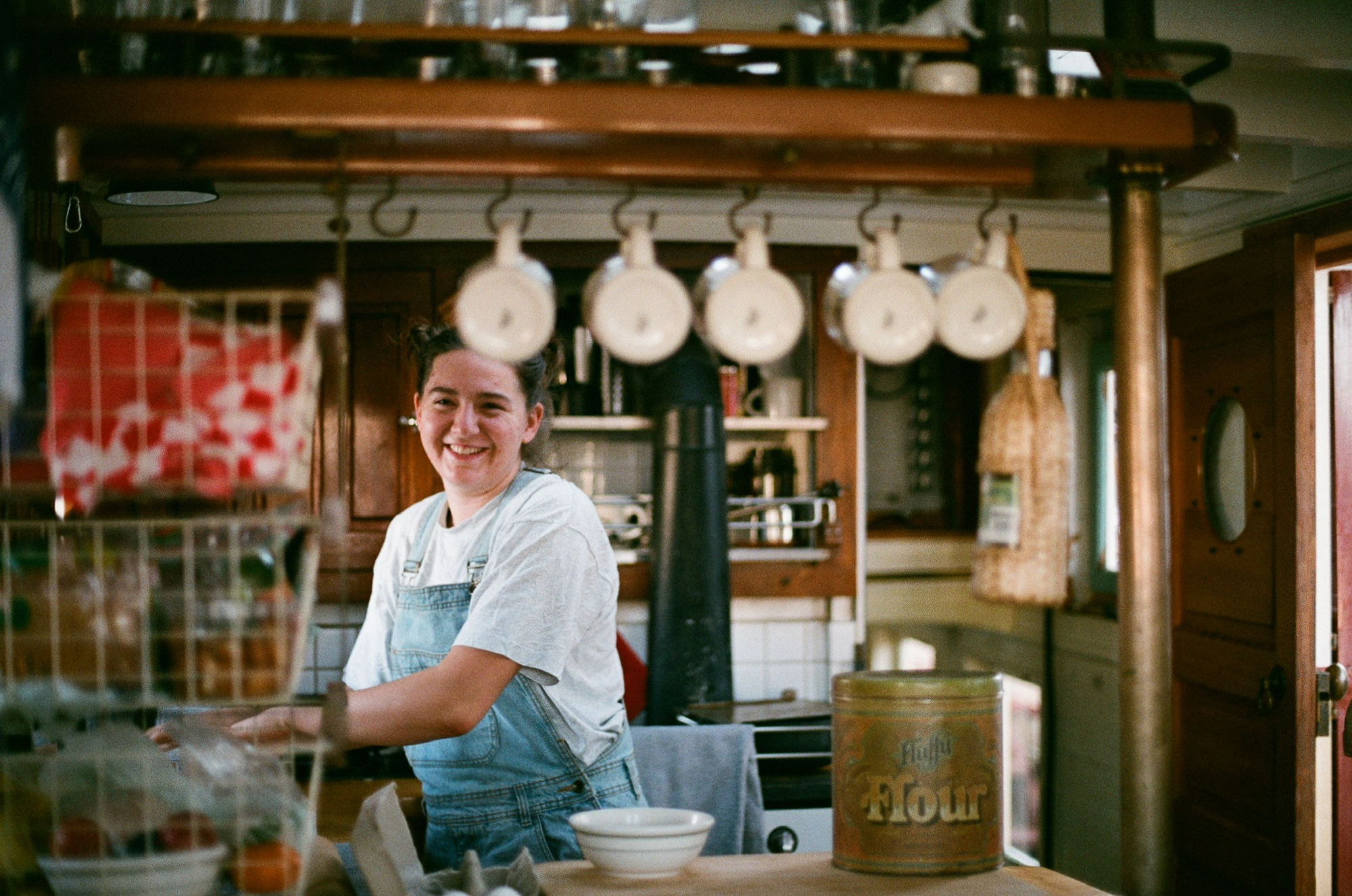
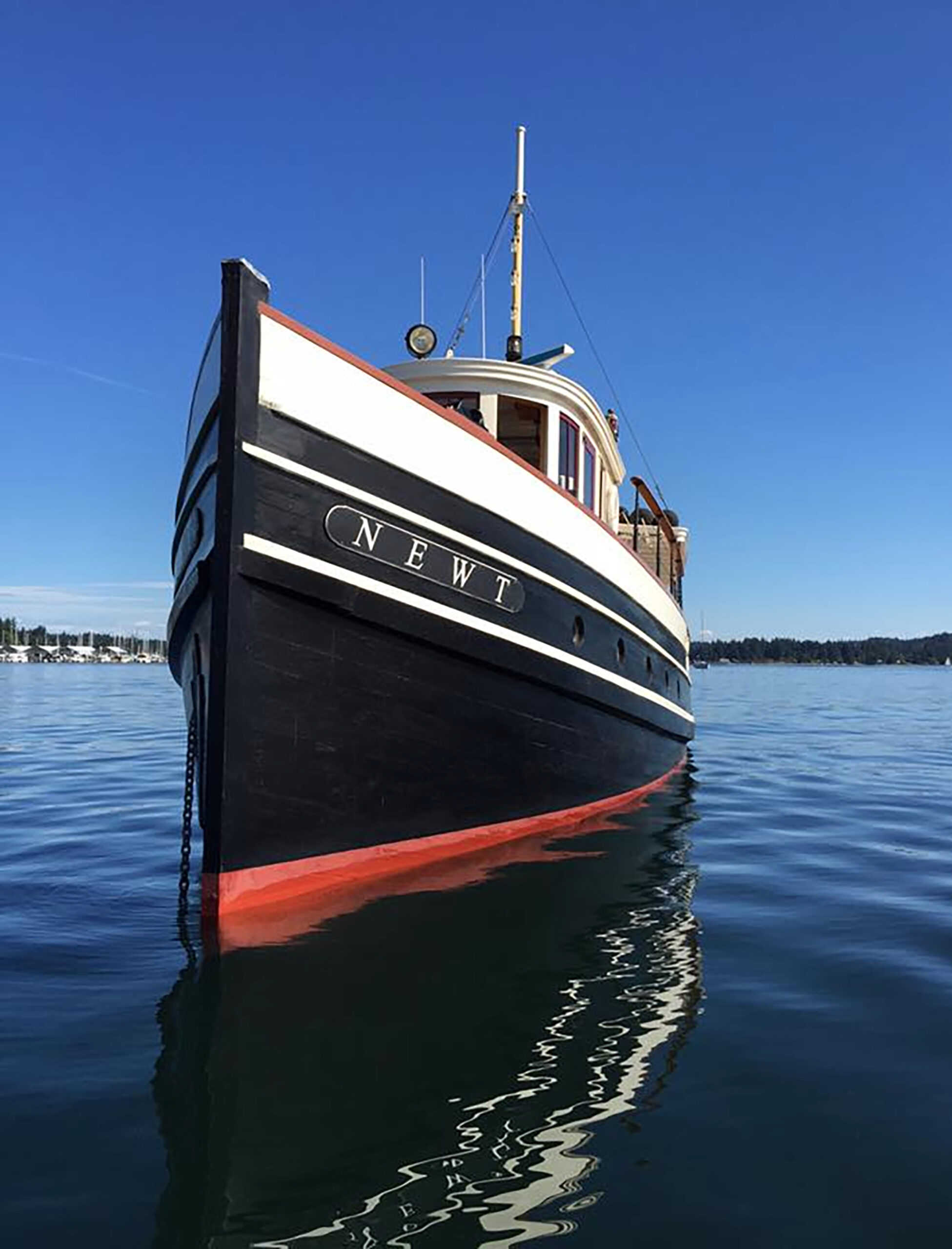
Newt, originally launched as tugboat Arrow #1 in Astoria, Ore., in 1924, has a warm, welcoming interior—especially when owner Eric Rasmussen and his daughter, Clara, greet you with steaming coffee and freshly baked pastries on a cold and rainy Seattle day.
For 24-year-old Clara, Newt is her childhood home. She and her 18-year-old brother spent their formative years aboard.
“I definitely learned to appreciate how special it was to live in this space [and] be part of the history,” Clara says.
How It Started
Eric is a shipwright with a wooden boatbuilding background who spent much of his career at the now-shuttered Jensen Motor Boat Company on Lake Union in Seattle.
“Clara was also not only in the magical Newt world, but she lived on an old-timey boatyard. Jensen Motor Boat was a pretty unique place also. She grew up in both those places,” Eric says.
“It was lovely,” Clara adds.
For the past five years, he has worked at Snow & Company, a Seattle-based custom build and refit yard, on a variety of jobs. His latest ongoing project: restoring and maintaining an icon of the area’s waterfront, the steam-powered Foss 300 (known as “Boss”) barge crane. The machine may be from another era, but it still works.
Eric’s grandfather, who emigrated from Denmark, was a sailor and coastguardsman. “He was shipwrecked, and he worked for the Coast Guard and all kinds of stuff,” Eric says. “Then he had a number of charter boats in Seattle. There’s a lot of boating in that generation.”
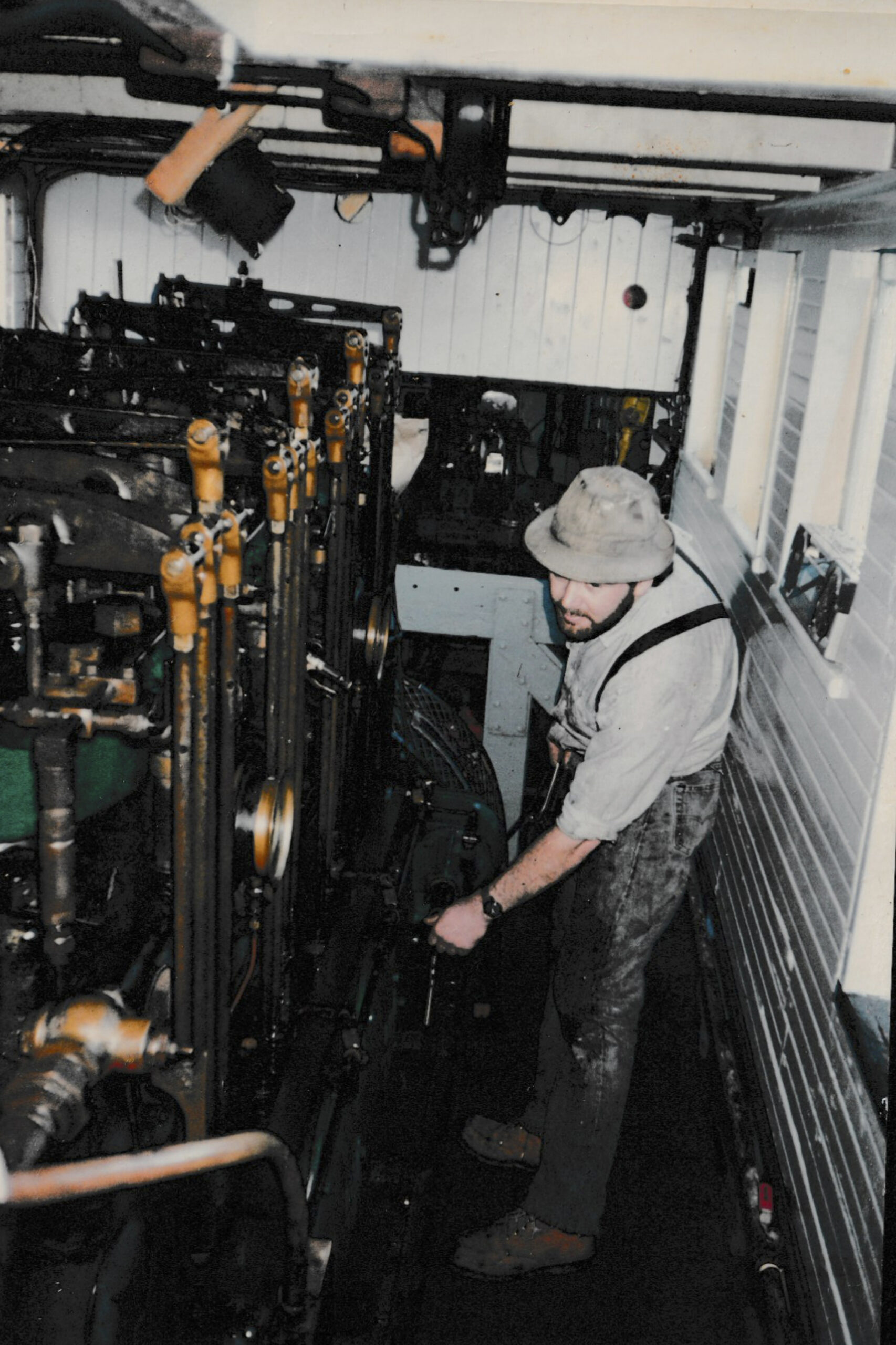
For his part, Eric was drawn to the historic museum ships of the local nonprofit Northwest Seaport. He signed up for a Sea Scout troop the nonprofit sponsored. He worked on the Arthur Foss—currently the nation’s oldest tugboat—and her original 700-hp Washington Iron Works diesel.
“[That] perked my interest in heavy diesels,” Eric says.
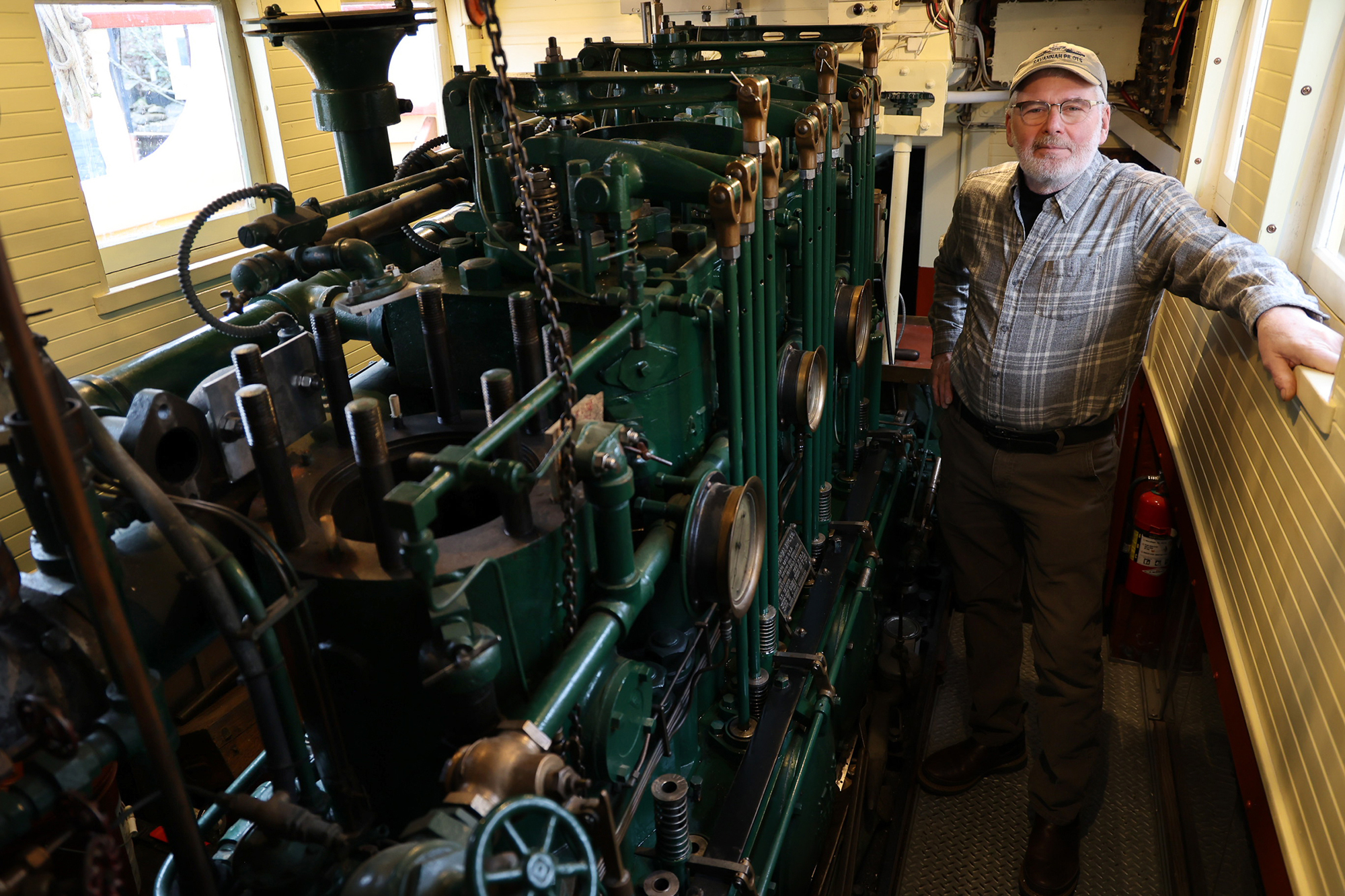
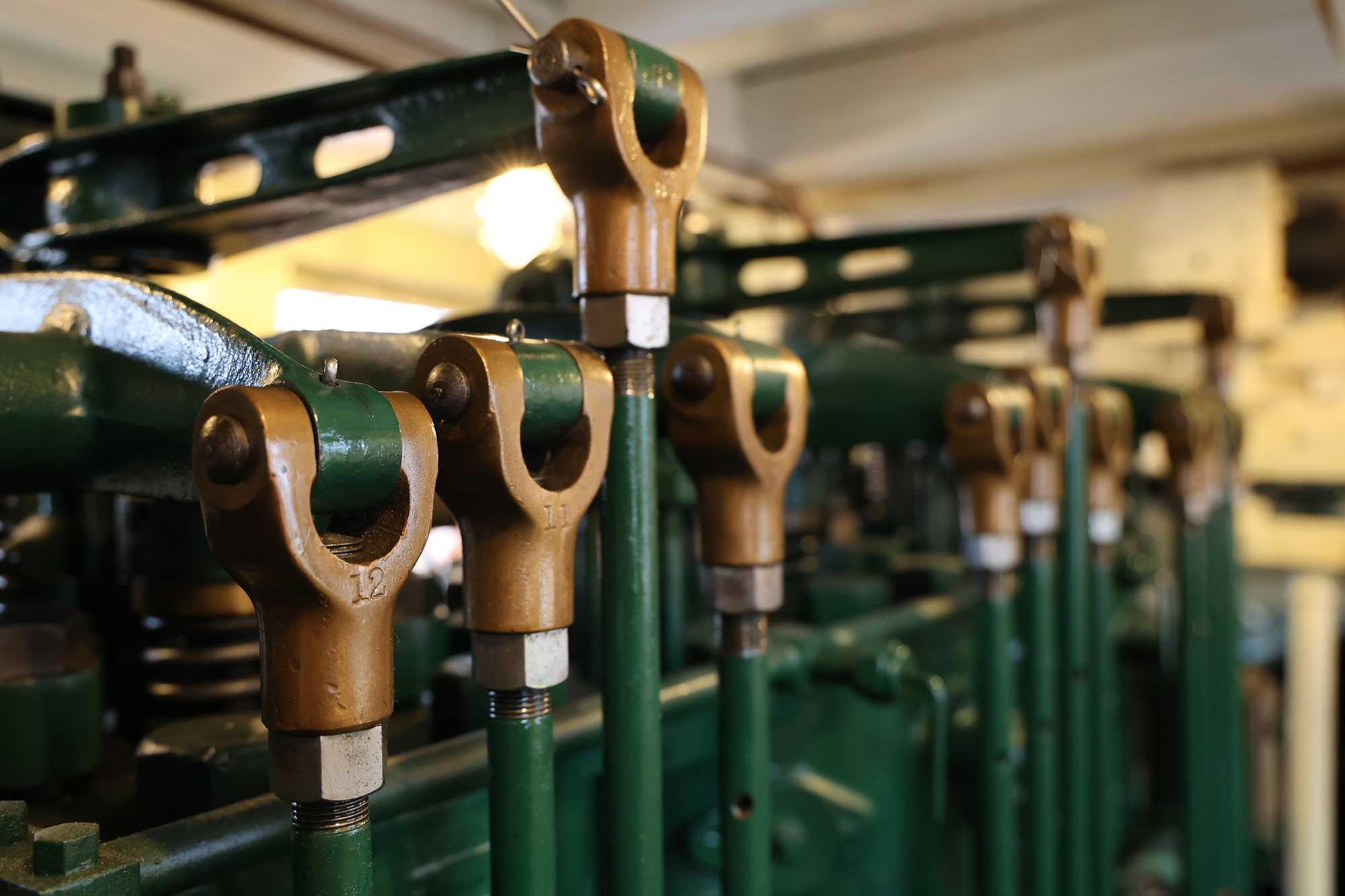
The interest grew into co-ownership of another vintage tugboat with a 60-hp Atlas for a few years. His first sight of Newt was on the cover of a magazine. The converted tugboat was for sale, and its 110-hp Atlas appealed to his tastes.
“At the very bottom it said: ‘If you’re not knowledgeable about boat repair, please don’t call,’” Eric recalls. “My buddy said, ‘This sounds like the boat for you.’”
A day trip to Vashon Island led to a purchase. “We got it running,” he says. “The boat itself sat in Judd Creek there for years. I guess it was kind of a local legend. Kids called it ‘the pirate ship.’”
He owned the boat for five or six years before another major rendezvous with destiny: He started dating his future wife, Burke Museum archaeology collections manager Laura Phillips.
Eric says Laura was always interested in his restoration ambitions for Newt. She helped him kick-start the refit: “Laura said to me, ‘Are you going to fix it up? Or are you just going to fiddle around with it? If you really want to fix it up, I’m willing to be a part of it.’”
They moved aboard on New Year’s Day in 2000. “We went out for a little New Year’s cruise on that night,” Eric says, and simply decided to stay aboard. Clara was born a year later.
“It was a great childhood,” Clara says of her first 10½ years. “Everyone always wanted to come over.”
Newt’s Finest Features
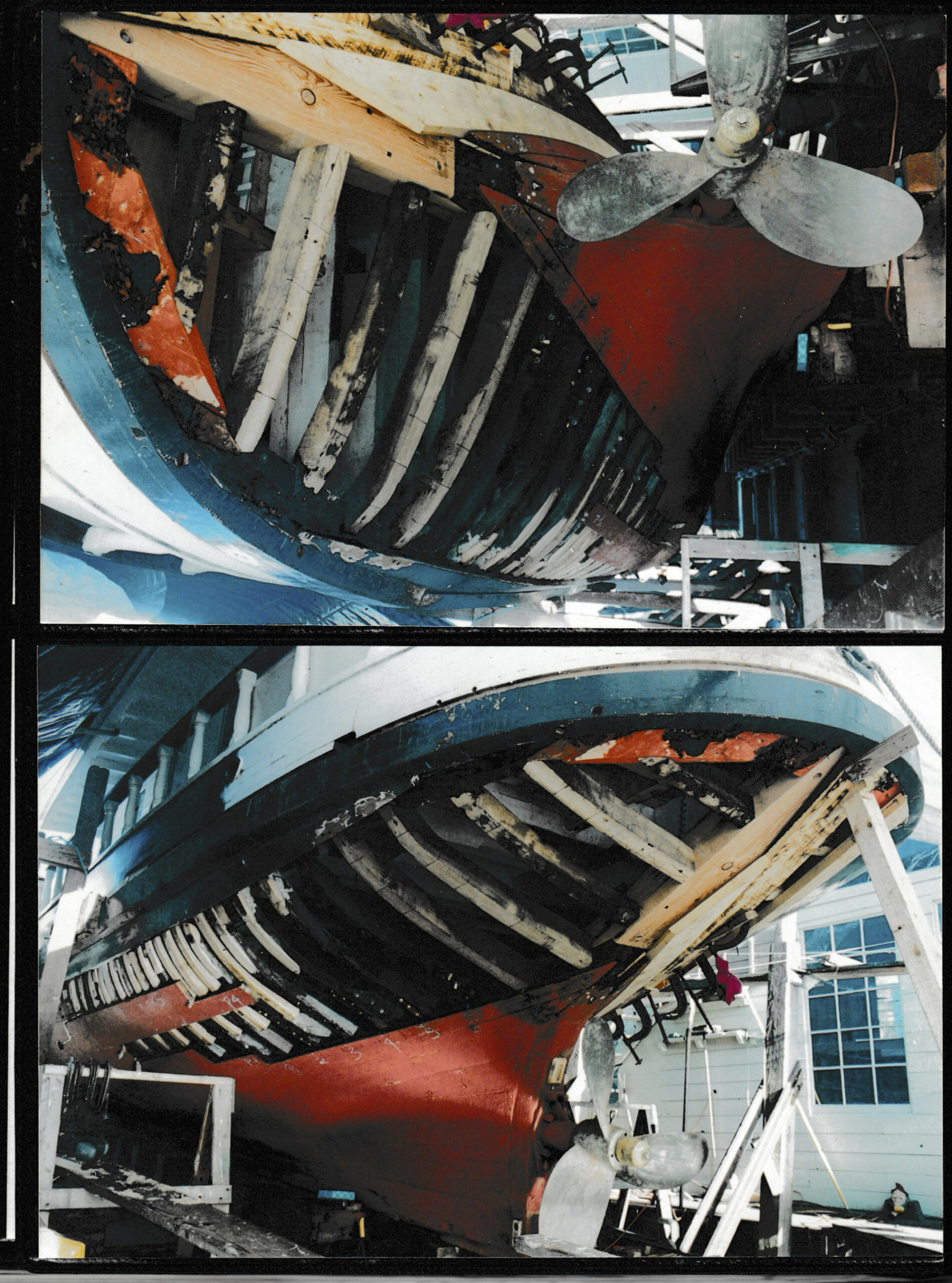
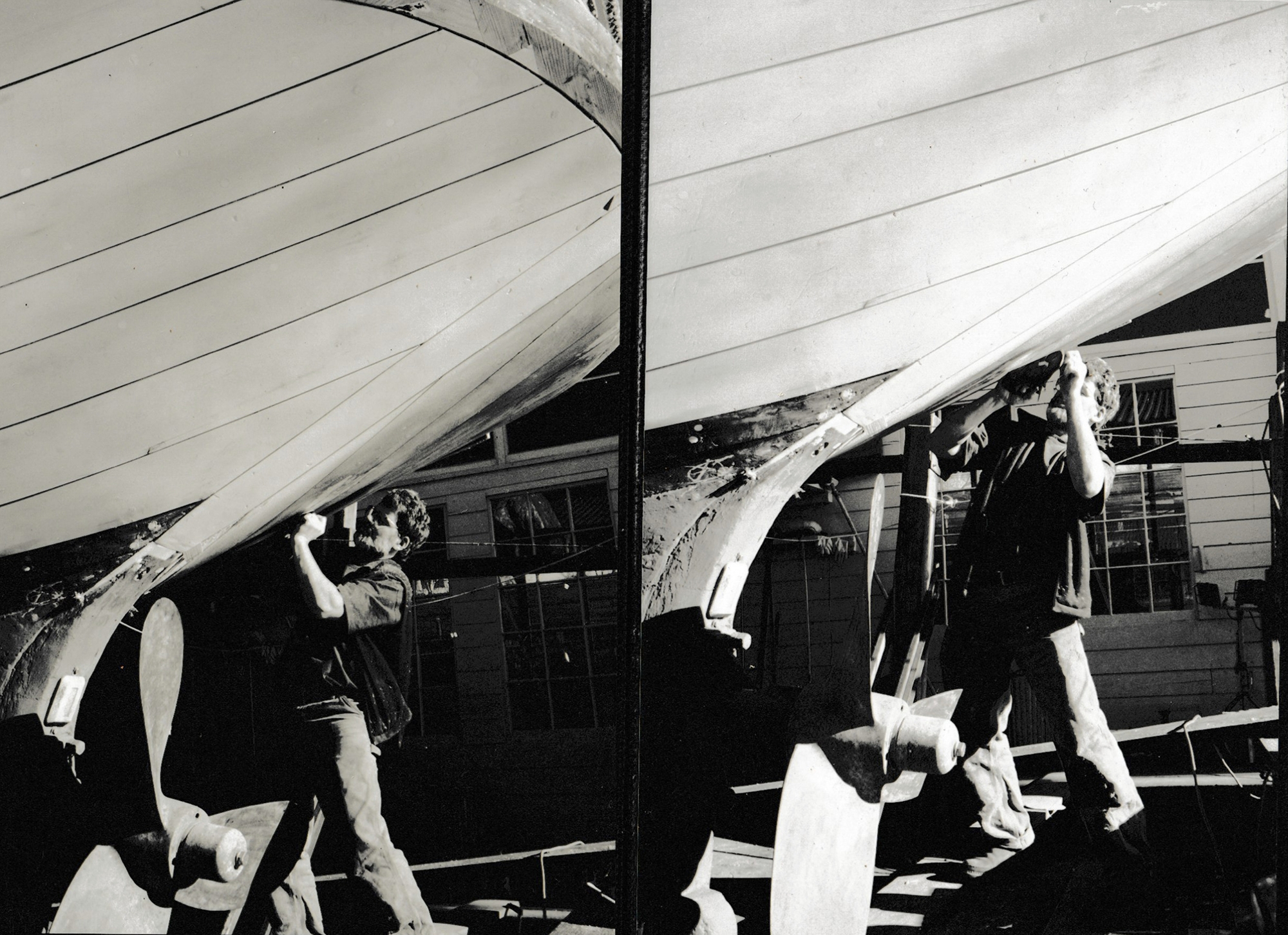
Eric says Newt’s construction includes a Douglas fir keel and oak framing—probably Oregon oak. The bottom planking is fir up to the turn of the bilge, and then it’s Port Orford cedar from there. “The original decks, we don’t know, because it’s on its third or fourth deck now,” he says. “Probably fir, I’d guess. Plank fir originally.”
Today, Newt is far more of a liveaboard space. A horseshoe-style seating arrangement with a table is built into the aft deck. The rim timbers, guardrails, planking and more have been replaced at least once. The current iteration was completed just in time for Newt’s 100th birthday party last year.
“Like one week before,” Clara says with a chuckle.
One of the major differences between Newt and Arrow #1 is the cabin. “When we got the boat, it had wide side decks,” Eric says. “There was no afterdeck [and] the inside was so narrow you couldn’t do much.”
He decided to sacrifice the side decks to expand the cabin 18 inches on either side, making the interior full-beam.
“With the wider cabin, we could put in the windows [and] reconfigure it to make it more usable space,” Eric says.
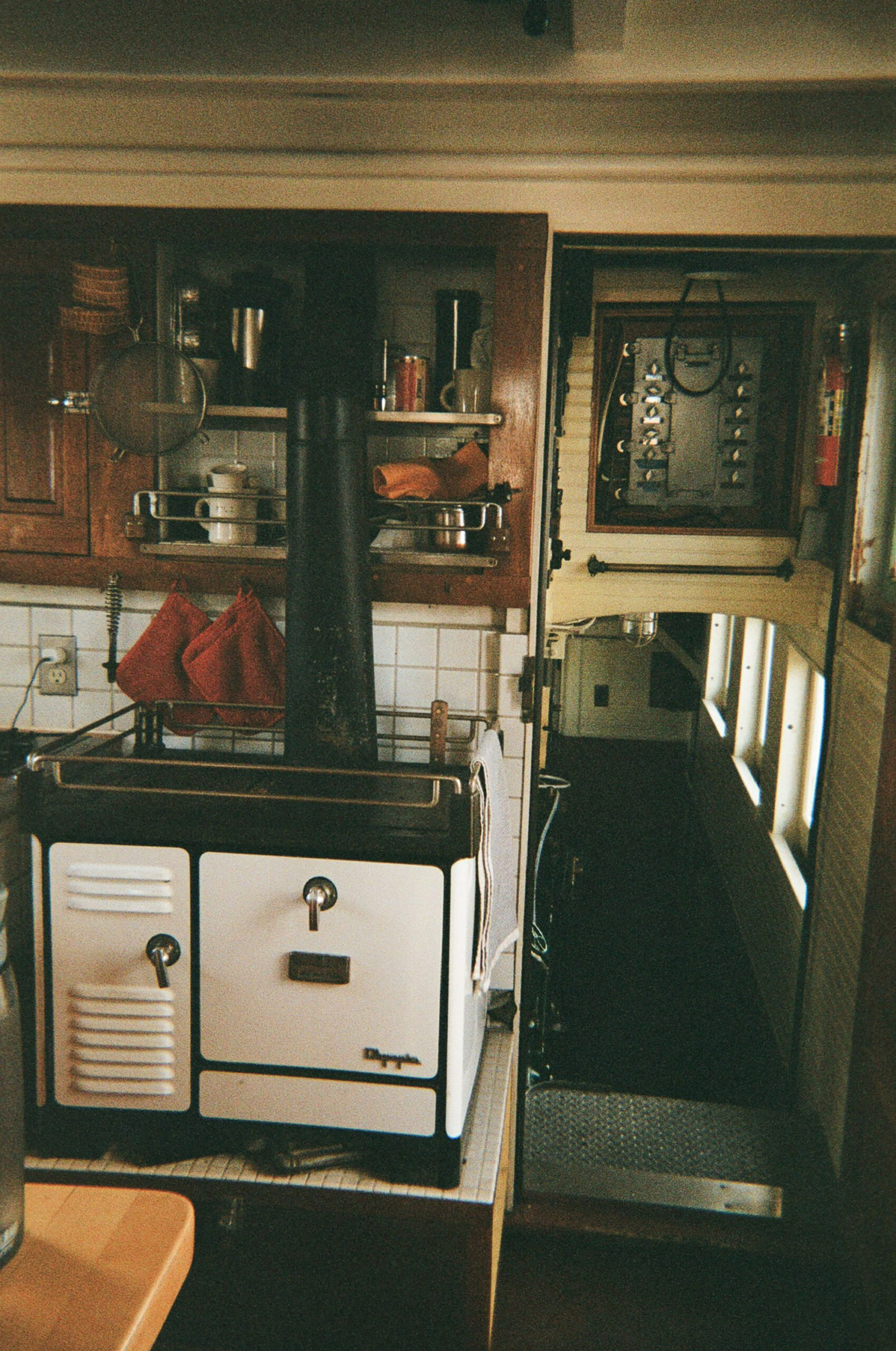
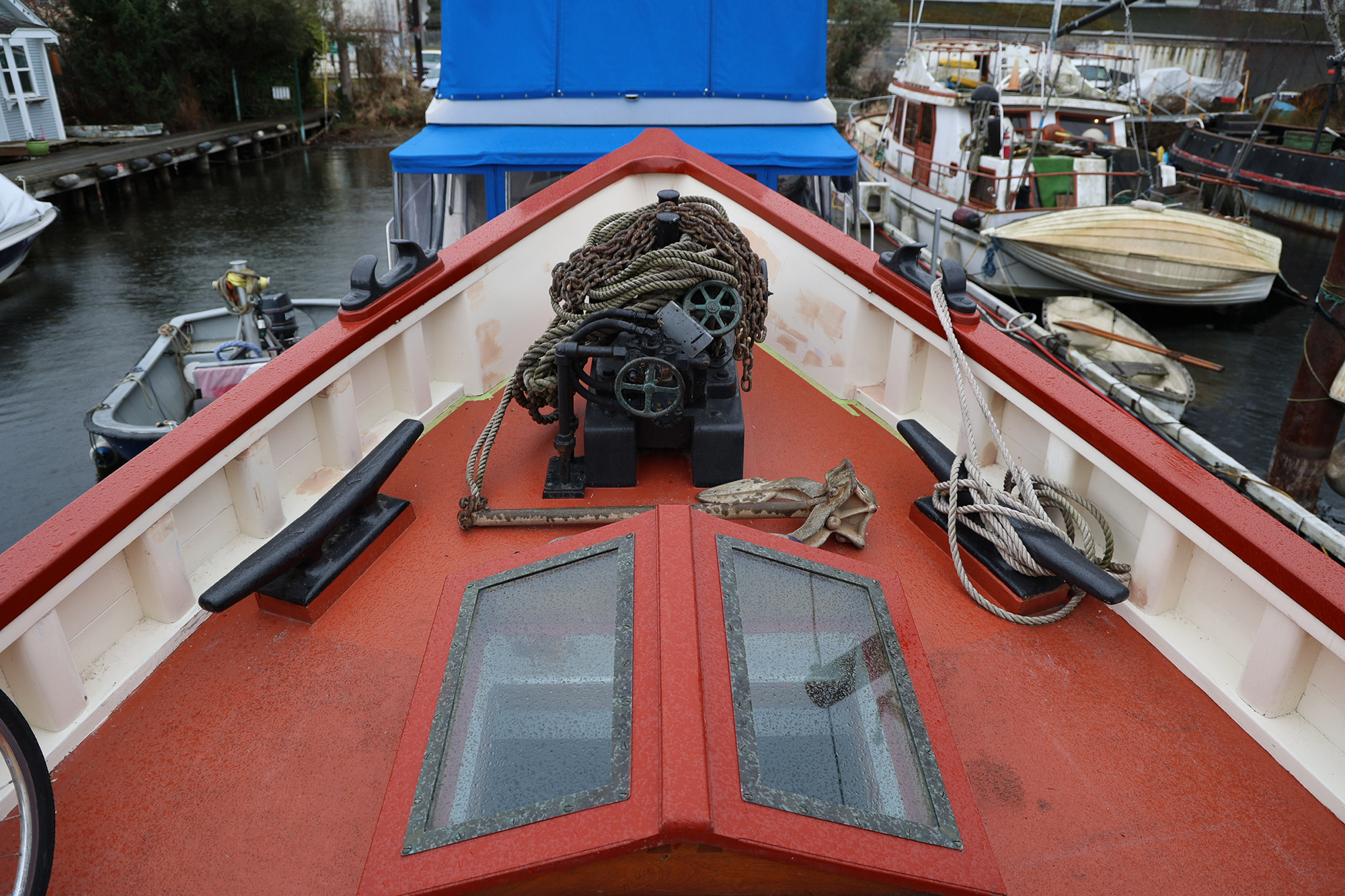
The boat’s original layout was on a single deck, so they raised the foredeck to increase living space below. Now, it’s possible to walk from the stern through the salon and galley before descending a few steps into the engine room amidships. The 110-hp Atlas, in all its metallic glory, takes up most of that space.
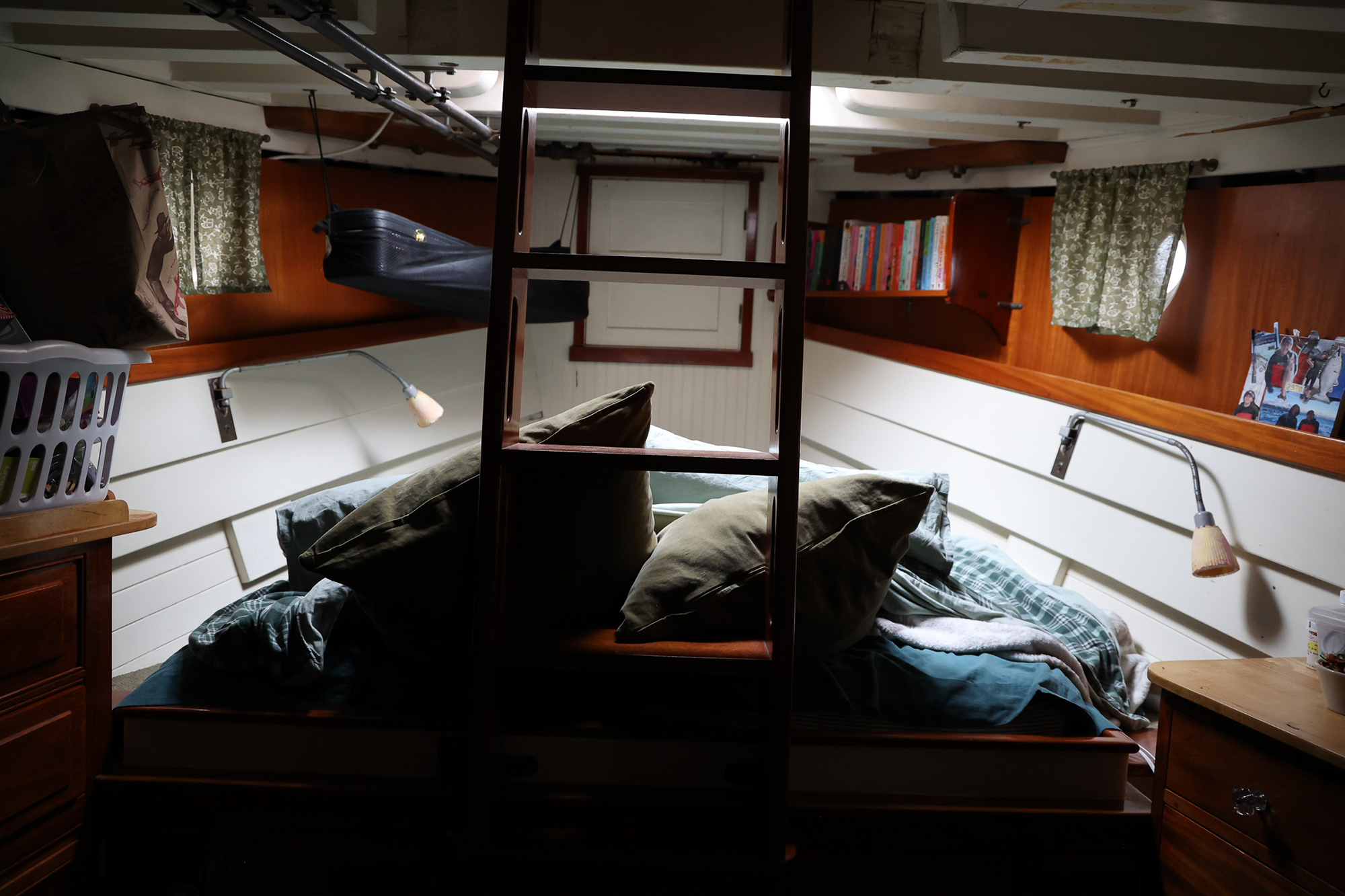
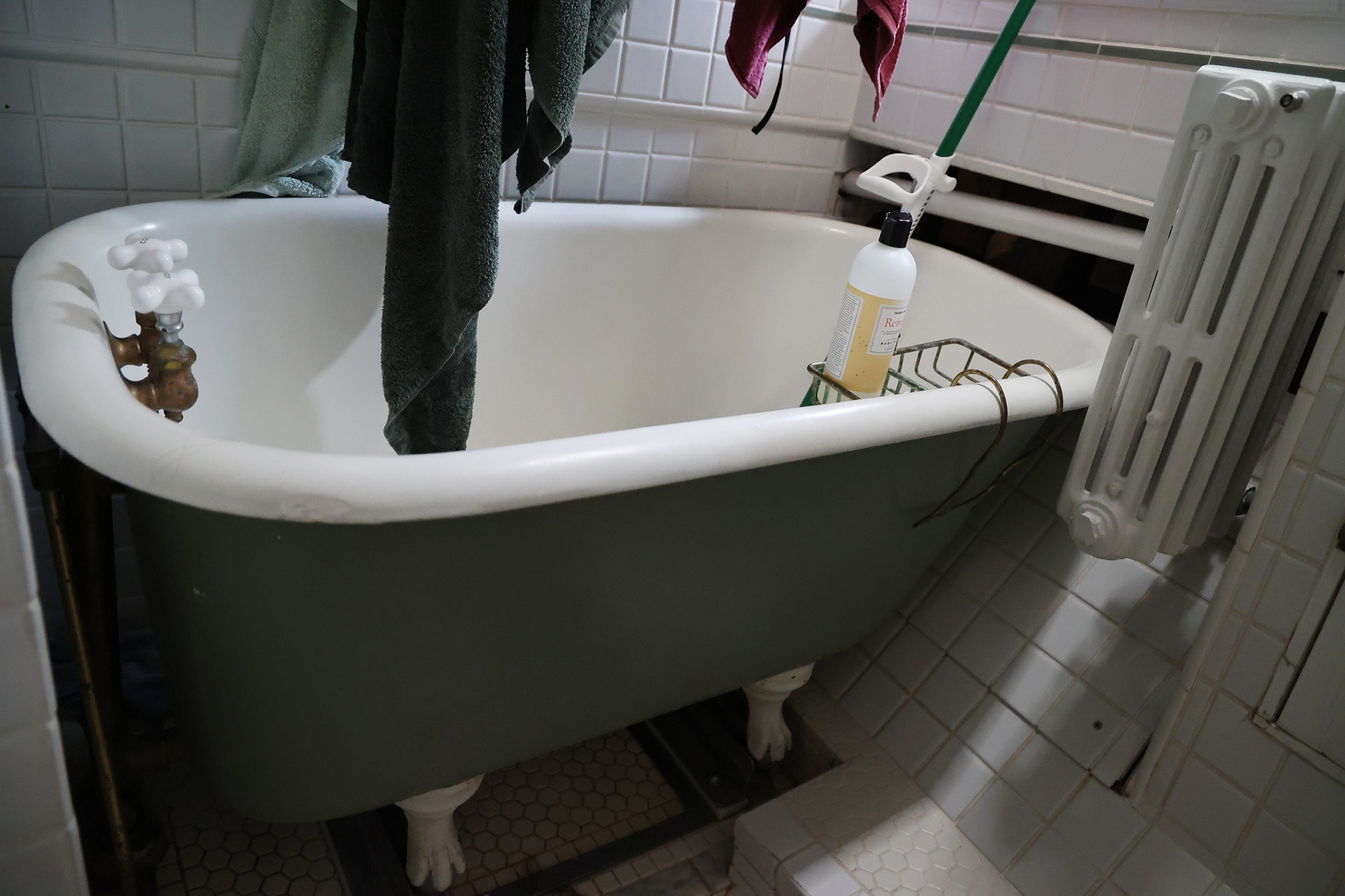
From the engine room, there’s access to the master stateroom forward. A skylight, another recent addition, helps illuminate a desk and bookshelves. Eric built all the cabinetry. There’s a split-head arrangement with a tiled port space that houses a clawfoot bathtub.
Access to the wheelhouse is via ladders from the engine room, and aft from the galley. Windows are all around for visibility.
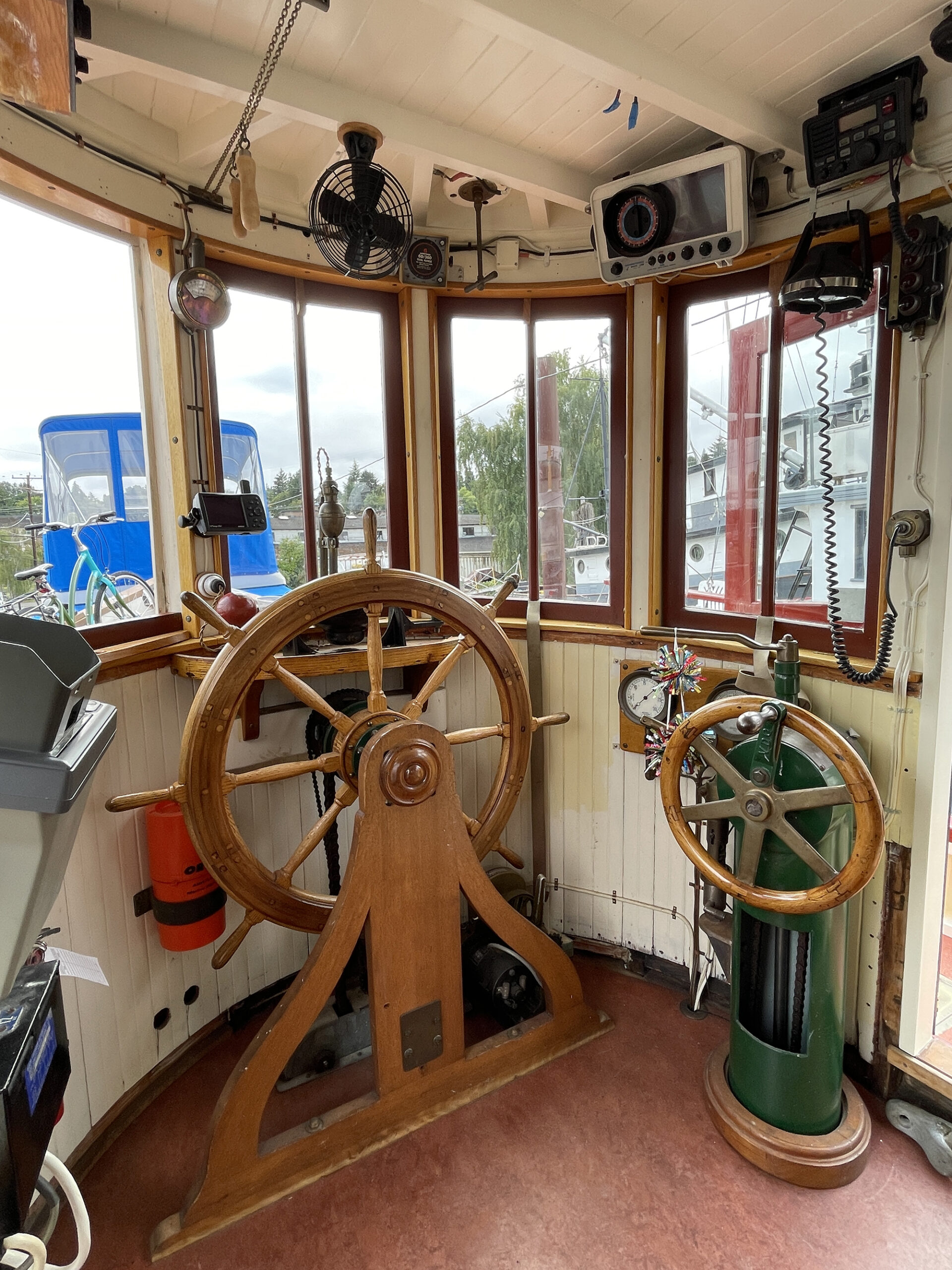
“All these windows are original. The doors are original. This is all Port Orford cedar. It’s the same material the hull is planked with. All shop-built,” Eric says.
The wheel is also original, although the steering gear was changed to accommodate the raised foredeck.
The wheelhouse has a table with seating that converts to a berth. This was 5-year-old Clara’s childhood room. “She’d have parties or friends,” Eric says. “We’d come to read books and just be this big spread with animals and stuff.”
Newt’s previous owners are still a bit of a mystery, but Laura was able to leverage her museum contacts to get some answers. The precise launch day was February 22, 1924. The boat was built by Wilson Brothers, a yard that started as a fishing cooperative and built warships for World War II. Newt worked from launch into the 1950s as a tugboat, then was a fishing charter boat out of Westport, Wash., under the name African Queen.
“There was another guy who owned the boat in the ’60s and ’70s,” Eric says. “Somebody said he was going to bring bibles up to the Alaska natives. I read in another account that he had this A-frame dormitory barge also tied up down there. He wanted to outfit it with sewing machines and take it to Alaska and teach natives to run the sewing machines as a trade. He was going to use this boat to tow the barge up there.”
A Shaky Future
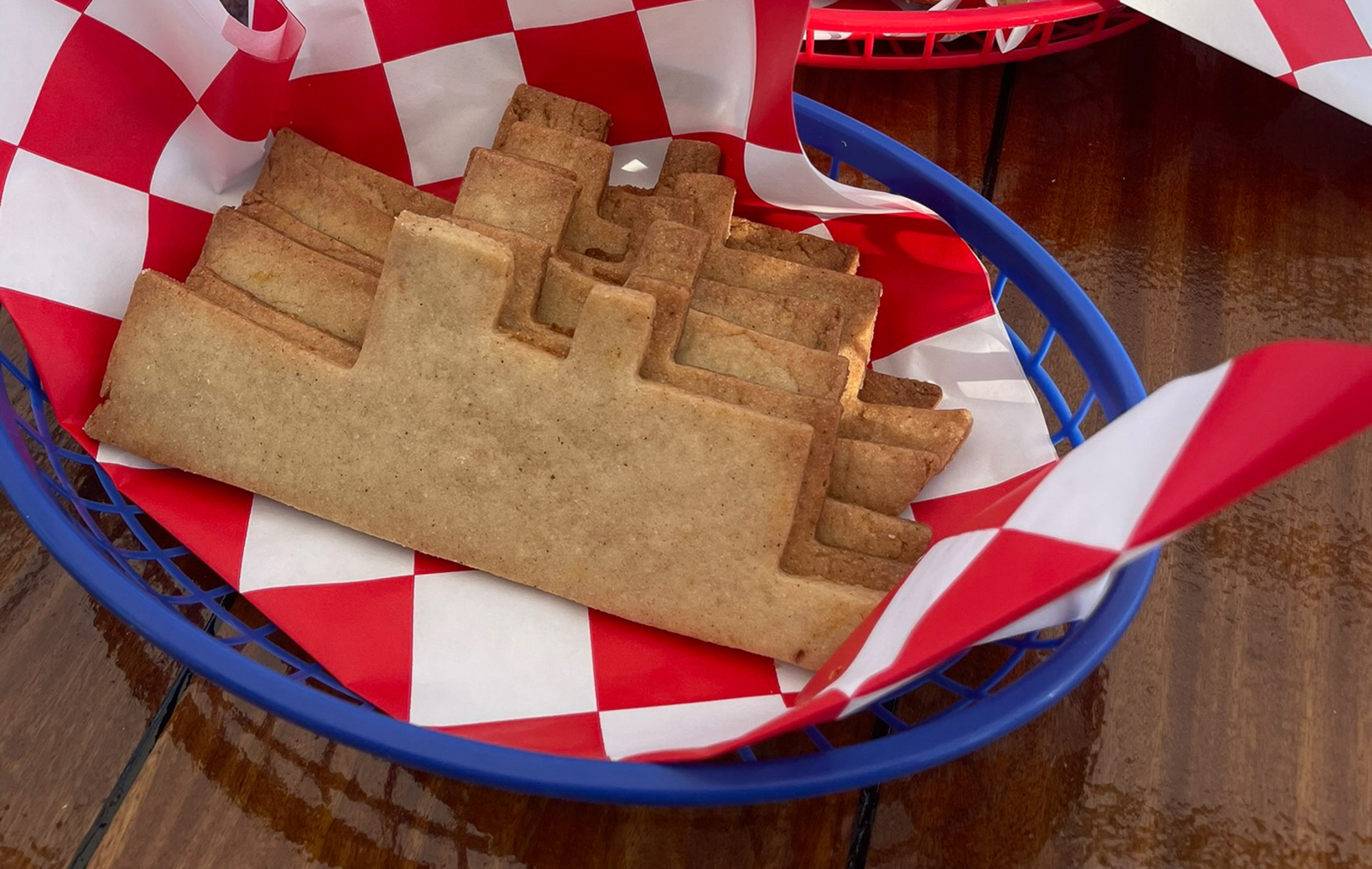
Newt’s 100th birthday party was on Labor Day 2024, a celebration of family and friends with Newt-shaped cookies, vintage attire and good memories.
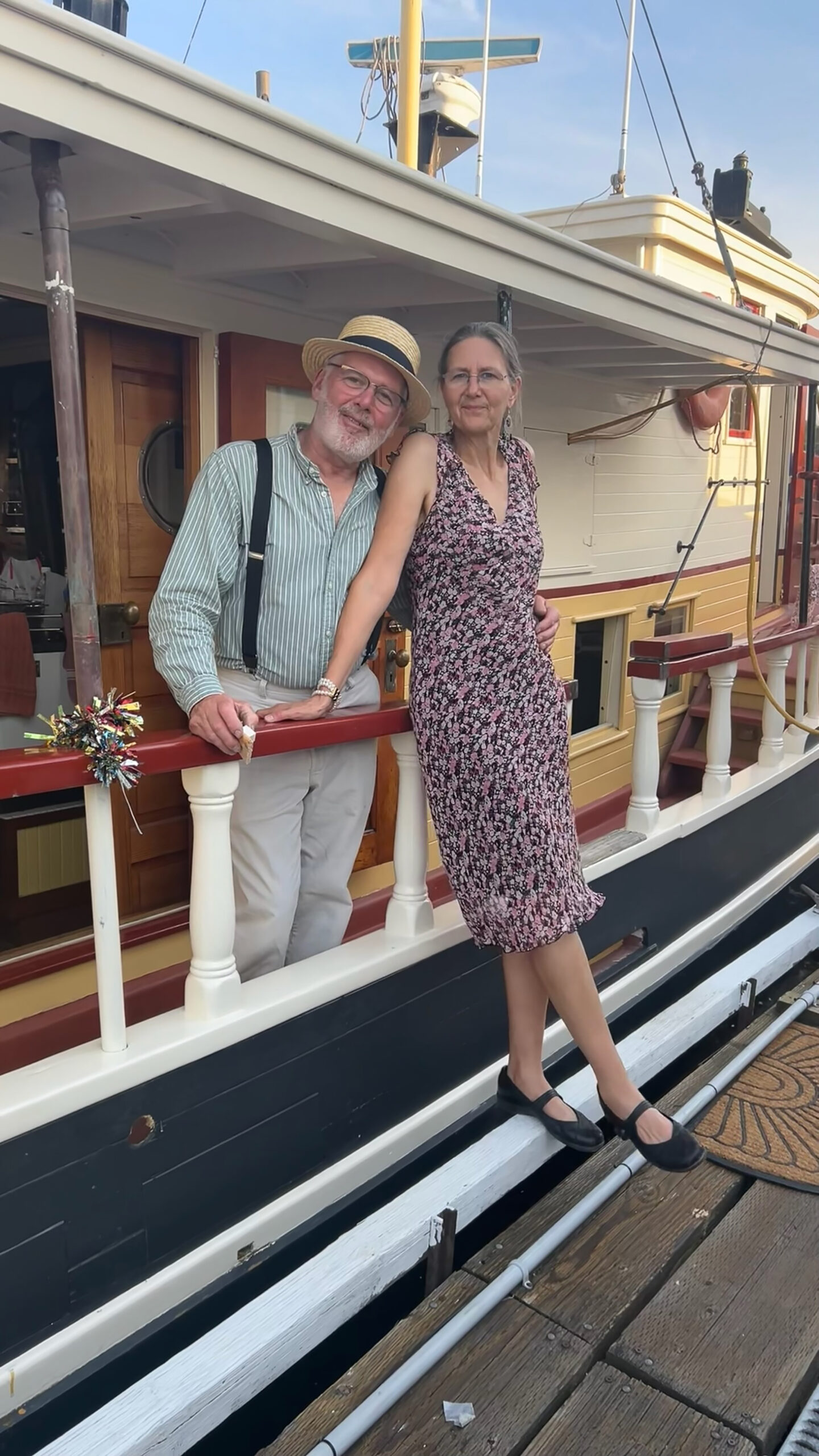
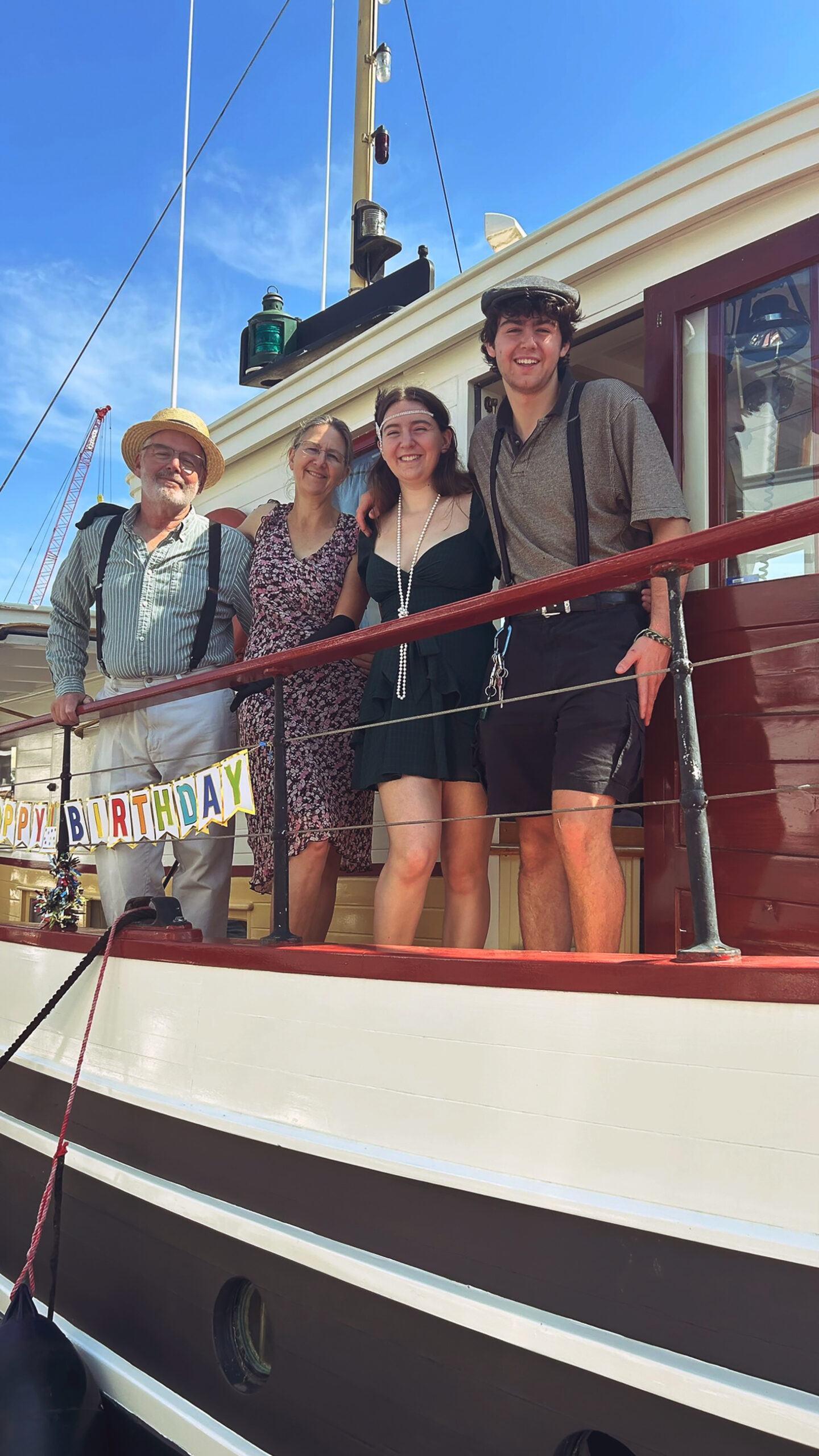
Through the years, the family has regularly taken Newt out for weekend trips, local harbor tours and other adventures, from the San Juan Islands to tugboat races in Desolation Sound.
“Our longest trip we ever took was to Desolation Sound,” Eric says. “We were getting to the point where we’re planning more ambitious trips, but now we’re having engine problems.”
He points to a missing cylinder head. “It’s always been a pretty dependable machine. Even missing a cylinder head, it’s still fairly dependable,” he says, adding that the trouble started a few years back with a coolant leak in one of the cylinders.
A local iron welder agreed to fix it, but the same problem emerged a few years later. They’d repeat the process and, over time, it’d leak again. Ultimately, Newt needs a new cylinder head, but parts for the antique engine are difficult to source.
The issue was really problematic on a trip to Port Townsend for a haulout.
“It was running pretty well. Then we got to Marrowstone Canal, and something went haywire,” Eric says. “Blowing out steam out of the top, and a chuffing noise.”
The bad cylinder head was toast. Newt made it to the yard and back on the remaining cylinders, but since then, the saga has spiraled to involve a patternmaker and multiple foundries trying and failing to cast the piece. A tricky element is that Newt’s Atlas is a rarer model.
According to Eric, Atlas made 110-, 125- and 135-hp versions. The cylinders were one piece and unlined. Atlas bore them to different sizes to create the horsepower differences.
“That’s what this engine is,” he says. “There’s no liners in the cylinders. They just happened to work with 9½-inch pistons. It’s a little esoteric, but it was a type of engine they built, and not the most common one.”
The challenge has left Eric at a crossroads about Newt.
“I’m at a point at my age, doing the maintenance on the boat was getting troublesome. If we need to sell it, well, you can’t sell antique wooden boats anymore, especially when they don’t run. A lot of boats I grew up with or knew about or admired get cut up,” he said. “You lose sleep over it.”
Eric says Clara has a particular love for the boat. She once again lives aboard and helps him with Newt’s general upkeep.
Whether Newt gets fully operational again and stays in the family or remains one cylinder down with shaky resale prospects will play out in the years ahead. But there is a lived-in magic aboard her, forged by generations of working at sea and the loving family that calls Newt home. The original Atlas is a marvel to behold. Frankly, only a master shipwright and professional archaeologist team could’ve gotten her this far in such great condition.
“We had a fantastic childhood,” Clara says. “We just had great parents who just kind of showed us the dedication and hard work that you can put into a project, and the fruits of the labor that come from that. It’s very inspirational.”
Newt’s Specifications:
LOA: 58ft.
Beam: 12ft. 6in.
Draft: 4ft. 10in.
Displacement: 36,000 lbs.
Fuel: 500 gal.
Water: 275 gal.
Engine: 1x 110-hp Atlas
This article originally appeared in the May/June 2025 issue of Passagemaker magazine.