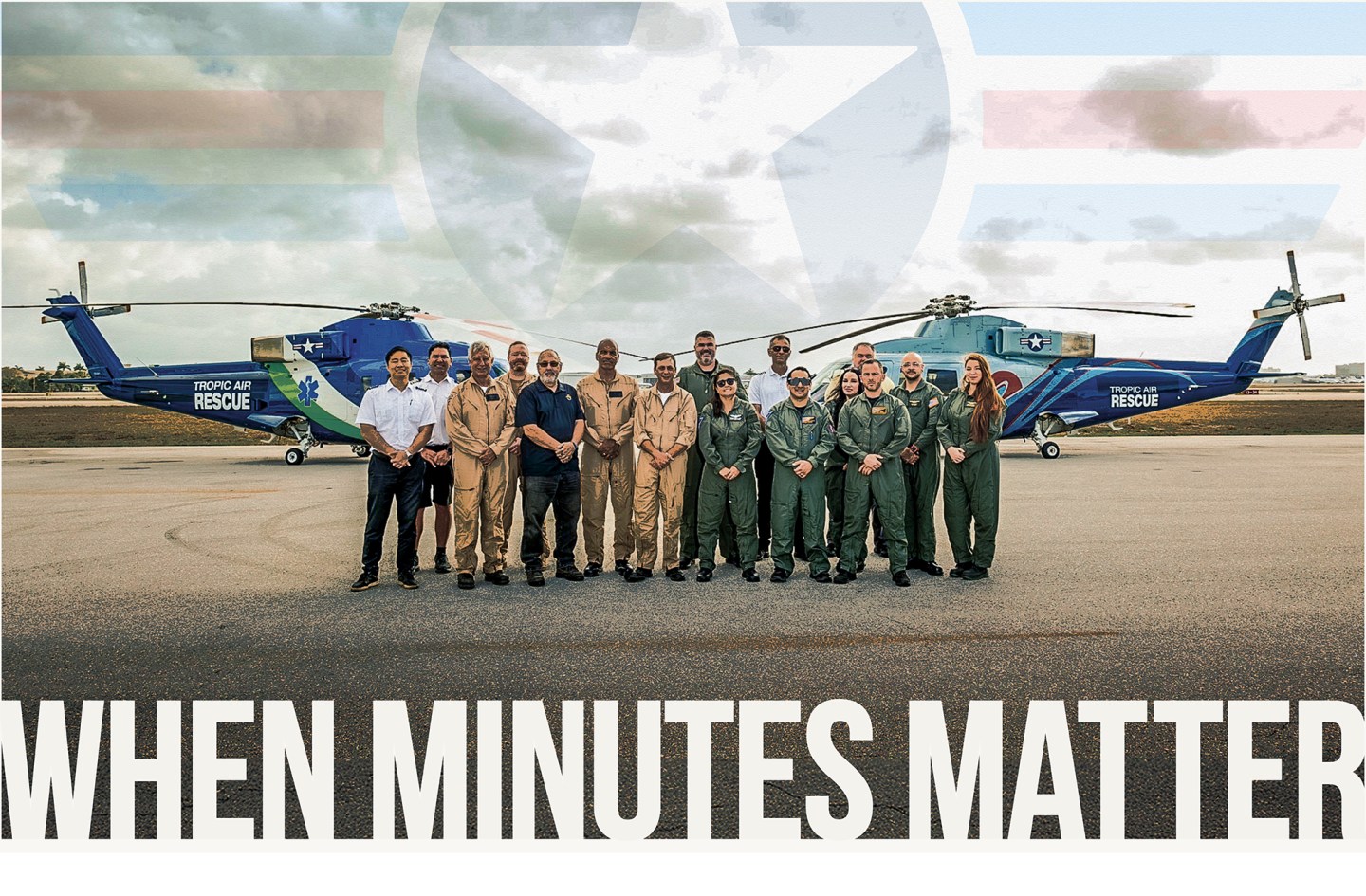
Photos by Tropic Air Rescue
For many cruisers, the Bahamas represent a kind of nautical promise. Clear water, friendly settlements, shallow banks and anchorages that feel suspended between sea and sky. It’s close enough to the United States to feel accessible, yet far enough away to remind you that you’re on your own.
However, being on your own is what becomes a frightening reality when something goes wrong. A fall in the cockpit. A sudden chest pain at anchor. A diver surfacing with symptoms that don’t fade. These are not hypothetical scenarios. They are the real risks that every offshore boater accepts, often without fully considering what “help” actually looks like once you’re a hundred miles from a U.S. emergency room.
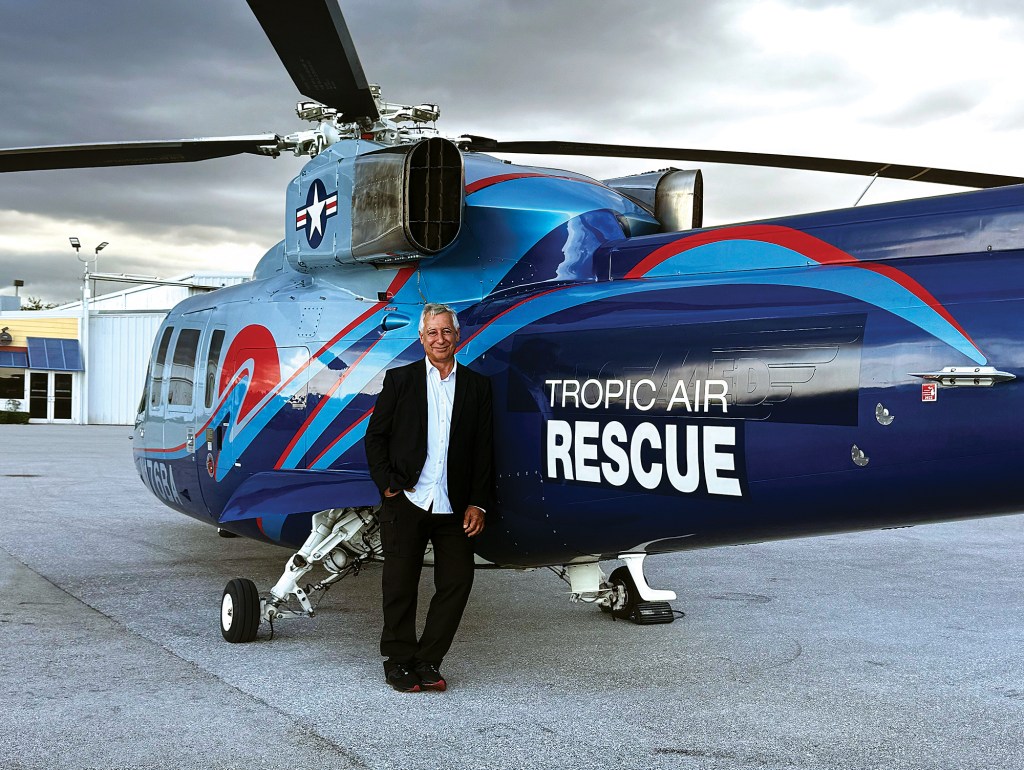
That gap between paradise and prompt medical care is exactly where a young company—Tropic Air Rescue—operates.
Founded by Anthony Marinello, Tropic Air Rescue offers something that, until recently, didn’t exist for private boaters in the Bahamas: a dedicated, rapid-response helicopter medevac service designed specifically for the region and typically capable of reaching most of the Bahamian islands within an hour or less. Its membership model is something that feels familiar to boaters, similar in concept to Sea Tow or BoatUS towing services, but applied to something far more consequential than a soft grounding or a fouled prop.
Life-Saving Flights
Marinello’s career before Tropic Air Rescue was spent flying helicopters in some of the most demanding conditions imaginable. A former New Jersey State Police pilot, he was responsible for law enforcement missions, search and rescue, and medical evacuations—under pressure, often at night and always when minutes truly mattered.
When Marinello retired, like many pilots, he could have stepped away from the cockpit with the satisfaction of a career spent in service to others. Instead, he saw a problem that no one seemed to be solving well.
The Bahamas attract tens of thousands of cruising boaters every year. They are adventurous, self-reliant and often operating far from a formal health-care infrastructure. Medical care on the islands ranges from good in Nassau and Freeport to basic or nonexistent on the Out Islands. And while emergency medical evacuation insurance has been available for decades, it often relies on a complex web of commercial air carriers and approvals that can take many hours, or sometimes even days, before a patient reaches the necessary care.
Marinello understood helicopters. He understood emergency medical services, and he understood that for U.S. boaters cruising in the Bahamas, geography, more than distance, was the real challenge.
The Bahamian Islands stretch over 500 miles from northwest to southeast. Waiting for a commercial flight, or arranging a fixed-wing air ambulance, often means stabilizing a patient locally, transporting him to a runway, coordinating international clearances and then flying him back to the United States. It works—eventually. But in medical emergencies, “eventually” sometimes is not enough.
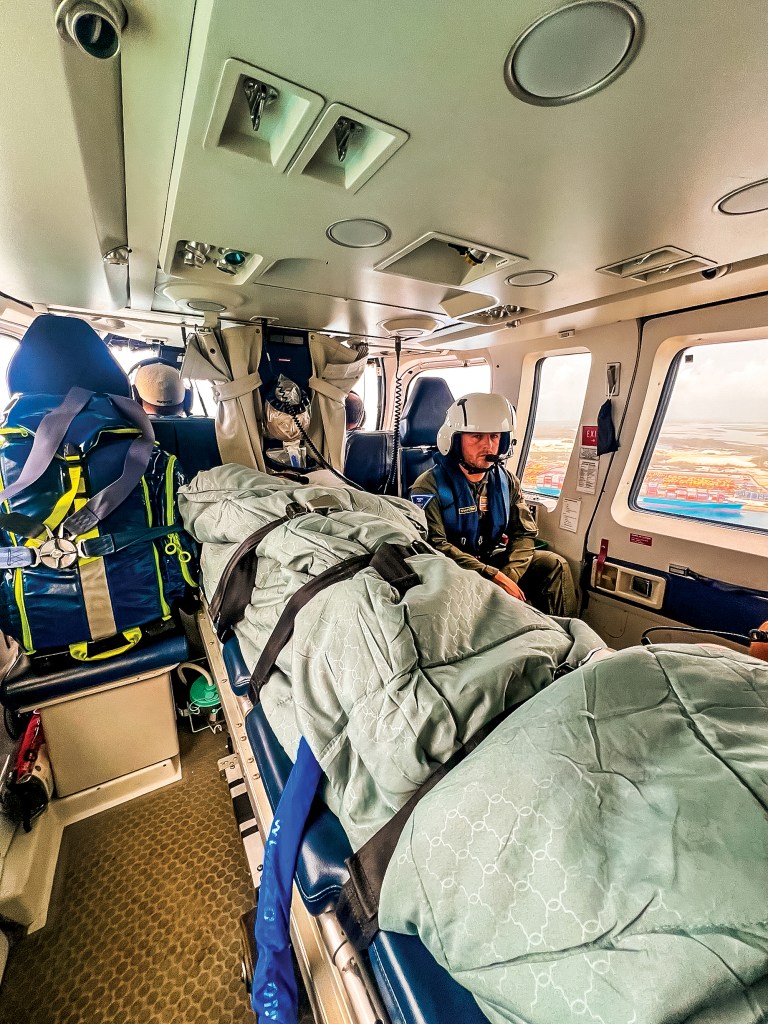
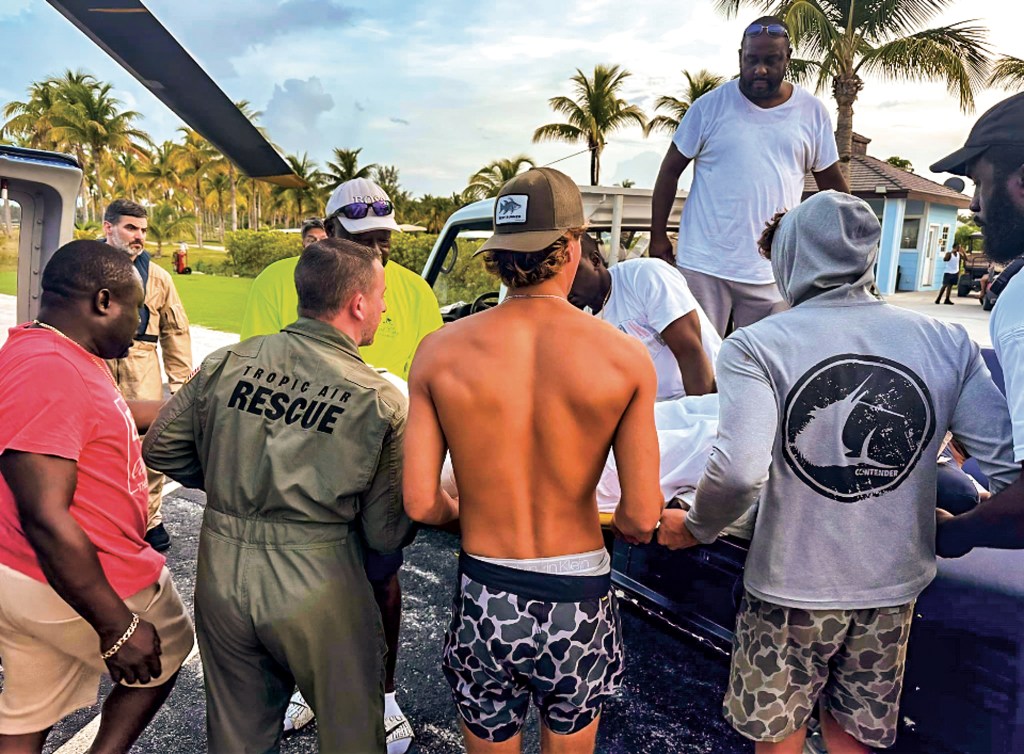
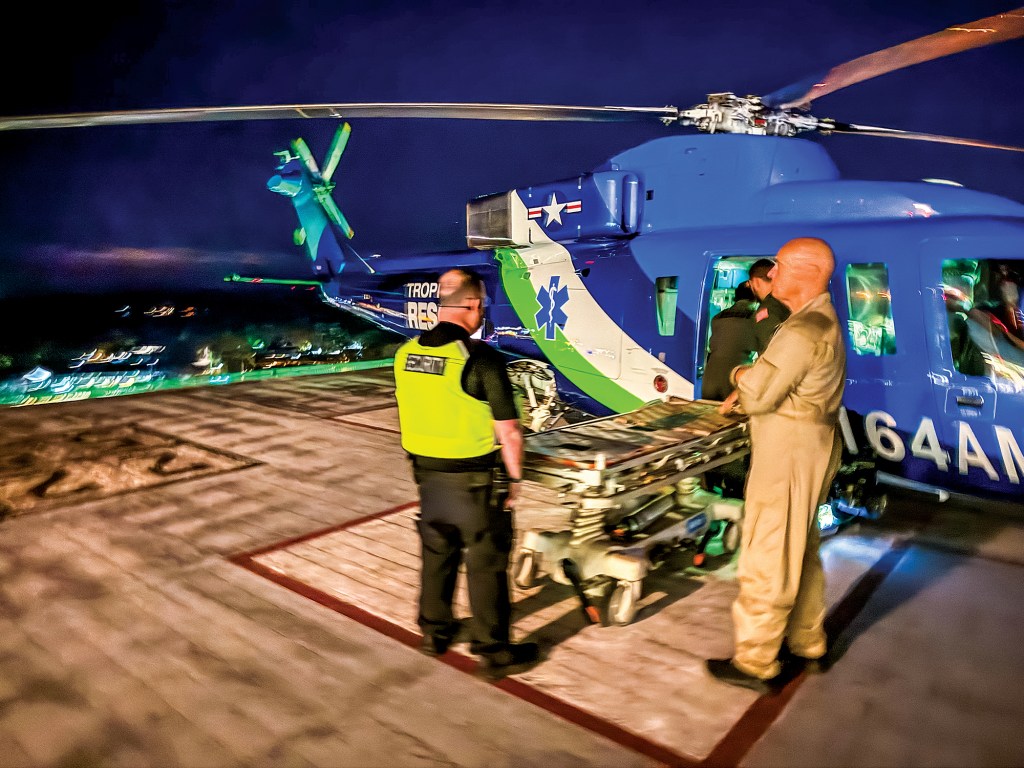
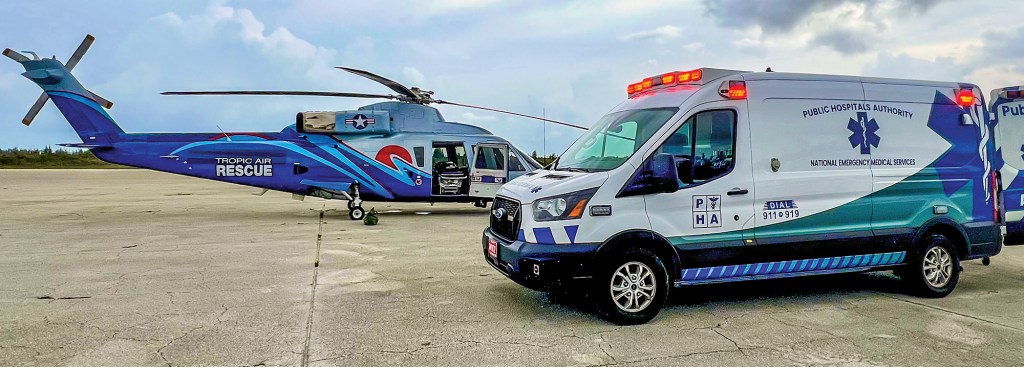
Tropic Air Rescue’s defining feature is speed. Operating turbine helicopters crewed by trained EMT flight personnel, the service is designed to launch quickly and fly directly to the patient—whether that patient is on a remote island, aboard a private yacht or at anchor miles from shore. Once the patient is safely aboard, the helicopter flies straight back to Florida, where the patient is transferred to the most appropriate nearby hospital.
The helicopters are equipped for advanced life support and are staffed by crews trained specifically for aeromedical operations. This isn’t simply transportation; it’s a continuation of care, from the moment the patient is loaded until he reaches definitive treatment. There is no waiting for commercial schedules. No island-hopping. No long delays while logistics are sorted out. For a boater who has just watched a crewmate collapse, that difference matters.
A critical distinction in this service is the helicopter’s ability to land in the immediate vicinity of the patient and directly at hospitals or designated medical helipads, making the transition seamless. What begins as an emergency in the Exumas can end at a trauma center in Florida within just a few hours.
Membership Model
One of the most compelling aspects of Tropic Air Rescue is how it’s structured. Rather than selling trip coverage or complex insurance policies, Tropic Air Rescue operates on a membership model. Members join for the planned duration of their trip, whether it’s a day, a week or several months. During the membership, if a medical evacuation is required, the flight is covered—without the six-figure invoices that often accompany air ambulance services.
This is a key difference from traditional medevac insurance, which often reimburses expenses after the fact, may require pre-authorization or limits coverage based on medical necessity as defined by insurers. Most medevac insurance policies involve an attempt to stabilize patients locally and then route them home via commercial airlines, a system that may be appropriate for some conditions, but that can be dangerously slow for others. Tropic Air Rescue removes much of that ambiguity. When a member calls with a medical emergency, the helicopter launches.
Traditional emergency medical evacuation insurance has its place, and for many travelers, it works well. But whenever you involve customs, immigration and medical clearances, you add delays to caring for the patient. For non-life-threatening conditions, that system can function adequately. But for more serious conditions, like strokes, cardiac events, traumatic injuries or rapidly evolving medical emergencies, time becomes the enemy.
Helicopters change the equation. They eliminate the need for runways. They eliminate multiple transfers. They eliminate long waits. And in the Bahamas, where geography fragments everything, that matters enormously.
There’s also a psychological component that’s hard to quantify. Knowing that help is airborne and coming directly to you changes how emergencies are experienced—not just by the patient, but also by everyone aboard.
Peace of Mind
Most cruisers don’t dwell on worst-case scenarios, but they plan for them anyway. Redundant navigation systems. Multiple anchors. Spare parts. Ditch bags. Life rafts. Medical evacuation is part of that same mindset: hoping for the best, while quietly preparing for the moment when preparation needs to become action. For couples cruising alone, or families traveling with children, or aging adventurers who are healthy but realistic, Tropic Air Rescue offers something beyond logistics. It offers reassurance.
In many ways, Tropic Air Rescue represents an evolution in seamanship—not in how we handle our boats, but in how we handle risk.
Modern expedition trawlers have expanded recreational cruising, with more boaters venturing farther, longer and with fewer crew. In doing this, the margin for error narrows. Services that once felt optional become part of a broader safety ecosystem. You’re still responsible for your vessel. You’re still making weather calls and navigational decisions. But if the unthinkable happens, you’re not as alone as the chart might suggest.
Marinello didn’t invent medevac. What he did was adapt it, precisely and thoughtfully, to the realities of the Bahamas and the cruising community that loves them. For remote cruisers who are accustomed to self-sufficiency but are appreciative of smart systems that back it up, Tropic Air Rescue feels less like a luxury and more like a logical extension of responsible cruising.
This article originally appeared in the April 2026 issue of Passagemaker magazine.
Info: tropicairrescue.com