Story + Photos by Maria Langer
It was summer 2024 when I signed up for the early autumn flotilla. I was just finishing an on-and-off 22 months cruising the Great Loop in my Ranger Tug. I’d be bringing the boat back to Washington state, where I’d purchased it two years before. But there was a problem: My boat didn’t have a home marina. I had attended the Ranger Rendezvous in Roche Harbor, but I didn’t know what I would do with my boat until I could tuck it away in the garage for the winter.
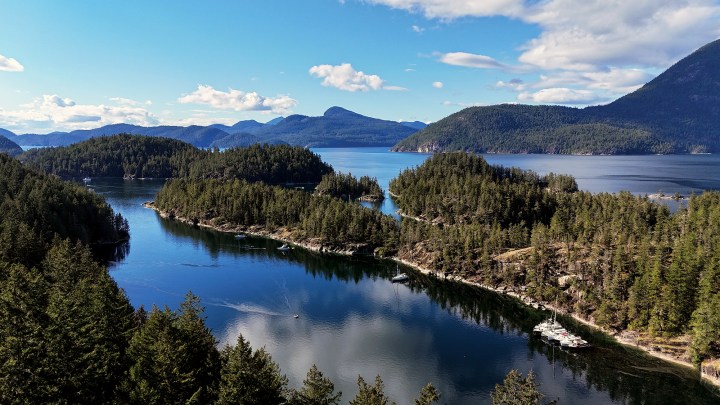
The two-week flotilla to Desolation Sound, with San Juan Yachting of Bellingham, would keep my boat and me busy for some of that time. And it would be the perfect end to five straight months of cruising.
Flotillas are popular in the Pacific Northwest, with at least two charter companies near the San Juan Islands that offer them. The flotillas make cruising easier not just for boat owners, but also for charter guests who might not be familiar with the area. I had bought my boat in Olympia, but I’d cruised in Puget Sound and the San Juan Islands for fewer than 20 days before shipping the boat to Chicago for the Great Loop. I really liked the idea of tagging along with a group of other boaters.
Desolation Sound is about halfway up Vancouver Island, northeast of the Strait of Georgia. The area is full of lush, densely wooded islands with plenty of navigable water and a handful of tricky narrows. The flotilla would go as far north as the Octopus Islands off Quadra Island before starting back on a different route.
There were six boats, including a Seahorse 52, an American Tug 362, an American Tug 34 and a Ranger Tug R-31. I was in my Ranger Tug R-29 CB. The odd boat out was a Nautitech sailing catamaran with its owners at the helm. Our overnight stops were a mix of marinas and anchorages. We each had a PDF of charts for every day’s cruise. Distances traveled ranged from 18 to 51 nautical miles a day.
We set off from Bellingham and crossed the border into Canada, checking in at South Pender Island. Poet’s Cove Resort & Spa was our first overnight. We provisioned the next day at Nanaimo’s Port Authority Marina. I also visited some shops, including Red’s Bakery, which is famous for its Nanaimo bars.
I also veered off on my own a bit when our flotilla was crossing the Strait of Georgia. I zigzagged at a faster speed to keep big waves off my beam and reach the destination sooner. After getting tossed around on the strait, John Henry’s Marina & Resort on Hospital Bay was a welcome respite. I had purchased a British Columbia crabbing license in advance, and I dropped my traps in overnight, but had no luck.
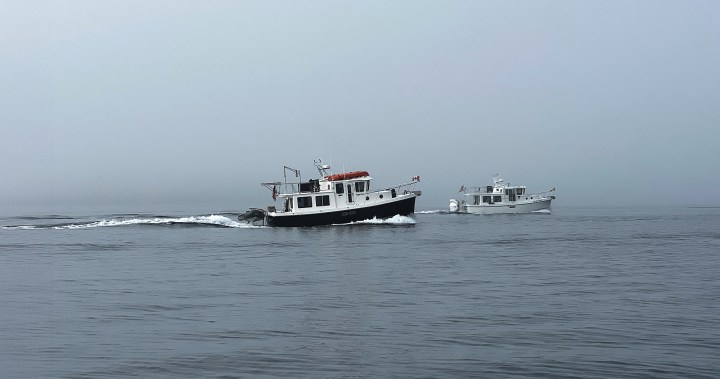
Dense fog greeted us the next morning as we made our way up Malaspina Strait toward Cortes Island. Sea lions and humpback whales were a welcome sight; we saw quite a few of them on this cruise, along with seals and dolphins.
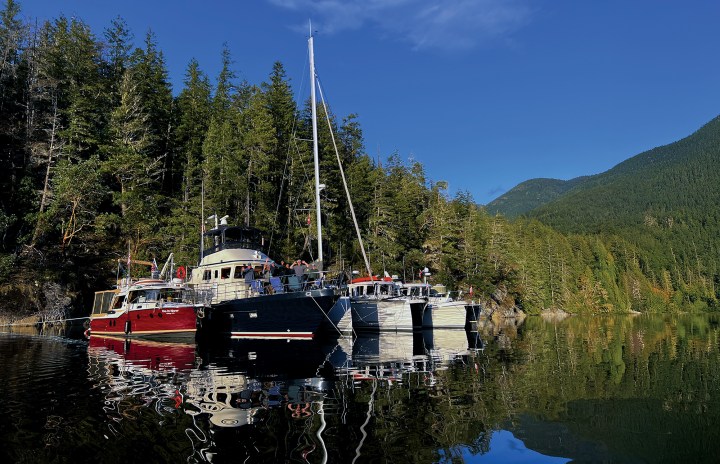
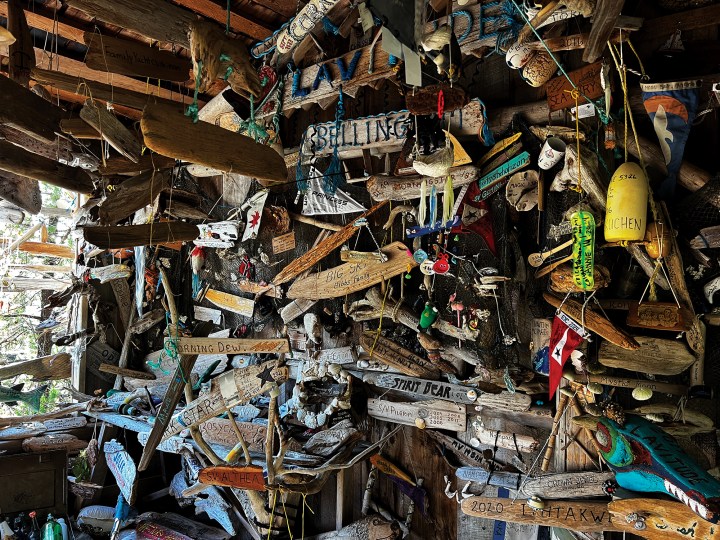
The flotilla then rafted up in a peaceful cove within the Octopus Islands Marine Park. My boat, which was the smallest, was on the outside, so I dropped my crab traps nearby; I wound up with a few rock crabs for cocktail hour the next day. We got a lot of dinghy use on this stop too, exploring the waterways between islands and landing on one island where there’s a cabin full of boat signs and memorabilia.
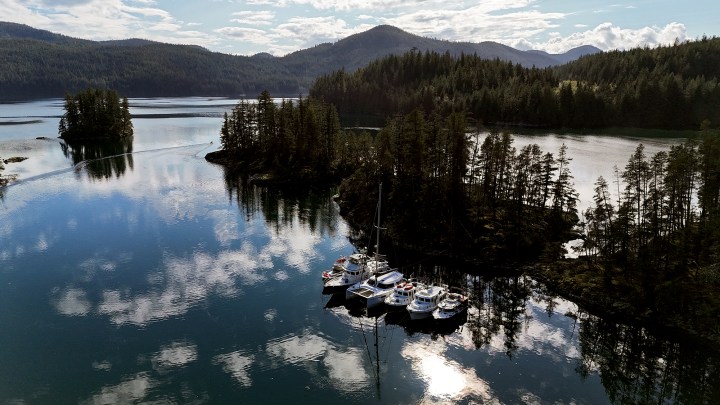
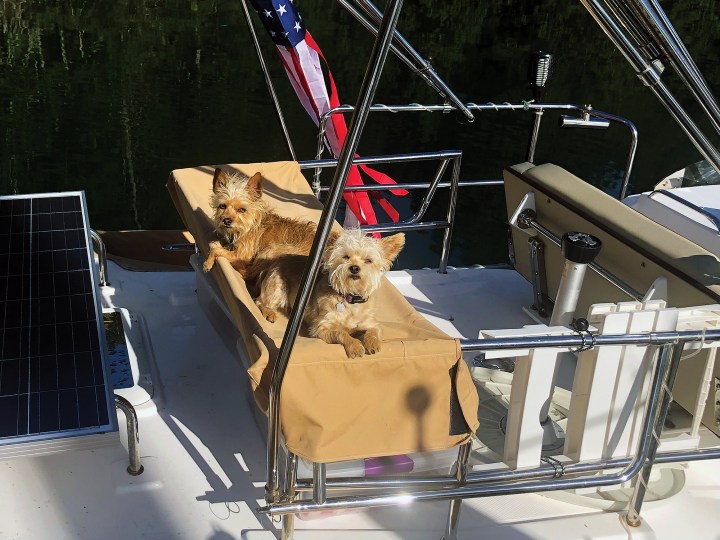
A week into the flotilla, we were at the Taku Resort and Marina on Quadra Island. I meandered along a trail and picked wild blackberries while walking my dogs. Everyone went out for dinner in town while I remained behind, and it was a good thing I did: A line came loose a boat from the outside dock, and the current pushed it sideways against the catamaran’s hanging RIB, which acted as a giant fender.
I couldn’t get on board safely, so I called for help and monitored the one line still holding the boat in place. Within minutes, almost everyone from our flotilla was running back. Someone got on board from the catamaran, started the engine and pulled away from the dock.
The other boat was then secured with more than just two lines. Lessons learned.
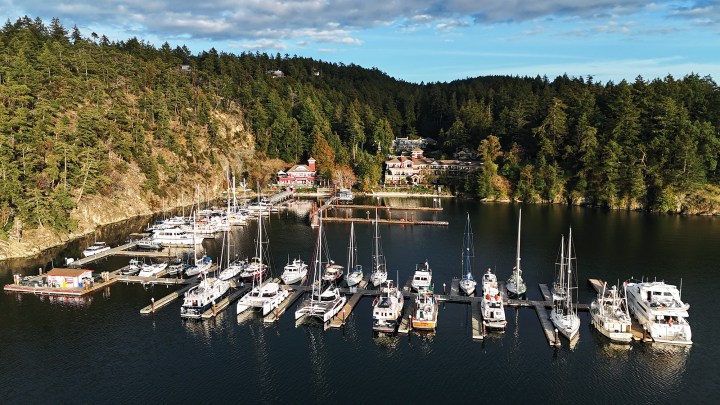
For the next two days, we dropped anchor in the quiet Melanie Cove at Prideaux Haven, part of Desolation Sound Marine Provincial Park. A short dinghy ride amid the forested islets and rocky shoreline brought us to a trailhead that led up into the mountains. We all got our daily steps in.
Texada Island was my least-favorite stop. I’ll blame it on the weather; it was drizzly. It was also the first time someone measured my boat to charge me for its exact length, bowsprit to dinghy. The group walked into town but, once again, I stayed behind with some hot soup and my pups.
We had another rough crossing of the Strait of Georgia with rainy weather. A direct run to Silva Bay would have put the 3-foot waves right on the beam of my little boat, but pointing toward Nanaimo wasn’t so bad. I was halfway across the strait when a flotilla leader who was watching my AIS signal radioed to correct my course. By then, I’d decided to overnight at Nanaimo instead.
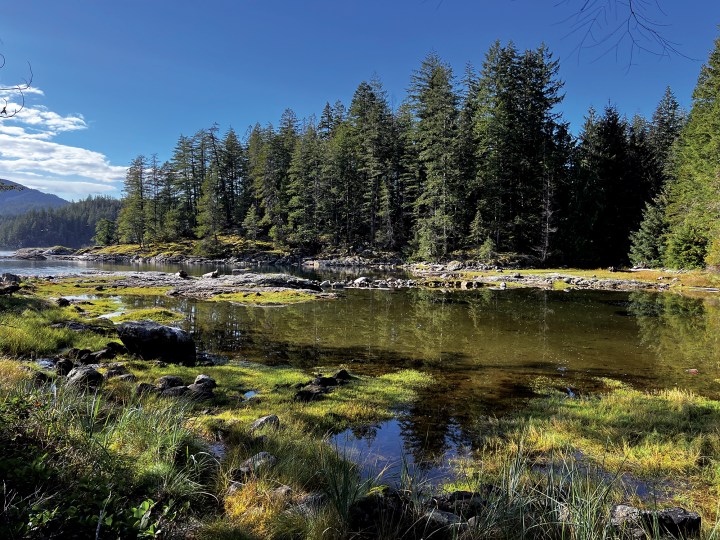
At Salt Spring Island, I reunited with the crew. It was among my favorite places we visited. From the Ganges Marina, it’s a short walk to the largest village. There were galleries, art studios, shops and restaurants to occupy everyone.
I was reminded that having a plan or calendar while cruising is a laughable endeavor. We were slated to spend the next two days making our way back to Bellingham, but one couple needed to get back early, and a wind out of the east promised an uncomfortable night at anchor. We voted to go all the way back to Bellingham’s Squalicum Harbor.
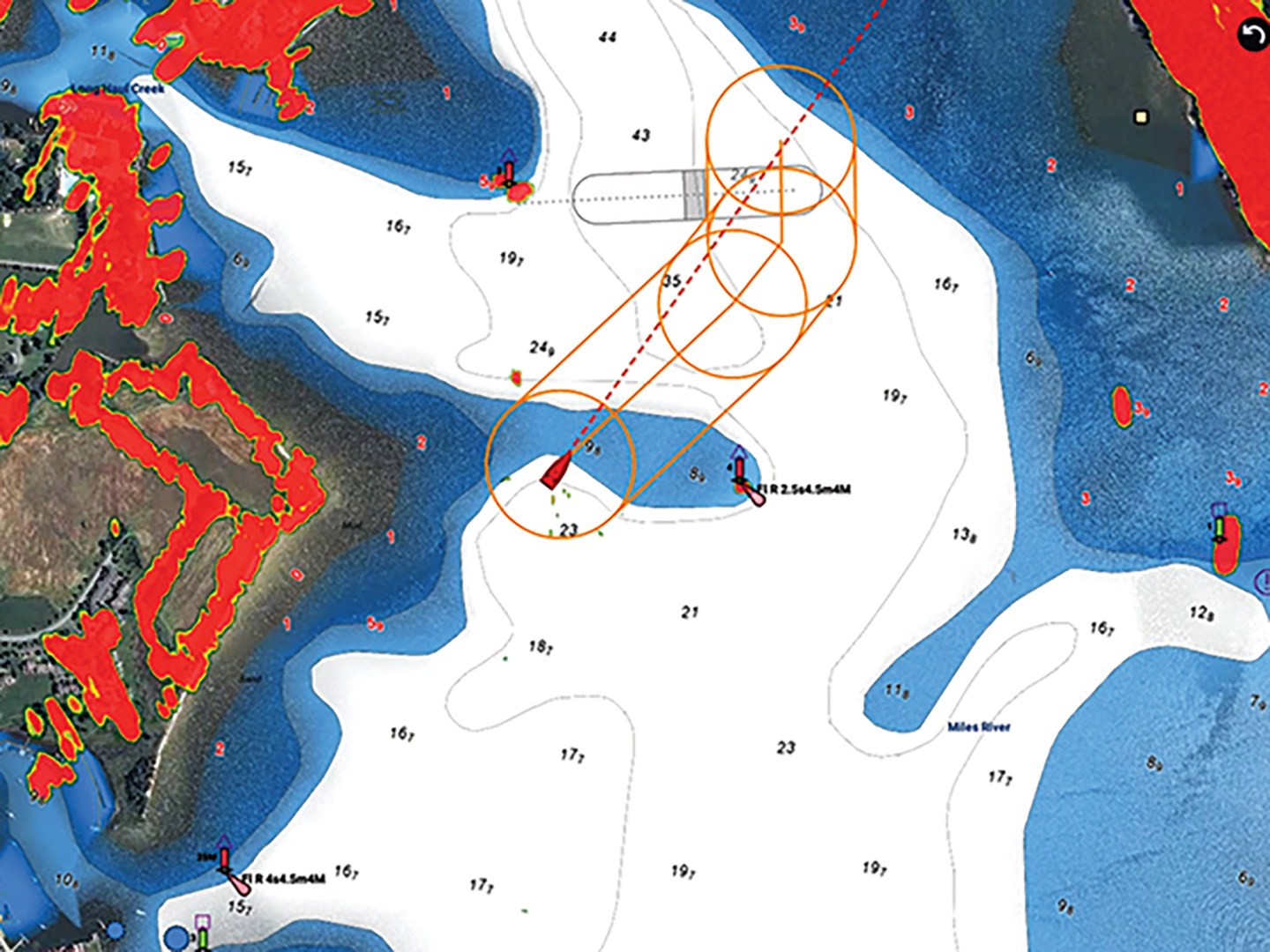
Looking back, there are three challenging spots where tidal currents meant that timing was everything: Dodd Narrows south of Nanaimo, Beazley Passage south of the Octopus Islands, and Gabriola Passage south of Gabriola Island. These passages are best transited at slack current, which may last only a few minutes.
I also learned that the best part of being in a flotilla is the camaraderie. We’d meet up daily on one of the larger boats for cocktails and snacks that became more elaborate each day. Soon, dinner became unnecessary; we were stuffed. We did off-the-boat activities and got to know one another to the point that we felt like old friends. Nearly two years have gone by, and I’m still in touch with two of the couples I met on that trip.
Would I do it again? Of course I would.
This article originally appeared in the September 2026 issue of Passagemaker magazine.