Story + Photos by Vincent Daniello
Whether you’re living aboard full-time, cruising distant waters or just spending weekends in your home marina, it’s a safe bet you’re on the boat to enjoy being outdoors in those surroundings. That goal likely extends beyond just fair weather, too.
“You want to enjoy all your outdoor spaces,” says Linda Hunt, owner of Custom Canvas by Linda in Hobe Sound, Fla. “Whether it’s enclosures when it’s cold or sunshades in the tropics, your boat can have the best patio deck for whatever the climate is at that time.”
It’s possible to enhance favorite outdoor places with tight, clear, weatherproof enclosures or quick-deploy sunshades. While you’re there, settle into sumptuous cushions, or refine spaces with a fresh look. And for times to come or go, ease your workload with user-friendly covers and lower-maintenance materials.
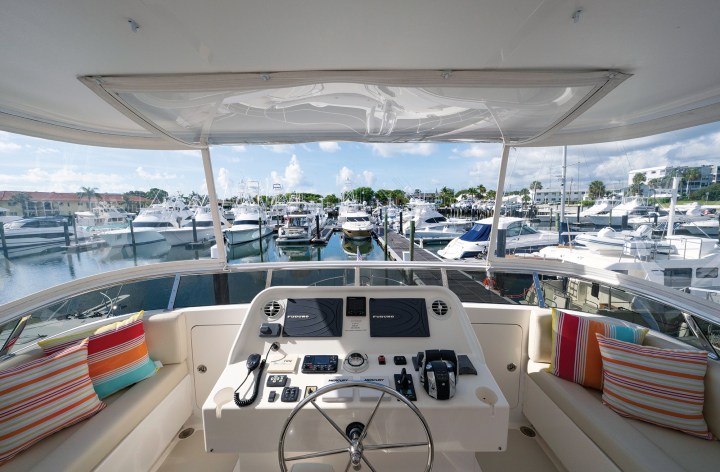
Weatherproof Enclosures
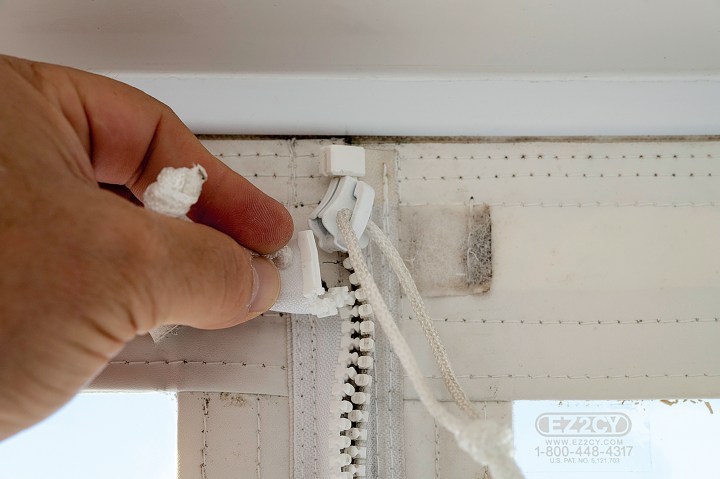
For a clean look and improved weather sealing, most custom enclosures avoid button-snap, twist-lock or lift-a-dot fasteners. Instead, sewn-in welts slide into grooved tracks along the top, bottom and sides of enclosures. Zippers along bottom and side edges facilitate installation.
Careful templating and cutting ensures those clear panels zip up tight, not hang loose, a fit that avoids wrinkles and puckers that distort gorgeous harbor views. “The tighter those panels are, the longer the enclosure will last, and the more clarity you’ll have through those windows,” Hunt says.
Materials balance cost, clarity and rigidity. “I don’t recommend anything less than Strataglass,” Hunt says. The 40-gauge clear vinyl holds its shape, yet it’s still flexible enough to be unzipped and rolled. The 54-by-110-inch sheets create wide panels and require fewer joining zippers. Vinyl might sag through tight turns, though.
For perfectly flat panels through wide temperature swings, Hunt suggests 60-gauge polycarbonate. “That gives you a semi-rigid enclosure that’s like looking out a window,” Hunt says. The clear sheets are sewn with sun- and chemical-resistant PTFE thread guaranteed to outlast canvas and polycarbonate. “You don’t want to have to restitch through polycarbonate,” she says. “If it has too many holes, it rips.”
Eighty-gauge acrylic, known best by the Ez2cy brand, is even more rigid than polycarbonate. Acrylic can’t be sewn, though, so the clear sheets are glued into borders that are sewn into surrounding canvas.
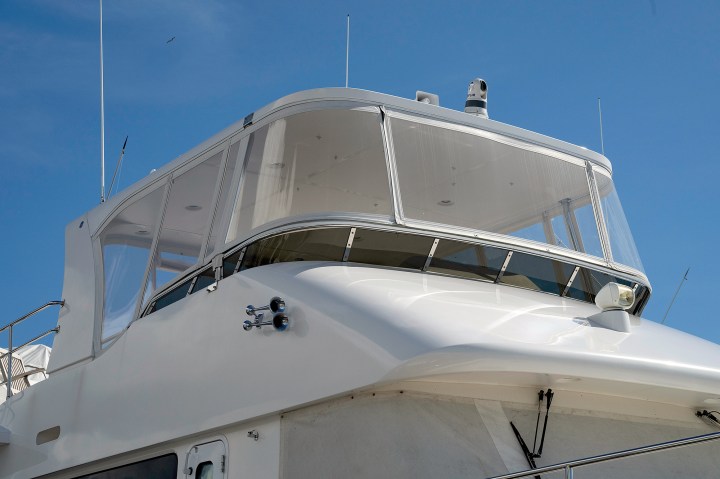
The biggest trade-off with polycarbonate or acrylic is that panels unzipped to open won’t roll up. Instead, they lay flat against the overhead, secured with twist-lock fasteners. Clear panels are limited to 48-by-96-inch dimensions, too.
“There is no perfect product,” says Brian Crist, owner of Boat Canvas Factory in Pompano Beach, Fla. “Acrylic turns those corners into a perfect fit, but on some boats you have things in the way, and you can’t fold panels up and clip them overhead. And gravity makes those panels bow down in the middle where they might be touching your head.”
To sidestep those compromises, Crist sometimes mixes materials. “You can do acrylic so the corners turn out pretty, but then put Strataglass in the middle sections where you want to roll the panels.”
For boats with canvas Bimini tops instead of hard tops, Crist sews zippers at the top of clear panels, rather than the bottom. “It has to be a permanent application where you are not taking it down,” he says.
Zippered doorways might roll up, or they can hang from a parallel track where they’re easily removed. “If there is room to one side, you can extend that track and slide it like a sliding door,” Hunt says. “That can be easier to handle, particularly in colder weather.”
Durability
While acrylic and polycarbonate generally outlast vinyl, caveats favor some installations. “I’ve seen big waves hit polycarbonate, and the panel tears along the stitching, like a perforation,” Crist says. This is especially true when the panels are low and close to breaking seas. “Acrylic lasts a long time on panels you don’t take down often,” he says, but it can shatter if handled roughly, particularly after several years in the sun.
Abrasion-resistant coatings on Strataglass and polycarbonate mitigate wear, but dried salt crystals, gritty scrub brushes or improper cleaning products scratch or haze all clear materials.
Tracks, Zippers and Canvas
Hunt and Crist both surround clear panels with Stamoid waterproof vinyl. Low-profile flangeless PVC welt tracks are heated to bend around curves. And while they’re not necessary, stainless steel track ends add durability. “If you have canvas going in and out of that track a lot, the stainless cap protects both the track and the welt from wear,” Hunt says.
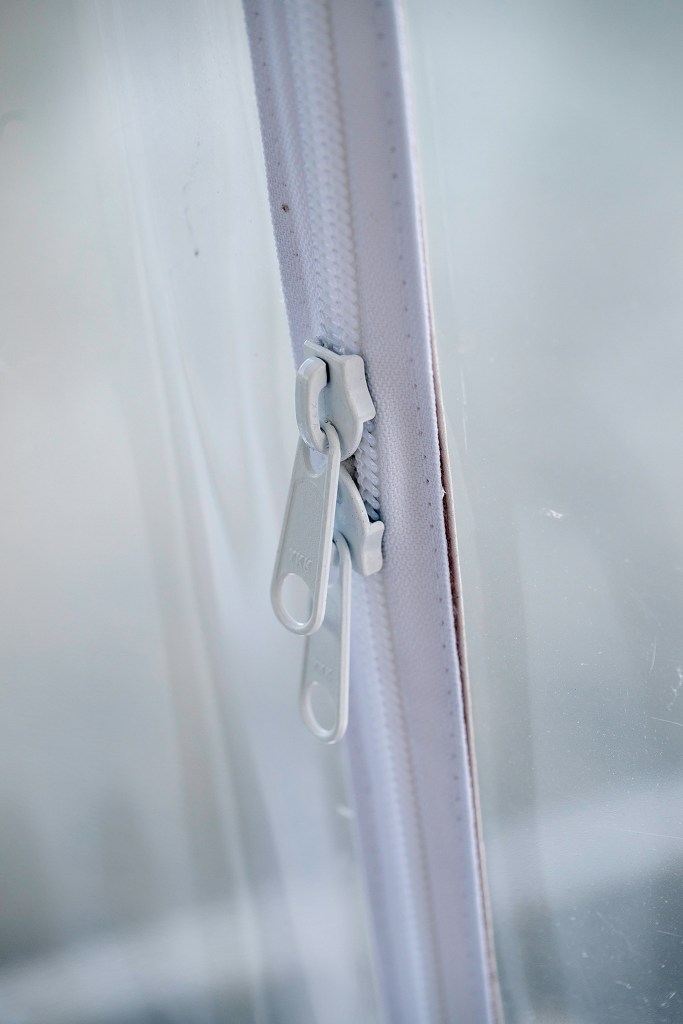
For easy-opening and quick-closing zippers, Hunt installs finger-pull cords, and she stitches an inch-long loose tab on each zipper’s male starter (the part that slides into the car). “That lets the zipper go all the way to the top to cover that gap, but once it is zipped, it lays flat,” she says.
In Strataglass and clear vinyl, U-shaped “smile” panels open for fresh air and then zip closed quickly. “If it’s raining, just unzip a bit of the bottom to get ventilation,” Hunt says. Self-healing coil zippers turn corners without bunching up or breaking teeth. Hunt hides panel-joining zippers behind poles or structural members: “U-zips go all the way against the side-connecting zippers to minimize eye obstructions.”
Sunshades
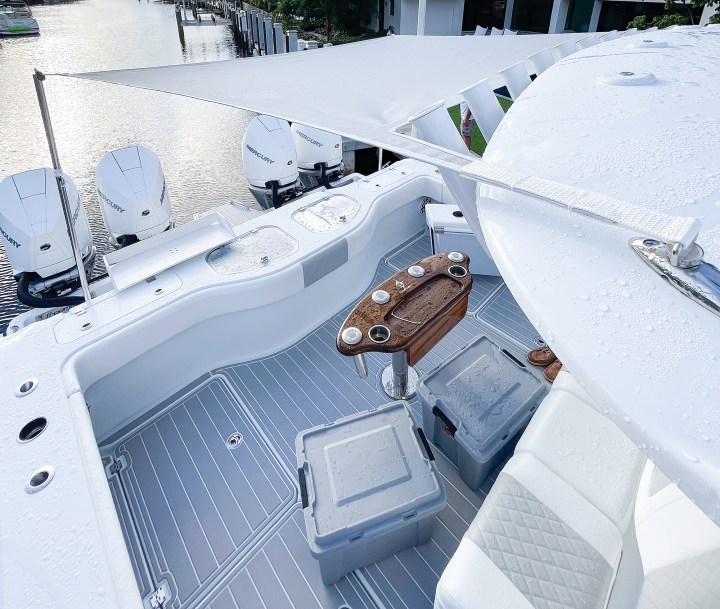
Quick, short-term protection from sun and showers enhances livability of cockpits, foredecks and boat decks, but fit is key. “I don’t care how well the canvas is cut,” Crist says. “If it can’t be pulled tight, that sunshade will never look nice.”
Hunt and Crist say they prefer stout, 1¼-inch-diameter stainless steel poles over carbon fiber for cost, performance and simplicity. Those poles insert into fishing rod holders or stainless steel deck mounts, with halyards and sailboat cleats that draw sunshades tight. Staying aloft in light rain requires a center halyard, too. Quick-disconnect Bimini top hardware provides snag-free, low-profile connections to fiberglass.
Boat Canvas Factory makes most sunshades from Stamoid Light. “It’s lightweight, dimensionally stable and stretches out nicely,” Crist says. Wide 102-inch rolls avoid extra seams, and it folds up and stores compactly. To help it stay aloft in the rain, he uses self-draining mesh Soltice 86 from the same company. “Sunbrella tends to stretch,” Crist says. “I can’t think of a better product for boat covers, but sunshades will sag.”
Sun Screens
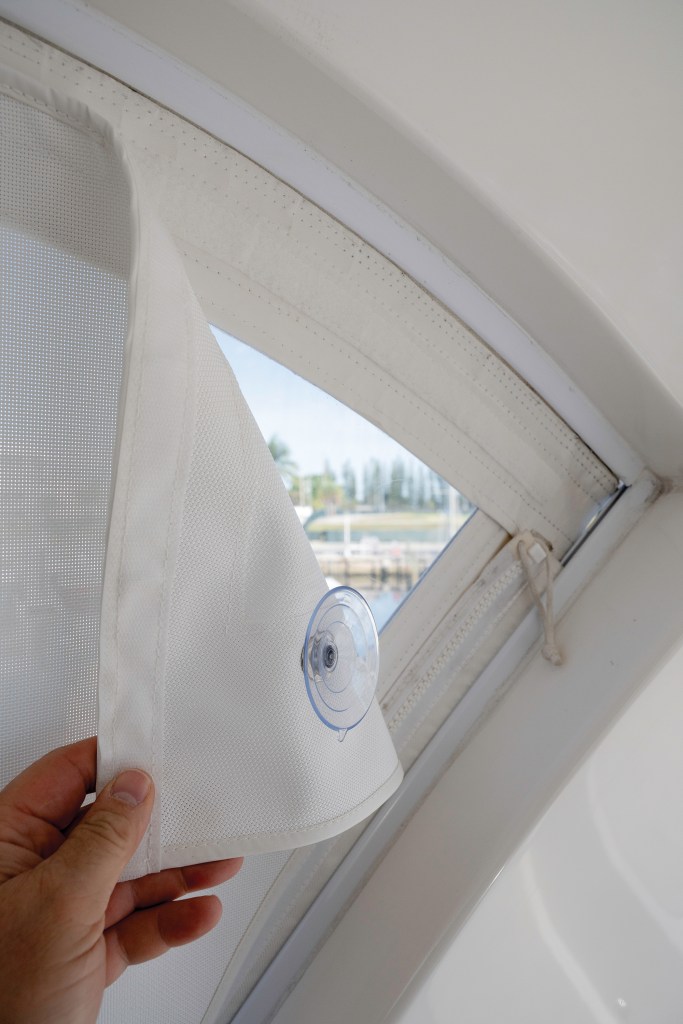
Sun screens secure inside enclosures, hang within open air spaces, or snap over exterior windows. “You can have an open-weave mesh that will block out a good percentage of the sun, but you can see through it,” Hunt says. “A tighter weave will block out 95 percent of the sun. You can see out, but you can’t really see in.”
Hunt prefers to hang sun screens from a second, parallel welt track, and then fasten the rest with suction cups or button snaps. “Velcro wears out,” Hunt says. “Suction cups work best on rigid acrylic or polycarbonate.” To avoid drilling fastener holes, she uses Snad button snaps on wide bases backed with 3M adhesive. “They’ll come off occasionally, so you have to carry a few spares.”
Exterior Cushions and Throw Pillows
“I don’t like boxy cushions. Sculpted edges are more comfortable and a lot prettier,” Hunt says. She starts with 4- or 5-inch perimeters sewn around seat edges. “That front edge is a separate piece of foam zipped into a pocket that’s sewn inside the cushion.”
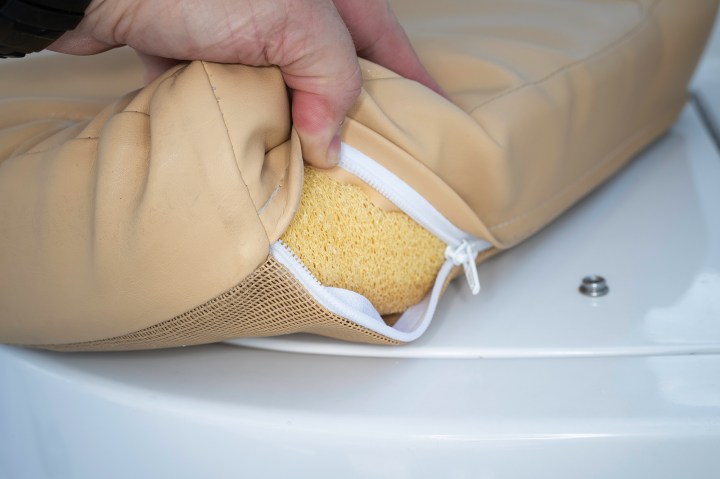
For cushions left outdoors, she often laminates seat bottoms from two layers of DryFast foam for soft cushioning atop closed-cell foam to add firmness.
Durability flows from design. “If you leave wet cushions with vinyl bottoms on fiberglass, the gelcoat can blister,” she says. Instead, mesh cushion bottoms drain and circulate air, which also mitigates mildew. “When people are stepping on one cushion all the time, redesign the layout so that traffic zone is one small cushion you just move out of the way.”
Cushion fabric ranges broadly in price and feel. “If it’s out in the weather, vinyl is the most durable,” Hunt says. “Sunbrella’s furniture fabric has a softer feel.” Where they only occasionally get wet, imitation leathers offer the most luxury.
For throw pillows, Hunt suggests Sunbrella fabric with natural kapok filling. “It doesn’t clump like Dacron, feels like feather, and holds up well,” she says. “Cotton gets moist, collects mildew and rots.”
Covers
“The quicker and easier it is to get a cover on and off, the more often you’re going to use it,” Hunt says. Welt tracks quicker than snaps, but will leave exposed track. Suction cups avoid permanent fasteners. Bungee cords are easier, neater and more secure than drawstrings. “Whether it’s a dinghy or a table or a fighting chair, instead of a big bag, I tailor covers to shape and then put a zipper in,” Hunt says.
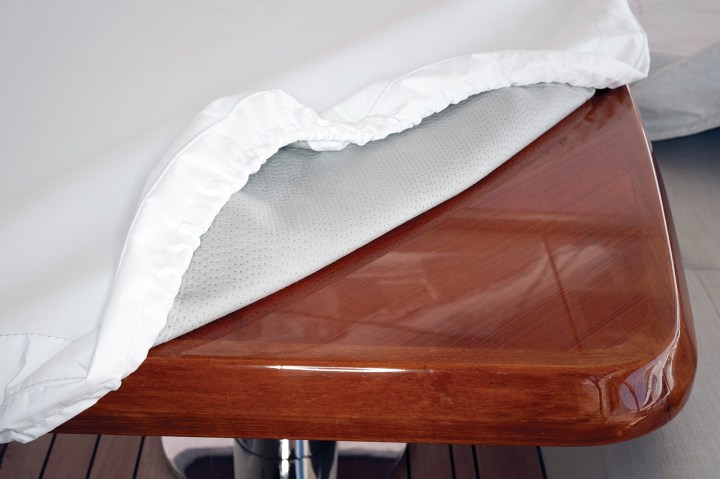
Stamoid vinyl covers are completely waterproof, while Sunbrella acrylic breathes a bit. “Sunbrella will give you the longest life. The dark colors have the most UV protection and will stay the cleanest-looking the longest,” Hunt says. Table covers made with an inner layer of soft material typically used for car covers protects glossy varnish against scratches and wear.
Whether you’re starting from scratch or just refurbishing tired canvas, don’t overlook improvements. “The easiest way to communicate what you want is to show photos of something you like,” Hunt says. A few tweaks can add comfort and utility to those coveted outdoor living spaces.
This article originally appeared in the September 2026 issue of Passagemaker magazine.