Story + Photos Vincent Daniello
Smart boaters and good captains build maintenance programs and parts inventories with the goal of avoiding unscheduled marina stays for emergency repairs.
While working as a freelance skipper, without a say in long-term maintenance, I’ve been on the wrong side of that premise too often. Issues with engine- or generator-cooling systems were often to blame for entirely preventable delays. Neglecting diesel cooling systems is also a sure way to ring up avoidable repair bills.
Fortunately, just a few simple steps and a short list of spare parts usually keep diesels running cool, repair bills minimal and dock stays planned.
Frequent Inspection
A successful engine maintenance program starts in the engine room. “Check all your fluids before you start the engines, every day,” says John Wheatley, owner of Florida Marine Tech in West Palm Beach. “You’re giving yourself a heads-up on problems early. If the oil is low or the coolant is low, it went somewhere.”
With familiarity from repetition, a comprehensive inspection won’t take long, but it does require more than a cursory glance.
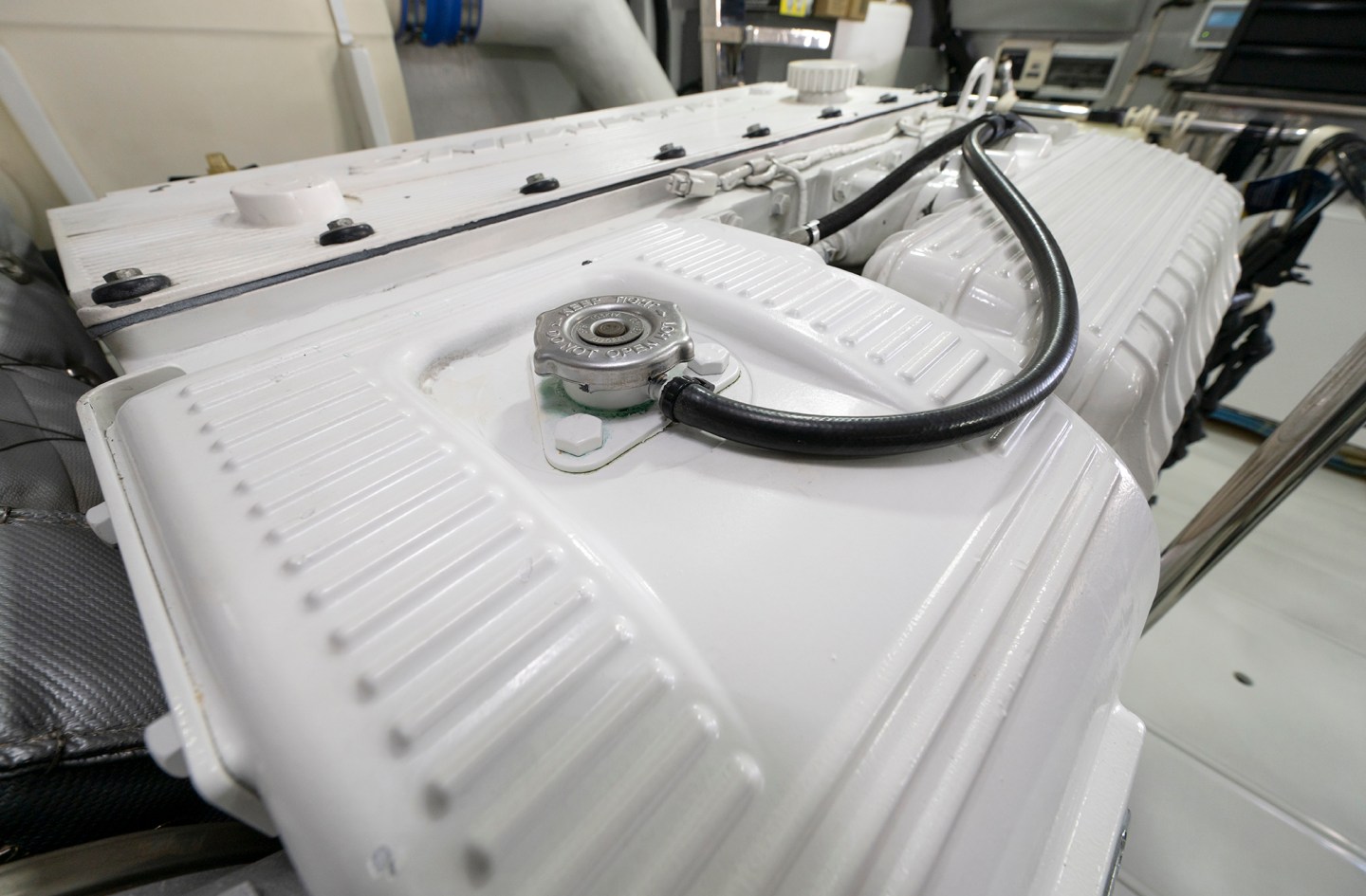
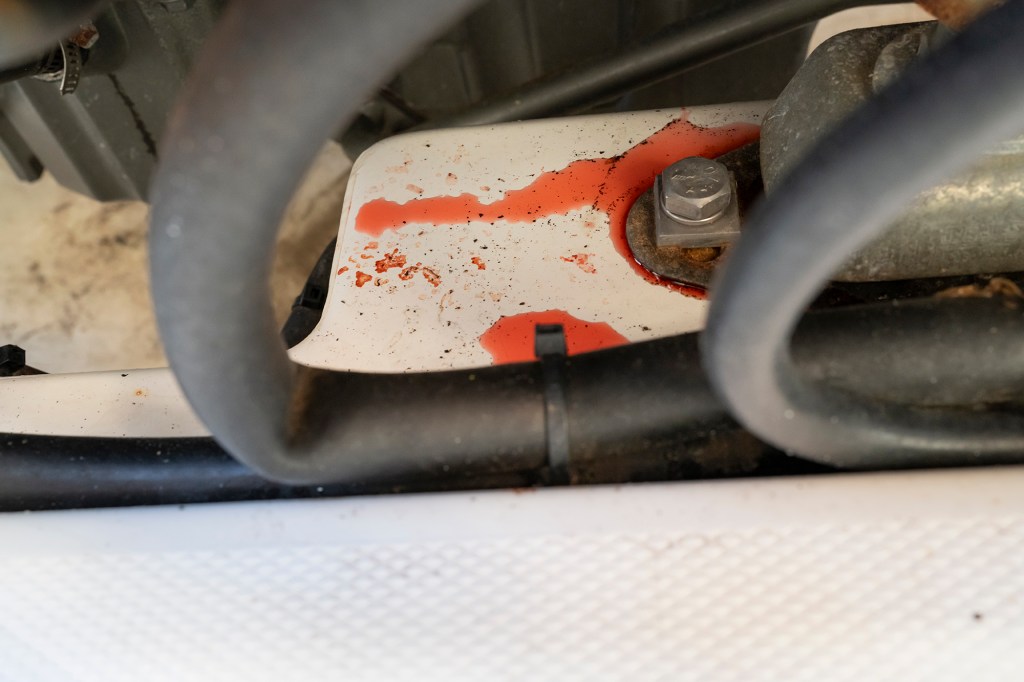
Remove heat exchanger caps, rather than just looking at unreliable overflow bottles. Check for worn or loose belts, and for other red flags like oil or coolant on the floorboards or in the bilge, or for soot accumulating from exhaust leaks. Also watch for signs of seawater leaks or heat discoloration on parts that shouldn’t be hot.
Remove generator sound shields often for a close-up look, and use a flashlight and telescoping mechanic’s mirror for interim inspections.
“If those problems are ignored, they’re only going to get worse,” Wheatley says. You don’t want that to happen often offshore when conditions are rough, somewhere near the middle of an extended trip.
Regular Tests
The next critical step—and the one that’s most often skipped—happens at your helm. When sea state permits, run the engines for a short time at full throttle. If either engine isn’t reaching its full rated rpm, then both engines are running overloaded. “Do that at the beginning of the trip, so you know you need to pull the throttles back and reduce that load,” Wheatley says.
If it’s a nice day and the engines are turning their full rpm, run them at maximum cruise rpm for a while. Catching elevated cooling temperatures under higher load buys time to schedule maintenance, instead of waiting until an engine overheating at normal cruising speed ruins a trip.
“When everything is running like it should, write those numbers in your logbook to compare to later,” Wheatley says. At a minimum, record rpm, engine load and coolant temperature along with sea state and seawater temperature at full throttle, maximum cruising rpm and your normal cruising rpm. Keep in mind that some readings, such as transmission oil temperature, change considerably with varying seawater temperature, so ask your mechanic what to monitor on your boat, and consult him when something seems amiss.
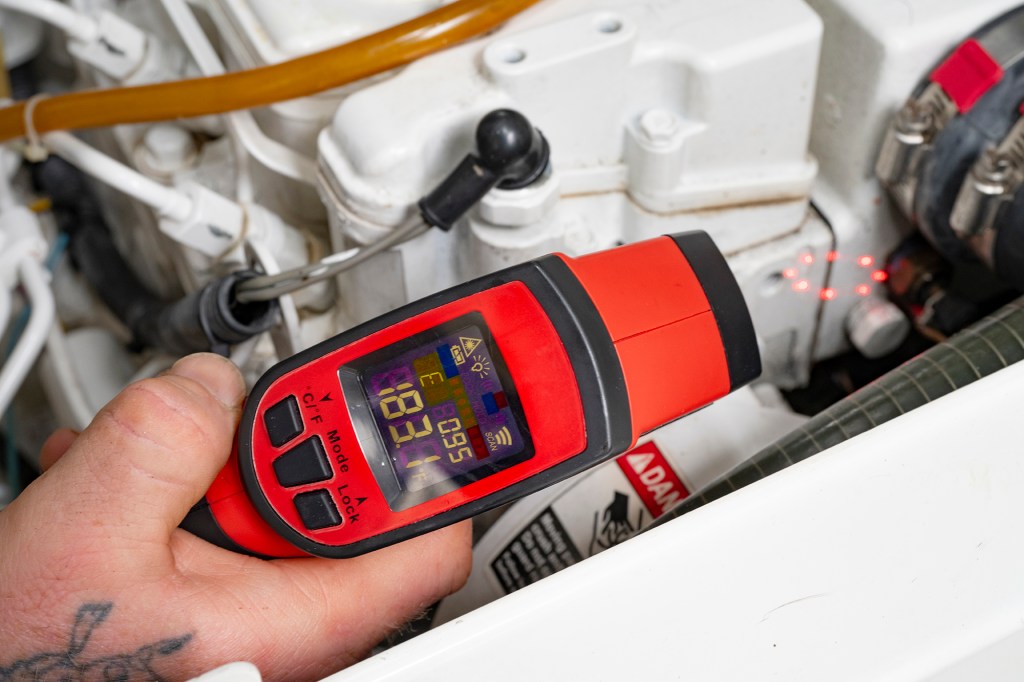
The same holds true for generators. Check temperatures under high load by running the water heater, battery charger, air conditioning—even the oven and grill. This will highlight cooling-system deficiencies before that engine overheats under typical cruising loads. “A $50 infrared heat gun is an important tool,” Wheatley says. “If the generator doesn’t have gauges, shoot it at the thermostat housing. That will give the same reading as a gauge.”
Troubleshooting Tips
When engines are running hotter than normal but not yet overheating, employ that temperature gun before disassembling anything.
“Shoot the temperature of the hose where coolant flows into the heat exchanger, and also the hose where coolant flows out of the heat exchanger,” says Sean Thomas, owner of Thomas Marine Service in Annapolis, Md. “You should see about a 25-degree [Fahrenheit] drop. If you’re only getting 10 degrees difference, that heat exchanger isn’t transferring enough heat.” That might be a signal that cooling-system innards need to be cleaned, or it could indicate a raw-water flow issue.
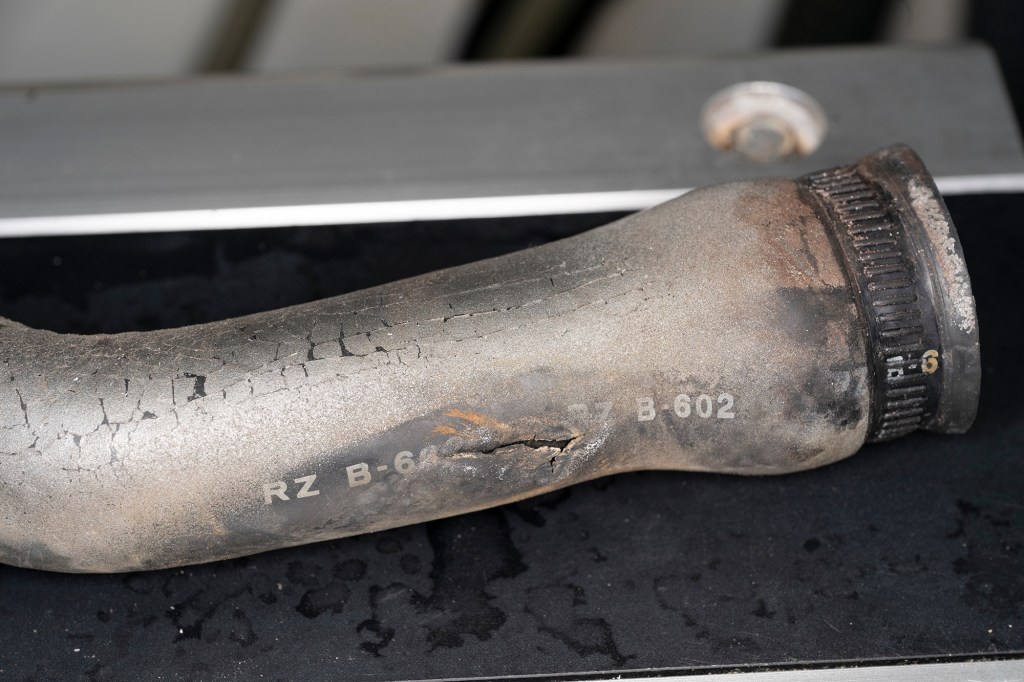
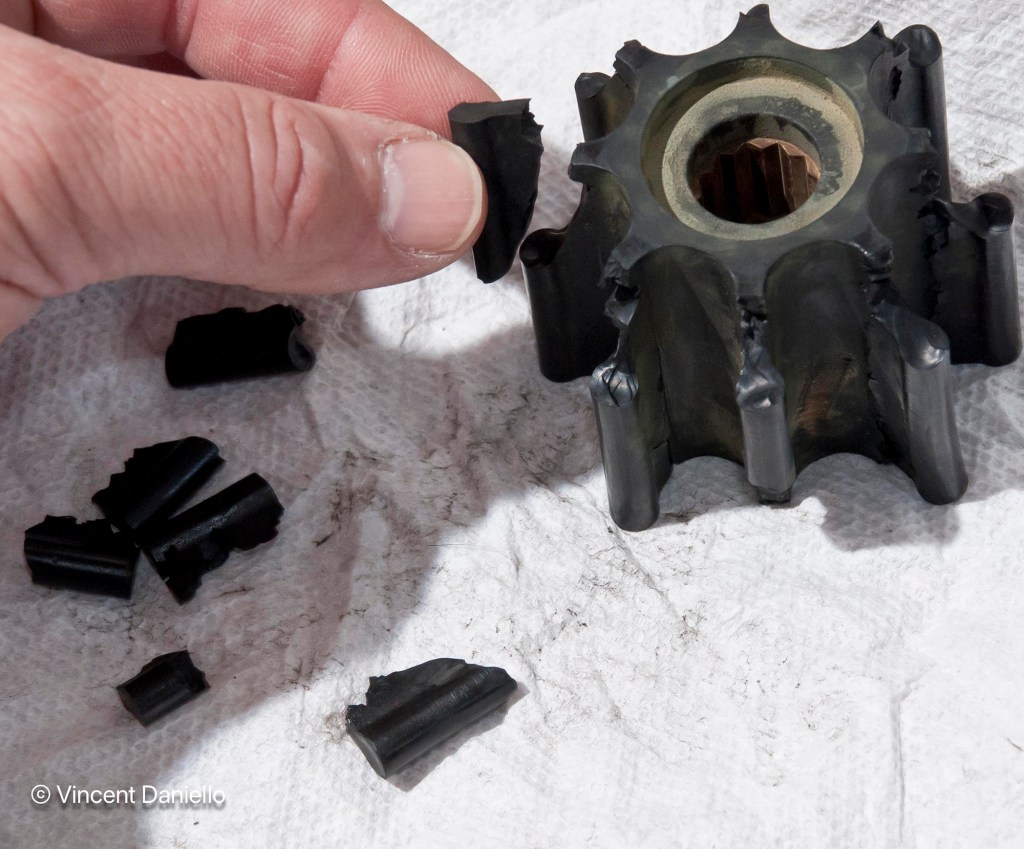
Similarly, Thomas says, “Even at cruising speed, the exhaust elbow shouldn’t be above 115 degrees. If you’re seeing 120 or 125, you definitely have a raw-water flow issue. The impeller might be missing a blade or two, or you could have a restriction in the raw-water system.”
Trip-Saving Repairs
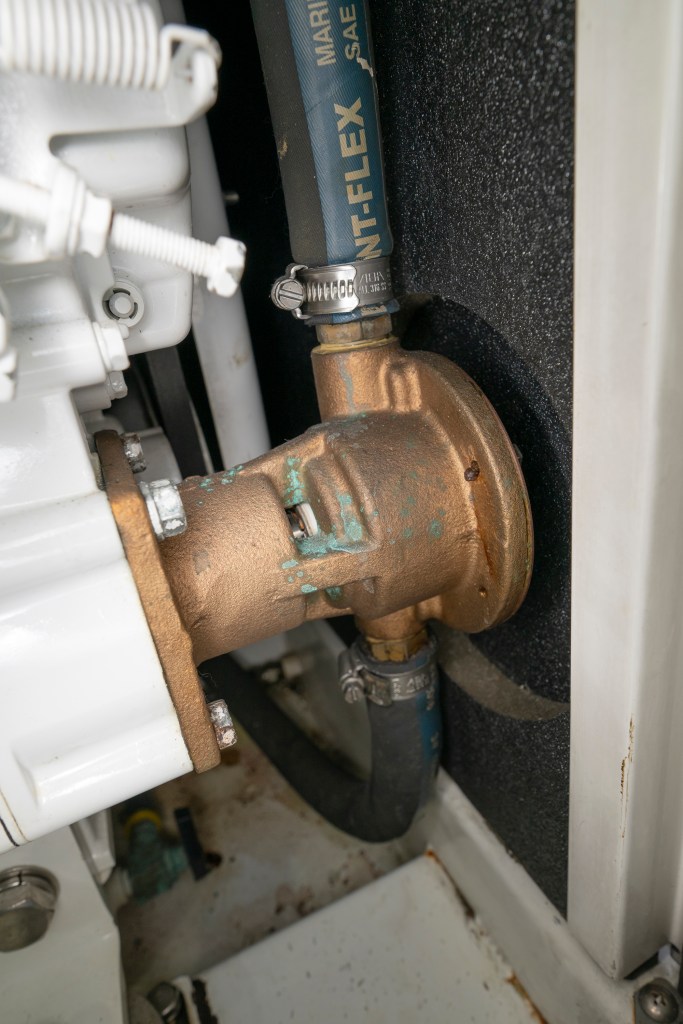
Thomas generally looks first for a clogged sea strainer, and then looks upstream. “Close the through-hull fitting, pull the hose off, and open the valve to see what kind of flow comes through.” If all seems fine there, he follows raw-water plumbing downstream. “If the raw-water pump is dripping from its stainless shaft, that can be a sign of backpressure from a clogged cooling system,” he says.
This might be debris or marine life, such as eelgrass or sea nettles that pass through sea strainers, but he often finds old rubber parts from years of failed impellers, which usually collect where raw water enters the heat exchanger.
A mechanic with spare gaskets in hand would remove that endcap, but Thomas offers a shortcut to try during a trip: “Take the hose off the seawater pump output and stick it in a bucket, and then remove the hose from the back side of the heat exchanger and back-flush it with a garden hose, and see what comes out into the bucket.
“Take the intake hose off the raw-water pump and shake it out, too,” he adds, as impeller parts sometimes collect there.
Scheduled Maintenance
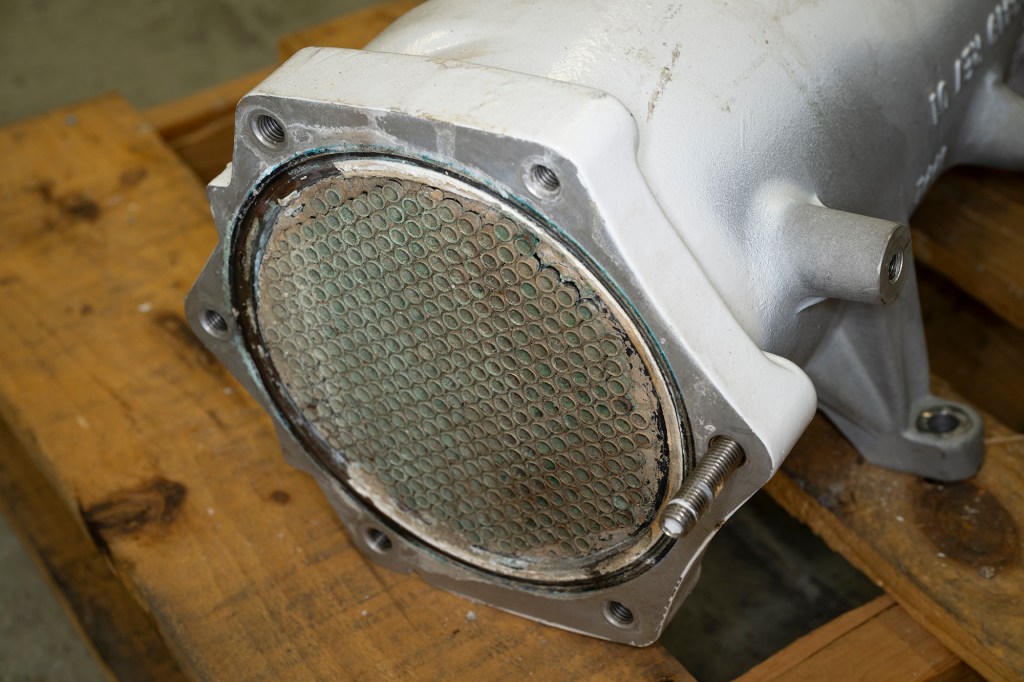
“Heat exchangers need to come off every three years,” Wheatley says. They are typically sent to a specialty shop for descaling and pressure testing, along with charge-air coolers and auxiliary coolers for fuel, transmission oil and hydraulic systems. Neglecting any of these might cause a transmission, stabilizer or bow thruster to fail when oil leaks through the cooler into the sea, or seawater migrates into oil. Often small leaks can be soldered closed, but Wheatley sees about one in 10 coolers fail, especially when service intervals are exceeded or obvious problems are ignored.
Antifreeze should be changed at least every three years, too, typically diluted to 30 percent concentration in warmer climates to inhibit rust and growth inside engines, or at least 40 percent antifreeze where boats are stored through freezing winters.
“Once a year, replace your seawater pump impeller, regardless of engine hours, and if the pump is leaking, rebuild it or replace it,” Wheatley says. That is also a good time to thoroughly inspect hoses and clamps. Leaving even a small leak is an invitation for ruining a trip, especially on modern engines that rely on numerous electronic inputs.
Beyond that, Wheatley relies on manufacturer service intervals as well as his experience. “Different engines have their idiosyncrasies,” he says. On some engines, for example, O-rings separate cupronickel cooling components from aluminum housings. “If salt water gets around those O-rings, it makes contact between cupronickel and aluminum,” he says, eventually resulting in expensive parts replacements. To be safe, he adds, change those O-rings annually. Other engines have different quirks that are best sorted out through the expertise of a trusted mechanic.
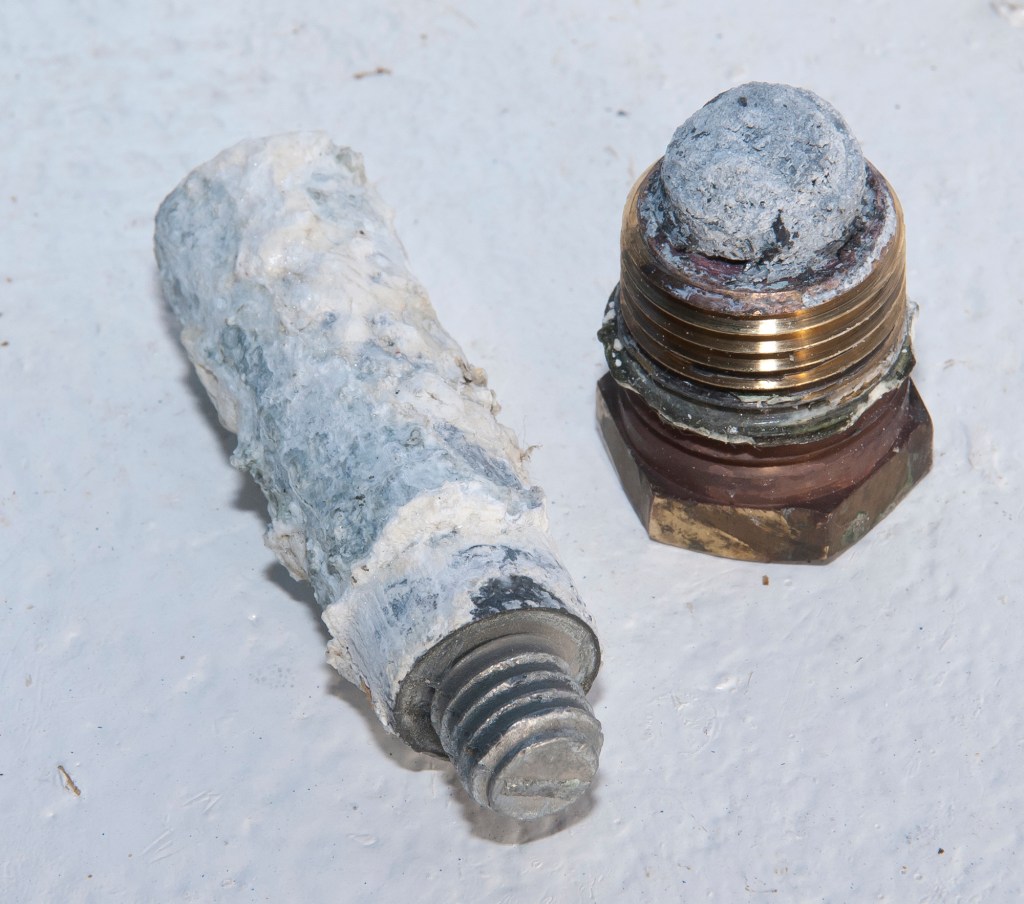
Individual boats vary, too. “When you first buy a boat, check the zincs every four months and replace them once they are halfway gone,” Wheatley says. Neglecting zincs is rolling the dice on expensive repairs. “It’s a learning curve. Some boats go through zincs every four months. On others, they might last four years.”
Spare Parts and Tools
Raw-water impellers, belts and fuel filters top Wheatley’s list of spare parts for every boat. Complete raw-water pumps might be another worthwhile spare, especially for generators that often run in shallow, silty water. “Have that pump rebuilt for next time, and rotate through your stock,” he says.
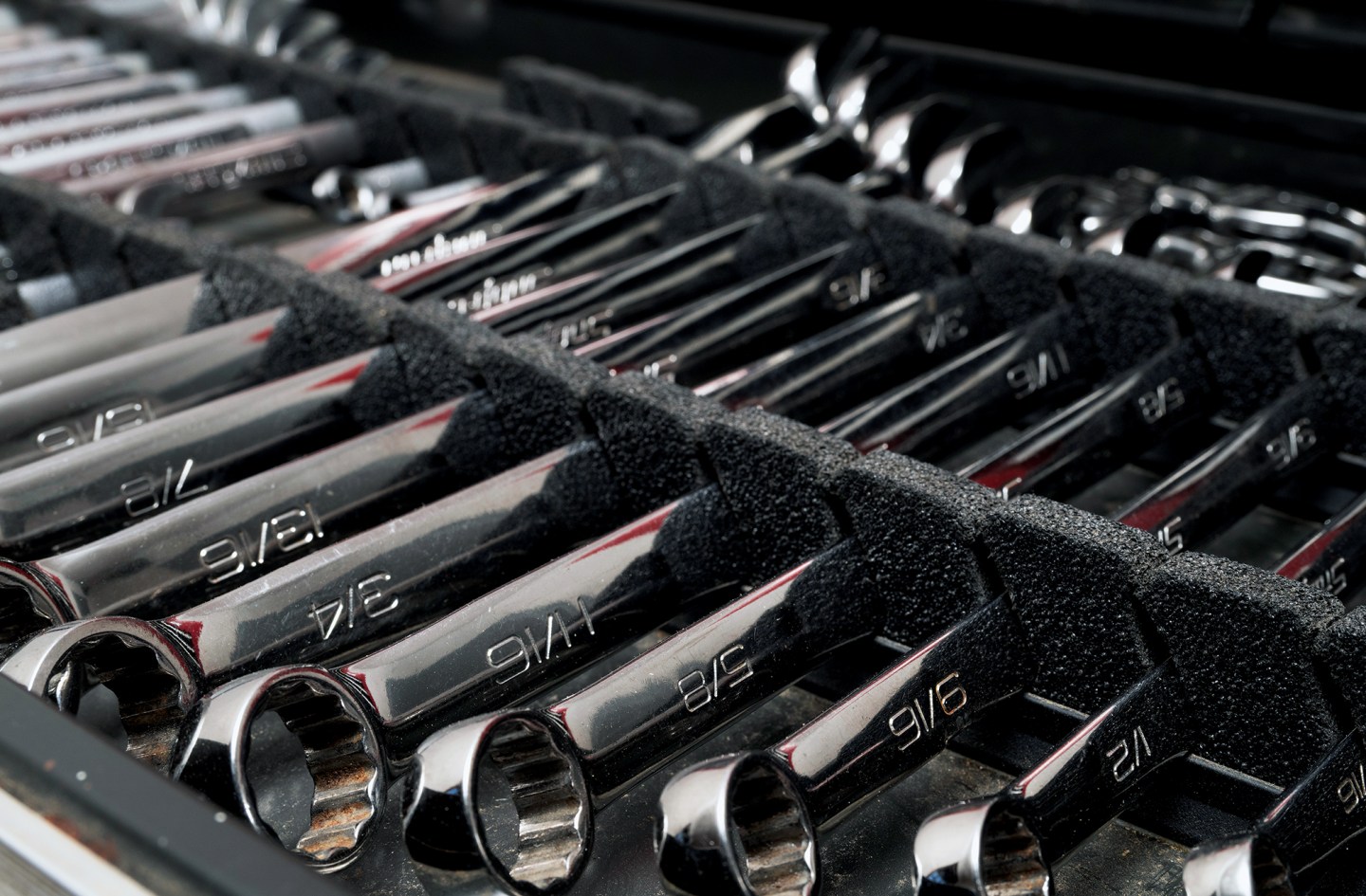
Be sure to have an impeller puller if your engine requires one. “A pressure tester is handy to track down cooling system leaks, and not that expensive” he adds. “Make sure you have the correct adapters for your engines.”
Thomas suggests: “Have the correct gaskets for the heat exchanger endcaps, in case you do have to remove one.” He also suggests a spare heat exchanger filler cap. They don’t take up much space, but when that pressure cap fails, it often leaves an engine overheating. Generator shutdown switches for coolant and exhaust temperature are also worthwhile spares.
Wheatley uses Ultra Tef-Gel anti-corrosion grease to lubricate nearly every screw and O-ring, especially with dissimilar metals like stainless steel bolts in aluminum housings, so everything comes apart in the future. “That might keep us from spending hours drilling out seized bolts,” he says.
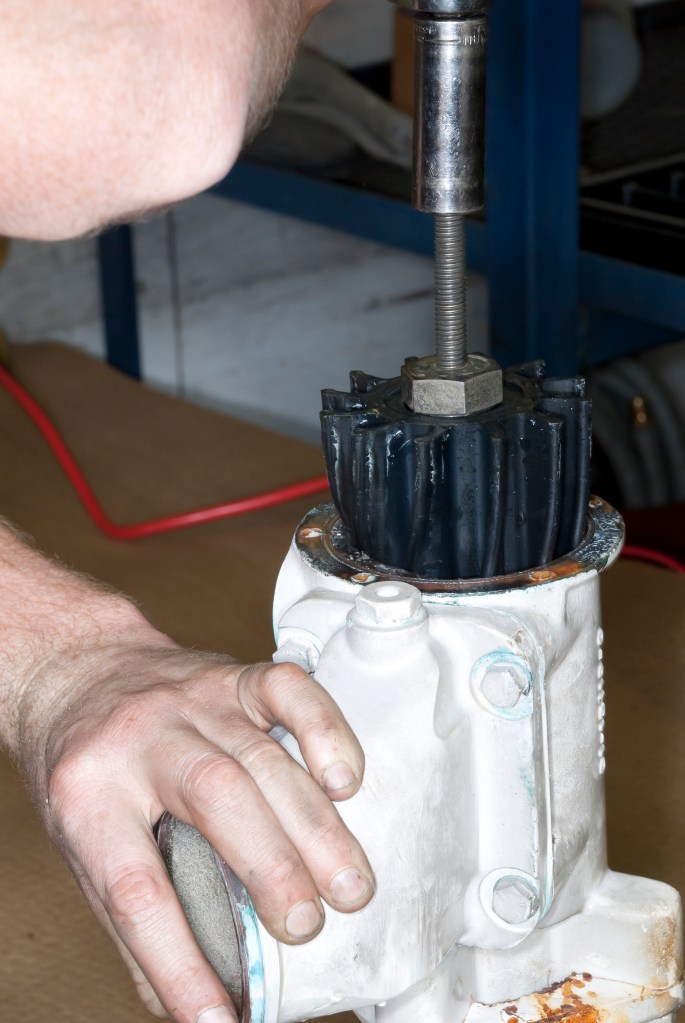
Thomas says he uses Super Lube grease: “It holds the O-ring in the groove in the raw-water pump while you replace the cover, and it helps make a good seal when everything is tightened down.
“Have a mechanic aboard your boat once a year, not just when you have an issue,” Thomas adds. Most technicians, during regular visits, are happy to pass along their knowledge.
Once a mechanic knows your boat, he can also help troubleshoot from afar. “It might give me a chance to bring what we need if we fly in for repairs,” Wheatley says.
“Don’t think everything will just work,” he adds. “Follow maintenance schedules, be aware, and be conscientious. You’re much more likely to have trouble-free trips.”
This article originally appeared in the January/February 2026 issue of Passagemaker magazine.