Photos by 39 pixels
I have heard many Selene owners use the same sentence to explain the yard’s fastidious approach to personalizing each build: “If you have been on one Selene yacht, you have been on one Selene yacht.”
Selene Yachts walks the line between semi- and fully custom craft, a practice that I saw firsthand in December. I traveled to China to celebrate the grand opening of the 400,000-square-foot expansion of Selene’s shipyard, and I found three new Selene yachts lined up along a bulkhead next to the facility.
The largest—and the one I was most keen to board—was the 64 Ocean Explorer. Two years back, I had spent a few days cruising on her smaller sibling, the 60 Ocean Explorer (read “Embracing the New” at passagemaker.com). I had come away impressed with the level of customization the yard was able to execute. I wondered what that same attention to detail would produce on the 64.
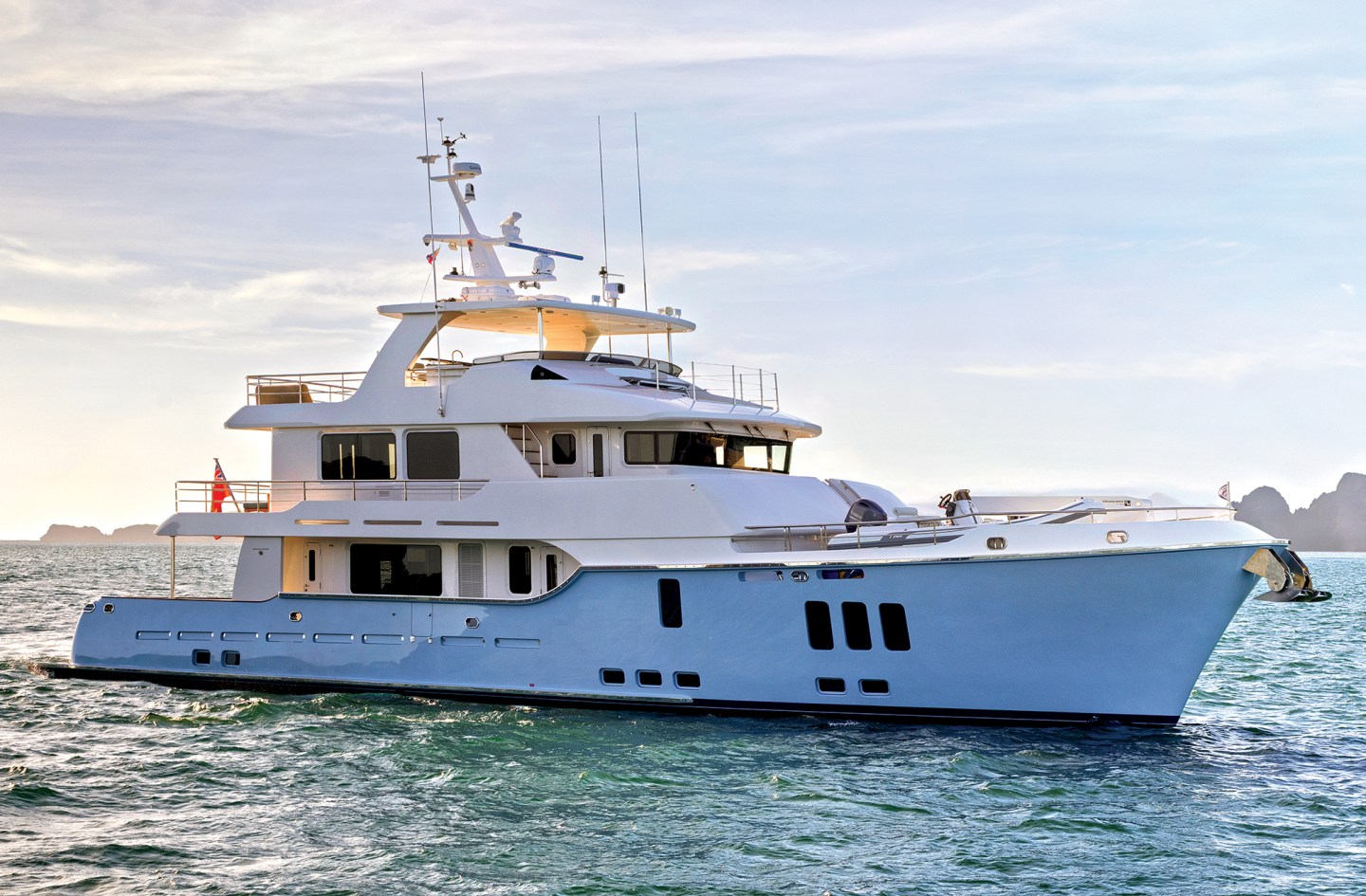
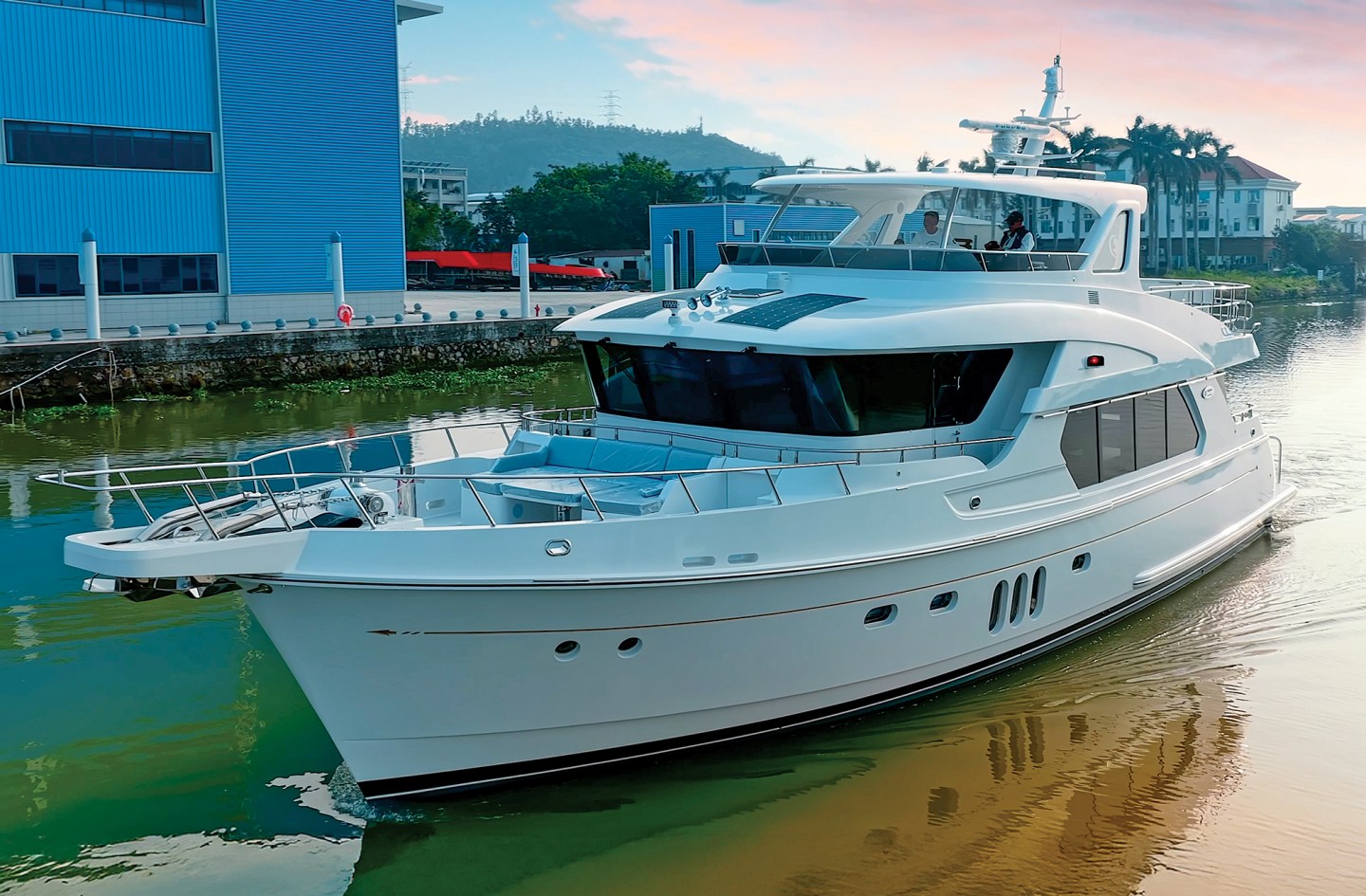
Selene CEO and naval architect Howard Chen wanted a yacht that would contrast with the traditional Classic profile. He tapped designer Guido de Groot, who managed to make a major departure while remaining on brief. The 64 Ocean Explorer leans into her contemporary characteristics within the framework of the builder’s full-displacement model line, including a raised pilothouse with reverse-raked glass, a Portuguese bridge and a flybridge with a boat deck.
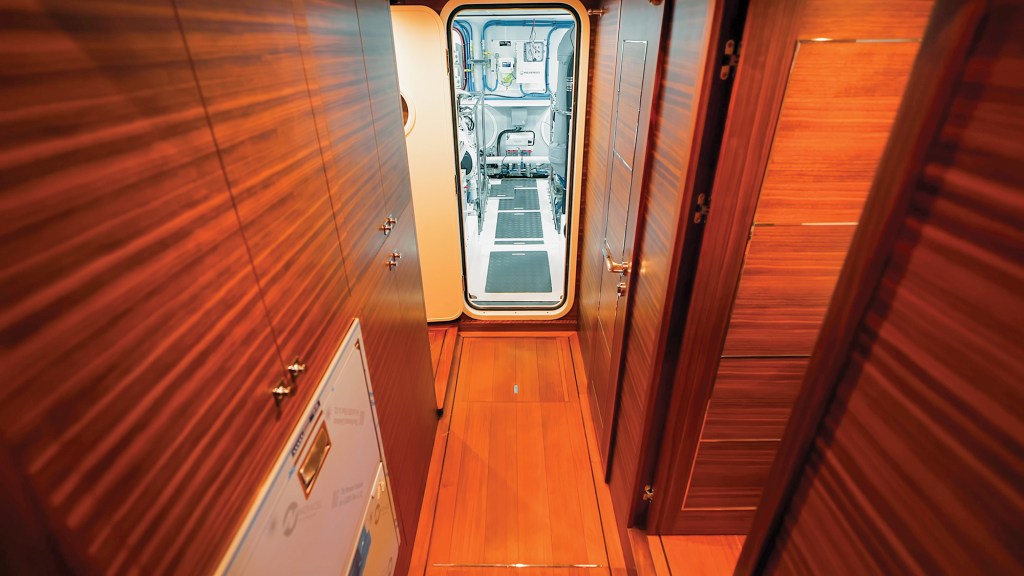
I boarded via the extended swim platform, one of the many custom touches I’d find on board Discovery, which was slated for transport to the United States. A door on centerline provides access from the platform to the lazarette, engine room, crew quarters and commissary, where there’s cruising-ready stowage, additional refrigerator/freezer drawers, and a machine room for the Victron electronic management hardware and LiON house batteries.
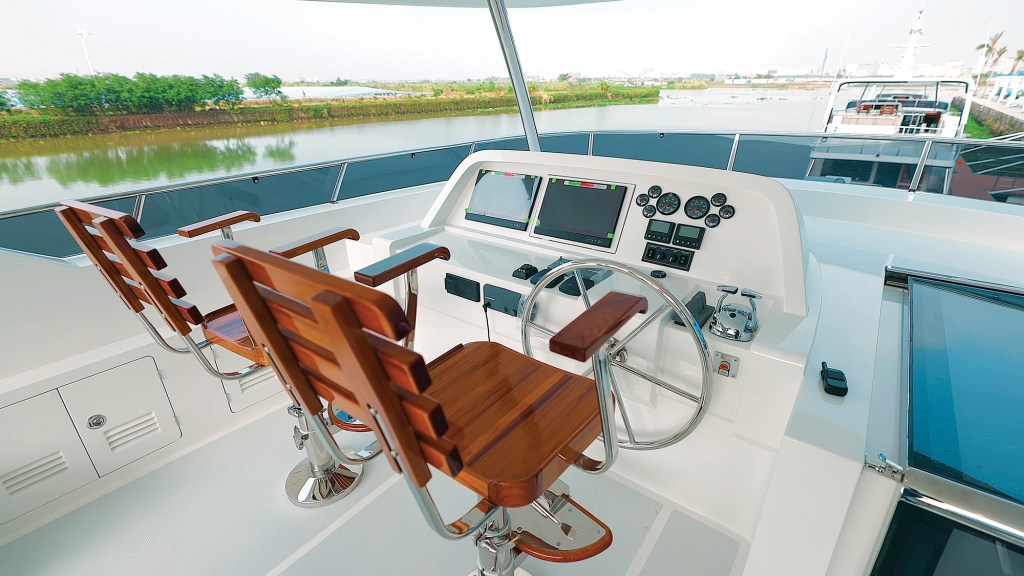
Discovery is a wide-body design with an asymmetrical layout that places a side deck to starboard. Full walkaround side decks are an option. The asymmetrical version gives owners wiggle room in the cockpit; on this yacht, stairs to the flybridge are pushed far to port, granting more space for a dinette and wet bar under the boat deck’s cover. The dinette area stands on its own as a gathering space, and stays connected to the salon, as the sliding glass door and window can fold away.
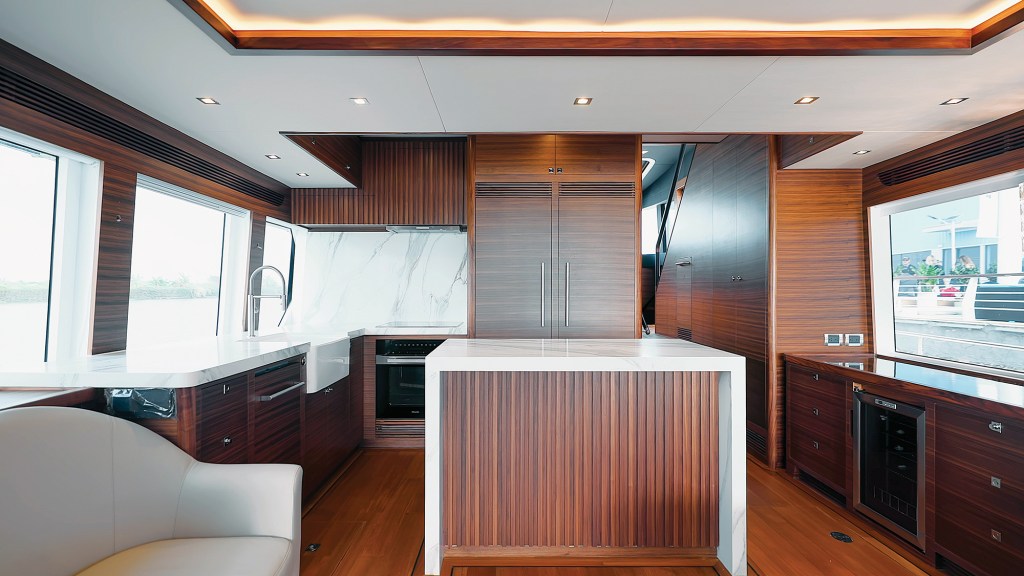
The salon exemplifies the yard’s woodworking expertise and its willingness to please owners. Discovery’s book-matched interior is done in American walnut with a matte finish. Darker than teak, it strikes a handsome contrast to the bone-white furnishings and the quartz countertops and backsplash. The galley, forward, is a gourmand’s delight, with an island, a farmhouse sink and a refrigerator/freezer that dominates the forward bulkhead. These owners also went with a pantry under the internal stairs that lead to the flybridge, a space that can alternatively be used for a day head.
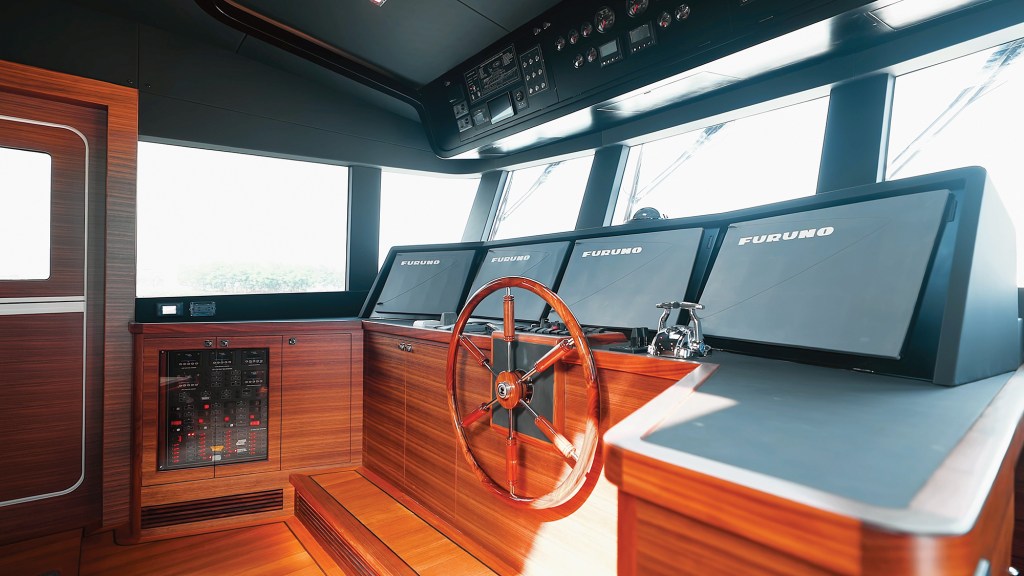
Three steps up, the captain’s space is also finished in American walnut, with a matte black headliner and mullions. A traditional Destroyer wheel is on centerline, with a quartet of 24-inch Furuno displays under a ring of forward-facing windows. Pantograph doors flank the space as well as the internal staircase to the flybridge. Abaft the helm, the L-shape settee is raised to the ideal height to take in views through the expanse of glass.
Custom touches continue belowdecks. A three-stateroom layout is standard, with an amidships master stateroom and forward VIP separated by the guest stateroom (it has twin berths and a Pullman). The VIP and guest staterooms share a head. Finishes on the companionway bulkheads are made to look like shoji screens, contrasting with the American walnut. In both heads and in the master stateroom shower, backlit onyx glows with an ethereal blue hue.
Bespoke touches just about everywhere I looked make Discovery seem more one-off than production, even though she is Hull No. 20 of the series.
Still, her hull design follows Selene’s proven format. On the builder’s Classic and Ocean Explorer model lines, a bulbous bow leads to a rounded, full-bodied section amidships. It finishes with hard chines and a deep center keel, moving into what Chen calls a “cruiser stern,” which is a longer waterline that adds stability, speed and efficiency. Discovery adds electric stabilization to keep her on an even keel.
Powered by twin 265-hp John Deeres, the 64 Ocean Explorer is reported to have a 3,000-nautical-mile range at 8 knots.
Selene 64 Ocean Explorer Specifications:
LOA: 65ft. 10in.
Beam: 18ft. 8in.
Draft: 6ft. 6in.
Displacement: 158,733 lbs.
Fuel: 2,400 gal.
Water: 600 gal.
Power: 2x 265-hp John Deere 6068AFM85
Info: seleneamericas.com
This article originally appeared in the April 2026 issue of Passagemaker magazine.